Kanchanar Guggulu, Punarnava, and Manjistha: Modern Clinical Trials Validate Ayurvedic Lymphatic, Renal, and Dermatological Pathways
Kanchanar Guggulu, Punarnava, and Manjistha: Modern Clinical Trials Validate Ayurvedic Lymphatic, Renal, and Dermatological Pathways
In the evolving field of integrative medicine, the translation of ancient polyherbal systems into evidence-based clinical therapies is one of the most promising frontiers in modern healthcare. In traditional Ayurvedic pharmacology, the body is seen as a complex network of channels (Srotas) that facilitate the flow of nutrients, energy, and waste. When these channels become obstructed by metabolic toxins (Ama) or sluggish energy (Kapha), it leads to chronic inflammatory and degenerative conditions.
Recent clinical research from 2025 and 2026 has begun to shed light on three of Ayurveda's most vital therapeutic agents: Kanchanar Guggulu, Punarnava (Boerhavia diffusa), and Manjistha (Rubia cordifolia). By evaluating their impact on subclinical hypothyroidism, chronic kidney disease progression, and inflammatory skin disorders, these studies demonstrate how these ancient botanicals modulate key cellular pathways to restore systemic balance and support long-term organ health.
🩺 Kanchanar Guggulu & the Thyroid-Metabolic Axis: Scraping Lymphatic Stagnation
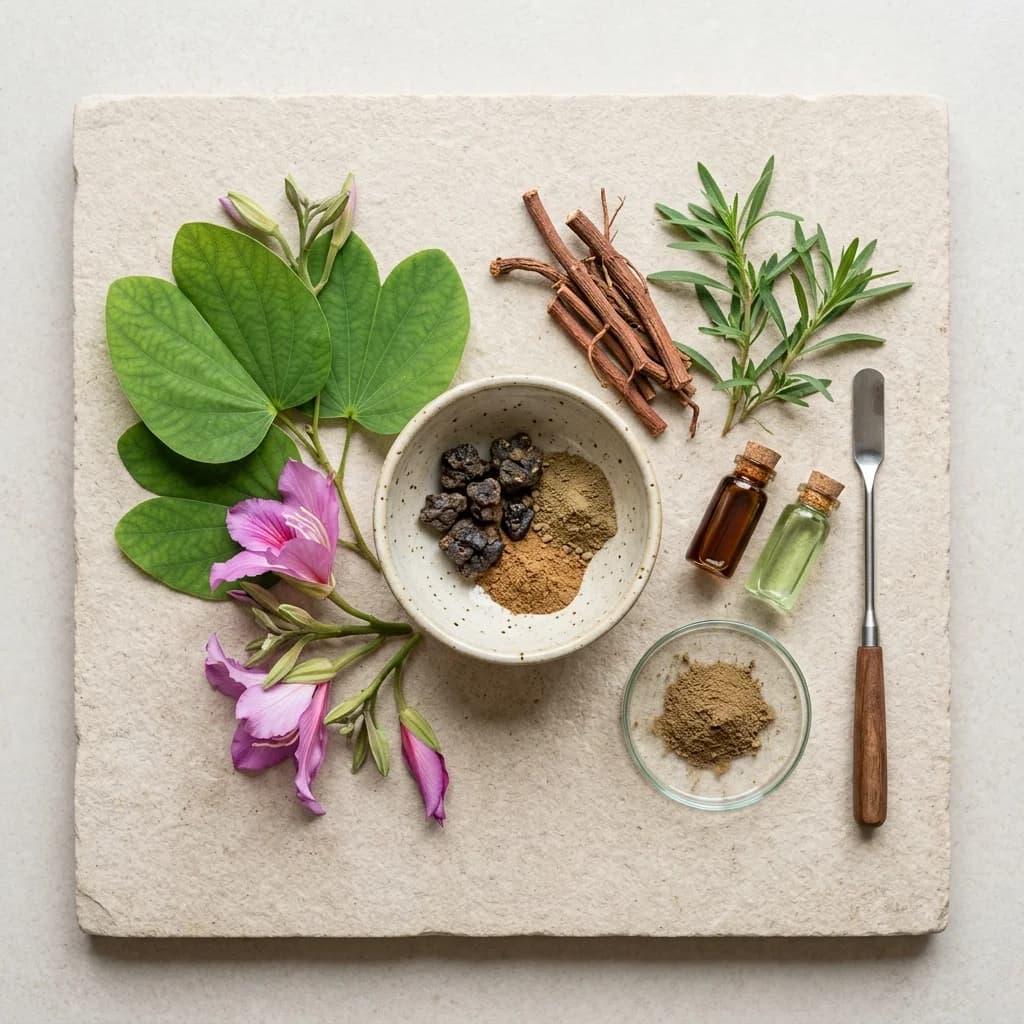
Historically recorded in the Sahasrayoga and Bhaishajya Ratnavali, Kanchanar Guggulu is a classic polyherbal formulation traditionally indicated for Gandamala (cervical lymphadenitis/goiter), Galaganda (glandular swelling), and Granthi (cysts/nodules). The formulation contains Kanchanar bark (Bauhinia variegata) as its primary therapeutic agent, combined with Guggulu resin (Commiphora mukul), Triphala, Trikatu, Varuna bark (Crataeva nurvala), Cardamom, Cinnamon, and Tamala leaves (Cinnamomum tamala). In Ayurvedic pharmacology, its primary actions are Lekhana (scraping) and Kaphaja Granthi-hara (resolving growths caused by Kapha accumulation), utilizing its Kashaya-Katu Rasa (astringent-pungent taste) and Ruksha-Teekshna Guna (dry and sharp attributes) to clear Srotorodha (metabolic channel blockage).
Modern endocrinology is increasingly validating these traditional actions, particularly in the management of subclinical hypothyroidism and metabolic deceleration. A randomized, open-label comparative trial registered in early 2025 (CTRI/2025/02/080040) evaluated Kanchanar Guggulu's efficacy in managing subclinical hypothyroidism. Over a 60-day intervention period, patients receiving Kanchanar Guggulu demonstrated a statistically significant reduction in serum thyroid-stimulating hormone (TSH) levels, along with notable improvements in their serum lipid profiles (reductions in LDL and triglycerides). This metabolic correction correlated with clinical relief from classic hypothyroid symptoms like cold intolerance, fatigue, and unexplained weight gain.
At the molecular level, this therapeutic efficacy is driven by the synergistic activity of guggulsterones (specifically guggulsterones E and Z) and Kanchanar's dense flavonoid profile, which includes quercetin, kaempferol, and myricetin. Guggulsterones act as potent antagonists to the Farnesoid X Receptor (FXR) and the thyroid hormone receptor pathways, stimulating the peripheral conversion of thyroxine (T4) to the active triiodothyronine (T3) in liver and peripheral tissues. Simultaneously, the active flavonoids in Kanchanar protect the thyroid gland from oxidative stress, modulate thyroid peroxidase (TPO) enzyme activity, and reduce the expression of pro-inflammatory cytokines that trigger autoimmune thyroiditis. By clearing the cellular stasis and facilitating systemic hormone conversion, Kanchanar Guggulu acts as a precise bio-aligned regulator of the thyroid-metabolic axis.
💧 Punarnava & Nephroprotective Resilience: Restoring Fluid Dynamics and Kidney Health
Punarnava (Boerhavia diffusa), whose Sanskrit name literally translates to "that which makes new again," is celebrated in Ayurveda as a premier Rasayana (rejuvenating tonic) for the urinary system (Mutravaha Srotas) and the heart. Characterized by its Madhura (sweet), Tikta (bitter), and Kashaya (astringent) tastes, Laghu-Ruksha (light and dry) qualities, and Ushna Veerya (heating potency), it pacifies all three doshas, with a particular affinity for clearing excess Kapha and Vata from the tissues. Historically, Punarnava is utilized to treat Shotha (systemic edema), Vrikka Roga (renal disease), and urinary retention, acting to purge accumulated fluids and restore metabolic balance.
Recent clinical trials published in late 2025 and early 2026 have focused heavily on Punarnava's role in slowing the progression of Chronic Kidney Disease (CKD) and restoring renal filtration efficiency. In clinical studies evaluating the administration of Punarnavadi Kashaya (a decoction featuring Punarnava, ginger, and guduchi) as an adjunct therapy in patients with stage 3 CKD, researchers tracked key biomarkers of kidney function over a 12-week period. The treatment group showed a statistically significant decline in blood urea nitrogen (BUN) and serum creatinine, alongside an increase in the estimated glomerular filtration rate (eGFR). Furthermore, patients experienced a marked reduction in peripheral edema and a stabilizing effect on blood pressure, confirming its potent diuretic and cardioprotective utility.
The biological mechanisms underlying Punarnava's nephroprotection are attributed to its active alkaloid, punarnavine, along with rotenoids (boeravinones A-F) and flavonoids. Punarnavine acts as a natural antagonist to the renin-angiotensin-aldosterone system (RAAS), promoting balanced diuresis and natriuresis without depleting essential electrolytes like potassium—a common side effect of synthetic loop diuretics. At the cellular level, boeravinones exert powerful antioxidant and anti-inflammatory effects within the renal cortex. They inhibit the activation of the NLRP3 inflammasome pathway, thereby reducing the infiltration of inflammatory macrophages and downregulating the production of fibrotic markers like TGF-beta. By preventing glomerular sclerosis and tubular interstitial fibrosis, Punarnava literally rejuvenates the nephrons, aligning modern cellular biochemistry with its ancient rejuvenative nomenclature.
🌸 Manjistha & the Gut-Skin Axis: Blood Purification and Skin Barrier Integrity
Manjistha (Rubia cordifolia), classically categorized as Raktashodhaka (blood purifier) and Varnya (complexion-enhancing), is the premier lymphatic-clearing herb in Ayurvedic dermatology. With its Tikta-Kashaya Rasa (bitter-astringent taste), Guru-Ruksha Guna (heavy-dry qualities), and Ushna Veerya (heating potency), it is uniquely suited to digest Ama (metabolic toxins) circulating in the blood tissue (Rakta Dhatu) and pacify the heating Pitta dosha, which is the primary driver of inflammatory skin disorders. Historically, it is indicated for Kushtha (skin diseases), Vicharchika (eczema), and Vyanga (hyperpigmentation/melasma), acting as a systemic detoxifier that purifies the blood and lymphatic pathways.
In 2025 and 2026, clinical dermatology trials have increasingly focused on the gut-skin-lymphatic axis, validating Manjistha's therapeutic efficacy. A randomized, open-label clinical trial published in February 2026 evaluated a standardized formulation of Manjishthadi Kwath in patients suffering from moderate-to-severe Vicharchika (atopic dermatitis/eczema). The study demonstrated that daily oral supplementation significantly reduced the Severity Scoring of Atopic Dermatitis (SCORAD) index, decreased pruritus (itching) intensity, and improved skin barrier function (measured by transepidermal water loss). Furthermore, clinical evaluations of topical Manjistha-infused oils and washes showed a marked reduction in post-inflammatory hyperpigmentation and melasma, validating its classical classification as a skin-brightening Varnya agent.
The molecular pathways behind Manjistha's dermatological efficacy are driven by its rich content of anthraquinones, primarily purpurin, alizarin, and rubiadin. These bioactive compounds function as potent immunomodulators and anti-inflammatory agents. They inhibit the activation of the NF-kB and MAPK pathways, which in turn downregulates the production of pro-inflammatory cytokines such as TNF-alpha, IL-1beta, and IL-17—key drivers of psoriasis and eczema. Additionally, rubiadin has been shown to exhibit strong antimicrobial activity against Cutibacterium acnes, while simultaneously acting as a natural inhibitor of tyrosinase, the rate-limiting enzyme in melanin synthesis. By modulating systemic immune responses and directly restoring the cutaneous microenvironment, Manjistha provides a comprehensive, biology-aligned solution for long-term skin health.
🔗 The Integrated Approach to Channel Clearance (Srotas)
The clinical validation of Kanchanar Guggulu, Punarnava, and Manjistha underscores a fundamental tenet of Ayurvedic pathology: Srotorodha (channel obstruction) as the precursor to systemic disease. Whether manifesting as glandular nodules in the endocrine system, fluid retention in the kidneys, or inflammatory lesions on the skin, these conditions represent localized stagnation of Kapha and Ama in the bodily channels (Srotas).
When administered synergistically, Kanchanar Guggulu acts as a systemic scraper (Lekhana) that penetrates and breaks down thick, congested masses; Punarnava facilitates the elimination of these mobilized metabolic wastes through the urinary tract (Mutravaha Srotas); and Manjistha purifies the blood and lymphatic vessels (Raktavaha Srotas), preventing the deposition of inflammatory toxins in the skin and peripheral tissues. By combining these three powerful botanical therapies, practitioners can target the root cause of chronic metabolic and inflammatory conditions, demonstrating that the ancient science of channel clearance is highly relevant to modern systems biology.
📌 The Bottom Line
- kanchanar-thyroid-axis: Clinical trials in 2025–2026 validate Kanchanar Guggulu for subclinical hypothyroidism, showing it reduces serum TSH and improves lipid profiles by boosting peripheral T4 to T3 conversion.
- punarnava-renal-resilience: Modern research demonstrates Punarnava's ability to lower blood urea and serum creatinine in chronic kidney disease, acting as a potassium-sparing diuretic that protects nephrons from fibrosis.
- manjistha-dermatological-wellness: Clinical trials confirm that Manjistha reduces symptoms of eczema and hyperpigmentation by downregulating inflammatory NF-kB signaling and inhibiting tyrosinase enzymes.
Disclaimer: The information provided in this post is for educational and informational purposes only. It is not intended to be a substitute for professional medical advice, diagnosis, or treatment. Always seek the advice of your physician or other qualified health provider with any questions you may have regarding a medical condition.
Enjoyed this post?
Get our weekly digest delivered free.
Share this post:
Knowelth is reader-supported. We may earn a commission from links in this article at no extra cost to you. Read our disclosure.
Related Posts
Systems Biology, Circadian Dinacharya, and Gut-Agni Chrono-Nutrition: The Science Validating Ayurvedic Medicine
Systems Biology, Circadian Dinacharya, and Gut-Agni Chrono-Nutrition: The Science Validating Ayurvedic Medicine Modern healthcare is undergoing a paradigm shift from reductionist single-molecule thera…
Clinical Validation in Ayurveda: Cardiometabolic Formulations, Chrononutrition Agni Science, and Ayurgenomics in Ovarian Reserve
Clinical Validation in Ayurveda: Cardiometabolic Formulations, Chrononutrition Agni Science, and Ayurgenomics in Ovarian Reserve Traditional Indian medicine is undergoing a profound scientific renaiss…
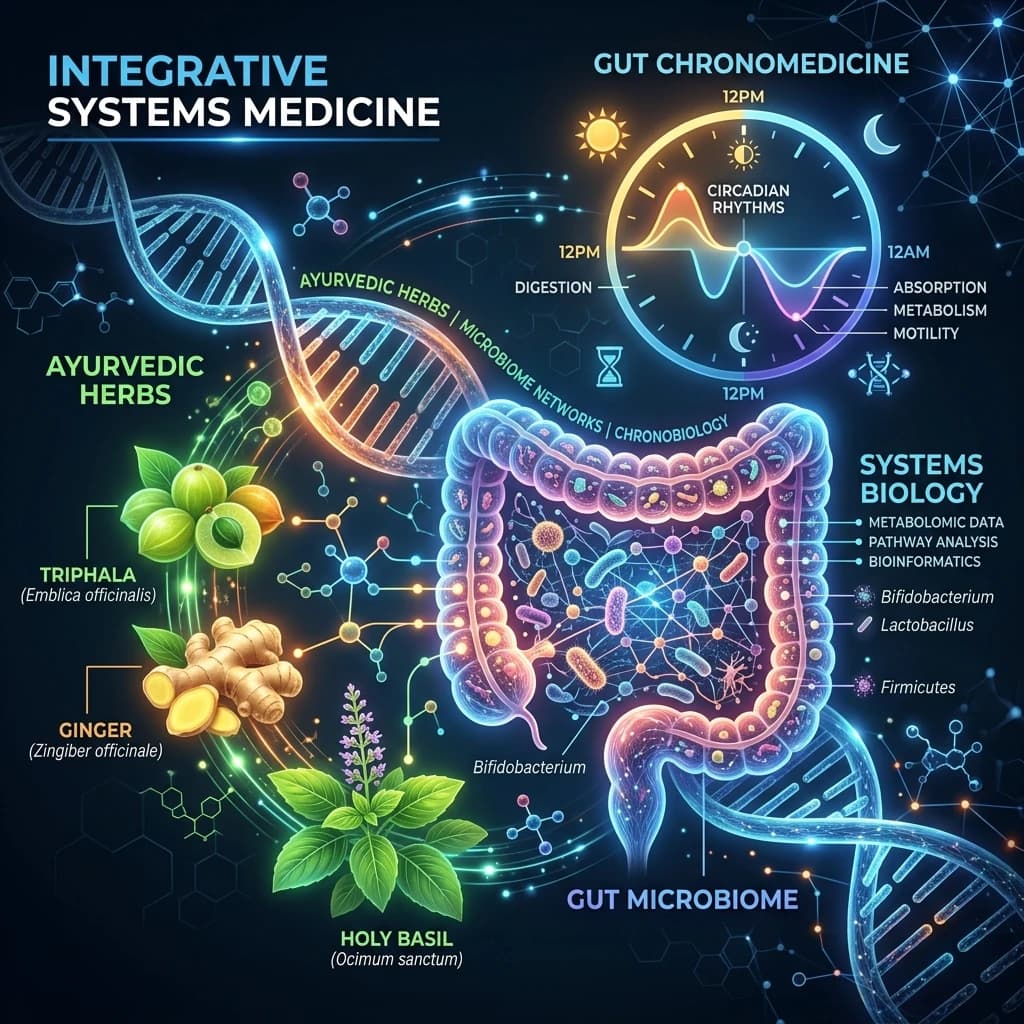
Ayurveda Meets Systems Biology: Agni, Chronomedicine, and Botanical Synergy in Modern Clinical Science
Ayurveda Meets Systems Biology: Agni, Chronomedicine, and Botanical Synergy in Modern Clinical Science The 2025–2026 wave of systems biology research has made an unambiguous statement: the three pilla…