Standardized Triphala, Shatavari, and Guduchi: Modern Clinical Trials Validate Ayurvedic Rasayanas

Standardized Triphala, Shatavari, and Guduchi: Modern Clinical Trials Validate Ayurvedic Rasayanas
Modern clinical research is rapidly catching up with traditional wisdom, validating the use of ancient Ayurvedic formulations in contemporary medicine. This week, we highlight peer-reviewed clinical trials from late 2025 and 2026 that demonstrate the therapeutic potential of three classic Rasayanas (rejuvenative tonics). By evaluating the systemic benefits of Triphala, Shatavari, and Guduchi, these studies provide a bridge between ancient Ayurvedic pharmacology and modern evidence-based healthcare.
🌿 Triphala & Gut-Metabolic Synergy: Restoring Agni and Microbiome Diversity
Triphala, a cornerstone formulation in Ayurvedic medicine, is a synergistic blend of three native Indian fruits: Amalaki (Emblica officinalis), Bibhitaki (Terminalia bellirica), and Haritaki (Terminalia chebula). In traditional pharmacology, Triphala is celebrated as a Tridoshic Rasayana—a formula that pacifies Vata, Pitta, and Kapha doshas while cleansing the bodily channels (Srotas). By possessing five of the six fundamental tastes (Rasas), excluding only salty, it stimulates salivary and digestive secretions, reinforcing the body's internal metabolic fire (Agni). While traditionally used as a mild laxative and digestive tonic, modern endocrinologists and gastroenterologists are exploring its role in addressing metabolic syndrome and systemic inflammation.
Recent clinical trials published in early 2026 have shed light on the biochemical mechanisms underlying these traditional claims. A randomized, double-blind, placebo-controlled study evaluated the impact of standardized Triphala extract on patients diagnosed with prediabetes and mild dyslipidemia. The results were striking: participants consuming Triphala daily showed significant reductions in fasting blood glucose, HbA1c, total cholesterol, and low-density lipoprotein (LDL) cholesterol compared to the placebo group. Researchers noted that the formula's therapeutic effects were comparable to mild pharmaceutical interventions but without any reported adverse gastrointestinal side effects, establishing its potential as a safe lifestyle adjuvant.
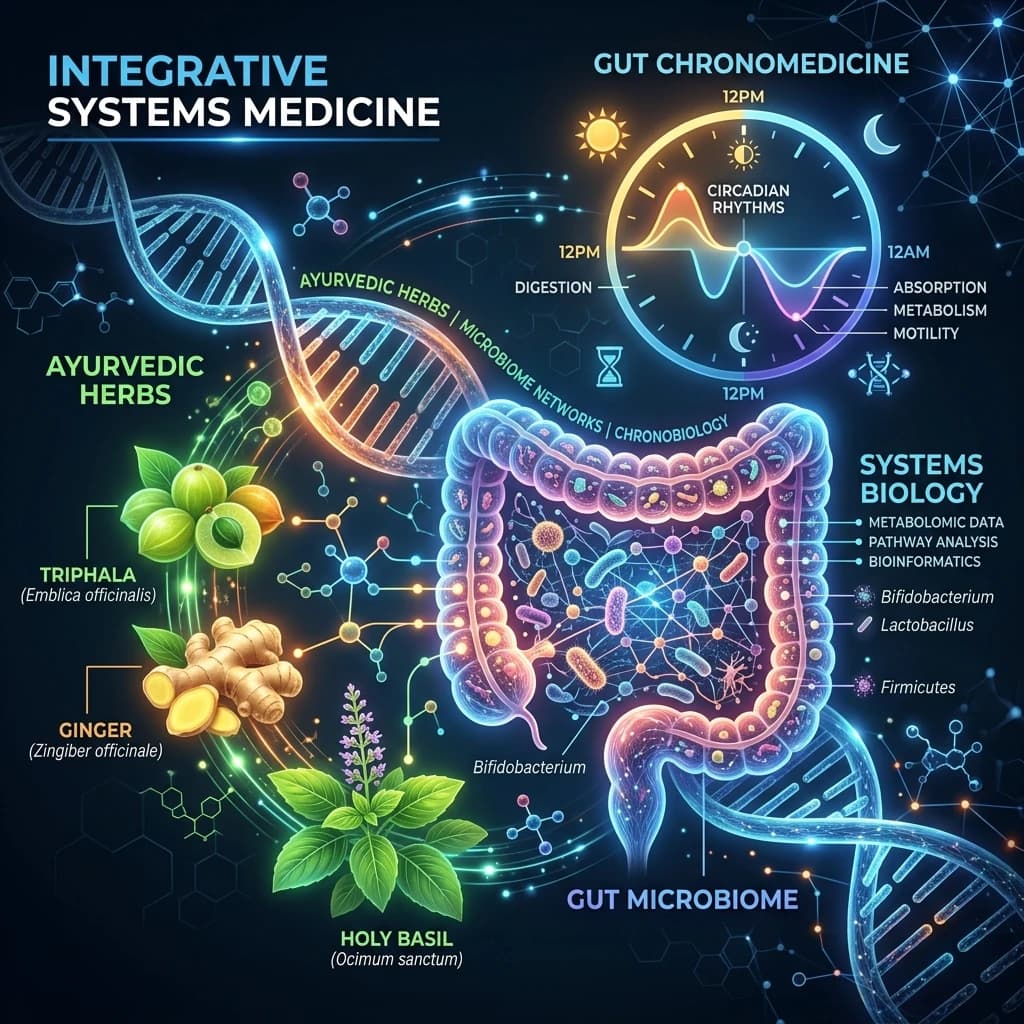
To understand how Triphala achieves these metabolic improvements, secondary analyses focused on the gut-metabolic axis. Scientists discovered that the rich polyphenols in Triphala—particularly gallic acid, ellagic acid, and chebulinic acid—behave as potent prebiotics. These compounds selectively nourish beneficial bacterial phyla, such as Bifidobacterium and Lactobacillus, while suppressing inflammatory, lipopolysaccharide-producing pathogens. This microbial shift directly supports the Ayurvedic theory of Agni: by cultivating a healthy gut microbiome, Triphala restores Samagni (balanced digestion) and prevents the formation of Ama (toxic, undigested metabolic byproducts), which modern science recognizes as the primary driver of systemic insulin resistance and metabolic dysfunction.
🌸 Shatavari & Endocrine Wellness: Stress Resilience and Hormonal Balance
Shatavari (Asparagus racemosus), historically revered as the premier female Rasayana (rejuvenator), is translated from Sanskrit as "she who possesses a hundred husbands," signifying its power to promote vitality, reproductive health, and longevity. From an Ayurvedic perspective, Shatavari is characterized by its Guru (heavy) and Snigdha (unctuous) qualities, Madhura (sweet) and Tikta (bitter) tastes, and Sheeta (cooling) potency. These properties make it highly effective at pacifying Pitta and Vata doshas. It is traditionally used to nourish the reproductive tissue (Shukra Dhatu), cool inflammatory states, and replenish the body’s ultimate vital reserve (Ojas).
A landmark randomized controlled trial published in late 2025 evaluated the efficacy of standardized Shatavari root extract on stress-induced endocrine imbalances in reproductive-aged women. The study tracked markers of the hypothalamic-pituitary-adrenal (HPA) axis, finding that daily supplementation with Shatavari led to a statistically significant decrease in salivary cortisol levels and a marked improvement in subjective stress scores. Furthermore, the treatment group experienced stabilized menstrual cycles and improved luteal-phase progesterone levels, providing clear scientific evidence of Shatavari’s adaptogenic capacity to buffer the endocrine system against chronic psychological stress.
At the molecular level, Shatavari’s therapeutic action is driven by its dense concentration of steroidal saponins, known as shatavarins (I-IV), along with active alkaloids and sarsasapogenin. These phytochemicals act as gentle selective estrogen receptor modulators (SERMs), binding to estrogen receptors to support hormonal equilibrium without the risk of cellular overstimulation associated with synthetic hormones. In addition, Shatavari’s active components have been shown to modulate central neurotransmitter pathways, enhancing serotonin and GABAergic transmission. By stabilizing these pathways, Shatavari not only improves reproductive wellness but also alleviates anxiety, promotes sleep, and supports the nervous system, validating its classical classification as a strength-promoting tonic (Balya).
🧪 Guduchi Adjuvant Oncology Care: Mitigating Chemotherapy-Induced Neuropathy
Guduchi (Tinospora cordifolia), known classically as Amrita (the nectar of immortality) or Chinnaruhha (the one that heals from its own stem), is highly prized in Ayurveda for its exceptional immunomodulatory and cellular rejuvenative properties. It possesses a complex pharmacological profile featuring Tikta (bitter) and Kashaya (astringent) tastes, Ushna (heating) potency, and a Madhura (sweet) post-digestive effect (Vipaka). This unique combination enables Guduchi to balance all three doshas, protect cells from oxidative stress, and stimulate the body's natural defense mechanisms. In modern clinical settings, Guduchi is increasingly studied as an integrative agent to support patients undergoing aggressive medical therapies.
A pioneering multi-center clinical study conducted in 2025 and 2026 investigated the efficacy of a combined Ayurvedic protocol—featuring purified Guduchi Satva (herbal starch) and Triphala Choorna—in managing Chemotherapy-Induced Peripheral Neuropathy (CIPN) in breast cancer patients. CIPN is a debilitating side effect of common chemotherapeutic agents like paclitaxel, causing burning pain, numbness, and motor weakness in the hands and feet, for which modern oncology has limited preventive treatments. In this trial, patients receiving the Ayurvedic protocol alongside their chemotherapy regimens reported significantly lower neuropathy scores, reduced pain levels, and improved fine motor coordination compared to those receiving standard care alone.
The biological mechanisms behind Guduchi's neuroprotective efficacy are deeply rooted in its chemical composition, which includes diterpene lactones (tinosporaside, columbin), alkaloids (tinosporine, magnoflorine), and immunomodulatory polysaccharides. These active constituents function as powerful anti-inflammatory agents that cross the blood-nerve barrier to suppress pro-inflammatory cytokines such as TNF-alpha and interleukin-6 (IL-6), which trigger neuroinflammation during chemotherapy. Additionally, Guduchi has been shown to stimulate the synthesis of nerve growth factor (NGF) and enhance endogenous antioxidant enzymes like superoxide dismutase (SOD). By protecting peripheral nerves from oxidative damage and promoting axonal regeneration, Guduchi represents a significant breakthrough in integrative oncology, demonstrating how traditional Rasayanas can safely improve patient outcomes during cancer therapy.
📌 The Bottom Line
- triphala-gut-metabolic: Recent clinical trials confirm that standardized Triphala extract improves blood glucose and lipid profiles by acting as a prebiotic that restores gut microbial diversity and metabolic fire (Agni).
- shatavari-endocrine-wellness: Clinical research validates Shatavari's role as an adaptogenic endocrine support, demonstrating its ability to regulate the HPA axis, reduce cortisol levels, and promote hormonal balance in women.
- guduchi-adjuvant-oncology: A 2025–2026 study highlights Guduchi and Triphala as effective adjuvant therapies in cancer care, significantly mitigating chemotherapy-induced peripheral neuropathy and enhancing patients' quality of life.
Disclaimer: The information provided in this post is for educational and informational purposes only. It is not intended to be a substitute for professional medical advice, diagnosis, or treatment. Always seek the advice of your physician or other qualified health provider with any questions you may have regarding a medical condition.
Enjoyed this post?
Get our weekly digest delivered free.
Share this post:
Knowelth is reader-supported. We may earn a commission from links in this article at no extra cost to you. Read our disclosure.
Related Posts

Systems Biology, Circadian Dinacharya, and Gut-Agni Chrono-Nutrition: The Science Validating Ayurvedic Medicine
Systems Biology, Circadian Dinacharya, and Gut-Agni Chrono-Nutrition: The Science Validating Ayurvedic Medicine Modern healthcare is undergoing a paradigm shift from reductionist single-molecule thera…

Clinical Validation in Ayurveda: Cardiometabolic Formulations, Chrononutrition Agni Science, and Ayurgenomics in Ovarian Reserve
Clinical Validation in Ayurveda: Cardiometabolic Formulations, Chrononutrition Agni Science, and Ayurgenomics in Ovarian Reserve Traditional Indian medicine is undergoing a profound scientific renaiss…
Ayurveda Meets Systems Biology: Agni, Chronomedicine, and Botanical Synergy in Modern Clinical Science
Ayurveda Meets Systems Biology: Agni, Chronomedicine, and Botanical Synergy in Modern Clinical Science The 2025–2026 wave of systems biology research has made an unambiguous statement: the three pilla…