Ayurvedic Clinical Trials: Kalyanaka Ghrita for Cognition, Marma Therapy for Sciatica, and Punarnavadi Mandura for Anemia
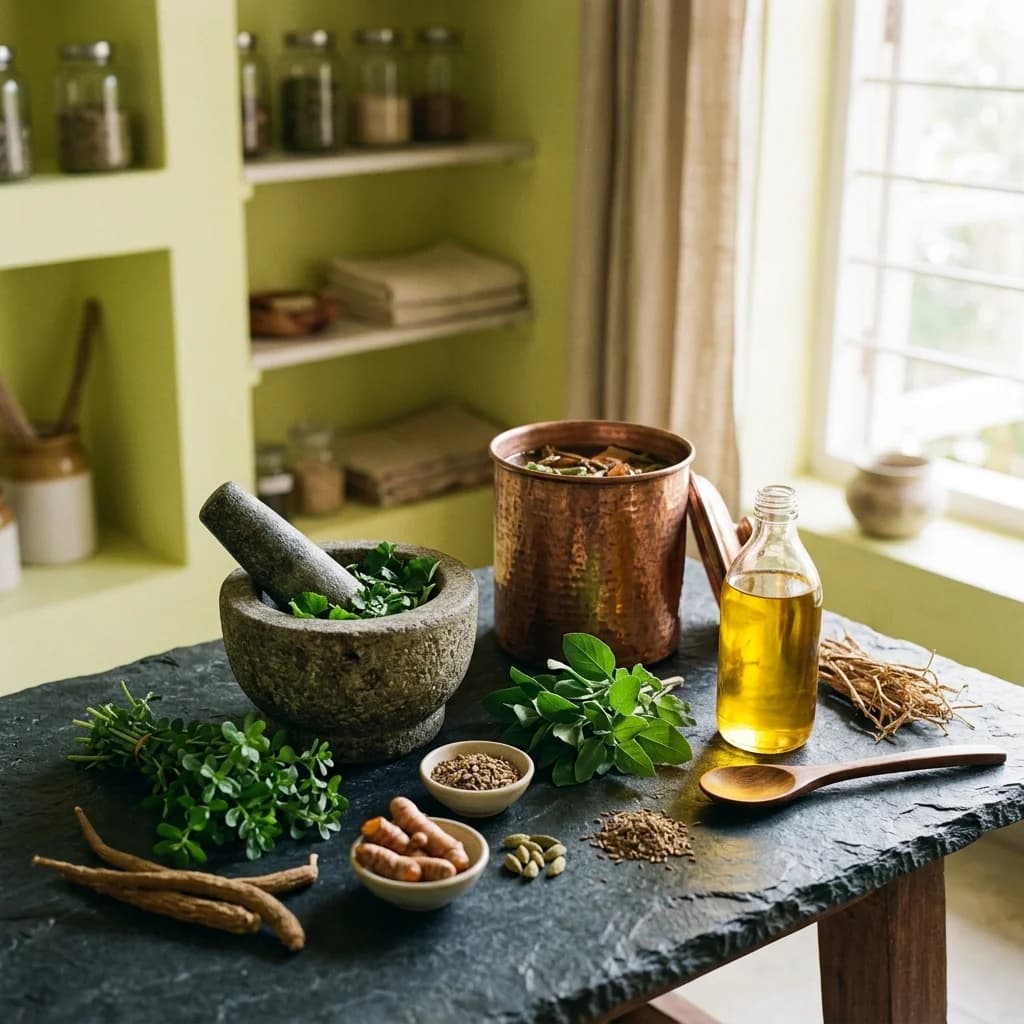
Ayurvedic Clinical Trials: Kalyanaka Ghrita for Cognition, Marma Therapy for Sciatica, and Punarnavadi Mandura for Anemia
As the integration of traditional medicine and modern clinical science accelerates, peer-reviewed studies are validating the efficacy of ancient Ayurvedic therapies. This week, we explore the groundbreaking results of the world's first published Ayurvedic N-of-1 trial on cognitive health, a randomized trial evaluating Marma therapy for sciatic pain, and a massive Phase III ICMR study on herbomineral formulations for anemia. By demonstrating therapeutic equivalence and personalized efficacy through rigorous modern methodologies, these studies show that traditional Indian medicine offers robust, evidence-based solutions for contemporary health challenges.
🌿 Personalized Cognitive Health: Kalyanaka Ghrita in Mild Cognitive Impairment
In Ayurvedic neuropsychiatry, cognitive decline and memory impairment are understood through the framework of Smriti Bhramsha (loss of memory) and Alpachetana (compromised cognitive clarity). These conditions are primarily driven by an imbalance in Vata and Pitta doshas, which dry out the subtle channels of the mind (Manovaha Srotas) and deplete the nervous tissue (Majja Dhatu). To counter this, classical texts prescribe Kalyanaka Ghrita, a medicated ghee formulation infused with twenty-eight potent herbs including Haritaki, Amalaki, Devadaru, and Shalaparni. It is characterized by its cooling potency (Sheeta Veerya) and sweet post-digestive effect (Madhura Vipaka), properties that nourish the brain, reduce neuroinflammation, and restore doshic balance in the central nervous system.
In June 2026, researchers at Banaras Hindu University (BHU) published a landmark study in the Journal of Ethnopharmacology, presenting the world's first published Ayurvedic N-of-1 clinical trial. The N-of-1 trial design—a double-blind, randomized, multi-crossover trial in a single patient—represents a revolutionary step forward in clinical research. Unlike standard clinical trials that average results across large populations, N-of-1 designs align perfectly with Ayurveda’s core philosophy of Prakriti (individualized constitution and therapy), showing exactly how a treatment works for a specific individual.
Over a 14-month period, the researchers utilized Bayesian statistical modeling to evaluate the efficacy of Kalyanaka Ghrita in a patient diagnosed with Mild Cognitive Impairment (MCI). The Bayesian analysis revealed a high probability of significant improvements in memory recall, attention span, and general cognitive processing speed during the active treatment phases compared to control periods. Furthermore, the patient showed a marked reduction in depressive symptoms and anxiety, which are common comorbidities in early-stage cognitive decline. By showing that Kalyanaka Ghrita directly enhances cognitive reserve and neuroplasticity in a personalized clinical setting, this study sets a new methodological standard for validating individual-centric holistic therapies.
🌀 Energy Channel Stimulation: Marma Therapy for Lumbar Radiculopathy
Sciatica, or lumbar radiculopathy, closely corresponds to the Ayurvedic condition Gridhrasi, a debilitating disorder classified under Vata-vyadhi (diseases caused by vitiated Vata). Gridhrasi is characterized by a sharp, radiating pain that starts in the gluteal region and travels down the thigh, knee, and calf muscles to the foot, mimicking the path of the sciatic nerve. Traditional pathology attributes this to a blockage of Prana (vital life force) and a severe imbalance of Vyana Vata and Apana Vata within the lower back and limbs, leading to stiffness, numbness, and restricted mobility.
To restore the flow of Prana and relieve sciatic pain, Ayurvedic practitioners employ Marma Chikitsa (Marma therapy), the stimulation of vital energetic points on the body. Recently, a randomized controlled trial published in JMIR Research Protocols in May 2026 evaluated the clinical efficacy of Marma therapy in ninety patients suffering from lumbar disc herniation with radiculopathy. In this study, the intervention group received targeted stimulation of specific lower-limb and spinal Marma points (such as Kshipra, Gulpha, Indrabasti, and Katikutaraka), while the control group underwent standard physical therapy. Both groups were co-administered Trayodashanga Guggulu, a classical herbal tablet known for its powerful anti-inflammatory, analgesic, and Vata-pacifying properties.
The trial results demonstrated that the integration of Marma therapy led to statistically significant and faster reductions in pain severity, measured via the Visual Analog Scale (VAS), compared to physical therapy alone. Patients in the Marma group also experienced superior recovery in their range of motion and overall functional mobility, with no adverse events reported. The researchers suggested that stimulating Marma points triggers the release of endogenous opioids and modulates the autonomic nervous system, thereby reducing muscle spasms and nerve root compression. This study provides clinical confirmation that Marma therapy is a safe, highly effective, non-invasive intervention for acute and chronic radicular pain.
🩸 Integrative Hematology: Punarnavadi Mandura for Moderate Anemia
Iron deficiency anemia is described in Ayurveda as Pandu Roga, a systemic disease characterized by paleness (Panduta), fatigue, and a deficiency in the quality of Rakta Dhatu (blood tissue). According to classical Ayurvedic pathophysiology, Pandu is initiated by a weakness in the digestive fire (Mandagni), which leads to the formation of Ama (metabolic toxins) and prevents the proper assimilation of nutrients. Consequently, the body cannot generate the refined essence (Prasada Bhaga) necessary to nourish blood cells. Traditional therapeutics therefore focus not just on iron supplementation, but on restoring digestive efficiency and tissue metabolism.
At the "1st ICMR Annual Clinical Trial Meet 2026" in May 2026, the Indian Council of Medical Research (ICMR) presented the results of a massive, multicentric Phase III Randomized Controlled Trial. The study evaluated the clinical efficacy of the herbomineral formulation Punarnavadi Mandura—both alone and in combination with the rejuvenative herbal paste Drakshavaleha—against standard synthetic Iron-Folic Acid (IFA) tablets. The trial was conducted among nearly 4,000 non-pregnant women of reproductive age (18–49 years) diagnosed with moderate iron deficiency anemia across multiple regions in India.
The ICMR trial concluded that Punarnavadi Mandura (with or without Drakshavaleha) is therapeutically equivalent to standard IFA in raising hemoglobin levels and correcting red blood cell indices. Crucially, the Ayurvedic group reported a significantly lower incidence of gastrointestinal side effects—such as nausea, vomiting, metallic taste, and severe constipation—which are notorious for causing patients to discontinue synthetic iron supplements. Punarnavadi Mandura achieves this balanced response because it contains bioavailable iron calx (Mandura Bhasma) combined with Punarnava (which reduces edema and supports liver function) and digestive spices like ginger and black pepper, which actively stimulate digestion (Agni) and prevent constipation. This landmark trial establishes Punarnavadi Mandura as a clinically proven, patient-friendly alternative for public health interventions against anemia.
📌 The Bottom Line
- kalyanaka-ghrita-cognition: The world’s first published Ayurvedic N-of-1 clinical trial shows that Kalyanaka Ghrita significantly improves memory, attention, and mood in mild cognitive impairment, validating personalized treatment designs.
- marma-sciatica: A May 2026 randomized trial demonstrates that targeted Marma therapy combined with Trayodashanga Guggulu offers superior and faster pain relief for sciatica compared to standard physical therapy.
- punarnavadi-mandura-anemia: A massive Phase III ICMR trial on 4,000 women confirms that the Ayurvedic formulation Punarnavadi Mandura is therapeutically equivalent to synthetic iron supplements for anemia, with significantly fewer gastrointestinal side effects.
Disclaimer: The information provided in this post is for educational and informational purposes only. It is not intended to be a substitute for professional medical advice, diagnosis, or treatment. Always seek the advice of your physician or other qualified health provider with any questions you may have regarding a medical condition.
Enjoyed this post?
Get our weekly digest delivered free.
Share this post:
Knowelth is reader-supported. We may earn a commission from links in this article at no extra cost to you. Read our disclosure.
Related Posts
Systems Biology, Circadian Dinacharya, and Gut-Agni Chrono-Nutrition: The Science Validating Ayurvedic Medicine
Systems Biology, Circadian Dinacharya, and Gut-Agni Chrono-Nutrition: The Science Validating Ayurvedic Medicine Modern healthcare is undergoing a paradigm shift from reductionist single-molecule thera…
Clinical Validation in Ayurveda: Cardiometabolic Formulations, Chrononutrition Agni Science, and Ayurgenomics in Ovarian Reserve
Clinical Validation in Ayurveda: Cardiometabolic Formulations, Chrononutrition Agni Science, and Ayurgenomics in Ovarian Reserve Traditional Indian medicine is undergoing a profound scientific renaiss…
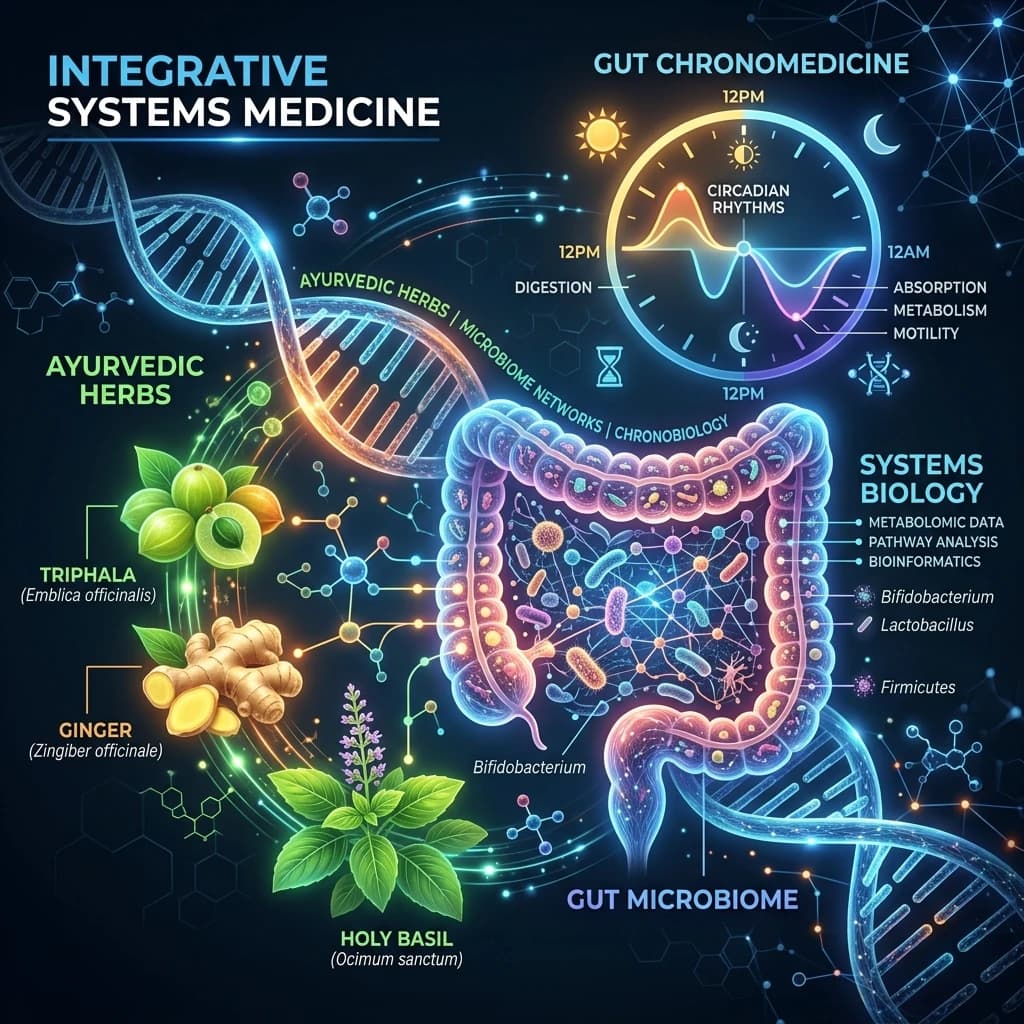
Ayurveda Meets Systems Biology: Agni, Chronomedicine, and Botanical Synergy in Modern Clinical Science
Ayurveda Meets Systems Biology: Agni, Chronomedicine, and Botanical Synergy in Modern Clinical Science The 2025–2026 wave of systems biology research has made an unambiguous statement: the three pilla…