Clinical Validation of Ayurveda: AIIMS Sarpagandha Hypertension Trial, Khadira for Psoriasis, and ICMR Kshara Sutra Success
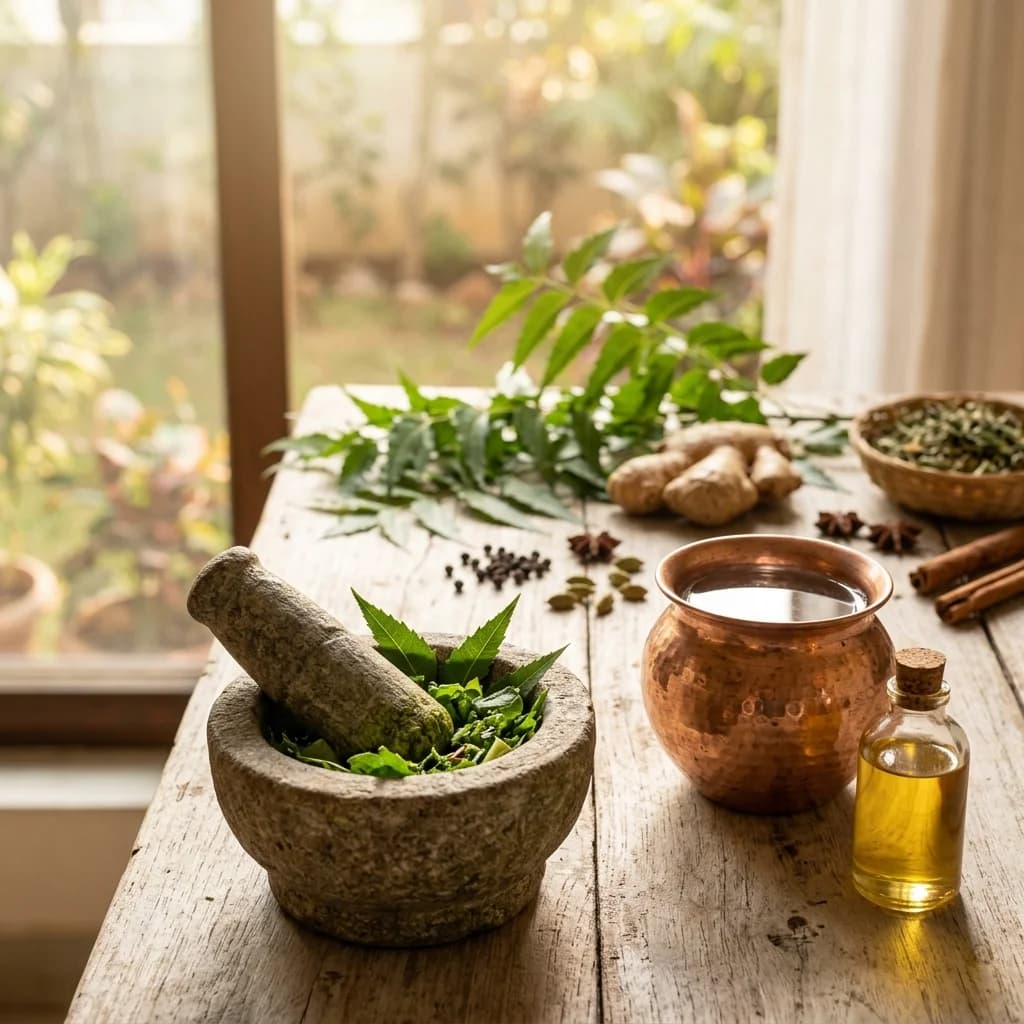
Clinical Validation of Ayurveda: AIIMS Sarpagandha Hypertension Trial, Khadira for Psoriasis, and ICMR Kshara Sutra Success
As modern healthcare increasingly transitions towards integrative, patient-centered models, clinical research plays an indispensable role in validating traditional medicine. The AYUSH systems, particularly Ayurveda, offer profound frameworks of personalized wellness that are now being scrutinized and substantiated through rigorous clinical trials and biochemical assays. This week, we explore three landmark clinical developments: the scientific validation of Sarpagandha (Rauwolfia serpentina) in a clinical trial at AIIMS New Delhi for Stage-I hypertension, the cellular and clinical evidence of Khadira (Acacia catechu) for chronic inflammatory skin conditions like psoriasis and eczema, and the gold-standard surgical validation of Kshara Sutra therapy by the Indian Council of Medical Research (ICMR) for fistula-in-ano.
🌿 Managing Hypertension: The AIIMS Clinical Trial on Sarpagandha (Rauwolfia serpentina)
Historically, Rauwolfia serpentina, known in Ayurveda as Sarpagandha (literally "snake root" due to its serpentine appearance), holds a legendary status in cardiovascular medicine. In traditional Ayurvedic pharmacology, Sarpagandha is described as having Tikta (bitter) Rasa (taste), Rooksha (dry) Guna (quality), Ushna (warm) Veerya (potency), and a Katu (pungent) Vipaka (post-digestive effect). It acts primarily by balancing Vata and Kapha doshas, targeting Vyana Vayu (the subtype of Vata regulating circulation and cardiac function) and Sadhaka Pitta (regulating emotional balance and heart health). For centuries, Ayurvedic practitioners have prescribed it to treat Rakta Vata or Vyana Bala Vaishamya (imbalances in circulating pressure and vascular tone), as well as sleep disturbances (Anidra) and mental agitation.
The global medical community was first introduced to Sarpagandha in the mid-20th century when researchers isolated the alkaloid reserpine, which became one of the first widely used natural antihypertensive agents in western medicine. Reserpine works by irreversibly binding to the vesicular monoamine transporter 2 (VMAT2), depleting catecholamines (like norepinephrine and dopamine) in the peripheral and central nervous systems. However, the use of isolated reserpine fell out of favor due to side effects, including severe depression and nasal congestion, which arose from stripping the alkaloid away from its natural matrix.
In recent years, interest has returned to the whole-herb synergy of Sarpagandha to provide a safer, more balanced therapy. A landmark prospective, randomized, double-blind, active-controlled clinical trial is being conducted at the All India Institute of Medical Sciences (AIIMS), New Delhi, comparing the safety and efficacy of Sarpagandha Mishran—a standardized Ayurvedic formulation containing Rauwolfia serpentina root powder—against Amlodipine, a standard calcium channel blocker, in patients with Stage-I essential hypertension. This study is designed to assess not only the reductions in systolic and diastolic blood pressure but also the secondary effects on lipid profiles, oxidative stress markers, and renal parameters. By utilizing the whole herb, the formulation retains other co-occurring alkaloids (like ajmaline and serpentine) that naturally buffer reserpine's effects, reducing the risk of depression and autonomic side effects. Smaller clinical studies have already demonstrated that Sarpagandha Ghan Vati, especially when integrated with Ayurvedic digestive and mild laxative therapies (Anuloman), produces sustained reductions in blood pressure and improvements in associated symptoms like headache, anxiety, and insomnia under medical supervision.
🍂 Skin Health and Immunomodulation: Khadira (Acacia catechu) for Psoriasis and Eczema
In the Ayurvedic treatment of dermatological disorders, collectively classified under the umbrella term Kustha, Khadira (Acacia catechu) stands as the premier Rakta-shodhaka (blood-purifying) and Twachya (skin-enhancing) herb. The heartwood of this medium-sized deciduous tree has been used for millennia to resolve chronic inflammatory skin conditions. Classic texts state that Khadira possesses Kashaya (astringent) and Tikta (bitter) Rasas, Sheeta (cool) Veerya, and Katu Vipaka. It targets the Pitta and Kapha doshas, which, when imbalanced, lead to the accumulation of metabolic waste (Ama) in the Rakta (blood) and Mamsa (muscle) tissues, manifesting as red, scaling, and itching skin lesions.
Modern dermatological science is validating Khadira's empirical efficacy by examining its rich phytochemical profile. The heartwood is exceptionally rich in polyphenols, including catechin, epicatechin, taxifolin, and condensed tannins. These compounds are powerful antioxidants that scavenge reactive oxygen species (ROS) which drive chronic skin inflammation.
In-vitro and preclinical models have revealed that extracts of Acacia catechu act as potent immunomodulators. They selectively inhibit pro-inflammatory cytokines such as Tumor Necrosis Factor-alpha (TNF-α), Interleukin-1 beta (IL-1β), and Interleukin-6 (IL-6), which are known to be overexpressed in the hyper-proliferative epidermal plaques of psoriasis and the eczematous lesions of dermatitis. Simultaneously, it upregulates anti-inflammatory cytokines like IL-10, promoting tissue healing. Clinical case studies and pilot trials of Ayurvedic formulations such as Khadirarishta and topical gels containing Acacia catechu and curcumin have demonstrated significant improvements in PASI (Psoriasis Area and Severity Index) scores, showing reductions in skin scaling (Matsyashakala), itching (Kandu), and erythema. While these preliminary findings are highly promising, researchers continue to advocate for large-scale, randomized controlled trials to fully standardize the extracts and establish definitive clinical protocols for human dermatological therapies.
🎗️ Gold-Standard Surgical Validation: ICMR Trials on Kshara Sutra for Fistula-in-Ano
One of the most remarkable achievements in the integration of traditional Indian medicine with modern clinical validation is the scientific endorsement of Kshara Sutra therapy. Kshara Sutra is a specialized Ayurvedic parasurgical technique first detailed by the ancient surgeon Sushruta in the Sushruta Samhita for the treatment of Bhagandara (fistula-in-ano). The procedure involves the application of a medicated thread coated with Snuhi Ksheera (latex of Euphorbia neriifolia), Apamarga Kshara (alkaline ash of Achyranthes aspera), and Haridra Churna (turmeric powder) to the fistulous tract. The thread acts as a chemical cutting and healing agent, gradually debriding and healing the tract from within.
Recognizing the potential of this outpatient procedure, the Indian Council of Medical Research (ICMR) conducted a landmark, multicentric, randomized controlled clinical trial across four premier medical institutions in India (including PGIMER Chandigarh and AIIMS New Delhi) to compare Kshara Sutra therapy with conventional surgical treatments (fistulectomy and fistulotomy).
The results of the ICMR trial were definitive and reshaped the clinical approach to fistula management. The trial demonstrated that Kshara Sutra therapy achieved complete healing in all patients, with a significantly lower long-term recurrence rate of 4%, compared to 11% in the conventional surgery group. While the median healing time was longer in the Kshara Sutra group (8 weeks versus 4 weeks for surgery), the Kshara Sutra procedure was performed entirely on an outpatient (ambulatory) basis, allowing patients to continue their daily activities without hospitalization, major anesthesia, or significant loss of workdays. Furthermore, complications such as anal incontinence were significantly lower in the Kshara Sutra cohort because the medicated thread cuts through the sphincters very slowly, allowing muscle fibers to heal and fibrose behind the thread, thereby preserving sphincter integrity. This landmark study established Kshara Sutra as a globally recognized, cost-effective, and minimally invasive gold standard for managing complex anal fistulas.
📌 The Bottom Line
- sarpagandha-hypertension-trial: The prospective clinical trial at AIIMS New Delhi highlights the efficacy of standardized Sarpagandha whole-herb formulations as a safe, balanced alternative to conventional medications for Stage-I essential hypertension.
- khadira-psoriasis-eczema: Preclinical and case studies demonstrate that Khadira (Acacia catechu) modulates key inflammatory cytokines (inhibiting TNF-α and boosting IL-10) to relieve symptoms of chronic psoriasis and eczema.
- kshara-sutra-fistula-therapy: Landmark ICMR multicenter trials validate Kshara Sutra medicated thread therapy as a highly effective, ambulatory outpatient treatment for fistula-in-ano, featuring a significantly lower recurrence rate (4%) than conventional surgery (11%).
Disclaimer: The information provided in this post is for educational and informational purposes only. It is not intended to be a substitute for professional medical advice, diagnosis, or treatment. Always seek the advice of your physician or other qualified health provider with any questions you may have regarding a medical condition.
Enjoyed this post?
Get our weekly digest delivered free.
Share this post:
Knowelth is reader-supported. We may earn a commission from links in this article at no extra cost to you. Read our disclosure.
Related Posts
Systems Biology, Circadian Dinacharya, and Gut-Agni Chrono-Nutrition: The Science Validating Ayurvedic Medicine
Systems Biology, Circadian Dinacharya, and Gut-Agni Chrono-Nutrition: The Science Validating Ayurvedic Medicine Modern healthcare is undergoing a paradigm shift from reductionist single-molecule thera…
Clinical Validation in Ayurveda: Cardiometabolic Formulations, Chrononutrition Agni Science, and Ayurgenomics in Ovarian Reserve
Clinical Validation in Ayurveda: Cardiometabolic Formulations, Chrononutrition Agni Science, and Ayurgenomics in Ovarian Reserve Traditional Indian medicine is undergoing a profound scientific renaiss…
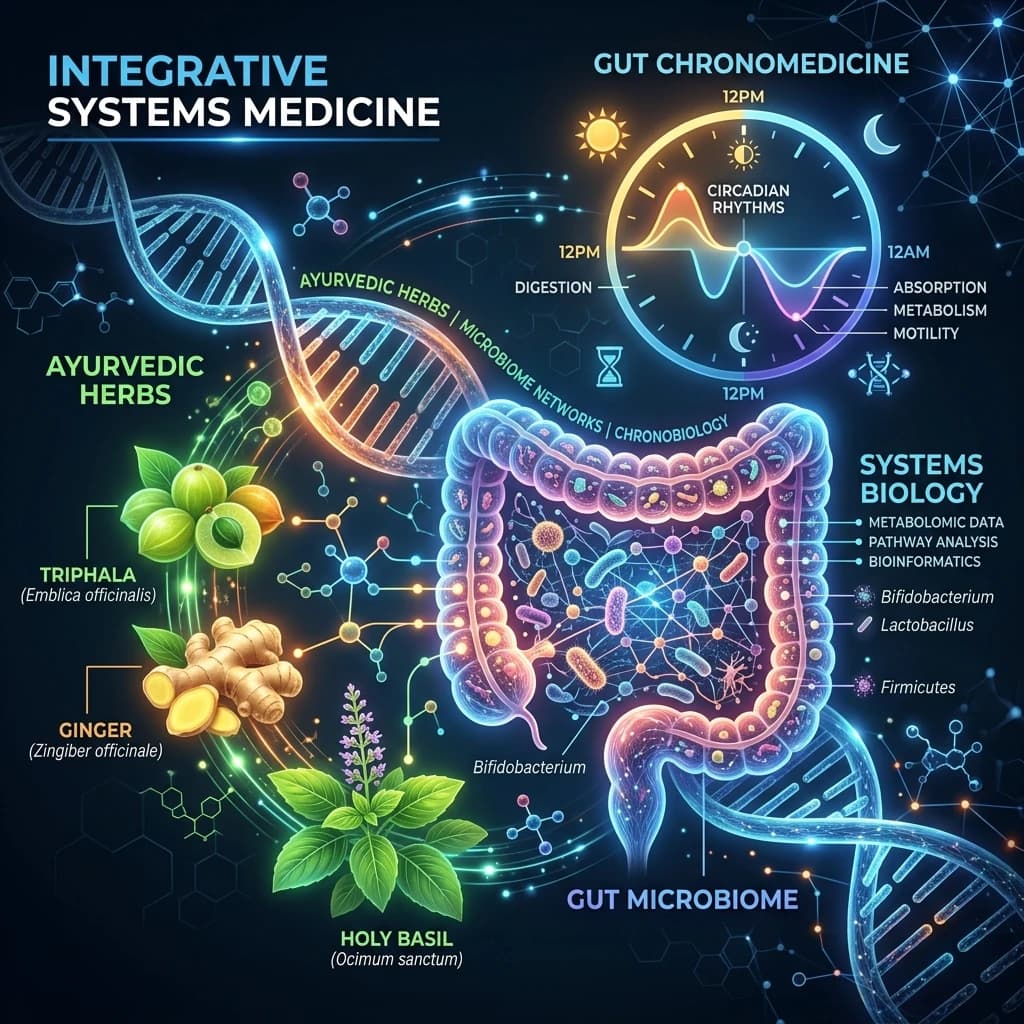
Ayurveda Meets Systems Biology: Agni, Chronomedicine, and Botanical Synergy in Modern Clinical Science
Ayurveda Meets Systems Biology: Agni, Chronomedicine, and Botanical Synergy in Modern Clinical Science The 2025–2026 wave of systems biology research has made an unambiguous statement: the three pilla…