The Maritime Imperium of Rajendra Chola I: How the Imperial Fleet Conquered the Waves and Rewrote Indian Ocean History
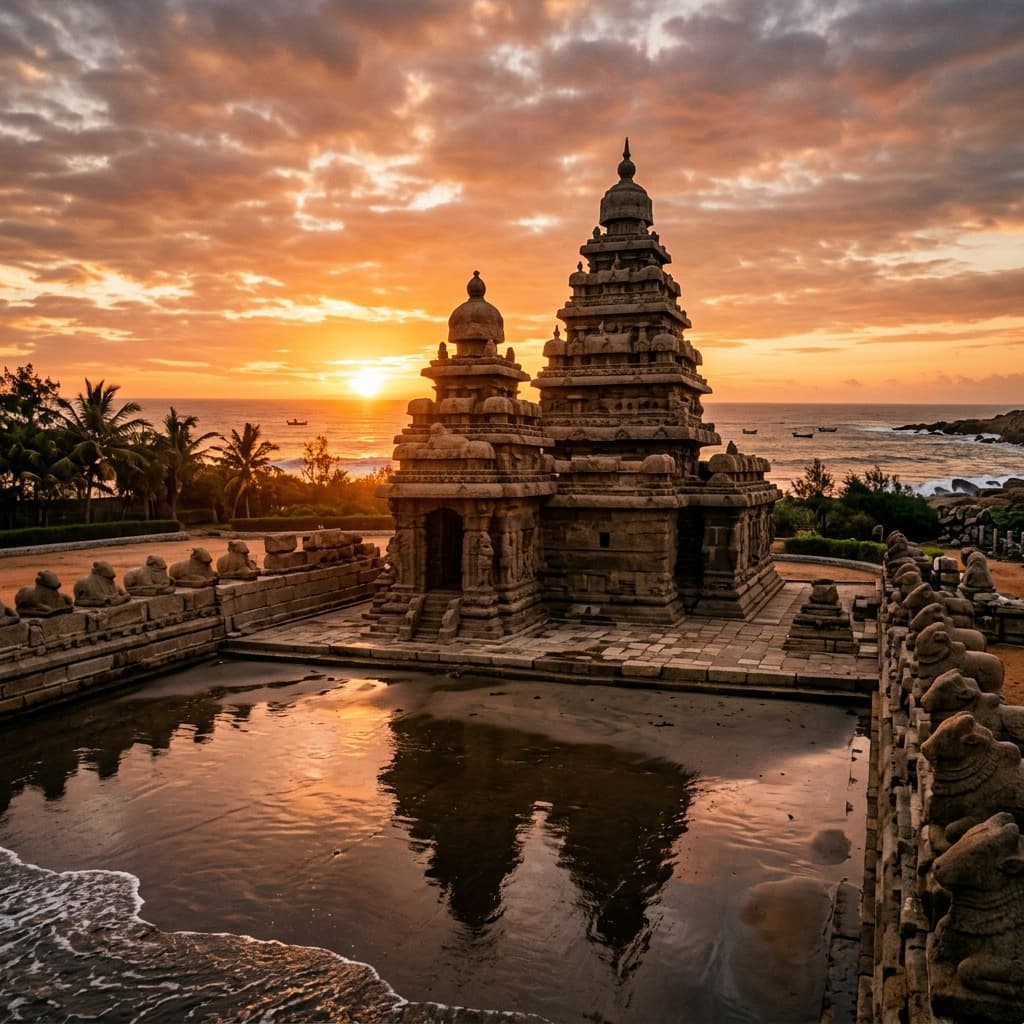
The Maritime Imperium of Rajendra Chola I: How the Imperial Fleet Conquered the Waves and Rewrote Indian Ocean History
In the spring of 1025 CE, an armada of war vessels assembled along the Coromandel coast of Southern India. Tall masts bristled with crimson banners bearing the leaping tiger emblem of the Chola Dynasty. Heavy teak hulls creaked against the tides of Nagapattinam as thousands of armor-clad marine infantry, naval commanders, and veteran sailors boarded their ships. At the helm of this maritime power stood Emperor Rajendra Chola I—a sovereign whose military genius and geopolitical vision were about to execute one of the most audacious naval campaigns in ancient and medieval world history.
Crossing more than 1,500 nautical miles of open sea across the Bay of Bengal—a body of water so completely dominated by Chola ships that contemporary chroniclers referred to it simply as the "Chola Lake"—the imperial fleet launched a surprise strike against the wealthy Srivijaya Empire in Southeast Asia. This was not a mere raiding expedition; it was a masterclass in strategic power projection, naval tactics, and economic statecraft that shattered a commercial monopoly, secured international trade routes, and permanently reshaped the cultural and economic landscape of Asia.
📜 The Historical Context
The Indian Ocean as the Medieval World's Economic Engine
During the eleventh century, the Indian Ocean was the beating heart of global commerce. Long before the rise of European maritime empires, an intricate web of trade routes connected the Song Dynasty in China, the Buddhist and Hindu kingdoms of Southeast Asia, the wealthy polities of the Indian subcontinent, the Abbasid Caliphate in Baghdad, and the Fatimid realm in Cairo. Ships laden with spices, aromatic woods, camphor, raw silk, fine porcelain, horses, ivory, and precious gems crisscrossed these waters, propelled by the predictable rhythm of the seasonal monsoon winds.
At the geographic center of this maritime superhighway lay two crucial geopolitical anchors: the Chola Empire along the southeastern coast of India and the Srivijaya Empire, a formidable thalassocracy centered on the island of Sumatra and controlling the Malay Peninsula.
+-----------------------------------------------------------------------------------+
|                        MEDIEVAL MARITIME SILK ROAD (c. 1000 CE)                   |
+-----------------------------------------------------------------------------------+
|  [ Abbasid Caliphate ] <---> [ Chola Empire ] <---> [ Srivijaya ] <---> [ Song China ]  |
|     (Arabian Sea)           (Coromandel Coast)     (Strait of Malacca)  (South China Sea) |
+-----------------------------------------------------------------------------------+
The Origins of Chola Naval Might
The foundations of Chola naval supremacy were laid by Rajendra’s illustrious father, Emperor Rajaraja Chola I (r. 985–1014 CE). Recognizing that landlocked conquests were insufficient to protect his realm's growing economic interests, Rajaraja built a standing permanent navy. He launched naval expeditions that annexed the Northern Crown of Sri Lanka (Ilam) and conquered the Maldives—an archipelago recorded in Tamil inscriptions as Mundhiradivu Pannaiyiram ("The Twelve Thousand Ancient Islands").
Rajaraja also famously destroyed the naval fleet of the Chera Kingdom at the battle of Kandalur Salai (Kandalur Salai Kalamarutharuli), establishing the Coromandel coast as an unassailable maritime fortress. When Rajendra Chola I ascended the throne in 1014 CE, he inherited not only a prosperous empire and a formidable land army but also the most technologically advanced and highly disciplined navy in Asia.
The Choke Point Conflict: Srivijaya's Monopoly
Srivijaya held a strategic stranglehold over the two primary maritime gateways connecting the Indian Ocean to the South China Sea: the Strait of Malacca and the Sunda Strait. Every merchant vessel traveling between China, India, and the Middle East had to pass through these narrow waterways.
For centuries, relations between the Cholas and Srivijaya were warm and collaborative. In 1006 CE, the Srivijayan King Mara Vijayatunggavarman built the Chudamani Vihara, a magnificent Buddhist monastery at Nagapattinam, supported by land grants from Rajaraja Chola. However, as the 11th century progressed, economic friction began to escalate dramatically.
Seeking to maximize its revenue, Srivijaya began enforcing predatory tariffs, confiscating foreign merchant cargoes, and demanding heavy tribute from ships anchoring in its harbors. Tamil merchant guilds—most notably the powerful Ayyavole 500 (Ainurruvar), the Manigramam, and the Anjuvannam—found their lucrative Asian trade routes imperiled. Furthermore, Srivijaya attempted to block direct diplomatic and commercial missions sent by Rajendra Chola to the Song court in China.
Faced with an existential threat to his empire’s commercial prosperity and maritime honor, Rajendra Chola I decided that diplomatic appeals were no longer enough. The waves would decide the fate of Asian trade.
🏛️ Key Historical Events & Figures
                     +----------------------------------------+
                     |         RAJENDRA CHOLA I               |
                     |  "Gangaikonda Chola" (r. 1014-1044 CE)  |
                     +-------------------+--------------------+
                                         |
                                         v
        +--------------------------------+--------------------------------+
        |                                                                 |
        v                                                                 v
+-------------------------------+                       +-------------------------------+
|     NAVAL INFRASTRUCTURE      |                       |    THE GREAT EXPEDITION       |
| • Shipyards: Nagapattinam     |                       | • Target: Srivijaya & Kedah   |
| • Fleet: Kalam & Pataavu      |                       | • Strategy: Diversion & Strike|
| • Guilds: Ayyavole & Manigramam|                      | • Date: 1025 CE (14 Ports)    |
+-------------------------------+                       +-------------------------------+
The Strategic Genius: Emperor Rajendra Chola I
Rajendra Chola I was a military monarch of unprecedented scope. Known by titles such as Gangaikonda Chola ("The Chola who took the Ganges") after his victorious land campaign to Northern India, his vision extended far beyond land borders. He understood that maritime trade was the lifeblood of state revenues. Rather than maintaining a purely defensive coastguard, Rajendra transformed the Chola fleet into an expeditionary force capable of conducting blue-water naval operations across thousands of miles of ocean.
Ship Architecture & Naval Organization
The Chola naval machine relied on sophisticated maritime engineering and rigorous organizational structures:
- Vessel Types: The fleet utilized heavy ocean-going warships called Kalam or Marakalam, constructed from durable teak wood fastened with iron rivets and waterproofed with vegetable resins and bitumen. Lighter, faster maneuver vessels such as Odam, Pataavu, and multi-rowed assault galleys provided tactical versatility.
- Naval Bases & Shipyards: Major naval shipyards operated along the Tamil coastline at Nagapattinam, Kaveripattinam (Poompuhar), Arikamedu, and Vizhinjam. These ports were equipped with dry docks, timber yards, rope-making workshops, and armories.
- Command Hierarchy: The navy was led by high-ranking naval commanders designated as Navigadhyaksha or Samudradhipathi. Marine shock troops (Velaikkarar and Kaikkolar) were specially trained for ship-to-ship boarding actions, amphibious landings, and beachhead assault operations.
- Monsoon Navigation: Chola navigators (Naluvaigalar) possessed detailed knowledge of celestial navigation, oceanic currents, and the precise timing of the monsoon winds. They timed their eastward crossing with the Southwest monsoon in late spring, ensuring rapid transit across the Bay of Bengal.
The Great Srivijaya Campaign of 1025 CE
The invasion of Srivijaya in 1025 CE stands as a masterpiece of naval warfare, marked by tactical surprise, deception, and overwhelming speed.
1. The Diversionary Strike
To draw Srivijaya’s defensive fleet away from its central stronghold, Rajendra dispatched a secondary naval squadron toward the northern Malay Peninsula. This squadron engaged and harassed Srivijayan vassal ports near Takuapa and Kedah (Kadaram), leading the Srivijayan high command to believe that the primary attack was aimed at the northern entrance of the Malacca Strait.
2. The Main Southern Assault
While Srivijaya shifted its forces north, Rajendra’s main battle fleet sailed far out into the open waters of the Indian Ocean, bypassing the northern defenses entirely. Sweeping up from the south through the Sunda Strait, the Chola armada struck directly at the heart of the empire: the capital city of Palembang in eastern Sumatra.
The strike was total and unexpected. The Chola war-kalam sailed up the Musi River, dropping anchor right before the royal palace. In a fiercely fought battle, Chola marine infantry stormed the city, capturing the ruling monarch, King Sangrama Vijayatunggavarman. The imperial palace was looted of its immense riches, including the sacred Vidyadhara Torana—the jewel-encrusted ceremonial gate of Srivijaya—and the royal elephant throne.
       BAY OF BENGAL ("Chola Lake")
  Nagapattinam -------------------------> Andaman & Nicobar
       |                                       |
       | (Primary Fleet Route)                 v
       v                               Takuapa / Kedah (Diversion)
  Sunda Strait                                 |
       |                                       v
       +-----------------------------> Palembang (Surprise Attack)
                                               |
                                               v
                                     14 Ports Liberated
3. The 14-Port Sweep of the Malacca Strait
With Palembang secured and its king captured, Rajendra’s fleet did not pause. In a rapid, multi-pronged campaign, the Chola navy systematically reduced and occupied fourteen key port cities and vassal kingdoms throughout Sumatra, the Malay Peninsula, and neighboring islands:
- Palembang (Sri Visai): The capital and primary treasury of Srivijaya.
- Pannai: Located on the eastern coast of Sumatra, famed for its inland water routes.
- Malaiyur: A powerful kingdom centered around Jambi in Sumatra.
- Mayirudingam: Strategic port on the Malay Peninsula.
- Ilangasogam (Langkasuka): Ancient Hindu-Buddhist kingdom in northern Malaya.
- Mappappalam: Coastal fortress controlling vital freshwater stations.
- Talaittakkolam (Takua Pa): Major tin-mining and trading emporium in modern Southern Thailand.
- Nakkavaram (Nicobar Islands): The crucial island refueling base in the Bay of Bengal.
- Kadaram (Kedah): The formidable northern fortress guarding the entrance to the Malacca Strait.
At Kedah, Srivijaya made a desperate last stand. The Chola inscriptions record that the fortress of Kadaram was protected by high walls and deep moats, yet it fell after an intense amphibious siege. Rajendra’s forces broke the defensive chains guarding the harbor, burned the enemy naval docks, and established total Chola control over both ends of the Malacca Strait.
Epigraphical Evidence: Copper Plates and Temple Walls
Our knowledge of this extraordinary naval campaign does not rest on folklore or legend; it is anchored in precise epigraphical records carved into copper plates and temple walls during Rajendra's reign.
The Thiruvalangadu Copper Plates
Discovered in Tamil Nadu, these 31 massive copper plates held together by a royal seal contain bilingual inscriptions in Sanskrit and Tamil. The Sanskrit section glorifies Rajendra’s maritime triumph:
"Having vanquished the King of Kattam with his fleet of ships in the middle of the sea, he captured the king together with his family and took away his immense wealth..."
The Tanjore Inscriptions
On the stone walls of the magnificent Brihadeeswarar Temple in Thanjavur, Rajendra caused an official prasasti (eulogy) to be etched. It provides a detailed geographic itinerary of the expedition:
"Who, having dispatched many ships in the midst of the rolling sea and having caught Sangrama-Vijayottungavarman, the King of Kadaram, took his fiery elephants, his jeweled gate, and the vast treasures... who took Sri Visai, Pannai, Malaiyur, Mayirudingam, Ilangasogam, Mappappalam, Talaittakkolam, Nakkavaram, and Kadaram of fierce strength..."
💡 The Lasting Legacy & Impact
A Thalassocracy Built for Trade, Not Annexation
Unlike European colonial powers of later centuries, Rajendra Chola I had no desire to occupy Southeast Asia permanently or enforce territorial governance over millions of foreign subjects. The Chola strategy was one of hegemonic economic deterrence.
Once Srivijaya’s military capacity was shattered and its rulers agreed to lower tariffs and respect Tamil trade rights, Rajendra restored a prince of the defeated dynasty to the throne of Srivijaya as a tributary vassal. The Chola navy withdrew its main battle fleet back to India, leaving behind only small naval garrisons and merchant consulates at key ports like Kedah and Kota Cina.
+-----------------------------------------------------------------------------------+
|                           IMPACT OF THE CHOLA NAVAL VICTORY                       |
+-----------------------------------------------------------------------------------+
| 1. DISSOLUTION OF MONOPOLY : Unrestricted trade across Malacca & Sunda Straits.   |
| 2. GUILD EXPANSION         : Ayyavole 500 established posts in Sumatra & China.   |
| 3. CULTURAL SYNTHESIS      : Deep diffusion of Tamil art, inscriptions & ritual.   |
| 4. BLUE-WATER DOCTRINE     : Demonstrated joint state-merchant maritime power.   |
+-----------------------------------------------------------------------------------+
The Golden Age of Merchant Guilds
The primary beneficiaries of the naval war were the Tamil merchant guilds. With maritime choke points cleared of hostile blockades, the Ayyavole 500 expanded their operations across the entire Indo-Pacific region.
Epigraphical discoveries across Southeast Asia provide vivid testimony to this economic boom:
- The Lobe Tuwa Inscription (1088 CE): Found in Kota Cina, Sumatra, this Tamil inscription records the presence and charitable donations of the Ainurruvar (Ayyavole) merchant guild operating in Indonesia decades after Rajendra's expedition.
- Guangzhou & Quanzhou Tamil Inscriptions: In Southern China, Tamil merchants built Hindu temples dedicated to Shiva and Vishnu, supported by trade charters granted by both the Song emperors and Chola monarchs.
Cultural and Architectural Diffusion
The maritime channels secured by the Chola Navy facilitated an unprecedented exchange of culture, language, religion, and art between Southern India and Southeast Asia.
- Linguistic & Literary Impact: Tamil terms for maritime trade, ship design, and commodities entered the Malay and Old Javanese languages.
- Architectural Parallels: The structural layout, bronze casting techniques, and stone carving aesthetics seen in classical Indonesian temples (such as Candi Prambanan and temple sites in Kedah) display unmistakable stylistic influences from contemporary Chola art.
- Religious Traditions: Saivism and Vaishnavism flourished alongside Mahayana Buddhism throughout the Malay Archipelago, establishing a shared cultural vocabulary that endured for centuries.
Historical Lessons in Strategic Maritime Power
The Chola naval imperium offers profound lessons for modern naval history and geopolitics:
- Choke-Point Security: Rajendra Chola understood that controlling critical oceanic narrows (the Strait of Malacca) is far more decisive than holding vast land masses.
- Joint Merchant-State Partnership: The Chola state did not treat commerce as separate from national security; the military navy existed explicitly to protect merchant guilds, while guild wealth financed the construction of warships.
- Blue-Water Projection: By conducting operations 1,500 miles away from home ports, the Cholas proved that medieval Asian powers possessed blue-water naval capabilities matching or exceeding any contemporary global power.
📚 Recommended Books & Resources
To dive deeper into the maritime history, naval architecture, and geopolitical legacy of the Chola Empire, consider exploring the following essential works:
Essential Reading
- "The Colas" by K.A. Nilakanta Sastri
The definitive masterwork on Chola history. Sastri's monumental study provides rigorous epigraphical analyses, administrative breakdowns, and detailed chronicles of Rajaraja I and Rajendra Chola I. - "Nagapattinam to Suvarnadwipa: Reflections on the Chola Naval Expeditions" by Hermann Kulke, K. Kesavapany, and Vijay Sakhuja (Eds.)
An outstanding collection of scholarly essays examining the 1025 CE expedition from Indian, Southeast Asian, and Chinese perspectives, featuring detailed naval tactical analysis. - "The Ocean of Churn: How the Indian Ocean Shaped Human History" by Sanjeev Sanyal
A vivid, highly accessible narrative history detailing how mariners, merchants, and kings—including the Cholas—built the trade networks of the Indian Ocean rim. - "A History of Early Southeast Asia: Maritime Trade and Cultural Development" by Kenneth R. Hall
Explores the economic interdependence between South Asian merchant guilds and Southeast Asian polities during the classical and medieval eras.
Online Courses & Digital Archives
- Coursera / University of Pennsylvania: Ancient & Medieval Maritime History of Asia — Courses covering oceanic trade routes, ship architecture, and regional diplomacy.
- EPIGRAPHIA INDICA Online Archive: Digital access to translated inscriptions, including the Thiruvalangadu plates and Tanjore temple prasastis.
- MakeMyTrip Cultural Heritage Trails: Explore historical travel packages visiting the UNESCO World Heritage Great Living Chola Temples at Thanjavur, Gangaikondacholapuram, and Darasuram, alongside the ancient port city of Nagapattinam.
Published by the History Archivist Team under history-daily scheduler.
Enjoyed this post?
Get our weekly digest delivered free.
Share this post:
Knowelth is reader-supported. We may earn a commission from links in this article at no extra cost to you. Read our disclosure.
Related Posts
The Battle of Diu (1509) & The Portuguese Cartaz System: The Naval Artillery Revolution in the Indian Ocean
The Battle of Diu (1509) & The Portuguese Cartaz System: The Naval Artillery Revolution in the Indian Ocean Last updated: August 17, 2026 | 13-minute read Executive Summary: Fought on February 3, 1509…
Shipbuilding Traditions of Ancient India: Naval Architecture in King Bhoja's 'Yukti Kalpataru' & The Stitched-Plank Revolution
Shipbuilding Traditions of Ancient India: Naval Architecture in King Bhoja's 'Yukti Kalpataru' & The Stitched-Plank Revolution Last updated: August 15, 2026 | 13-minute read Executive Summary: While m…
Satavahana Naval Dominance: Lead Ship-Coins of Yajna Sri Satakarni, Coromandel Ports & Deccan Greco-Roman Commerce
Satavahana Naval Dominance: Lead Ship-Coins of Yajna Sri Satakarni, Coromandel Ports & Deccan Greco-Roman Commerce Last updated: August 13, 2026 | 13-minute read Executive Summary: Reigning over the D…