Tamralipti Port (Tamluk): Ancient Bengal's Maritime Silk Road, Buddhist Monastic Voyages & Southeast Asian Commerce
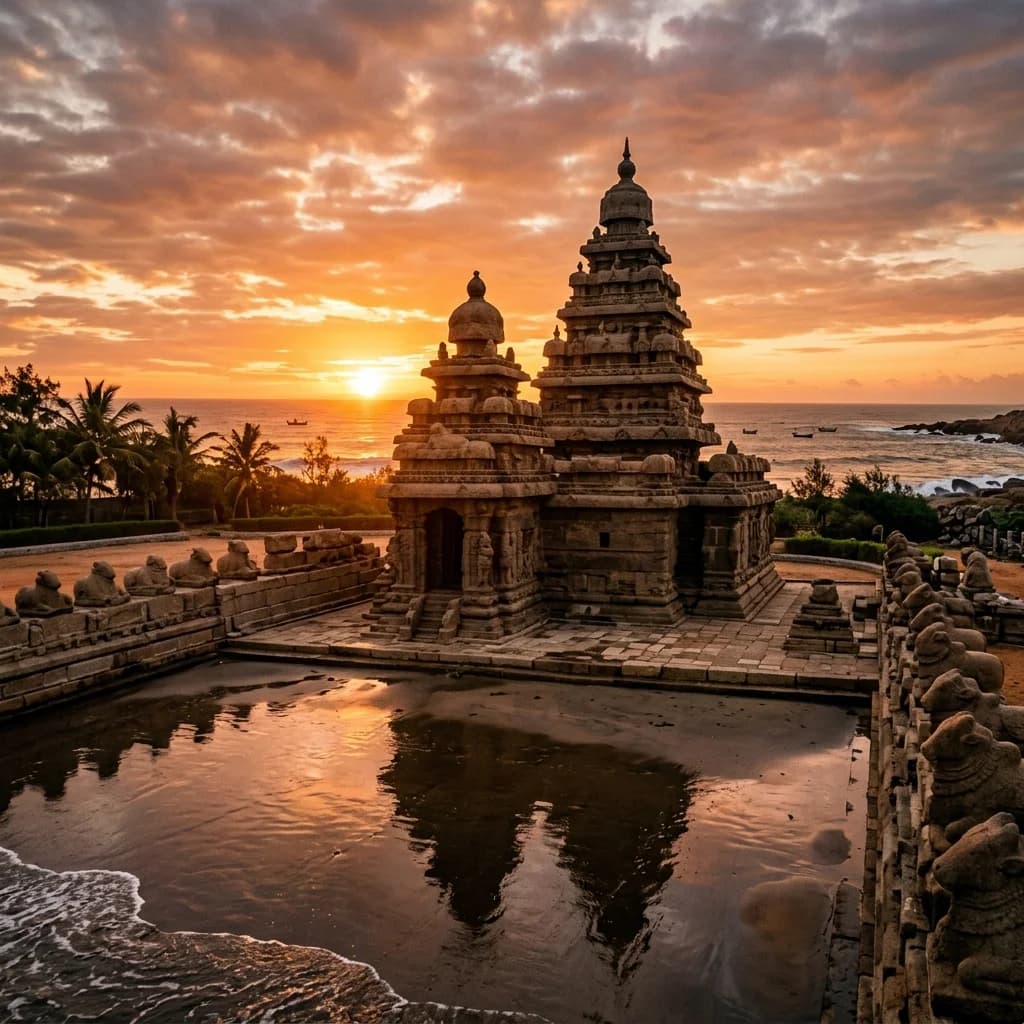
Tamralipti Port (Tamluk): Ancient Bengal's Maritime Silk Road, Buddhist Monastic Voyages & Southeast Asian Commerce
Last updated: August 10, 2026 | 13-minute read
Executive Summary: Situated at the mouth of the Rupnarayan River in the Gangetic delta of modern West Bengal, Tamralipti (modern Tamluk - flourished circa 3rd century BCE to 8th century CE) was the paramount eastern maritime gateway of the Indian subcontinent. Mentioned in the Mahabharata, Ptolemy’s Geographia, and the travelogues of Chinese pilgrim-monks Fa-Hien, Xuanzang, and Yijing, Tamralipti functioned as the vital oceanic terminus where the overland Silk Road merged with the Maritime Silk Road. Massive ocean-going vessels (Mahānāvas) carrying hundreds of passengers departed Tamralipti for Simhala (Sri Lanka), Suvarnabhumi (Southeast Asia), and Guangzhou (China), exporting fine Gangetic muslins, copper ingots, indigo, and Buddhist philosophical manuscripts across Asia.
+---------------------------------------------------------------------------------------------------+
|                        TAMRALIPTI MARITIME & RIVERINE CONVERGENCE ENGINE                          |
+---------------------------------------------------------------------------------------------------+
                                                  │
         ┌────────────────────────────────────────┼────────────────────────────────────────┐
         ▼                                        ▼                                        ▼
+──────────────────────────+             +──────────────────────────+             +──────────────────────────+
| GANGETIC INLAND FLOTILLA |             | TAMRALIPTI ESTUARY DOCK  |             | OPEN BAY OF BENGAL VOYAGE|
| • Pataliputra / Varanasi |             | • Deep-Water Tidal Quay  |             | • Sri Lanka (Simhala)    |
| • Muslin & Silk Barges   |             | • Copper Smelting Works  |             | • Strait of Malacca      |
| • Nalanda Sacred Texts   |             | • Buddhist Viharas (20+) |             | • Srivijaya / Guangzhou  |
+──────────────────────────+             +──────────────────────────+             +──────────────────────────+
         │                                        │                                        │
         └────────────────────────────────────────┼────────────────────────────────────────┘
                                                  ▼
+---------------------------------------------------------------------------------------------------+
| SYNTHESIS: Transcontinental Cultural & Mercantile Bridge Linking North India to China & Java      |
+---------------------------------------------------------------------------------------------------+
📜 1. The Historical Chronicles: Fa-Hien and Yijing
Chinese pilgrim accounts provide eyewitness descriptions of Tamralipti's maritime grandeur:
- Fa-Hien (circa 411–413 CE): Stayed in Tamralipti for two years at one of its 22 grand Buddhist monasteries, copying sutras and painting holy images. He boarded a large merchant ship (Mahānāva) carrying over 200 passengers and crew, sailing directly from Tamralipti to Sri Lanka in just 14 days during the winter Northeast Monsoon.
- Yijing (I-Tsing, 673 CE): Arrived at Tamralipti from Sumatra aboard a Persian merchant vessel, describing Tamralipti as a bustling cosmopolitan port where Chinese, Indian, Persian, and Southeast Asian languages were spoken simultaneously in the marketplace.
+---------------------------------------------------------------------------------------------------+
|                           FA-HIEN'S 413 CE TRANS-OCEANIC PASSAGE                                  |
+---------------------------------------------------------------------------------------------------+
 Departure: Port of Tamralipti (Winter NE Monsoon)
                 │
                 ▼ (14-Day Open Sea Transit across Bay of Bengal)
 Simhala / Sri Lanka (Abhayagiri Vihara Monastery)
                 │
                 ▼ (Eastward Oceanic Transit)
 Suvarnadvipa / Sumatra (Srivijaya Buddhist Academy)
                 │
                 ▼
 [Guangzhou / Shandong Peninsula (Arrival in China with 100+ Sacred Sanskrit Buddhist Texts!)] 🏆
+---------------------------------------------------------------------------------------------------+
🏺 2. Archaeological Excavations & Terracotta Masterpieces
Excavations at Tamluk conducted by the Archaeological Survey of India (ASI) revealed continuous cultural strata from the Maurya and Sunga eras through the Gupta and Pala periods:
+---------------------------------------------------------------------------------------------------+
|                         TAMRALIPTI / TAMLUK EXCAVATED ARCHEOLOGICAL ARTIFACTS                     |
+---------------------------------------------------------------------------------------------------+
| Excavated Artifact Class     | Provenance / Era                   | Historical Proof & Significance|
+------------------------------+------------------------------------+-------------------------------+
| **The Oxford "Tamluk Yakshi"**| Sunga Period (2nd Century BCE)     | Exquisite moulded terracotta  |
| (Ashmolean Museum Masterpiece)| Rich jewelry & floral motifs       | depicting elite mercantile art|
| **Roman Rouletted Pottery**  | 1st to 2nd Century CE              | Proof of direct trade with    |
|                              | Mediterranean Black-Slipped Ware   | Roman Empire via Red Sea      |
| **Cast Copper Punch-Coins**  | Maurya & Gupta Coinage             | High-density monetary economy |
|                              | (Ship emblems & crescent marks)    | backing port merchant guilds  |
| **Buddhist Votive Plaques**  | Gupta / Post-Gupta Era             | Depicting Bodhisattva Avalokit|
|                              | Inscribed in Sanskrit Brahmi script| as protector of storm mariners|
| **Copper Smelting Slag**     | Copper ingots (*Tamra*)            | Etymological root of port name|
|                              | Smelted from Singhbhum mines       | (*Tamralipta* = "Smear of Cu")|
+------------------------------+------------------------------------+-------------------------------+
🚢 3. Riverine to Maritime Transshipment Hub
The unique economic advantage of Tamralipti lay in its location at the junction of the Ganges riverine highway and the Bay of Bengal open sea:
- Heavy bulk cargoes from the Gangetic plain (wheat, rice, timber, and copper from Chota Nagpur) were transported downriver on flat-bottomed river barges (Panchis).
- At Tamralipti's protected tidal docks, these goods were transshipped onto keeled, sea-going Mahānāvas built with sal and teak timbers, capable of enduring the fierce typhoons and monsoon gales of the open ocean.
📌 The Bottom Line & Historical Significance
+---------------------------------------------------------------------------------------------------+
|                              TOPIC SLUG ALIGNED ACTIONABLE TAKEAWAYS                              |
+--------------------------------------+------------------------------------------------------------+
| tamralipti-ancient-bengal-port       | Eastern naval gateway connecting the Ganges to the ocean.  |
| maritime-silk-road-bay-of-bengal     | The convergence point of overland and maritime Silk Roads. |
| buddhist-monastic-voyages-fa-hien    | Fa-Hien's 14-day passage to Sri Lanka proves sea speed.    |
| ganga-delta-shipbuilding-riverine    | Indigenous sal-timber naval architecture resisted shipworms|
| suvarnadvipa-sri-lanka-trade-links   | Primary conduit for transmitting Nalanda scholarship east. |
+---------------------------------------------------------------------------------------------------+
📫 Subscribe to Indian Maritime History & Archaeology Insights
Get peer-reviewed archaeological excavation reports, ancient naval warfare deep-dives, and maritime heritage monographs delivered to your inbox weekly.
Enjoyed this post?
Get our weekly digest delivered free.
Share this post:
Knowelth is reader-supported. We may earn a commission from links in this article at no extra cost to you. Read our disclosure.
Related Posts
The Battle of Diu (1509) & The Portuguese Cartaz System: The Naval Artillery Revolution in the Indian Ocean
The Battle of Diu (1509) & The Portuguese Cartaz System: The Naval Artillery Revolution in the Indian Ocean Last updated: August 17, 2026 | 13-minute read Executive Summary: Fought on February 3, 1509…
Shipbuilding Traditions of Ancient India: Naval Architecture in King Bhoja's 'Yukti Kalpataru' & The Stitched-Plank Revolution
Shipbuilding Traditions of Ancient India: Naval Architecture in King Bhoja's 'Yukti Kalpataru' & The Stitched-Plank Revolution Last updated: August 15, 2026 | 13-minute read Executive Summary: While m…
Satavahana Naval Dominance: Lead Ship-Coins of Yajna Sri Satakarni, Coromandel Ports & Deccan Greco-Roman Commerce
Satavahana Naval Dominance: Lead Ship-Coins of Yajna Sri Satakarni, Coromandel Ports & Deccan Greco-Roman Commerce Last updated: August 13, 2026 | 13-minute read Executive Summary: Reigning over the D…