Symphonies in Stone: The Bhumija Spire of Sinnar, the Stellate Hoysala Masterpiece of Amruthapura, and the Himalayan Sun Sanctuary of Katarmal
Symphonies in Stone: The Bhumija Spire of Sinnar, the Stellate Hoysala Masterpiece of Amruthapura, and the Himalayan Sun Sanctuary of Katarmal
Across the diverse geography of the Indian subcontinent, ancient and medieval temple architectures serve as monumental treatises on geometry, geology, and spiritual cosmology. Far from being passive structures of worship, these stone complexes reflect the highly sophisticated engineering capabilities and dynamic dynastic ambitions of their builders. By examining the black basalt Bhumija spire of the Gondeshwar Temple in Maharashtra, the soapstone stellate masterpiece of the Amrutesvara Temple in Karnataka, and the high-altitude wooden and stone sun sanctuary of Katarmal in Uttarakhand, we witness the diverse regional traditions that pushed the boundaries of ancient masonry and sacred design.
🏛️ The Basalt Panchayatana: Gondeshwar Temple of Sinnar
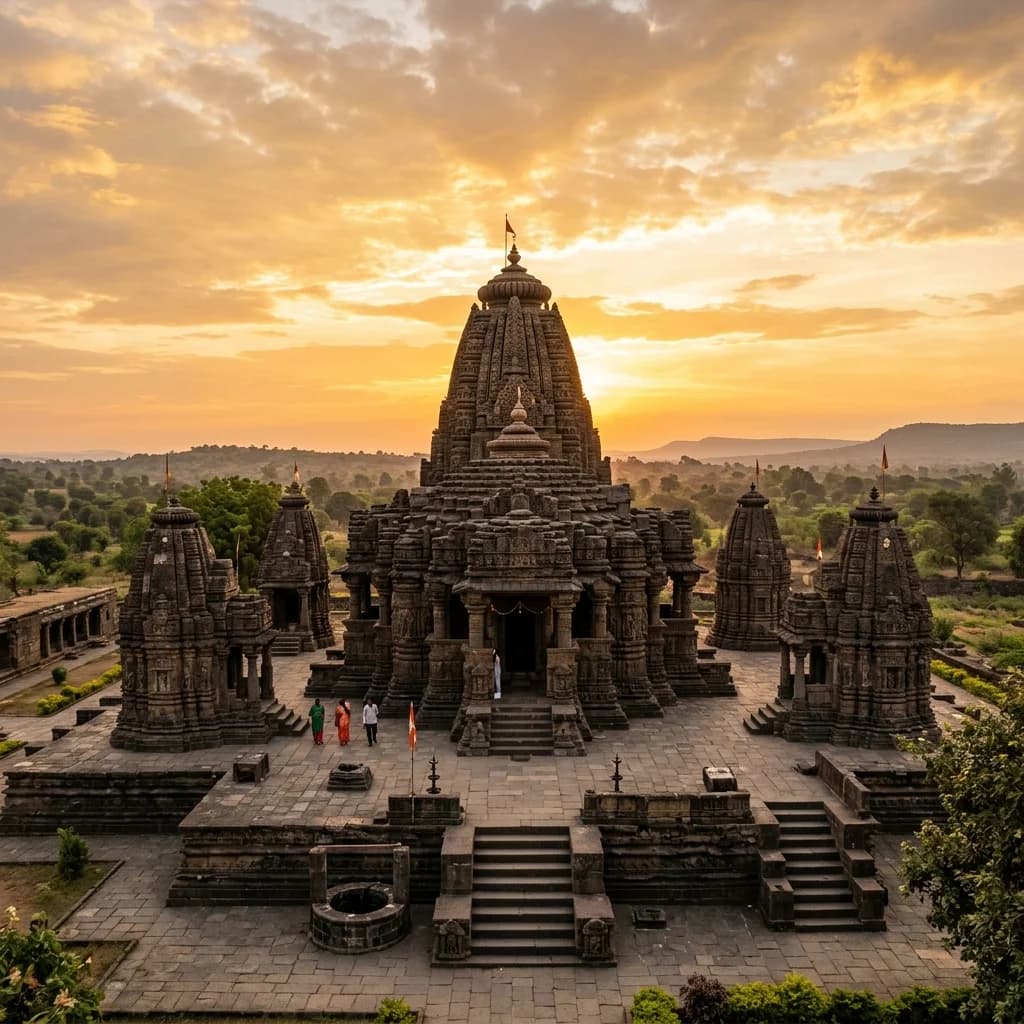
Located in the Sinnar taluka of Nashik district, Maharashtra, the Gondeshwar Temple is the most complete and spectacular surviving example of Hemadpanthi architecture, a regional variation of the Nagara style. Constructed during the 11th and 12th centuries CE under the patronage of the Yadava dynasty of Devagiri, this temple is built entirely of local black basalt. The selection of basalt, an extremely hard and dense volcanic rock, speaks to the geological mastery of the medieval stone carvers, who devised tools and techniques capable of shaping this stubborn material into highly refined, intricate forms.
The layout of the Gondeshwar Temple follows a strict panchayatana (five-shrine) plan, which stands on a grand raised rectangular platform (jagati). The central shrine, dedicated to Lord Shiva, is positioned at the heart of the complex and is surrounded by four smaller, subsidiary shrines dedicated to Surya (the Sun God), Vishnu, Parvati, and Ganesha. This arrangement represents a microcosm of the Hindu cosmos, balancing the different devotional streams within a unified architectural framework. The central Shiva temple features a pillared assembly hall (mandapa) with three entrance porticoes, leading to the inner sanctum (garbhagriha).
Architecturally, Gondeshwar is celebrated for its Bhumija shikhara (spire), a major sub-style of Nagara architecture. Unlike the smooth curvilinear Latina towers, the Bhumija spire is composed of miniature vertical rows of small towers (kutas or shringas) rising along the corners, intersected by horizontal tiers of miniature shrines. This creates a highly complex, textured surface that plays with light and shadow throughout the day. The crown of the spire features a massive, ribbed stone disc (amalaka) topped by a vase-shaped finial (kalasha), symbolizing the axis mundi. The interior of the mandapa features a magnificent dome-like ceiling supported by four central pillars carved with detailed bands of musicians, foliage, and geometric patterns.
🗿 The Stellate Soapstone Masterpiece: Amrutesvara Temple of Amruthapura
Deeper south in the Tarikere taluk of Chikmagalur district, Karnataka, lies the Amrutesvara Temple, a testament to the artistic heights achieved by the Hoysala Empire. Commissioned in 1196 CE by Amrutheshwara Dandanayaka, a commander under the Hoysala King Veera Ballala II, the temple is dedicated to Lord Shiva. Constructed using chloritic schist—commonly known as soapstone—this temple represents the classic transition from the earlier Western Chalukya traditions to the fully realized, hyper-ornate Hoysala style. The soft nature of freshly quarried soapstone allowed sculptors to execute carvings of near-microscopic precision, which hardened over time into durable stone monuments.
The temple is designed around a stellate (star-shaped) plan, a hallmark of Hoysala genius. The outer wall of the sanctum and the closed mandapa are designed with a series of projections and recesses, creating a zigzag profile that maximizes the surface area available for sculpture. The temple rises from a low, wide raised platform (jagati) that mirrors the star-like contours of the main structure. Unlike many other Hoysala temples, the Amrutesvara Temple retains its original, highly ornamented curvilinear tower (vimana), which features carvings of miniature shrines, floral scrolls, and the Hoysala emblem depicting Sala slaying the mythical tiger.
The most extraordinary feature of Amruthapura is its open assembly hall (ranga-mandapa), which consists of 29 distinct bays. The ceiling of each bay is decorated with a unique, deeply carved dome-like panel (bhuvaneshwari) featuring concentric rings, hanging buds, and miniature figures representing the guardians of the eight directions (Ashta-dikpalas). The outer balustrade of this mandapa features 140 relief panels that depict scenes from the Hindu epics, including the Ramayana, the Mahabharata, and the Bhagavata Purana. These reliefs are arranged in a continuous, chronological narrative sequence that reads from left to right, serving as a visual lithic library for medieval devotees.
In addition to the narrative reliefs, the temple is renowned for its lathe-turned pillars. These pillars, common in Hoysala structures, were fashioned by mounting large soapstone blocks on horizontal shafts and rotating them against metal chisels. This process yielded perfectly smooth, bell-shaped profiles that gleam like polished metal. Near the entrance stands a large Kannada inscription slab, a piece of epigraphical art in its own right, detailing the grants, the builder's lineage, and the poetry of the medieval scribe Janna, one of Kannada literature’s greatest classical poets.
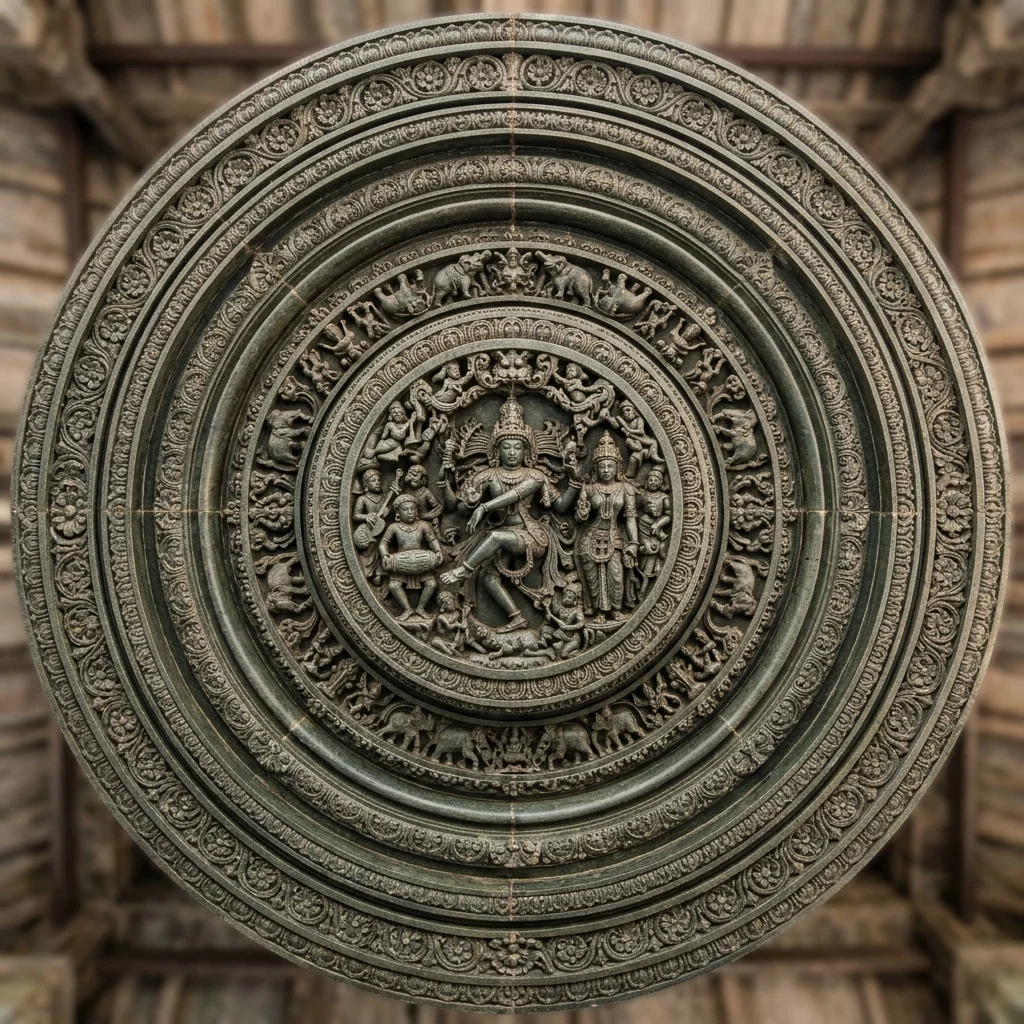
Figure 1: Intricate stone craftsmanship and architectural elements at Amrutesvara Temple.
🔱 The Himalayan Sun Sanctuary: Katarmal Sun Temple of Almora
Perched on a steep hill slope in the Kumaon Himalayas at an altitude of 2,116 meters near Almora, Uttarakhand, the Katarmal Sun Temple is a monumental tribute to the Sun God. Built during the 9th century CE by King Katarmalla of the Katyuri dynasty, this temple is one of the rare surviving structural sun temples in northern India, second in historical importance only to the Sun Temple at Konark. The Katyuris, who ruled over the central Himalayan region from the 7th to the 13th centuries, constructed the temple using locally quarried grey granite and metamorphic stone blocks, transporting them up the rugged mountain slopes without modern machinery.
The architectural style of the Katarmal temple belongs to the early Himachali Nagara tradition, characterized by its tall, heavy curvilinear towers (Rekha-prasada). The temple complex consists of a main shrine dedicated to the sun deity, locally worshipped as Vriddhaditya (the old Sun God), surrounded by a cluster of 44 smaller subsidiary shrines dedicated to Shiva, Vishnu, Shakti, and other deities. The main temple is notable for its dry-masonry construction, where stone blocks were fitted together without mortar, relying instead on gravity and precise interlocking joints to withstand the seismic activity of the Himalayan belt.
One of the most remarkable features of the Katarmal Sun Temple is its astronomical alignment. The temple is oriented precisely toward the east, ensuring that during the equinoxes, the first rays of the morning sun pass through the main entrance of the mandapa and illuminate the stone idol of Vriddhaditya in the dark garbhagriha. Historically, the temple was also famous for its exquisite wooden carvings. The pillars, lintels, and doors of the main shrine were carved from local cedar wood, depicting intricate floral designs, dancing figures, and deities—a rare survival of early medieval wooden architecture in the hills. To protect these vulnerable treasures from decay, the most significant wooden elements, including the monumental carved doors, are now preserved in the National Museum in New Delhi.
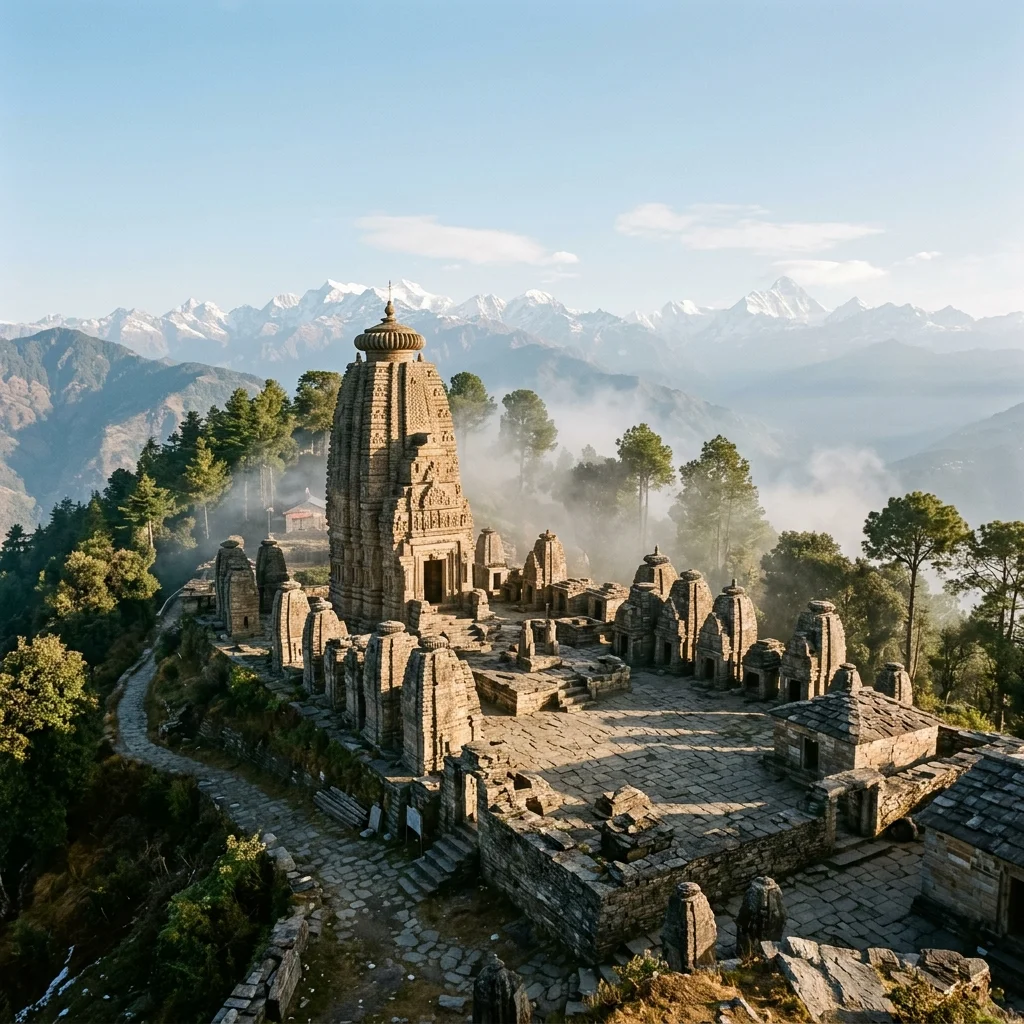
Figure 2: Architectural design and monumental structures at Katarmal Sun Temple.
📌 The Bottom Line
- sinnar-gondeshwar: A highly complete Yadava-era panchayatana temple in Maharashtra, showcasing the volcanic black basalt construction and the complex textured geometry of the Bhumija Nagara shikhara.
- amruthapura-amrutesvara: A classic stellate Hoysala temple in Karnataka, celebrated for its 29-bay open mandapa, intricately carved soapstone dome ceilings, and sequential epic relief panels.
- katarmal-sun-temple: A 9th-century Kumaoni Nagara temple cluster in Uttarakhand, aligned to capture the equinoctial sun rays and representing the rich artistic legacy of the Katyuri dynasty.
Enjoyed this post?
Get our weekly digest delivered free.
Share this post:
Knowelth is reader-supported. We may earn a commission from links in this article at no extra cost to you. Read our disclosure.
Related Posts
Stone Chronicles of Sovereignty and Democracy: The Epigraphic Legacy of Aihole's Meguti Temple, Uttiramerur's Assembly Inscriptions, and the Royal Reliefs of Hampi's Hazara Rama
Stone Chronicles of Sovereignty and Democracy: The Epigraphic Legacy of Aihole's Meguti Temple, Uttiramerur's Assembly Inscriptions, and the Royal Reliefs of Hampi's Hazara Rama Across the diverse lan…
Monolithic Cliffs, Alpine Spires, and Chariots of Stone: The Architectural Feats of Dhamnar, Baijnath, and Melkadambur
Monolithic Cliffs, Alpine Spires, and Chariots of Stone: The Architectural Feats of Dhamnar, Baijnath, and Melkadambur Across the vast geographical expanse of the Indian subcontinent, ancient and medi…
Sacred Corridors, Interlocking Stone Chains, and Thousand-Pillar Sanctuaries: The Architectural Marvels of Rameswaram, Kanchipuram, and Moodabidri
Sacred Corridors, Interlocking Stone Chains, and Thousand-Pillar Sanctuaries: The Architectural Marvels of Rameswaram, Kanchipuram, and Moodabidri Across the Indian subcontinent, sacred architecture r…