India Markets Daily: Sensex Rebounds to 78,080 as Nifty Drags, RBI Proposes Loan Reset Rules, FIIs Sell ₹1,006 Cr
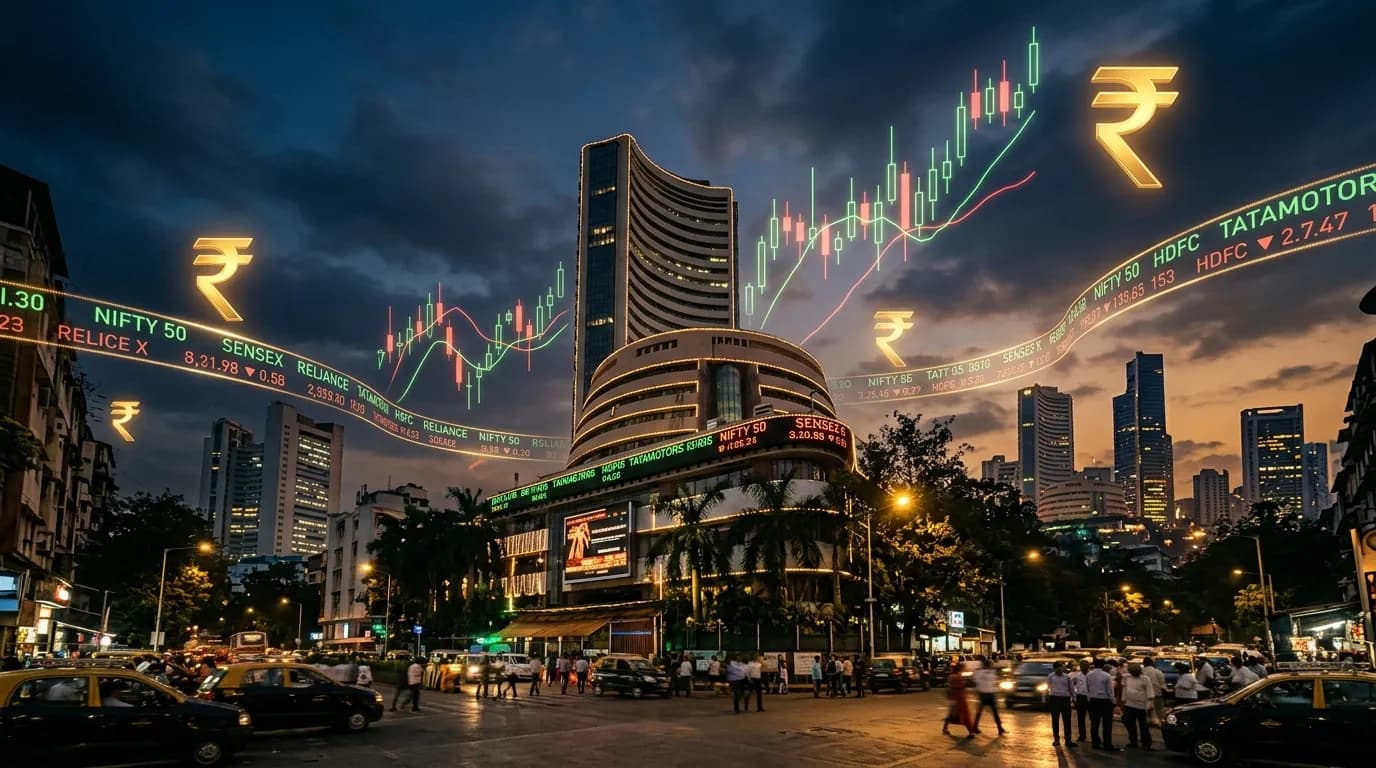
India Markets Daily: Sensex Rebounds to 78,080 as Nifty Drags, RBI Proposes Loan Reset Rules, FIIs Sell ₹1,006 Cr
Indian financial markets navigated a divergent trading session on August 13, 2026, as the BSE Sensex broke its two-day losing streak while the Nifty 50 recorded a minor decline amidst geopolitical caution and crude oil volatility. Meanwhile, significant central bank regulatory proposals and institutional capital movements shaped broader market sentiment.
📌 Sensex Snaps Losing Streak to Close at 78,080 while Nifty Slips for Third Day
Indian equity benchmark indices exhibited split momentum on Thursday, August 13, 2026, as domestic investors grappled with persistent geopolitical tensions in the Middle East and fluctuating crude oil prices. The 30-share BSE Sensex snapped its two-session losing streak, surging 113.61 points or 0.15% to settle at 78,079.96. In contrast, the broader 50-share NSE Nifty 50 index drifted lower for the third consecutive trading session, declining 40.10 points or 0.16% to close at 24,395.85. The market volatility index, India VIX, hovered around 14.65 points, reflecting underlying hedging activity in derivative markets ahead of key global macroeconomic data releases.
The main drag on the Nifty 50 came from the metal and energy segments, with the Nifty Metal index sliding 1.25% on falling international commodity prices and weak global industrial demand forecasts. Heavyweights such as Tata Steel, Hindalco, and JSW Steel receded between 1.1% and 2.4%. Conversely, the automotive and fast-moving consumer goods (FMCG) sectors provided essential market support. Tata Motors emerged as the standout blue-chip performer of the session, jumping nearly 4% to ₹1,042.50 following robust Q1 FY27 financial performance, expansion in commercial vehicle margins, and bullish management guidance for Jaguar Land Rover (JLR) electric vehicle rollouts.
Macroeconomic headwinds remained anchored to international energy markets, where Brent crude futures held firm above $81.50 per barrel. Given India's reliance on imported crude for over 85% of its domestic consumption, elevated energy quotes continue to trigger caution regarding import bills and current account balance expectations. Despite these headwinds, mid-cap and small-cap indices demonstrated resilience, with the Nifty Midcap 100 gaining 0.28% and the Nifty Smallcap 100 closing 0.42% higher, indicating healthy underlying retail and domestic institutional participation across broader equities.
From a technical perspective, equity market strategists identify the 24,350 level as critical immediate support for the Nifty 50, aligning closely with its 50-day exponential moving average (EMA). On the upside, 24,550 to 24,600 serves as a formidable overhead resistance zone. Technical indicators such as the Relative Strength Index (RSI) stand neutral at 48.5, suggesting that the Indian benchmark indices are undergoing a routine consolidation phase after their multi-week summer rally rather than entering a structural correction phase.
🏦 RBI Issues Draft Guidelines for Floating Rate Loan Resets as CPI Hits 4.45%
In a major monetary and regulatory development, the Reserve Bank of India (RBI) published comprehensive draft guidelines titled "Reserve Bank of India (Interest Rates on Loans and Advances) Directions, 2026." The draft directions seek to establish standardized, transparent, and consumer-centric interest rate setting frameworks across commercial banks, housing finance companies (HFCs), and Non-Banking Financial Companies (NBFCs). The central bank's initiative aims to curb arbitrary spread expansions by lenders during monetary policy transitions and eliminate disparities in pricing between existing and new borrowers.
Under the proposed regulatory framework, all regulated entities offering floating-rate retail and MSME loans must ensure that interest rate resets occur at a maximum interval of three months. Crucially, the RBI has mandated that the non-credit risk spread component embedded in the lending rate must remain unchanged for a minimum period of three years from the date of loan disbursement, except in explicitly defined credit risk deterioration events. This rule prevents financial institutions from stealthily widening profit margins by inflating administrative spreads when benchmark rates decline or remain static.
This regulatory move comes against the backdrop of recently released macroeconomic data showing India's headline Consumer Price Index (CPI) inflation rising to 4.45% in July 2026. Although inflation remains comfortably within the RBI's statutory tolerance band of 2.0% to 6.0%, it has exceeded the central bank's primary target of 4.0% for the second consecutive month. Food price volatility, particularly in vegetable and pulse categories, accounted for the bulk of headline inflationary momentum, reinforcing the Monetary Policy Committee's (MPC) decision to maintain the repo rate at 5.25% with a neutral policy stance.
Banking analysts from top brokerage firms note that while the draft loan guidelines will enhance borrower protection and standardisation, they may temporarily squeeze Net Interest Margins (NIMs) for private lenders and NBFCs with slower asset-liability repricing cycles. Shares of major commercial lenders traded flat to slightly negative following the release, with the Nifty Bank index easing 0.12% to 52,140.80. Industry associations have been granted until September 15, 2026, to submit feedback on the draft directions before final implementation guidelines are issued by the central bank.
📊 FIIs Net Sell ₹1,006 Cr in Equities while Reallocating Capital into Indian Debt Markets
Foreign Institutional Investor (FII) activity remained a key focal point for market participants on August 13. According to provisional trading data from the National Stock Exchange, FIIs recorded net outflows of ₹1,005.68 crore in the Indian cash equity segment. This marked the fourth consecutive trading session of net institutional equity selling by foreign funds. The persistent foreign capital outflows reflect portfolio rebalancing strategies amidst rising US Treasury yields, strong US dollar index dynamics (DXY trading around 103.20), and ongoing global macroeconomic uncertainties.
However, foreign investors demonstrated a clear appetite for Indian fixed income assets, purchasing a net ₹327.40 crore in the debt segment on the same day. Institutional interest in Indian sovereign debt has remained firm following India's full inclusion in major global emerging market bond indices, which has driven steady passive inflows into Fully Accessible Route (FAR) government securities. The benchmark 10-year Indian Government Bond (IGB) yield eased by 2 basis points to settle at 6.81%, reflecting stable domestic liquidity conditions and steady sovereign paper demand.
Domestic Institutional Investors (DIIs) continued to play a crucial stabilizing role in the Indian capital markets, counterbalancing foreign equity selling with net purchases worth ₹845.20 crore on Thursday. Strong systematic investment plan (SIP) monthly flows into domestic mutual funds—which crossed ₹23,500 crore in recent monthly data—have provided a formidable liquidity cushion for Indian stock markets. This steady domestic retail accumulation has effectively insulated Dalal Street from sharper drawdowns despite recurring waves of foreign portfolio fund liquidation.
In foreign exchange markets, the Indian Rupee (INR) traded in a tight, range-bound band against the US Dollar (USD), closing at 83.92/USD compared to Wednesday's close of 83.89/USD. The local currency faced modest pressure from elevated Brent crude import bills and FII equity outflows, but active intervention by the RBI in non-deliverable forward (NDF) and spot markets limited currency volatility. India's foreign exchange reserves remain robust at over $670 billion, granting the central bank ample firepower to defend macroeconomic stability and prevent speculative currency weakness.
📌 The Bottom Line
- nifty-sensex-divergence: Sensex gained 113.61 pts (+0.15%) to 78,079.96, while Nifty dropped 40.10 pts (-0.16%) to 24,395.85 amid metal sector drag and Tata Motors' 4% rally.
- rbi-loan-guidelines: RBI proposed 3-month max reset windows and 3-year spread freezes for floating loans as July CPI inflation picked up to 4.45%.
- fii-dii-flows: FIIs pulled out ₹1,005.68 crore from equities while buying ₹327 crore in debt; DIIs injected ₹845.20 crore as the Rupee settled at 83.92/USD.
📫 Stay Updated
Get India market analysis delivered to your inbox every trading day. Subscribe to our free newsletter →
Disclosure: This post contains affiliate links. If you purchase through our links, we earn a small commission at no extra cost to you. We only recommend products we believe in.
Enjoyed this post?
Get our weekly digest delivered free.
Share this post:
Knowelth is reader-supported. We may earn a commission from links in this article at no extra cost to you. Read our disclosure.
Related Posts
India Markets Update: Nifty Drops Below 24,450 Amid Oil Spike, RBI Holds Repo Rate at 5.25%, and FII Inflows Resume
India Markets Update: Nifty Drops Below 24,450 Amid Oil Spike, RBI Holds Repo Rate at 5.25%, and FII Inflows Resume Indian benchmark indices drifted lower for a second consecutive session as global en…

Nifty Snaps 4-Day Rally as Pre-RBI Policy Jitters & Crude Surge Trigger Profit Booking; Bharti Airtel Q1 Profit Soars 37%
Nifty Snaps 4-Day Rally as Pre-RBI Policy Jitters & Crude Surge Trigger Profit Booking; Bharti Airtel Q1 Profit Soars 37% Indian benchmark equity indices snapped their four-session winning streak on A…

Nifty Drops Below 24,000 as Oil Spikes; Rupee Slides to 96.59 Ahead of RBI FDI Reform Push
Nifty Drops Below 24,000 as Oil Spikes; Rupee Slides to 96.59 Ahead of RBI FDI Reform Push Indian equity benchmarks succumbed to acute global pressures on July 22, 2026, as geopolitical conflicts in t…