U.S.-Iran Military Escalation, 3.2-Billion-Year-Old Enzymes Reconstructed, and Apple's $30 Billion U.S. Chip Deal
U.S.-Iran Military Escalation, 3.2-Billion-Year-Old Enzymes Reconstructed, and Apple's $30 Billion U.S. Chip Deal
A dramatic military escalation in the Middle East has disrupted global energy markets, while parallel breakthroughs in evolutionary biology and domestic tech supply chains are reshaping the scientific and business landscapes. As the United States and Iran trade heavy strikes following a ceasefire collapse, biochemists have successfully resurrected ancient enzymes from Earth's dawn, and Apple has committed to a historic $30 billion domestic semiconductor deal. Together, these events represent a volatile yet highly innovative start to the second week of July.
💥 Fire in the Gulf: US Strikes 80 Iranian Sites After Ceasefire Collapse
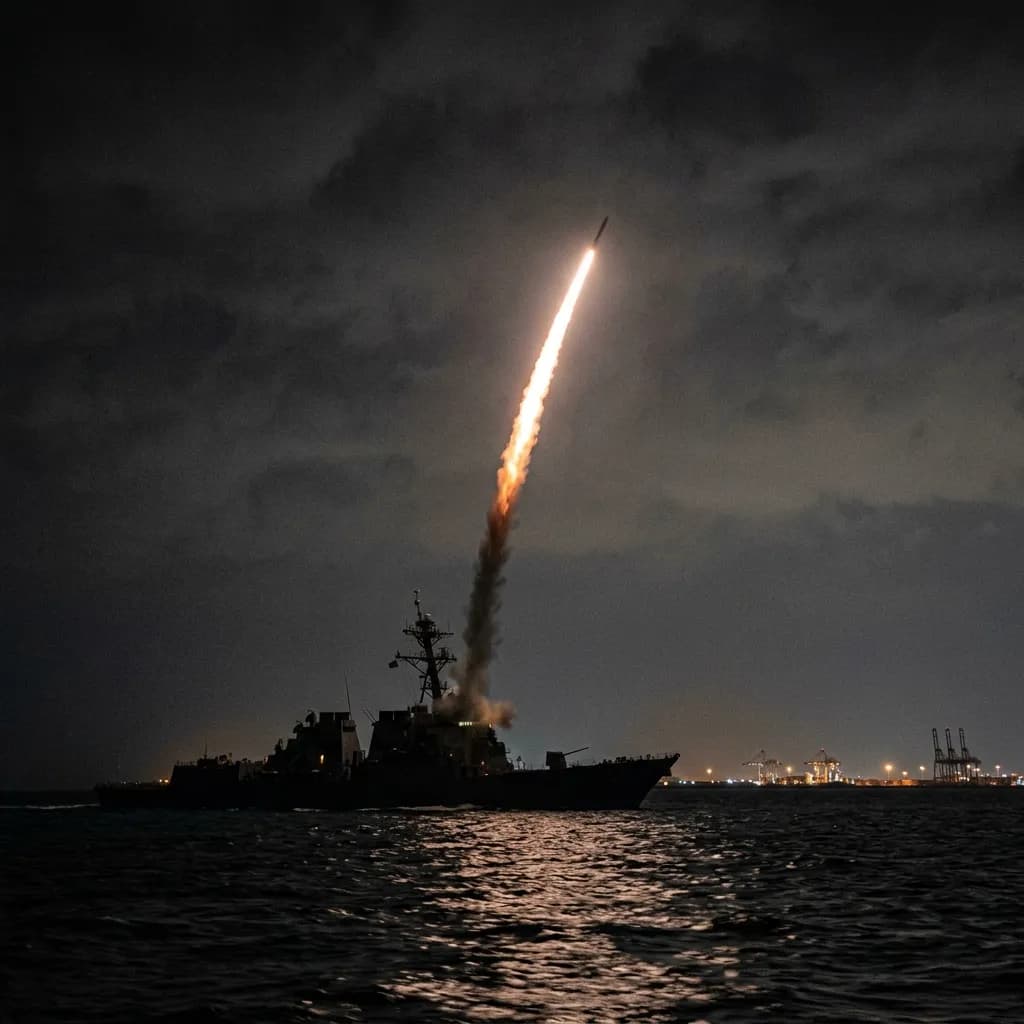
The fragile interim ceasefire between the United States and Iran has collapsed completely, plunging the Middle East into a severe military escalation. Following intelligence reports that Iranian forces targeted commercial vessels transiting the critical Strait of Hormuz, U.S. President Donald Trump declared the truce officially over. U.S. Central Command (CENTCOM) immediately retaliated by launching massive military strikes against 80 distinct Iranian military positions, targeting coastal radar systems, command-and-control hubs, air defense networks, and fast attack boats belonging to the Islamic Revolutionary Guard Corps (IRGC).
Tehran reacted swiftly, with the IRGC launching missile and drone strikes against U.S. military bases in Bahrain and Kuwait, setting off air defense sirens and triggering interceptor systems across host nations. Iran also claimed to have shot down a U.S. MQ-9 Reaper drone operating in the region. The sudden outbreak of hostilities sent shockwaves through global energy markets, forcing crude oil prices up by more than 5% as concerns mount over shipping disruptions in the Strait of Hormuz, through which a fifth of the world's oil transit occurs. International leaders, currently meeting at a NATO summit in Ankara, expressed support for defensive actions while urgently pleading for diplomatic de-escalation to prevent a wider regional war.
🧬 Cellular Time Machine: Scientists Rebuild 3.2-Billion-Year-Old Enzymes
In a groundbreaking feat of evolutionary bioengineering, researchers have successfully reconstructed functional, 3.2-billion-year-old nitrogen-fixing enzymes in the laboratory. By analyzing the genetic sequences of modern microbes and tracing their evolutionary lineages backward through deep time, the scientific team was able to map out and synthesize the ancient amino acid sequences of nitrogenases—the essential enzymes that convert atmospheric nitrogen into bioavailable forms like ammonia, enabling life to flourish.
This discovery provides a direct molecular window into how early life survived on an oxygen-poor, primordial Earth. Reconstructing these ancient catalysts not only reveals the biochemical challenges faced by the planet's earliest organisms but also offers a template for how life might adapt or develop under harsh conditions on other celestial bodies. Beyond the implications for astrobiology and evolutionary biology, understanding the structure of these highly efficient ancient enzymes could help modern chemical engineers design more sustainable, energy-efficient catalysts for agricultural fertilizer production, reducing our reliance on energy-intensive industrial processes.
🍎 Silicon Shift: Apple Signs Historic $30B Chip Manufacturing Deal with Broadcom
Apple has announced a massive, multiyear manufacturing agreement with semiconductor giant Broadcom valued at over $30 billion. Under the terms of the deal, Broadcom will develop and manufacture key 5G radio frequency components and advanced wireless connectivity modules within the United States. This includes FBAR filters (Film Bulk Acoustic Resonator filters), which are critical for filtering signals in high-frequency wireless bands, enabling faster and cleaner cellular connections. The components will be fabricated at several key U.S. manufacturing facilities, including a major Broadcom production site in Fort Collins, Colorado, which is expected to see significant expansion.
The partnership represents a major milestone in Apple’s broader commitment to invest $430 billion in the United States economy over a five-year period. By localizing critical semiconductor production, Apple is attempting to insulate its supply chain from geopolitical volatility, particularly in East Asia, while capitalizing on domestic manufacturing tax credits. For the U.S. tech sector, the deal is a massive vote of confidence in domestic advanced packaging and fabrication capabilities, creating thousands of high-tech manufacturing and engineering jobs while securing supply chains for future iterations of the iPhone and other flagship Apple devices.
📌 The Bottom Line
- us-iran-conflict: The U.S. launched strikes on 80 Iranian sites after a ceasefire collapse in the Strait of Hormuz, prompting retaliatory strikes on U.S. bases in Kuwait and Bahrain and causing a 5% surge in crude oil prices.
- 3-billion-year-old-enzymes: Researchers reconstructed functional 3.2-billion-year-old nitrogen-fixing enzymes, revealing how early life adapted to primordial Earth and offering templates for sustainable agricultural chemistry.
- apple-broadcom-chip-deal: Apple signed a historic $30 billion domestic chip manufacturing pact with Broadcom to source key 5G and wireless components from U.S. fabs, strengthening supply chain resilience.
Enjoyed this post?
Get our weekly digest delivered free.
Share this post:
📌 Disclosure: This post may contain affiliate links. If you make a purchase through our links, we may earn a commission at no extra cost to you. We only recommend products we believe in. See our Affiliate Disclosure.
Related Posts
NATO Summit in Ankara, Saudi Arabia's Historic Crude Oil Price Slashes, and World's First Sub-1 GHz Massive MIMO 5G Network
NATO Summit in Ankara, Saudi Arabia's Historic Crude Oil Price Slashes, and World's First Sub-1 GHz Massive MIMO 5G Network July 7, 2026, represents a landmark day for international security allian…
UN AI Governance Summit, ISRO PSLV Resumption, and Norway's Historic World Cup Triumph
UN AI Governance Summit, ISRO PSLV Resumption, and Norway's Historic World Cup Triumph On July 6, 2026, the global landscape reflects a dynamic convergence of international policy, technological br…

Greenland Sovereignty Polling, Pterosaur Biomolecules, and World Cup Host Nations Advance
Greenland Sovereignty Polling, Pterosaur Biomolecules, and World Cup Host Nations Advance On July 4, 2026, the global landscape presents a fascinating blend of international diplomacy, prehistoric …