Global Brief: Middle East Energy Tensions, AI Bio Genesis Mission, and Orbital Radar Breakthroughs

Global Brief: Middle East Energy Tensions, AI Bio Genesis Mission, and Orbital Radar Breakthroughs
Geopolitical volatility, next-generation biotechnology, and orbital security dominate today's global headlines. From heightened maritime risks in vital oil transit corridors to cutting-edge AI breakthroughs in healthcare and space monitoring, here is your essential morning briefing for July 23, 2026.
🌐 Strait of Hormuz Tensions Surge as Oil Hovers Near $94/bbl
Military readiness across the Middle East reached high alert today following sharp diplomatic warnings regarding commercial shipping protection in the Strait of Hormuz. In response, regional air defense networks across Kuwait, Bahrain, and Jordan reported intercepting multiple drone and missile vectors, while energy markets reacted swiftly with Brent crude trading near $94 per barrel.
The International Monetary Fund's latest World Economic Outlook highlights a dual-force global economy: while rising energy transport costs and supply chain friction pose downside risks for net importers, rapid private investment in technology continues to cushion broader growth. Key international observers emphasize that securing maritime choke points remains the paramount economic priority to prevent secondary inflation spikes across global consumer markets.
🧬 U.S. Launches AI-Driven 'Bio Genesis Mission' for Medical Breakthroughs
The United States government officially launched the "Bio Genesis Mission," a landmark national initiative pairing high-performance supercomputing with deep generative AI models to accelerate drug discovery and complex biological sequencing. The mission aims to condense traditional multi-year research pipelines for oncology and rare genetic disorders into target discovery workflows lasting only weeks.
While the scientific community has praised the scale of computational power deployed, international policy leaders in Europe have raised strategic considerations regarding AI sovereignty and infrastructure dependence. The launch underlines a broader global trend where artificial intelligence is no longer merely a software productivity tool, but the primary engine driving sovereign scientific and industrial competitiveness.
🛰️ Radio Telescopes Repurposed to Track Orbital Debris and Satellites
Astronomers and aerospace defense researchers announced a major operational breakthrough today by successfully repurposing existing deep-space radio telescope arrays into high-precision orbital scanners. The novel active-radar technique allows ground stations to track previously undetected micro-debris and maneuvering satellites in high-density geostationary orbits with pinpoint accuracy.
As low-Earth and geostationary orbits grow increasingly congested with commercial constellations, space situational awareness has become vital to protecting multi-billion dollar communications infrastructure. This software and signal processing breakthrough provides a cost-effective global monitoring mesh without requiring the deployment of expensive specialized ground radars.
📌 The Bottom Line
- middle-east-tensions: Strait of Hormuz shipping concerns push crude oil near $94/bbl as regional defenses intercept threats and global economic forecasts highlight energy supply risks.
- ai-bio-genesis: The U.S. launches a massive supercomputing and AI initiative for biomedical breakthroughs, sparking global discussions on technology sovereignty and scientific leadership.
- space-radar-tracking: Scientists successfully transform radio telescopes into high-precision space scanners to track satellite movements and dangerous orbital debris.
📬 Stay Updated
Get today's top stories delivered to your inbox every morning. Subscribe to our free newsletter →
Disclosure: This post contains affiliate links. If you purchase through our links, we earn a small commission at no extra cost to you. We only recommend products we believe in.
Enjoyed this post?
Get our weekly digest delivered free.
Share this post:
Knowelth is reader-supported. We may earn a commission from links in this article at no extra cost to you. Read our disclosure.
Related Posts
Daily Brief: Strait of Hormuz Tensions Surge, EU Orders Android AI Openness, and IMF Issues Global Outlook
Daily Brief: Strait of Hormuz Tensions Surge, EU Orders Android AI Openness, and IMF Issues Global Outlook Today's Highlights: Geopolitical conflicts and maritime disruptions in the Middle East contin…

Strait of Hormuz Blockade, IBM Earnings Spark Tech Sell-Off, and CDC Cyclosporiasis Outbreak
Strait of Hormuz Blockade, IBM Earnings Spark Tech Sell-Off, and CDC Cyclosporiasis Outbreak The global landscape is witnessing rapid developments today across geopolitics, technology markets, and pub…
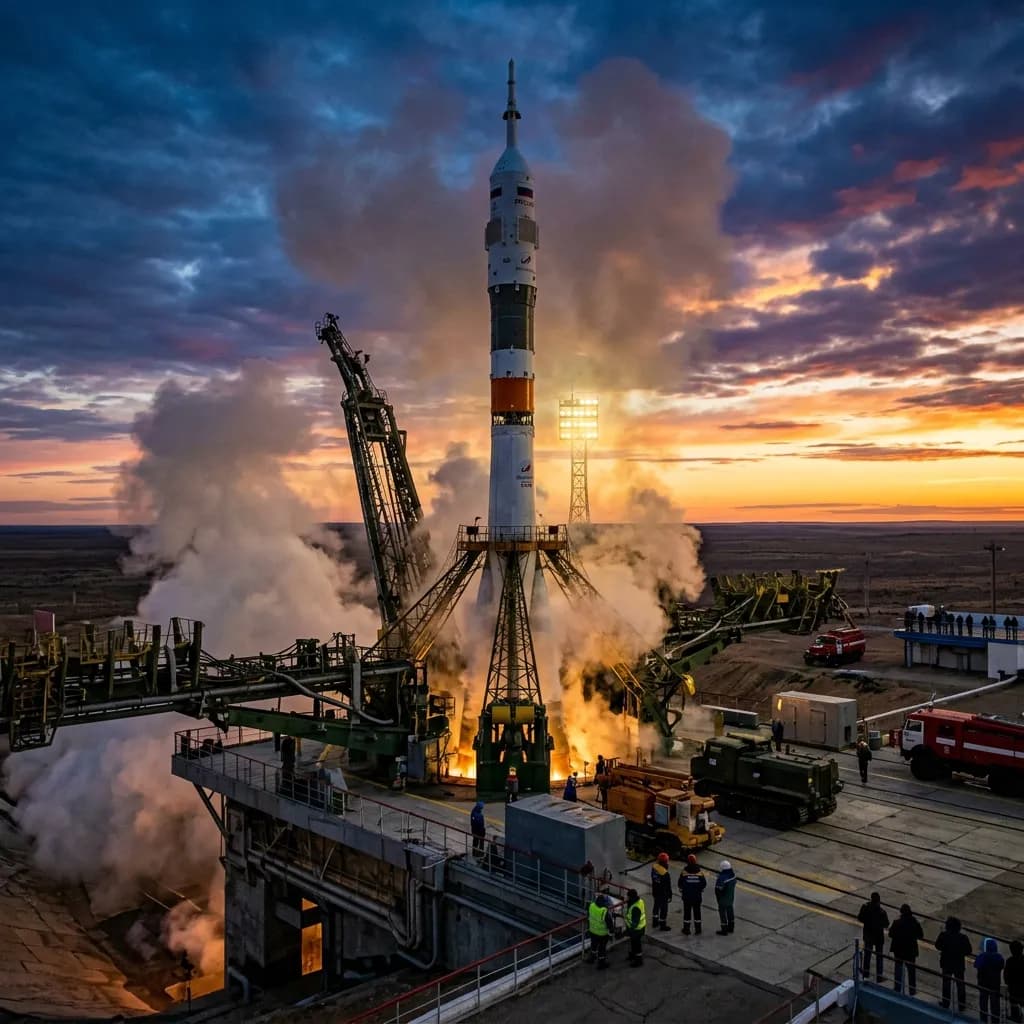
Hormuz Blockade Sparks Oil Surge, Soyuz MS-29 Launches, and MIT Grows Blood Vessels
Hormuz Blockade Sparks Oil Surge, Soyuz MS-29 Launches, and MIT Grows Blood Vessels A dramatic military escalation in the Persian Gulf, a milestone launch to the International Space Station, and a cri…