The Ankara Procurement Cartel: Why NATO is Shifting from Security to Shopping
The Ankara Procurement Cartel: Why NATO is Shifting from Security to Shopping
Opinion | Editorial Desk | July 8, 2026
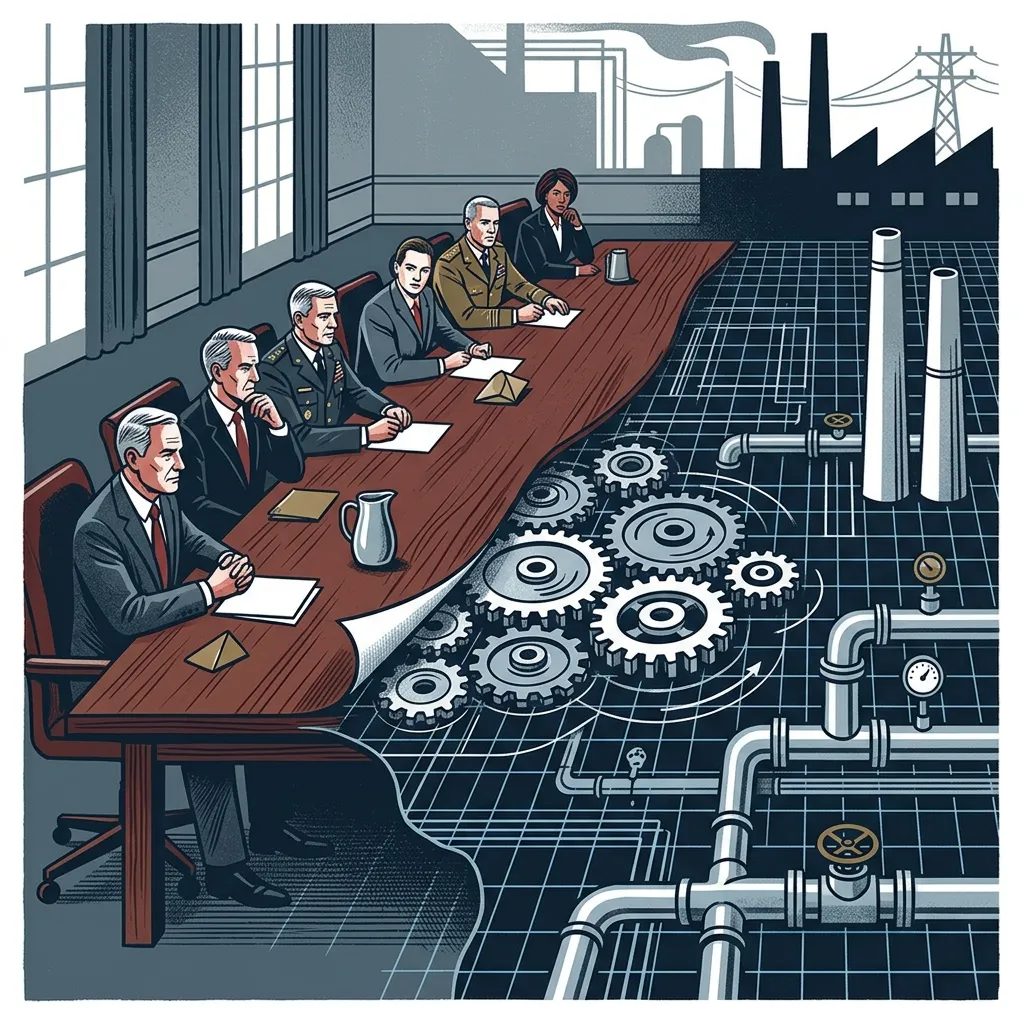
As leaders departed the NATO summit in Ankara, the traditional declarations of democratic unity and strategic deterrence were overshadowed by a different kind of noise: the clicking of pens on tens of billions of dollars in new procurement contracts. The launch of the alliance’s inaugural Defence Industry Forum alongside the main summit marks a profound structural shift in the nature of collective security. What was once a mutual defense pact built on shared values is rapidly transforming into a state-subsidized purchasing cartel for the transatlantic defense-industrial complex.
The Core Argument
This corporatization of NATO is a systemic hazard, turning defense spending metrics into the sole benchmark of alliance health. We have seen NATO Secretary General Mark Rutte declare the summit "tremendously successful" primarily on the basis of defense industry output, procurement totals, and allied spending commitments. While standardizing weaponry and scaling up production lines is an urgent tactical necessity to aid Ukraine and replenish depleted European stockpiles, anchoring national budgets to perpetual wartime contracts creates dangerous economic and political feedback loops.
First, it creates a two-tier alliance where nations are judged not by their strategic contribution or diplomatic agility, but by their capacity to act as high-volume customers for major defense contractors. Smaller nations, unable to match the massive capital expenditures required to sustain local defense industries or purchase top-tier systems, are relegated to secondary status. Meanwhile, defense conglomerates are given unprecedented influence over the alliance's long-term planning, aligning NATO's strategic priorities with the commercial need for constant threat-inflation and indefinite contract pipelines.
Second, the economic cost of this procurement-first model is staggering. When national security is measured by the sheer volume of procurement, resources are diverted away from vital civilian infrastructure, clean energy transitions, and non-military security priorities. Under the guise of "burden-sharing," European allies are lockstepping their industrial policies to match the requirements of defense consortiums, creating a warfare-dependency that will be incredibly difficult to dismantle even if geopolitical tensions subside.
Finally, this shift undermines democratic accountability. By institutionalizing the defense industry as a co-equal partner in strategic planning, defense policy is increasingly shielded from public debate. Decisions about weapon systems, threat assessments, and defense spending are made in closed-door forums dominated by corporate lobbyists and military planners, leaving taxpayers to foot the bill with little say in the strategic direction of their nations.
The Counterargument (and Why It Falls Short)
Proponents of the new procurement-first framework argue that in the face of an aggressive, revanchist Russia and rising global instability, the defense industry is a core strategic asset. They assert that the war in Ukraine exposed critical vulnerabilities in Western manufacturing capacities—such as shell shortages and slow production times—and that the only way to build credible deterrence is to integrate the defense sector directly into NATO’s planning. They argue that massive procurement contracts are the necessary price for maintaining peace and ensuring collective readiness under Article 5.
This argument, however, misdiagnoses the cause of NATO's vulnerability and ignores the capture of public policy. The bottleneck in Western defense production is not a result of insufficient public funding, but a consequence of decades of corporate consolidation and monopolistic practices within the defense sector itself. Shoveling more public cash into this system without structural reforms will only lead to price-gouging, cost overruns, and windfall profits for contractors, without yielding proportional security returns.
Furthermore, equating industrial capacity with deterrence conflates the means with the end. True security is achieved through diplomatic stabilization, economic resilience, and societal cohesion. By prioritizing a procurement-led model, NATO risks creating a self-reinforcing dynamic where the alliance is incentivized to find new threats to justify its expanding industrial capacity, trapping democratic states in a permanent, corporatized arms race.
What Should Happen
To protect both national security and democratic governance, policymakers must pivot from procurement volume to a holistic model of collective defense.
First, NATO must decouple its assessment of allied contributions from arbitrary spending percentages and procurement volumes. Member states should be evaluated on holistic security metrics, including their investments in civil defense, cyber resilience, critical infrastructure protection, and energy independence.
Second, governments must impose strict regulatory oversight on the defense-industrial complex. Procurement contracts must include clawback provisions for cost overruns, strict profit-margin caps, and technology-sharing mandates that prevent monopolistic lock-in by a few dominant players. If the public is financing the scaling of defense production, the resulting intellectual property and industrial capacity must be treated as public goods rather than corporate monopolies.
Finally, the alliance must revitalize its diplomatic and conflict-prevention mechanisms. A security strategy that relies solely on matching the adversary's production lines is structurally fragile and financially unsustainable. NATO must balance its military readiness with active, long-term diplomatic engagement, ensuring that industrial mobilization remains a temporary emergency measure rather than a permanent feature of democratic governance.
The Bottom Line
The Ankara summit has laid bare a worrying truth: NATO is swapping its geopolitical soul for a procurement ledger. By institutionalizing the defense industry as a co-equal partner in strategic planning, the alliance risks aligning the survival of democratic states with the profit margins of private military contractors. True collective defense cannot be bought off the shelf or outsourced to corporate lobbies. If we continue to mistake shopping for strategy, we will build an alliance that is rich in weaponry but destitute of the democratic resilience it was created to defend.
The views expressed in this editorial represent an analytical position based on publicly available evidence and expert consensus, not personal or political affiliation.
Enjoyed this post?
Get our weekly digest delivered free.
Share this post:
📌 Disclosure: This post may contain affiliate links. If you make a purchase through our links, we may earn a commission at no extra cost to you. We only recommend products we believe in. See our Affiliate Disclosure.
Related Posts

The Geneva Illusion: Why the UN AI Dialogue Shields Tech Monopolies
The Geneva Illusion: Why the UN AI Dialogue Shields Tech Monopolies Opinion | Editorial Desk | July 9, 2026 As diplomats and tech executives gathered in Geneva for the UN's inaugural Global Dialogue o…

The Biotech Decoupling Delusion: Why the BIOSECURE Act Threatens the Next Generation of Lifesaving Medicine
The Biotech Decoupling Delusion: Why the BIOSECURE Act Threatens the Next Generation of Lifesaving Medicine Opinion | Editorial Desk | July 8, 2026 In the global theater of technological competition, …

The Gigawatt Gamble: Why Big Tech's $700 Billion AI CapEx Arms Race is a Systemic Risk
The Gigawatt Gamble: Why Big Tech's $700 Billion AI CapEx Arms Race is a Systemic Risk Opinion | Editorial Desk | July 1, 2026 In the history of industrial build-outs, no sector has ever att…