Supreme Court Immigration Rulings, Venezuela Earthquake Aid, and FDIC Regulatory Overhaul
Supreme Court Immigration Rulings, Venezuela Earthquake Aid, and FDIC Regulatory Overhaul
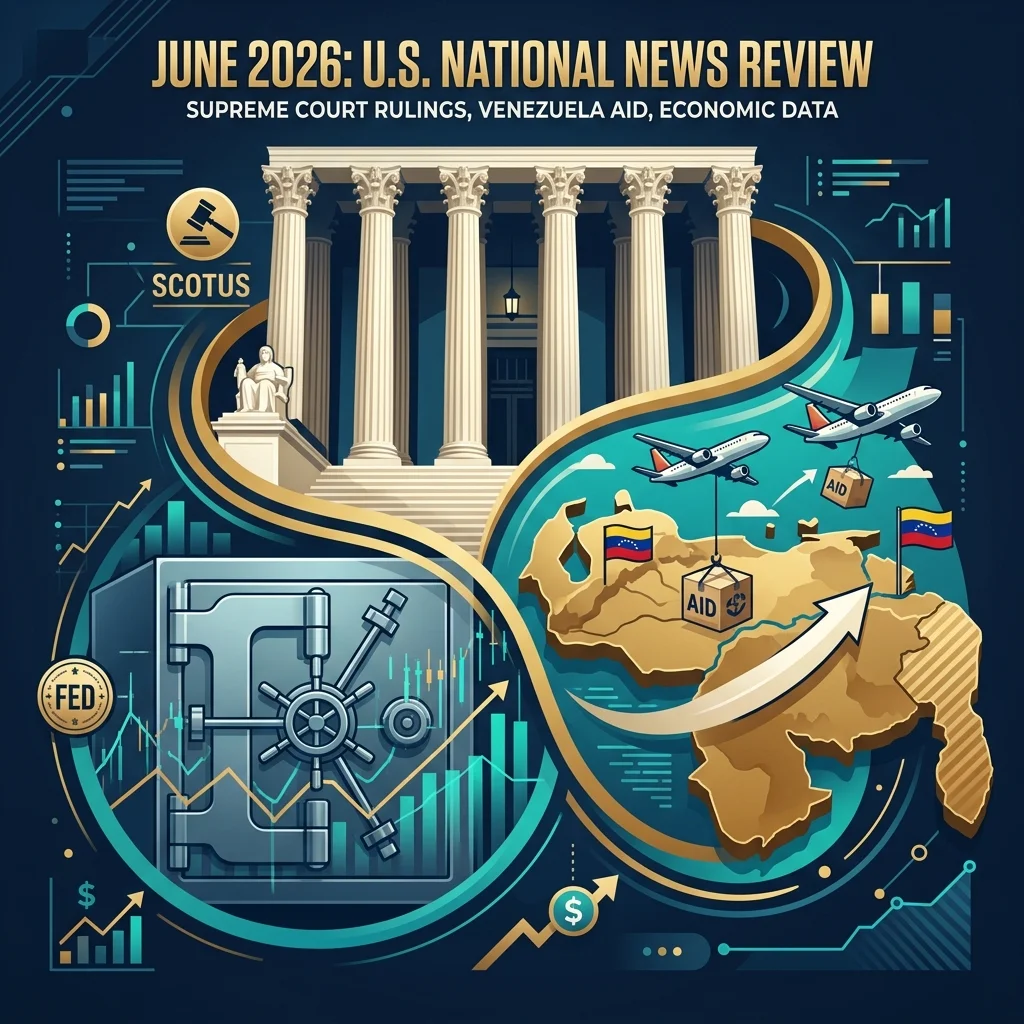
In a series of major actions across Washington and the Americas, federal institutions have asserted new authority, coordinated massive foreign disaster relief, and initiated a major restructuring of banking regulations. The U.S. Supreme Court handed the administration two significant immigration victories by upholding restrictions on asylum and Temporary Protected Status. Meanwhile, the U.S. military and diplomatic corps mobilized a massive humanitarian relief operation following catastrophic earthquakes in Venezuela. Finally, the Federal Deposit Insurance Corporation (FDIC) approved a series of sweeping proposals to reduce compliance burdens on regional and small-scale financial institutions. Together, these developments highlight the dynamic intersections of judicial policy, defense logistics, and financial deregulation shaping the summer of 2026.
⚖️ Supreme Court Delivers Major Immigration Victories to Trump Administration
In two highly anticipated 6–3 decisions, the Supreme Court of the United States ruled in favor of the Trump administration's restrictive immigration agenda, resolving significant legal battles over border enforcement and humanitarian relief. Writing for the majority in the first case, Justice Samuel Alito held that the executive branch has sole, unreviewable discretion under federal law to terminate Temporary Protected Status (TPS) designations. The ruling allows the administration to proceed with its plans to phase out the special legal protections for hundreds of thousands of immigrants from Haiti and Syria, asserting that these policy actions are not subject to judicial review under the Administrative Procedure Act.
In the second decision, the Court backed the administration's policy of "metering," which limits the daily processing of asylum seekers at ports of entry along the U.S.-Mexico border. The majority opinion clarified that asylum seekers standing on the Mexican side of the border are not considered to be "arriving" in the United States under the terms of the Immigration and Nationality Act (INA). The ruling significantly curtails the legal avenues available to migrants seeking to challenge wait times and border limitations in federal court. In a sharp dissent, Justice Sonia Sotomayor, joined by Justices Elena Kagan and Ketanji Brown Jackson, argued that both decisions insulate executive overreach from judicial check and leave vulnerable individuals without recourse.
🌎 U.S. Mobilizes Southern Command and Aid Teams for Venezuela Earthquake Relief
Following a catastrophic pair of earthquakes that struck north-central Venezuela on June 24, 2026, the United States government has launched a massive coordinated humanitarian relief effort. The disaster, consisting of a magnitude 7.2 foreshock followed closely by a magnitude 7.5 mainshock, caused widespread destruction in Caracas and La Guaira, leaving at least 235 people dead, over 4,300 injured, and critical infrastructure severely damaged. In response, the U.S. Department of State deployed a Disaster Assistance Response Team (DART), which includes specialized urban search-and-rescue teams from Fairfax County, Virginia, and Los Angeles County, California, to help locate survivors and provide emergency medical support.
U.S. Southern Command (SOUTHCOM) has surged its regional military assets to support logistics, airlift, and emergency distribution channels. Maj. Gen. Kevin J. Jarrard arrived in Caracas to lead the military coordination on the ground, directing U.S. cargo aircraft to transport food, clean water, and field hospitals to the affected regions. To facilitate the flow of critical resources, the U.S. Department of the Treasury's Office of Foreign Assets Control (OFAC) issued Venezuela General License 60. This emergency regulation provides immediate legal clarity, allowing non-governmental organizations and international relief agencies to deliver humanitarian aid and financial transactions to the sanctioned nation without violating U.S. sanctions.
🏦 FDIC Board Approves Sweeping Proposals to Deregulate Regional Banking Sector
The Board of Directors of the Federal Deposit Insurance Corporation (FDIC) approved three Notices of Proposed Rulemaking (NPRs) on June 25, 2026, marking a significant step toward deregulating the regional and community banking sectors. The most notable proposal substantially revises resolution submission requirements—often referred to as "living wills"—for insured depository institutions (IDIs). The board voted to raise the asset threshold for these submissions from $50 billion to $100 billion and transition covered banks to a three-year filing cycle. Crucially, the rule aims to eliminate more than half of current filing content, including hypothetical resolution scenarios and credibility determinations, which the board argues will save millions in compliance costs.
In a second regulatory change, the FDIC proposed raising the asset threshold that defines "small" and "large" institutions for deposit insurance assessments from $10 billion to $30 billion. The adjustment, which will be indexed to inflation, lowers base assessment rates for small-to-medium banks and introduces a "Resolution Readiness Adjustment" (RRA) to discount rates for large institutions that pass virtual data room testing. The third proposal amends Part 309 of the FDIC regulations, providing banks and holding companies greater flexibility to share confidential supervisory information with affiliates and advisors without prior regulatory approval. The proposed rules will undergo a 60-day public comment period following their publication in the Federal Register.
📌 The Bottom Line
- scotus-immigration: The Supreme Court ruled 6-3 in two decisions, permitting the termination of TPS for Haiti and Syria without judicial review, and upholding border "metering" by defining border-side migrants as not "arriving" in the U.S.
- venezuelan-aid: The U.S. mobilized DART teams and SOUTHCOM forces under Maj. Gen. Jarrard to provide emergency relief for Venezuela's earthquake disaster, backed by a Treasury license protecting aid groups from sanctions.
- fdic-deregulation: The FDIC approved proposals raising the resolution plan threshold to $100 billion, redefining small banks up to $30 billion, and easing disclosure rules for confidential supervisory data.
Enjoyed this post?
Get our weekly digest delivered free.
Share this post:
📌 Disclosure: This post may contain affiliate links. If you make a purchase through our links, we may earn a commission at no extra cost to you. We only recommend products we believe in. See our Affiliate Disclosure.
Related Posts
Fed Hawkish Shift Sparks Affordability Concerns, US Restricts Frontier AI, and Trump Seeks Syria Terror Delisting
Fed Hawkish Shift Sparks Affordability Concerns, US Restricts Frontier AI, and Trump Seeks Syria Terror Delisting The United States is navigating critical transitions across economic, technological, a…

US Strikes Iran After Ceasefire Collapses, Apple-Broadcom Unveil $30B Silicon Deal, and Deere Settles Right-to-Repair
US Strikes Iran After Ceasefire Collapses, Apple-Broadcom Unveil $30B Silicon Deal, and Deere Settles Right-to-Repair The United States faces a pivotal day marked by severe geopolitical escalation in …

US World Cup Defeat, Raman Sworn In at NIST, and Congressional Visit to Taiwan
US World Cup Defeat, Raman Sworn In at NIST, and Congressional Visit to Taiwan The United States has experienced a whirlwind 24 hours across sports, national technology policy, and international di…