Breaking: US Reinstates Naval Blockade on Iran, Launches Military Strikes in Strait of Hormuz

Breaking: US Reinstates Naval Blockade on Iran, Launches Military Strikes in Strait of Hormuz
Last updated: 2026-07-15 13:10 IST
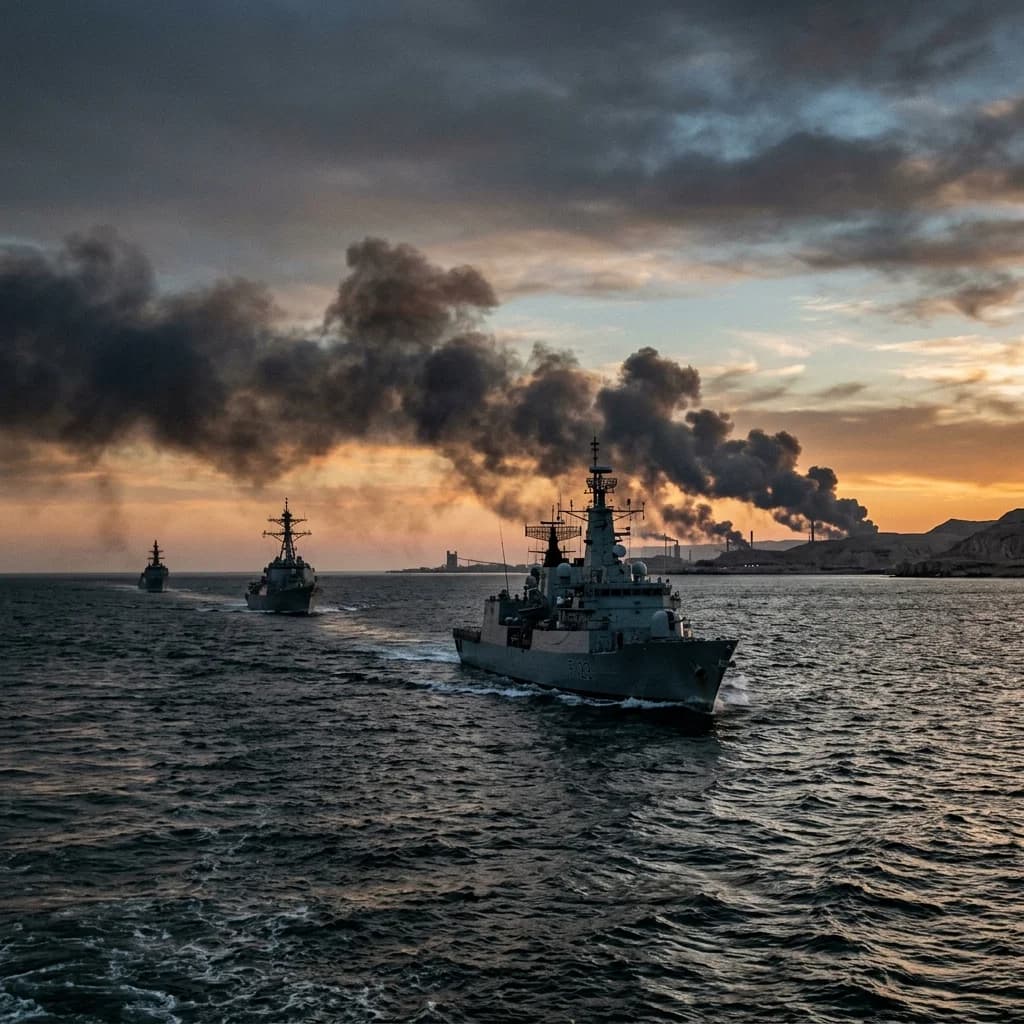
The United States military has reinstated a comprehensive naval blockade of all Iranian ports and launched multiple waves of targeted airstrikes in the Strait of Hormuz, following the collapse of the Islamabad ceasefire memorandum. Iran has retaliated with strikes on U.S. bases in Bahrain, Kuwait, and Jordan, while declaring the strategic shipping channel closed. President Donald Trump has issued a strict ultimatum, warning of imminent strikes on Iranian power plants and civilian infrastructure unless Tehran returns to negotiations.
What Happened
The escalation began in the early hours of July 15, 2026 (Gulf time), as the U.S. Navy officially enforced a full blockade targeting all maritime vessels entering or leaving Iranian ports. The move follows the formal breakdown of the Islamabad Memorandum of Understanding, which had previously established a fragile interim ceasefire.
Concurrently, U.S. Central Command (CENTCOM) launched multiple waves of offensive airstrikes targeting Iranian military installations. According to official Pentagon statements, these strikes specifically targeted coastal missile batteries, drone launch facilities, and naval assets in and around the Strait of Hormuz. The objective of the operation is to systematically degrade Tehran's ability to threaten international commercial shipping.
Iran responded immediately by launching retaliatory drone and missile attacks against U.S. military bases in Jordan, Kuwait, and Bahrain, which hosts the U.S. Fifth Fleet. In a televised address, Iranian military commanders declared the Strait of Hormuz closed to all international shipping, vowing that no commercial vessels would be allowed passage until the U.S. ends its "illegal aggression."
Why It Matters
The Strait of Hormuz is the world's most critical oil transit chokepoint, with approximately one-fifth of global oil consumption passing through the waterway daily. The closure of the strait and the active naval blockade have sent shockwaves through global energy markets, sending crude oil prices surging as traders brace for a prolonged disruption to global supplies.
Furthermore, the threat of escalation is extremely high. President Trump has issued a televised ultimatum, warning that if Iran does not immediately halt its retaliatory strikes and agree to resume diplomatic negotiations, the U.S. military will begin targeting critical Iranian civilian infrastructure, including major bridges and electrical power plants, starting next week.
The conflict also risks drawing in other global powers. Commercial shipping companies have suspended all transits through the Persian Gulf, forcing cargo vessels to reroute around Africa, which will significantly increase shipping costs and exacerbate global inflation.
Key Figures & Reactions
- U.S. President Donald Trump: "We will not allow American lives or global commerce to be held hostage by Iranian aggression. If Iran does not come to the negotiating table by next week, our targets will expand to their power grid and major transit infrastructure."
- Iranian Supreme Leader's Office: "The Islamic Republic will not negotiate under the threat of force. Any aggression against our ports or territory will meet with a devastating response against American bases and their regional allies."
- UN Secretary-General: Called for an immediate cessation of hostilities and a return to the Islamabad agreement framework, warning that a full-scale war in the Persian Gulf would have "catastrophic humanitarian and economic consequences."
- Indian Ministry of External Affairs: Expressed deep concern over the safety of commercial shipping and Indian sailors in the region, calling for diplomatic restraint and the urgent de-escalation of tensions.
What to Watch Next
- Diplomatic Channels: Whether third-party mediators, such as Switzerland or Oman, can successfully establish communication channels to avert the U.S. ultimatum deadline next week.
- Energy Market Response: The reaction of OPEC and other oil-producing nations to stabilize supply if the Strait of Hormuz remains closed for an extended period.
- Military Movements: Potential deployment of additional allied naval forces to the region to assist in clearing the shipping lanes and defending regional bases against Iranian retaliation.
This is a developing story. Details may be updated as new information emerges.
Enjoyed this post?
Get our weekly digest delivered free.
Share this post:
Knowelth is reader-supported. We may earn a commission from links in this article at no extra cost to you. Read our disclosure.
Related Posts
US Launches Sixth Night of Airstrikes on Iran as Strait of Hormuz Crisis Deepens
Breaking: US Launches Sixth Night of Airstrikes on Iran as Strait of Hormuz Crisis Deepens Last updated: 2026-07-17 16:20 IST The United States has expanded its military campaign against Iran, launchi…

China's AI Governance Vision, US Proposes 100% Tariff on Russian Oil Buyers, and a Historic Species Discovery in the Western Ghats
China's AI Governance Vision, US Proposes 100% Tariff on Russian Oil Buyers, and a Historic Species Discovery in the Western Ghats The global geopolitical, technological, and environmental landscape i…

Breaking: U.S. Strike Near Ahvaz Hospital Forces Evacuation of 211 Pediatric Cancer Patients
Breaking: U.S. Strike Near Ahvaz Hospital Forces Evacuation of 211 Pediatric Cancer Patients Last updated: 2026-07-16 23:45 IST An emergency evacuation of 211 pediatric cancer patients was carried out…