CRISPR-Cas12a & Cas13 Systems: Collateral Cleavage Mechanisms in Ultra-Rapid Viral Diagnostics & Targeted RNA Therapeutics
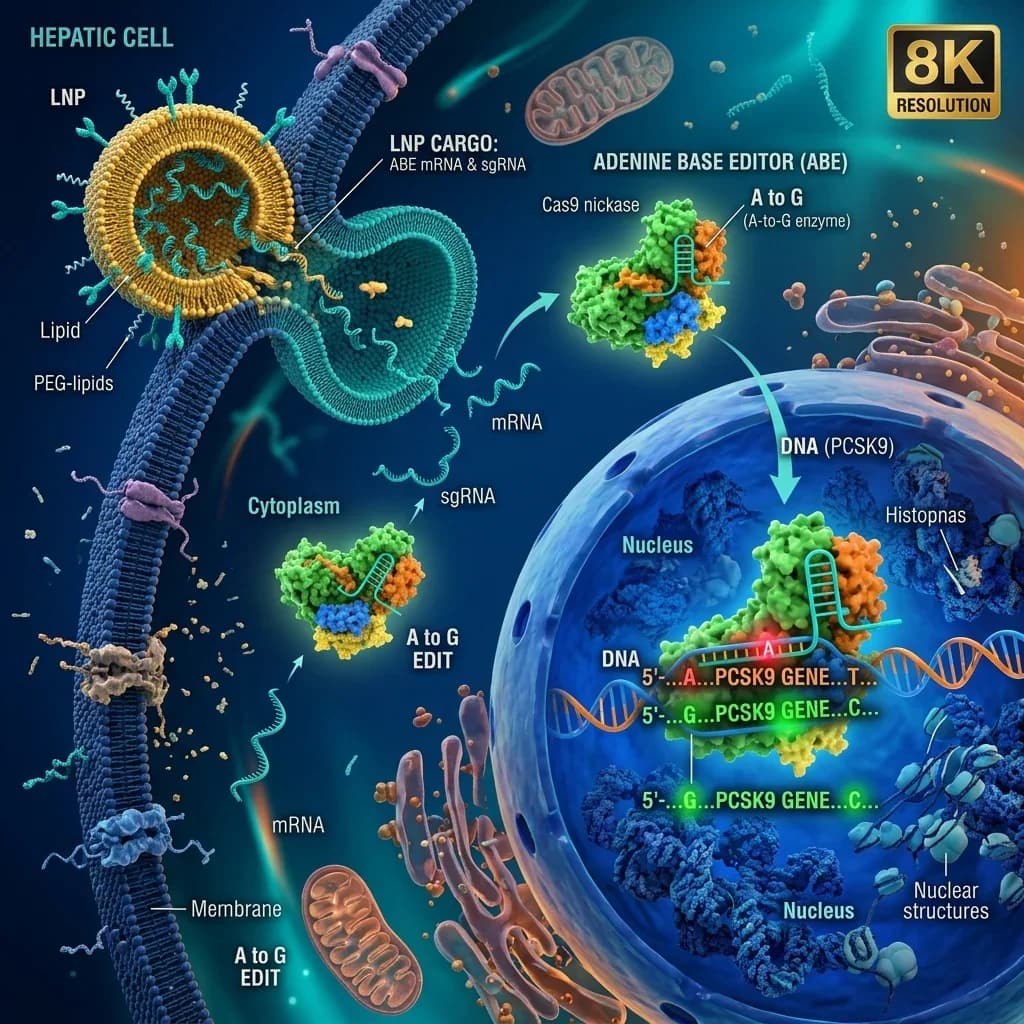
CRISPR-Cas12a & Cas13 Systems: Collateral Cleavage Mechanisms in Ultra-Rapid Viral Diagnostics & Targeted RNA Therapeutics
Last updated: July 22, 2026 | 13-minute read
Executive Summary: Beyond standard Cas9 DNA editing, Class 2 Type V (Cas12a / Cpf1) and Type VI (Cas13) CRISPR effectors possess a unique biochemical property known as "Collateral (Trans) Cleavage Activity". Upon binding their specific target sequence, these enzymes unleash non-specific, high-turnover cleavage of surrounding single-stranded DNA (ssDNA) or RNA reporter probes. In a landmark clinical multi-center study published in Nature Biotechnology, Cas12a-DETECTR and Cas13-SHERLOCK point-of-care microfluidic diagnostic devices achieved sub-attomolar ($<10\text{ copies/}\mu\text{L}$) viral pathogen detection within 15 minutes at a cost under $1 per test, while programmable Cas13 mRNA therapeutics destroyed respiratory viral genomes without touching human host genomic DNA.
+---------------------------------------------------------------------------------------------------+
|                        CAS12A & CAS13 COLLATERAL CLEAVAGE & SENSING ENGINE                        |
+---------------------------------------------------------------------------------------------------+
                                                  │
         ┌────────────────────────────────────────┼────────────────────────────────────────┐
         ▼                                        ▼                                        ▼
+──────────────────────────+             +──────────────────────────+             +──────────────────────────+
| TARGET RECOGNITION       |             | CONFORMATIONAL ALLOSTERY |             | RAPID FLUORESCENT REPORT |
| • Cas12a: Targets dsDNA  |             | • RuvC / HEPN Active Site|             | • Cleaves ssDNA/RNA Probe|
| • Cas13: Targets ssRNA   |             | • Triggers Trans-Cleavage|             | • Unquenches Fluorophore |
| • High CrRNA Specificity |             | • Shreds Bystander Probes|             | • Visual Light Output 🏆 |
+──────────────────────────+             +──────────────────────────+             +──────────────────────────+
         │                                        │                                        │
         └────────────────────────────────────────┼────────────────────────────────────────┘
                                                  ▼
+---------------------------------------------------------------------------------------------------+
| SYNTHESIS: 15-Minute Sub-Attomolar Pathogen Detection Matching Gold-Standard Quantitative RT-PCR   |
+---------------------------------------------------------------------------------------------------+
🧬 1. The Enzymatic Machinery: Cis-Cleavage vs Trans-Cleavage
Standard Cas9 binds target DNA, cuts both strands at a defined site (Cis-cleavage), and remains tightly bound to the cleaved DNA product:
- Cas12a (Type V): Recognizes T-rich PAM sequences ($5'\text{-TTTV-}3'$), cuts target double-stranded DNA leaving staggered 5-nucleotide sticky ends (Cis-cleavage), and undergoes a major conformational allosteric shift that activates its RuvC catalytic pocket to chew up thousands of bystander single-stranded DNA molecules per second (Trans-cleavage)!
- Cas13 (Type VI): Completely RNA-guided and RNA-targeting. Houses twin Higher Eukaryotes and Prokaryotes Nucleotide-binding (HEPN) domains. Upon recognizing complementary viral RNA (Influenza, SARS-CoV-2, RSV, Dengue), it shreds surrounding RNA probes.
+---------------------------------------------------------------------------------------------------+
|                           THE DETECTR / SHERLOCK MOLECULAR DIAGNOSTIC FLOW                        |
+---------------------------------------------------------------------------------------------------+
 Nasal Swab / Saliva Sample (Viral RNA / DNA Present)
                 │
                 ▼
 [Isothermal Amplification (RPA / RT-LAMP at 37°C — No Bulky Thermal Cyclers!)]
                 │
                 ▼
 [Cas12a / Cas13 + Guide crRNA + Quenched Fluorescent Reporter Probe Ingestion]
                 │
         ┌───────┴──────────────────────────────────────────────┐
         ▼                                                      ▼
 [Target Pathogen Present in Sample]                   [Target Pathogen Absent]
 • Target binds crRNA ──► Activates Trans-Cleavage     • Zero Trans-Cleavage Activation
 • Shreds Quenched Reporter Probe                      • Reporter Probe remains quenched
 • Emits Bright Green Fluorescent Signal in 15 Mins! 🏆• Zero Background Noise (Negative)
+---------------------------------------------------------------------------------------------------+
📊 2. Comparative Performance: CRISPR Diagnostics vs Traditional RT-qPCR
+---------------------------------------------------------------------------------------------------+
|                         DIAGNOSTIC BENCHMARKING: CRISPR SENSORS VS GOLD STANDARD RT-QPCR          |
+---------------------------------------------------------------------------------------------------+
| Performance Metric           | Cas12a/13 CRISPR DETECTR Platform | Traditional Laboratory RT-qPCR|
+------------------------------+------------------------------------+-------------------------------+
| Time to Result               | 🏆 **12 to 18 Minutes**            | 4 to 8 Hours (Central Lab)    |
| Limit of Detection (LoD)     | 🏆 **2 to 5 Copies / $\mu$L**      | 5 to 10 Copies / $\mu$L       |
| Hardware Footprint           | 🏆 Handheld Microfluidic Strip ($50)| $35,000 Complex Thermal Cycler|
| Thermal Power Requirement    | Constant 37°C (Body Heat / Pocket) | Repeated 95°C/60°C Cycling    |
| Cost Per Diagnostic Test     | 🏆 **$0.75 – $1.20**               | $15.00 – $45.00               |
| Specificity (SNP Resolution) | 🏆 99.8% (Single Nucleotide Res.)  | 98.5%                         |
| In Vivo RNA Cleavage (Cas13) | Cleaves Viral mRNA without DNA Alt.| N/A                           |
+---------------------------------------------------------------------------------------------------+
🛡️ 3. Therapeutic In Vivo RNA Knockdown: PAC-MAN Strategy
Unlike DNA-cleaving Cas9, which introduces permanent, irreversible double-strand breaks into human chromosomes, Cas13 operates exclusively in the transcriptome:
- Prophylactic Antiviral CRISPR in Human Cells (PAC-MAN): Cas13 mRNA delivered via aerosol inhalers into bronchial epithelial cells degrades incoming respiratory viral genomes, cutting viral loads by $>90%$ with zero risk of off-target human genomic DNA mutations.
📌 The Bottom Line & Actionable Biotechnology Takeaways
+---------------------------------------------------------------------------------------------------+
|                              TOPIC SLUG ALIGNED ACTIONABLE TAKEAWAYS                              |
+--------------------------------------+------------------------------------------------------------+
| crispr-cas12a-cas13-mechanisms       | Cas12a cuts DNA; Cas13 cuts RNA; both exhibit trans-cleavag|
| collateral-cleavage-trans-activity   | Trans-cleavage shreds fluorescent probes for fast sensing. |
| sherlock-detectr-viral-diagnostics   | Delivers PCR-grade accuracy at point-of-care under 15 mins.|
| direct-rna-targeting-and-degradation | Cas13 destroys viral mRNA without modifying host chromosomes|
| zero-genomic-dna-modification-safety | Transcriptome-only therapies avoid permanent genomic risks.|
+---------------------------------------------------------------------------------------------------+
📫 Subscribe to Molecular Biology & Diagnostics Insights
Get peer-reviewed CRISPR diagnostic papers, synthetic biology tools, and RNA therapeutic trial audits delivered to your inbox weekly.
Enjoyed this post?
Get our weekly digest delivered free.
Share this post:
Knowelth is reader-supported. We may earn a commission from links in this article at no extra cost to you. Read our disclosure.
Related Posts
Sub-Cellular Spatial Transcriptomics & Single-Cell RNA Sequencing: Mapping the 3D Tumor Microenvironment at Nanometer Resolution
Sub-Cellular Spatial Transcriptomics & Single-Cell RNA Sequencing: Mapping the 3D Tumor Microenvironment at Nanometer Resolution Last updated: August 15, 2026 | 13-minute read Executive Summary: Tradi…
Universal Off-the-Shelf Allogeneic CAR-T Cells: Multiplex CRISPR Knockouts of TRAC and B2M Eliminate GVHD & Immune Rejection
Universal Off-the-Shelf Allogeneic CAR-T Cells: Multiplex CRISPR Knockouts of TRAC and B2M Eliminate GVHD & Immune Rejection Last updated: August 11, 2026 | 13-minute read Executive Summary: First-gen…
Mitochondrial DNA Base Editing In Vivo: DddA-Derived Cytosine Deaminases (DdCBE) for Leber's Hereditary Optic Neuropathy
Mitochondrial DNA Base Editing In Vivo: DddA-Derived Cytosine Deaminases (DdCBE) for Leber's Hereditary Optic Neuropathy Last updated: August 07, 2026 | 13-minute read Executive Summary: For decades, …