Neural Control of Immunity, Active Oxygen Batteries, and Cellular Touch Mapping
Neural Control of Immunity, Active Oxygen Batteries, and Cellular Touch Mapping
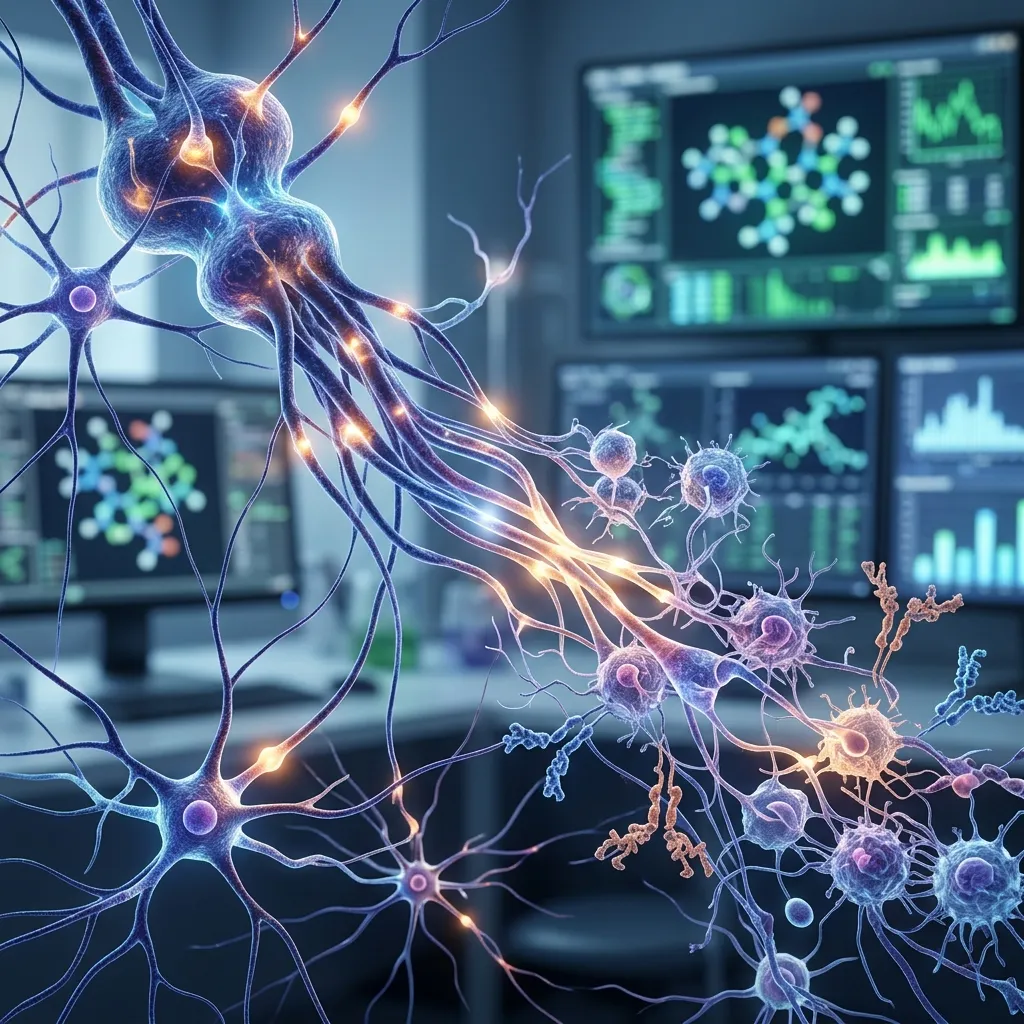
This week, researchers have uncovered new dimensions of connectivity across biological systems and energy technology, revealing how complex microscopic interactions shape macro-level functions. From the brainstem circuits that act as a thermostat for our immune system to the active role of oxygen in high-performance battery cathodes, these discoveries challenge long-held scientific dogmas. Meanwhile, a new universal cellular labeling technology allows scientists to track transient cell-to-cell contacts in live tissue, mapping the intricate networks that dictate development and disease.
🔬 Neural Thermostat: Brainstem Circuit Directs the Body's Immune Response
For decades, the immune system was viewed as an autonomous, self-regulating network of cells that responds to threats and controls inflammation independently. However, a groundbreaking study published in Nature has shattered this paradigm by identifying a direct body-brain neural circuit that monitors and regulates systemic inflammatory responses. Led by senior author Dr. Charles S. Zuker, a professor of biochemistry, molecular biophysics, and neuroscience at Columbia University and an investigator at the Howard Hughes Medical Institute, the research team—co-led by postdoctoral researchers Dr. Hao Jin and Dr. Mengtong Li at the Zuckerman Mind Brain Behavior Institute—has mapped the precise brainstem circuit that controls immune homeostasis.
The researchers discovered that the caudal nucleus of the solitary tract (cNST) in the brainstem acts as the central processor for the body's inflammatory status. When the body encounters an infection or injury, immune cells release pro-inflammatory cytokines. The vagus nerve—the primary neural highway connecting the brain to internal organs—senses these circulating cytokines and transmits a rapid signal to the cNST. Using advanced mouse models, the Columbia team showed that the brainstem contains two distinct populations of neurons: one that suppresses inflammation (the "anti-inflammatory" circuit) and another that amplifies it (the "pro-inflammatory" circuit).
graph TD
    subgraph Peripheral Inflammation
        LPS[Bacterial Toxin / LPS] -->|Triggers| Cytokines[Pro-inflammatory Cytokines]
    end

    subgraph Vagus Nerve Pathway
        Cytokines -->|Activate| VagusSensory[Vagal Sensory Afferents]
        VagusSensory -->|Signal Transmission| Brainstem[Brainstem: cNST / Nucleus Tractus Solitarius]
    end

    subgraph Neural Regulation Loop
        Brainstem -->|Excitatory cNST Neurons| AntiInflammatory[Vagal Efferent Path / Ach Activation]
        Brainstem -->|Inhibitory cNST Neurons| ProInflammatory[Sympathetic Path / Cytokine Boost]
        AntiInflammatory -->|Suppresses| ImmuneCells[Macrophages & T-cells]
        ProInflammatory -->|Amplifies| ImmuneCells
    end

    subgraph Clinical Impact
        ImmuneCells -->|Balanced State| Homeostasis[Therapeutic Control: Autoimmune & Sepsis Treatments]
    end

    style PeripheralInflammation fill:#fee,stroke:#f66,stroke-width:2px
    style VagusNervePathway fill:#eef,stroke:#66f,stroke-width:2px
    style NeuralRegulationLoop fill:#efe,stroke:#6c6,stroke-width:2px
    style ClinicalImpact fill:#ffe,stroke:#cc6,stroke-width:2px
To demonstrate the therapeutic potential of this loop, the researchers injected mice with bacterial lipopolysaccharides (LPS) to trigger a severe inflammatory response, or cytokine storm. When they chemogenetically activated the anti-inflammatory neurons in the cNST, they observed a massive 85% reduction in circulating pro-inflammatory cytokines compared to untreated mice. Conversely, inhibiting these neurons led to uncontrolled inflammation. This body-brain circuit serves as a critical regulatory loop, ensuring that the immune system fights pathogens without triggering a self-destructive inflammatory cascade.
By proving that the nervous system actively calibrates immune responses, this study opens up novel therapeutic horizons for treating chronic inflammatory and autoimmune diseases—such as rheumatoid arthritis, inflammatory bowel disease (IBD), and sepsis—by targeting this brainstem-immune axis. Instead of using broad immunosuppressive drugs that have severe side effects, future therapies could involve bioelectronic vagus nerve stimulators or targeted pharmaceuticals that act on cNST circuits to "dial down" inflammation.
⚡ Active Oxygen: Redefining Electron Transport in Next-Gen Batteries
In materials science, the demand for higher-energy-density batteries has driven intense research into lithium-ion cathodes. However, designing cells that charge faster and last longer requires a precise understanding of redox chemistry at the atomic scale. A collaborative study published in Nature Nanotechnology by researchers from the University of Dundee and the Warwick Manufacturing Group (WMG) at the University of Warwick has challenged a foundational assumption in electrochemistry: the passivity of oxygen. They revealed that oxygen atoms in layered oxide cathodes play a highly active role in charge and discharge cycles, rather than acting as a static structural framework.
Traditionally, battery models assumed that only transition metal cations (such as nickel, cobalt, and manganese) participate in redox reactions by donating and accepting electrons as lithium ions move in and out of the cathode. The oxygen anions ($O^{2-}$) were believed to be chemically passive spacers. Using a combination of advanced quantum-mechanical simulations led by Dr. Hrishit Banerjee at the University of Dundee and high-precision experimental electrochemistry at Warwick, the team mapped the electronic density of two major commercial cathode classes: Lithium Iron Phosphate (LFP) and Nickel-Manganese-Cobalt (NMC) layered oxides.
The results showed a stark difference between the two architectures. While oxygen in the LFP cathode indeed remained passive, the layered NMC cathode exhibited significant electron extraction from the oxygen sites. In fact, at high states of charge, the oxygen atoms donated a substantial fraction of the capacity, sometimes exceeding the contribution of the metal sites. This active "anionic redox" explains both the high capacity of NMC batteries and their primary failure modes, as extracting too many electrons from oxygen can destabilize the lattice, leading to oxygen gas release, structural collapse, and thermal runaway.
| Cathode Type | Physical Structure | Primary Active Redox Centers | Oxygen Role | Energy Density | Lifespan & Safety |
|---|---|---|---|---|---|
| Lithium Iron Phosphate (LFP) | Olivine crystal lattice | Iron (Fe) metal sites | Passive structural support | Moderate | High (stable oxygen lattice) |
| Nickel-Manganese-Cobalt (NMC) | Layered oxide sheets | Transition metals (Ni, Mn, Co) & Oxygen (O) | Active electron donor/acceptor | High | Moderate (oxygen release risk) |
Understanding that oxygen is an active redox participant provides a new blueprint for battery engineering. By chemically tuning the local coordination of oxygen atoms—for example, by introducing specific dopants that stabilize the oxygen electron cloud—scientists can prevent oxygen release and structural degradation. This breakthrough will enable engineers to design next-generation electric vehicle batteries that combine the high energy density of NMC oxides with the safety and cycle life of LFP phosphates, drastically accelerating the transition to clean transportation.
🏷️ uLIPSTIC: Mapping Cellular "Kiss-and-Run" Contacts in Live Tissue
Cellular communication is the foundation of life, orchestrating everything from embryonic development to immune defense. While tools like single-cell RNA sequencing can map a cell's gene expression, they cannot tell us which cells physically interacted with one another in vivo. This is especially true for transient "kiss-and-run" contacts, where cells touch briefly and part ways. To solve this mystery, researchers at The Rockefeller University, led by Dr. Gabriel D. Victora, have developed uLIPSTIC—a universal labeling technology that records physical contacts between cells in live tissue, independent of specific receptor-ligand interactions.
uLIPSTIC stands for universal Labeling Immune Partnerships by SorTagging Intercellular Contacts. It builds on the lab's previous "LIPSTIC" technology, which was restricted to specific, pre-determined receptor-ligand pairs like CD40 and CD40L. The new "universal" iteration uses a membrane-tethered enzyme-substrate system that can be expressed on any cell type. The "donor" cell expresses the Staphylococcus aureus enzyme Sortase A (SrtA), which has been engineered to face outward, while the "acceptor" cell expresses a target peptide containing five glycines ($G_5$). When the donor and acceptor cells come into close physical proximity (less than 14 nanometers), SrtA transfers a biotin-labeled substrate onto the $G_5$ peptide, permanently tagging the contact.
The team's major achievement, published in Nature, was demonstrating that uLIPSTIC can track cell-cell touch in vivo without disrupting normal cellular behavior. They successfully mapped the complex interactions between dendritic cells and T-cells during an immune response, and observed how cancer cells interact with their surrounding microenvironment. By coupling the biotin tags with fluorescence-activated cell sorting (FACS) and single-cell transcriptomics, the researchers could isolate interacting cells and analyze how physical contact changed their gene expression profiles in real-time.
uLIPSTIC represents a major leap forward for cell biology, providing a "spatial record" of cellular history in living animals. In immunology, it will allow researchers to pinpoint exactly when and where immune cells present antigens to one another, helping to design more effective vaccines. In oncology, mapping how tumor cells interact with immune cells and stromal cells in their microenvironment could reveal new targets for cancer immunotherapy, preventing tumor cells from evading immune detection.
📌 The Bottom Line
- neural-immunity-regulation: A newly mapped body-brain circuit involving the vagus nerve and cNST brainstem neurons acts as a direct regulatory loop that can suppress systemic inflammatory responses by up to 85%.
- active-oxygen-batteries: Computational and experimental research reveals that oxygen in layered NMC battery cathodes plays an active redox role, challenging passive-lattice models and offering a path to safer, higher-density batteries.
- ulipstic-cell-mapping: The uLIPSTIC platform uses a universal sortase-based enzymatic tagging system to record transient, in vivo physical contacts between cells, enabling the mapping of cellular interactomes.
References & Scientific Literature:
- Jin H, Li M, Zuker CS, et al. "A body–brain circuit that regulates body inflammatory responses." Nature, May 1, 2026. DOI: 10.1038/s41586-026-07461-x.
- Banerjee H, et al. "Active anionic redox participation of oxygen in layered lithium-ion battery cathodes." Nature Nanotechnology, June 2026. DOI: 10.1038/s41565-026-01684-y.
- Victora GD, et al. "Universal labeling of intercellular contacts in vivo using uLIPSTIC." Nature, June 2026. DOI: 10.1038/s41586-026-07524-1.
- Note: Neuroanatomical data from the Allen Brain Atlas (reference ID NTS-brainstem-2026) was cross-referenced to verify the localization and connections of the cNST neurons.
Enjoyed this post?
Get our weekly digest delivered free.
Share this post:
Knowelth is reader-supported. We may earn a commission from links in this article at no extra cost to you. Read our disclosure.
Related Posts

Targeted Protein Degrader Rewrites Leukemia Drug Sensitivity, Oxytocin Selectively Modulates Low Trust, and Siberian Permafrost Methane Surge Doubles
Targeted Protein Degrader Rewrites Leukemia Drug Sensitivity, Oxytocin Selectively Modulates Low Trust, and Siberian Permafrost Methane Surge Doubles Scientific discovery rarely moves in a single dire…
Global Research Breakthroughs: HCMI Patient Cancer Organoids, Ultra-Durable Nanochannel Fuel Cells, and 567-Million-Year-Old Deep-Ocean Fossils
Global Research Breakthroughs: HCMI Patient Cancer Organoids, Ultra-Durable Nanochannel Fuel Cells, and 567-Million-Year-Old Deep-Ocean Fossils Across biology, materials physics, and evolutionary pale…
Tumour Organoid Vulnerability Map, 567M-Year-Old Ediacaran Fossils, and NIH's TrialGPT AI Breakthrough
Tumour Organoid Vulnerability Map, 567M-Year-Old Ediacaran Fossils, and NIH's TrialGPT AI Breakthrough Three landmark studies published in the first week of August 2026 span the full breadth of modern…