Global Research Breakthroughs: HCMI Patient Cancer Organoids, Ultra-Durable Nanochannel Fuel Cells, and 567-Million-Year-Old Deep-Ocean Fossils
Global Research Breakthroughs: HCMI Patient Cancer Organoids, Ultra-Durable Nanochannel Fuel Cells, and 567-Million-Year-Old Deep-Ocean Fossils
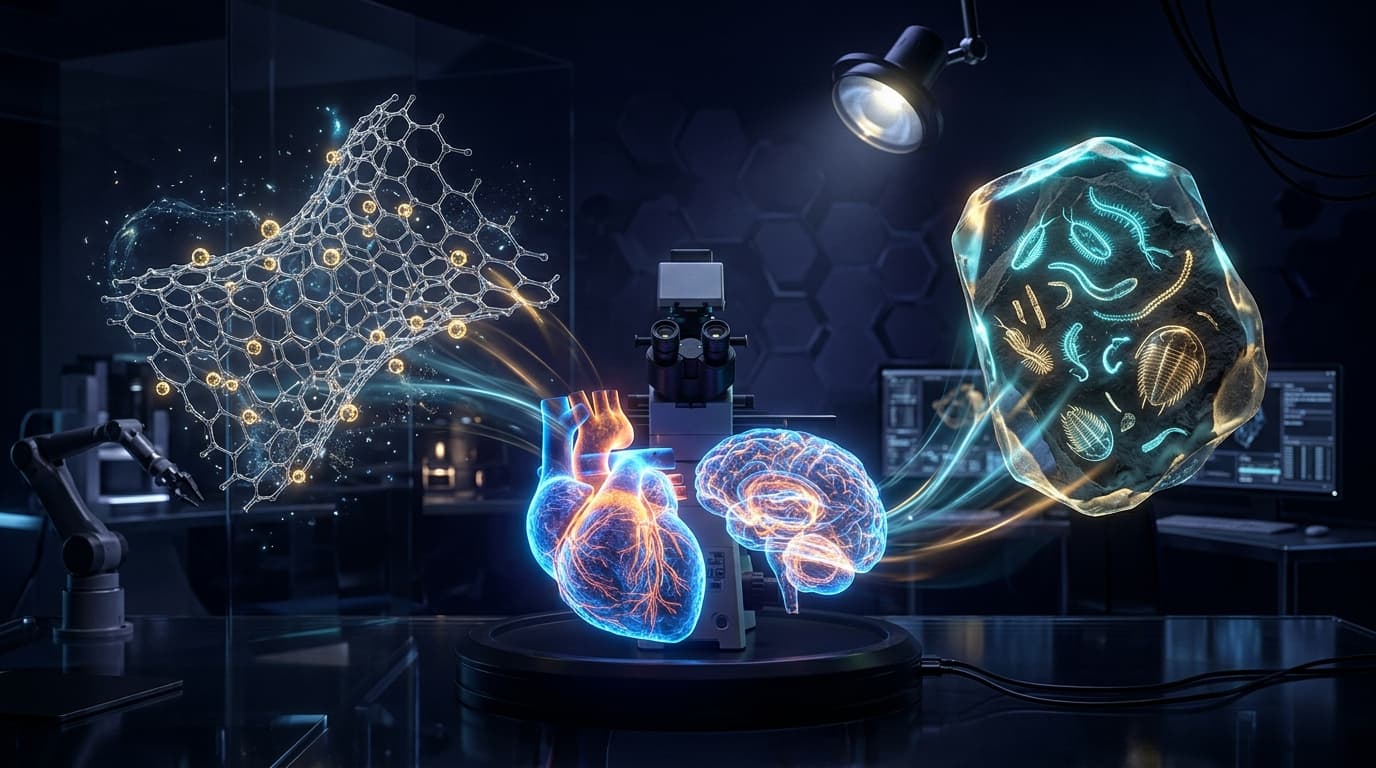
Across biology, materials physics, and evolutionary paleontology, scientific discovery in August 2026 is demonstrating how micro-architectural precision dictates macro-scale reality. From living 3D human organoids that unveil hidden tumor vulnerabilities, to self-assembling carbon nanochannels that unlock heavy-duty hydrogen power, to deep-sea fossil beds that rewrite the early history of animal life, researchers around the world are pushing the frontiers of human knowledge.
🔬 Decoding Tumor Architecture: The Human Cancer Models Initiative Unveils 665 Patient-Derived 3D Organoids in Nature
For decades, cancer researchers have faced a frustrating paradox: drugs that miraculously eliminate tumors in laboratory dishes frequently fail when tested in human clinical trials. More than 90% of prospective oncology therapeutics collapse during clinical phases, largely because traditional two-dimensional cell cultures—grown flat on plastic petri dishes—rapidly lose their native genetic diversity, structural architecture, and microenvironmental signals. In a landmark study published in Nature, an international research consortium has delivered a powerful solution: a public compendium of 665 next-generation, patient-derived 3D cancer models representing 25 distinct cancer types.
Led by researchers from the Broad Institute of MIT and Harvard, the Koch Institute for Integrative Cancer Research at MIT, the Dana-Farber Cancer Institute, and the National Cancer Institute (NCI), the project represents a milestone for the Human Cancer Models Initiative (HCMI). Rather than relying on decades-old, immortalized cell lines, the consortium derived living three-dimensional "organoids" directly from fresh surgical patient tissue. These organoids retain the complex, multi-layered architecture, cell-to-cell signaling, and genetic heterogeneity of human tumors, providing an unprecedented functional avatar of human disease.
+-------------------------------------------------------------------+
|                    TRANSLATIONAL ONCOLOGY GAP                     |
|                                                                   |
|  Traditional 2D Cell Lines           HCMI 3D Patient Organoids    |
|  - Grown flat on plastic             - Grown in 3D extracellular  |
|  - Rapid genetic drift & loss        - Preserves genomic, phenotypic|
|    of tumor microarchitecture          & structural heterogeneity |
|  - High clinical failure rate (>90%) - High fidelity predictive   |
|                                        response for drug discovery|
+-------------------------------------------------------------------+
To create these models, the team isolated tumor cells from primary and metastatic patient biopsies across 25 cancer types, including notoriously difficult-to-treat diseases such as pancreatic ductal adenocarcinoma, cholangiocarcinoma, rare pediatric sarcomas, and treatment-resistant ovarian carcinomas. The cells were suspended in extracellular matrix hydrogels and nourished with specialized growth-factor cocktails, allowing them to self-assemble into microscopic, 3D biological structures. Deep genomic sequencing, transcriptomic profiling, and clinical annotation were performed on every single model to ensure long-term biological stability without the "biological drift" that degrades older laboratory cell lines.
Crucially, the Broad Institute integrated these 665 organoid models directly into the Cancer Dependency Map (DepMap) ecosystem. By subjecting the 3D organoids to high-throughput CRISPR-Cas9 functional gene knockouts and systematic small-molecule drug screens, scientists can systematically map "genetic dependencies"—identifying specific genes that cancer cells rely upon for survival while sparing healthy tissue. Distributed globally through the non-profit American Type Culture Collection (ATCC), this open-access collection provides academic institutions and biotechnology firms with an immediate, pre-validated pipeline for target discovery and personalized oncology testing.
⚡ Zero-Emission Power: Radial Nanochannel Carbon Catalysts Achieve 25,000-Hour Endurance Breakthrough for Heavy Transportation and Data Centers
As the global energy transition accelerates, high-demand sectors such as heavy-duty freight trucking, maritime shipping, aviation, and artificial intelligence data centers require clean, continuous energy that lithium-ion batteries cannot feasibly deliver due to weight constraints and lengthy recharging cycles. Proton exchange membrane fuel cells (PEMFCs), which convert hydrogen and oxygen into electricity with zero operational emissions other than pure water, offer an ideal solution. However, commercial adoption has been severely limited by the high cost of platinum catalysts and their rapid degradation under intense thermal and electrical stress. Published in Nature Nanotechnology, a breakthrough material design promises to overcome this fundamental barrier.
A multi-institutional team led by Professor Gang Wu at Washington University in St. Louis, in collaboration with scientists at Brookhaven National Laboratory, Lawrence Berkeley National Laboratory, Northeastern University, and the University of Pittsburgh, has engineered a novel catalyst support architecture featuring hollow carbon spheres enveloped in radial nanochannel arrays (RNCS). This porous 3D carbon scaffold acts as a molecular cage that encapsulates platinum-cobalt (PtCo) intermetallic nanoparticles.
Radial Nanochannel Carbon Scaffold (RNCS) Architecture
=====================================================
    [ Hollow Carbon Core ] <--- High surface area & gas transport
          |||||||||        <--- Radial Nanochannels (3D array)
     ( PtCo Nanoparticles ) <--- Confined <5nm intermetallic phase
          |||||||||        <--- Sintering prevention at 1000°C
The primary engineering challenge in fuel cell chemistry has long been the trade-off between catalyst particle size and atomic order. To form the highly durable "intermetallic" phase of platinum-cobalt alloys, materials must be synthesized at temperatures reaching 1,000°C. At these extreme temperatures, unconfined platinum nanoparticles normally sinter—clumping together into larger blobs that drastically reduce active surface area and catalytic activity. The radial nanochannels constructed by Prof. Wu's team solve this problem by physically confining the PtCo nanoparticles under 5 nanometers in diameter during high-temperature annealing, maintaining perfect atomic dispersion while inducing intermetallic ordering.
In rigorous accelerated stress testing conducted in accordance with Department of Energy protocols, the radial nanochannel PtCo catalyst demonstrated astounding durability. After 150,000 voltage stress cycles—simulating approximately 25,000 hours of continuous operation—the catalyst retained 82.5% to 85% of its initial power density, vastly outperforming conventional carbon-supported platinum catalysts that degrade within a fraction of that time. Furthermore, the material achieved a peak current density of 2.12 amperes per square centimeter. By dramatically extending operational lifespan while reducing expensive platinum consumption, this technological milestone paves the way for commercial zero-emission heavy transport and grid-independent, fuel-cell-powered AI data centers.
🦴 Deep-Ocean Genesis: 567-Million-Year-Old Ediacaran Fossils Push Back Animal Locomotion and Sexual Reproduction Timelines in Science Advances
The dawn of complex animal life on Earth remains one of the most intriguing mysteries in evolutionary biology. For over a century, the prevailing scientific consensus maintained that the earliest multicellular animals evolved exclusively in shallow, oxygen-rich coastal waters during the Ediacaran Period (635 to 538 million years ago) before gradually adapting to deeper oceanic environments. However, a remarkable discovery published in Science Advances has overturned this traditional paradigm, revealing that complex animal behaviors—including active locomotion, sexual reproduction, and bilateral body symmetry—originated deep beneath the ancient ocean surface millions of years earlier than previously believed.
A research expedition led by Dr. Scott Evans of the American Museum of Natural History, alongside geologists and paleontologists from Dartmouth College, Pennsylvania State University, and Stanford University, discovered more than 100 exquisitely preserved fossils in the remote Mackenzie Mountains of Canada’s Northwest Territories. Located on the traditional ancestral lands of the Sahtú Dene and Métis, the fossil bed dates back 567 million years—pushing key evolutionary milestones back by 5 to 10 million years.
FOSSIL DISCOVERY METRICS (Mackenzie Mountains, NWT)
---------------------------------------------------
Fossil Age:              567 Million Years Ago (Ediacaran Period)
Geological Setting:      Deep-Sea Benthic Turbidite Deposit
Key Specimens Uncovered: - Dickinsonia (Early seabed locomotion trails)
                         - Funisia (Oldest evidence of sexual reproduction)
                         - Kimberella (Early ancestral bilateral mollusk)
Timeline Shift:          Pushes locomotion & sexual reproduction back 5-10 Myr
Sedimentological profiling of the host rocks confirmed that the fossils were deposited in a deep-water benthic basin, far below the reach of storm waves and photosynthetic sunlight. Among the key organisms uncovered was Dickinsonia, a flat, oval Ediacaran organism that left clear displacement trails in the sediment, providing direct evidence of deliberate animal movement across the seafloor. The site also yielded abundant specimens of Funisia, which grew in dense, uniform age cohorts characteristic of synchronized sexual reproduction (spawning), as well as Kimberella, an early bilateral animal closely related to modern mollusks.
The discovery of over six fossil groups never before documented in North America connects the ancient Laurentian continent to global Ediacaran assemblages previously identified only in South Australia and the White Sea of Russia. More importantly, it proves that deep-ocean environments were vibrant cradles of evolutionary experimentation prior to the Cambrian Explosion. Rather than serving as an evolutionary graveyard, the deep sea provided a stable, nutrient-rich sanctuary where early complex animals developed fundamental reproductive, anatomical, and behavioral adaptations.
📌 The Bottom Line
- cancer-organoids: The HCMI consortium's 665 patient-derived 3D organoid models, published in Nature and integrated into DepMap, bridge the drug discovery gap across 25 cancer types.
- fuel-cell-catalyst: Radial nanochannel carbon scaffolds created by Washington University in St. Louis stabilize platinum-cobalt catalysts for 25,000 operational hours, enabling heavy hydrogen transportation and zero-emission data centers.
- deep-ocean-fossils: Discovery of 567-million-year-old Ediacaran fossils in Canada's Northwest Territories reveals that animal locomotion, sexual reproduction, and complex ecosystems evolved in the deep ocean 5 to 10 million years earlier than known.
📫 Stay Updated
Get the week's most important research breakthroughs delivered to your inbox. Subscribe to our free newsletter →
Disclosure: This post contains affiliate links. If you purchase through our links, we earn a small commission at no extra cost to you. We only recommend products we believe in.
Enjoyed this post?
Get our weekly digest delivered free.
Share this post:
Knowelth is reader-supported. We may earn a commission from links in this article at no extra cost to you. Read our disclosure.
Related Posts

Targeted Protein Degrader Rewrites Leukemia Drug Sensitivity, Oxytocin Selectively Modulates Low Trust, and Siberian Permafrost Methane Surge Doubles
Targeted Protein Degrader Rewrites Leukemia Drug Sensitivity, Oxytocin Selectively Modulates Low Trust, and Siberian Permafrost Methane Surge Doubles Scientific discovery rarely moves in a single dire…
Tumour Organoid Vulnerability Map, 567M-Year-Old Ediacaran Fossils, and NIH's TrialGPT AI Breakthrough
Tumour Organoid Vulnerability Map, 567M-Year-Old Ediacaran Fossils, and NIH's TrialGPT AI Breakthrough Three landmark studies published in the first week of August 2026 span the full breadth of modern…
3D Genome Crohn's Discovery, Plant Nitrogen Switch, and Alzheimer's 3D Tissue Model
3D Genome Crohn's Discovery, Plant Nitrogen Switch, and Alzheimer's 3D Tissue Model Scientific progress accelerates when researchers map the physical architecture of living systems across micro- and m…