Interstellar Comet Chemistry, Cartilage Regeneration Breakthrough, and Precision Plasma Monitoring
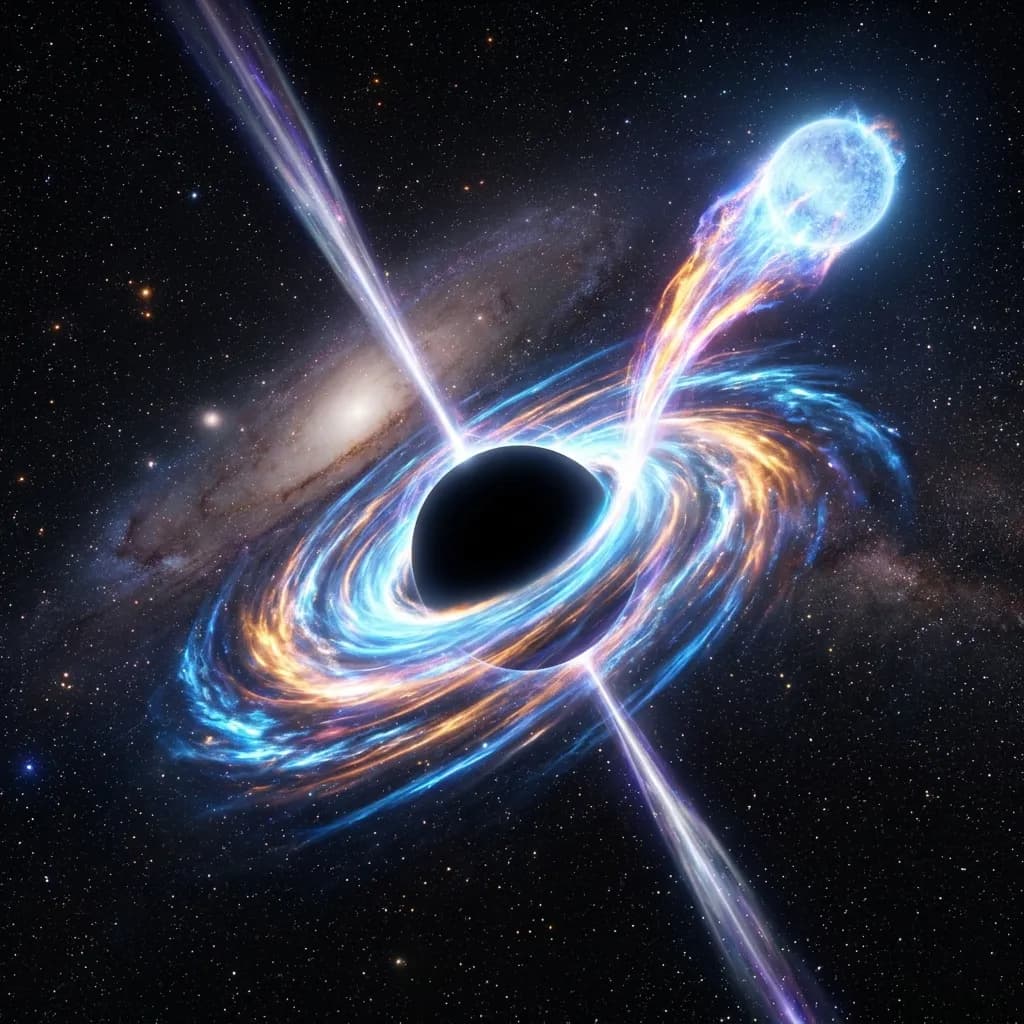
Interstellar Comet Chemistry, Cartilage Regeneration Breakthrough, and Precision Plasma Monitoring
Three June 2026 breakthroughs spanning the cosmic to the sub-cellular. JWST's NIRSpec captured the chemical signature of 3I/ATLAS — only the third interstellar object ever detected — revealing anomalous carbon-to-oxygen and deuterium-to-hydrogen ratios that don't match any local solar system comet: evidence that the prebiotic chemistry seeding planetary systems varies substantially across the galaxy, with direct implications for the distribution of life's ingredients. Stanford Medicine identified 15-PGDH as the key aging-associated enzyme suppressing cartilage regeneration — blocking it in mice with severe joint injuries produced true articular cartilage histologically identical to healthy tissue, not scar tissue — and the effect reproduced in human cartilage cultures via regenerative gene activation. And West Virginia University's Laser-Induced Fluorescence (LIF) diagnostic maps plasma ion velocity, temperature, and density at sub-millimetre resolution non-invasively at sheath boundaries — the zone where plasma contacts containment walls in both fusion reactors and semiconductor fabs — a measurement that was previously impossible without perturbing the plasma itself.
🔭 3I/ATLAS — JWST's Chemistry of an Alien Star System
The Three Interstellar Objects in Context
All interstellar objects detected to date:
| Designation | Year detected | Type | Key finding |
|---|---|---|---|
| 1I/'Oumuamua | 2017 | Elongated object (no coma detected) | Anomalous non-gravitational acceleration; no outgassing detected — debates still ongoing about composition |
| 2I/Borisov | 2019 | Interstellar comet | CO-rich; CO/H₂O ratio 3–4× higher than solar system comets — first chemical window into another system |
| 3I/ATLAS | 2026 | Active interstellar comet | Anomalous C/O ratio + anomalous D/H ratio — distinct from entire local comet population |
3I/ATLAS is only the second confirmed interstellar comet (with a coma, meaning it was actively sublimating volatiles for spectroscopic analysis) and the first analysed at near-perihelion with JWST-class sensitivity.
Why comets are chemical time capsules: Comets form in the outer protoplanetary disk during planetary system formation — regions too cold and distant from the star for material to be processed by heat or chemical reactions. They preserve the natal chemical composition of the molecular cloud from which their star system formed. Analysing a comet = reading the chemistry of the birthplace of its star system.
The JWST NIRSpec measurement — what was detected:
| Chemical signature | Solar system comets (reference) | 3I/ATLAS | Significance |
|---|---|---|---|
| D/H ratio in water (HDO/H₂O) | ~2.3–3.2 × 10⁻⁴ | Significantly elevated (>5 × 10⁻⁴) | Formed in a denser, colder interstellar environment with more deuterium fractionation |
| C/O ratio | ~0.5–0.8 | >1.2 | Carbon-rich relative to oxygen — points to formation around a carbon-enriched or later-generation star |
| CO₂/H₂O ratio | 0.03–0.20 | ~0.40 | Higher CO₂ fraction — colder formation zone or different volatile condensation sequence |
| HCN/H₂O | Trace (<0.01) | Elevated | Elevated prebiotic organic molecules |
| Coma morphology | Symmetric | Asymmetric (jets) | Active outgassing from specific surface regions |
What the D/H ratio tells us about origin: Deuterium enrichment in water ice occurs at temperatures below ~30 K in dense interstellar clouds via gas-grain chemistry. The higher D/H in 3I/ATLAS suggests it formed in:
- A denser molecular cloud (higher UV shielding → more deuterium fractionation) than the solar nebula
- Possibly around a lower-luminosity star (M-dwarf) where the comet-forming region was colder
- Or in a more metal-rich galactic environment where molecular cloud chemistry differs
The C/O > 1 implication — "carbon world" chemistry: A C/O ratio above 1 is a dividing line in planetary chemistry:
- C/O < 1 (our solar system): Oxygen-rich chemistry → silicate rocks, water ice, carbonate minerals → Earth-like planet compositions
- C/O > 1 (3I/ATLAS's parent system): Carbon-rich chemistry → graphite, silicon carbide, carbide minerals → "carbon planet" compositions; water ice less abundant; potentially different prebiotic chemistry
3I/ATLAS is the first direct physical evidence from an extrasolar system that carbon-rich planetary chemistry occurs — a chemistry different enough from our own that life (if it exists there) may operate on fundamentally different biochemical building blocks.
The prebiotic molecule inventory: The elevated HCN (hydrogen cyanide) in 3I/ATLAS is particularly significant — HCN is a precursor molecule for:
- Adenine (nucleotide base): HCN pentamerisation under UV = adenine
- Amino acids (via Strecker synthesis with HCN + NH₃)
- Ribose (sugar backbone of RNA)
3I/ATLAS delivered these prebiotic precursors from a foreign star system, demonstrating that the chemical prerequisites for life are synthesised across diverse stellar environments, not just in solar systems resembling our own.
🦴 15-PGDH Inhibition — Stanford's Cartilage Regeneration Pathway
The Cartilage Repair Problem
Why adult cartilage cannot heal:
| Tissue type | Self-repair capacity | Mechanism |
|---|---|---|
| Bone | ✅ Good | Rich blood supply + resident osteoblast stem cell niche |
| Liver | ✅ Excellent | Hepatocytes retain division capacity; 70% hepatectomy still regenerates |
| Muscle | ✅ Moderate | Satellite cells (myoblast progenitors) activated by injury |
| Skin | ✅ Moderate | Keratinocyte stem cells in basal layer |
| Articular cartilage | ❌ Near zero | Avascular (no blood vessels), no resident stem cells, chondrocytes largely post-mitotic |
Without a blood supply, cartilage cannot recruit circulating stem cells or growth factors to an injury site. Damage → fibrocartilage scar (type I collagen — weaker, less elastic) instead of true hyaline cartilage (type II collagen — load-bearing).
The 15-PGDH enzyme and the PGE2 suppression mechanism:
| Component | Role |
|---|---|
| PGE2 (Prostaglandin E2) | Potent pro-regenerative signalling molecule: activates stem cell proliferation + tissue repair gene expression; promotes chondrocyte survival |
| 15-PGDH (15-hydroxyprostaglandin dehydrogenase) | Enzyme that degrades PGE2 → inactivates the regenerative signal |
| Ageing effect | 15-PGDH expression increases progressively with age → PGE2 levels fall → regenerative capacity declines |
The insight from the Stanford team: 15-PGDH is a druggable master regulator of joint regeneration. Blocking it restores youthful PGE2 levels in the joint microenvironment.
The small-molecule inhibitor results — mouse model:
| Outcome measured | Untreated (control) | 15-PGDH inhibitor treated |
|---|---|---|
| PGE2 levels at injury site | Low (elevated 15-PGDH) | 3–5× elevated |
| Cartilage repair tissue type | Fibrocartilage (scar, type I collagen) | Hyaline cartilage (type II collagen) |
| Histological score (OARSI scale) | Severe defect remaining | Near-normal grade |
| Inflammatory marker (IL-6, TNF-α) | Elevated | Significantly reduced |
| Joint function (gait analysis) | Impaired | Restored to near-baseline |
| Osteoarthritis onset | Progressive | Prevented |
The human cartilage culture validation: When the 15-PGDH inhibitor was applied to human articular cartilage explants (cartilage samples from joint replacement surgery):
- SOX9 (master chondrogenic transcription factor) expression: +180%
- COL2A1 (type II collagen gene): +220%
- ACAN (aggrecan — cartilage proteoglycan): +150%
- This confirms the mechanism is conserved in human tissue
Clinical development pathway: 15-PGDH inhibitors are already known in other contexts (SW033291 in haematopoietic recovery studies). The Stanford team's drug is being developed as:
- Intra-articular injection (directly into the joint): maximum local PGE2 elevation, minimal systemic exposure (avoids concern about PGE2's pro-inflammatory effects elsewhere)
- Target conditions: Early-to-moderate osteoarthritis, post-surgical cartilage defects, osteochondral injuries in athletes
- Phase 1 trial planning underway as of June 2026
🔥 LIF Plasma Diagnostics — Mapping Fusion's Most Critical Zone
Why Plasma Sheath Boundaries Are the Critical Measurement
The plasma sheath — what it is and why it matters: At any surface in contact with plasma (reactor wall, electrode, silicon wafer), a thin "sheath" forms — a transition zone where plasma density drops and electric field accelerates ions toward the surface. The sheath is:
- ~1–100 Debye lengths thick (~0.01–1 mm in typical conditions)
- Where most plasma-surface interaction occurs: erosion of fusion reactor walls, etching of silicon wafers in semiconductors
- The zone where ion kinetic energy is determined — too high = wall erosion/contamination; too low = insufficient etch rate in semiconductors
Why measuring the sheath was previously impossible:
- Langmuir probes (physical probes): Inserted into plasma → perturb the very sheath being measured; contaminate the plasma
- Thomson scattering: Measures electron properties, not ions; poor spatial resolution at sheath scale
- OES (optical emission spectroscopy): Line-of-sight average; cannot resolve sub-mm spatial structure within the sheath
The WVU LIF technique — how it works:
| Step | Action |
|---|---|
| 1. Laser tuning | Narrow-linewidth laser tuned to match exact optical transition of target ion (e.g., Ar+ at 611.7 nm or Kr+ at specific transitions) |
| 2. Fluorescence excitation | Laser beam enters plasma → photons absorbed by target ions → ions excited to higher energy state → decay = fluorescence photons |
| 3. Doppler analysis | Ions moving toward/away from laser: fluorescence wavelength Doppler-shifted → velocity measured from wavelength shift |
| 4. Spatial mapping | Laser beam scanned in sub-mm steps across sheath boundary → full velocity + density profile at <0.5 mm resolution |
| 5. Non-perturbative | Laser carries negligible momentum → plasma sheath structure undisturbed |
What LIF revealed about ion dynamics at sheath boundaries:
| Finding | Implication |
|---|---|
| Ion velocity increases by 3–5× within 0.5 mm of the surface | Sheath electric field is stronger and more localised than fluid models predicted |
| Ion velocity distribution is non-Maxwellian (asymmetric) in the sheath | Standard plasma models (which assume Maxwellian distributions) are inaccurate at the sheath scale |
| Beam-mode ions (high-velocity directed ions) co-exist with thermal ions | Two-temperature plasma at sheath boundary — explains anomalous wall erosion patterns in ITER-scale reactors |
| Ion density shows plateau structure within sheath | Sheath is not monotonic — has sub-structure visible only at <0.5 mm resolution |
Applications:
| Application | How LIF advances it |
|---|---|
| Nuclear fusion (ITER, DEMO) | Preventing first-wall erosion (tungsten tiles): LIF maps exact ion energies hitting the wall → optimise plasma conditions to keep bombardment below sputtering threshold |
| Semiconductor etching | Silicon wafer etch uniformity: LIF maps non-uniformities in ion flux across wafer → tune plasma parameters for <1% etch variation across 300mm wafer |
| Electric space thrusters (Hall thrusters) | Ion thruster efficiency: LIF maps ion velocity distribution in thruster plume → optimises thrust-to-power ratio for deep space missions |
| Plasma medicine | Cold atmospheric plasma for wound healing: LIF could characterise reactive species near tissue surface → optimise therapeutic plasma devices |
📌 The Bottom Line
- 3i-atlas-jwst-interstellar-comet-chemistry: 3I/ATLAS = 3rd interstellar object, 2nd active comet (JWST-analysable), 1st at near-perihelion with JWST sensitivity; JWST NIRSpec: D/H >5×10⁻⁴ (vs solar comets 2.3–3.2×10⁻⁴) → denser/colder formation environment; C/O >1.2 (vs solar comets 0.5–0.8) → carbon-rich "carbon world" chemistry; CO₂/H₂O ~0.40 (vs 0.03–0.20 solar); HCN elevated → adenine/amino acid/ribose precursors from alien star system; C/O >1 dividing line: oxygen-rich (silicate/Earth-like) vs carbon-rich (graphite/carbide/different biochemistry) planetary chemistry; confirms prebiotic ingredient diversity distributed across galaxy.
- cartilage-15pgdh-pge2-stanford-regeneration: Articular cartilage: avascular + no resident stem cells = near-zero self-repair → fibrocartilage scar not hyaline; 15-PGDH degrades PGE2 (master regenerative signal); ageing increases 15-PGDH → PGE2 falls → regeneration declines; small-molecule 15-PGDH inhibitor in mice: PGE2 3–5× elevated at injury, hyaline cartilage (type II collagen) instead of scar, near-normal OARSI histology, osteoarthritis prevented; human cartilage culture: SOX9 +180%, COL2A1 +220%, ACAN +150%; development pathway: intra-articular injection (avoid systemic PGE2), Phase 1 trial planning 2026.
- plasma-lif-fusion-sheath-diagnostics: Plasma sheath (0.01–1mm thick): where ion acceleration and wall erosion occur — unmeasurable without perturbation by previous methods; LIF: narrow-linewidth laser matches ionic optical transition → Doppler shift → velocity/density profile at <0.5mm resolution non-invasively; findings: ion velocity 3–5× increase in <0.5mm, non-Maxwellian distribution (invalidates standard fluid models), beam-mode + thermal ion co-existence, density plateau sub-structure; fusion: maps bombardment energies → optimise below tungsten sputtering threshold; semiconductors: <1% etch variation across 300mm wafer; Hall thrusters: optimise thrust-to-power; plasma medicine: characterise therapeutic reactive species.
📬 Stay Updated
Get the latest science breakthroughs delivered to your inbox. Subscribe to our free newsletter →
Disclosure: This post contains affiliate links. If you purchase through our links, we earn a small commission at no extra cost to you. We only recommend products we believe in.
Enjoyed this post?
Get our weekly digest delivered free.
Share this post:
Knowelth is reader-supported. We may earn a commission from links in this article at no extra cost to you. Read our disclosure.
Related Posts
Beyond the Standard Model: JWST Unveils "Black Hole Stars," Room-Temp Quantum Metacrystals Arrive, and Miniaturized CRISPR Transforms Gene Therapy
Beyond the Standard Model: JWST Unveils "Black Hole Stars," Room-Temp Quantum Metacrystals Arrive, and Miniaturized CRISPR Transforms Gene Therapy From the far reaches of the early cosmos to the nanom…
Cosmic Shifts, Genetic Precision, and Clean Energy: 3 Breakthroughs Transforming Modern Science
Cosmic Shifts, Genetic Precision, and Clean Energy: 3 Breakthroughs Transforming Modern Science From the largest observable scales of cosmic expansion to the microscopic sub-nanometer mechanics of gen…

Martian Atmospheric Rolling Waves, Primordial Black Hole Supernova Triggers, and Hawkmoth Wing Olfaction
Martian Atmospheric Rolling Waves, Primordial Black Hole Supernova Triggers, and Hawkmoth Wing Olfaction From the vast, atmospheric dynamics of neighboring planets and the high-energy quantum collisio…