Atmospheric Methane on Exoplanet WD 1856 b, Layered Delafossite Polar Metals, and the Brain's 'Attention Engine'
Atmospheric Methane on Exoplanet WD 1856 b, Layered Delafossite Polar Metals, and the Brain's 'Attention Engine'
This week, scientific discoveries push the boundaries of our understanding from the vast graveyard of distant star systems to the quantum lattices of advanced materials and the ancient neural circuits of the brain. Astronomers utilizing the James Webb Space Telescope have captured a rare look at the atmosphere of a giant planet orbiting a dead star, while materials physicists have engineered a highly conductive "polar metal" that could revolutionize energy efficiency in electronics. Simultaneously, neuroscientists have mapped a brainstem focus filter—a cellular "attention engine"—offering new insights into cognitive disorders like ADHD. Together, these breakthroughs demonstrate how precision observation and structural manipulation are unlocking the hidden mechanisms of our universe.
🔭 Surviving the Red Giant: JWST Probes the Atmosphere of Exoplanet WD 1856 b
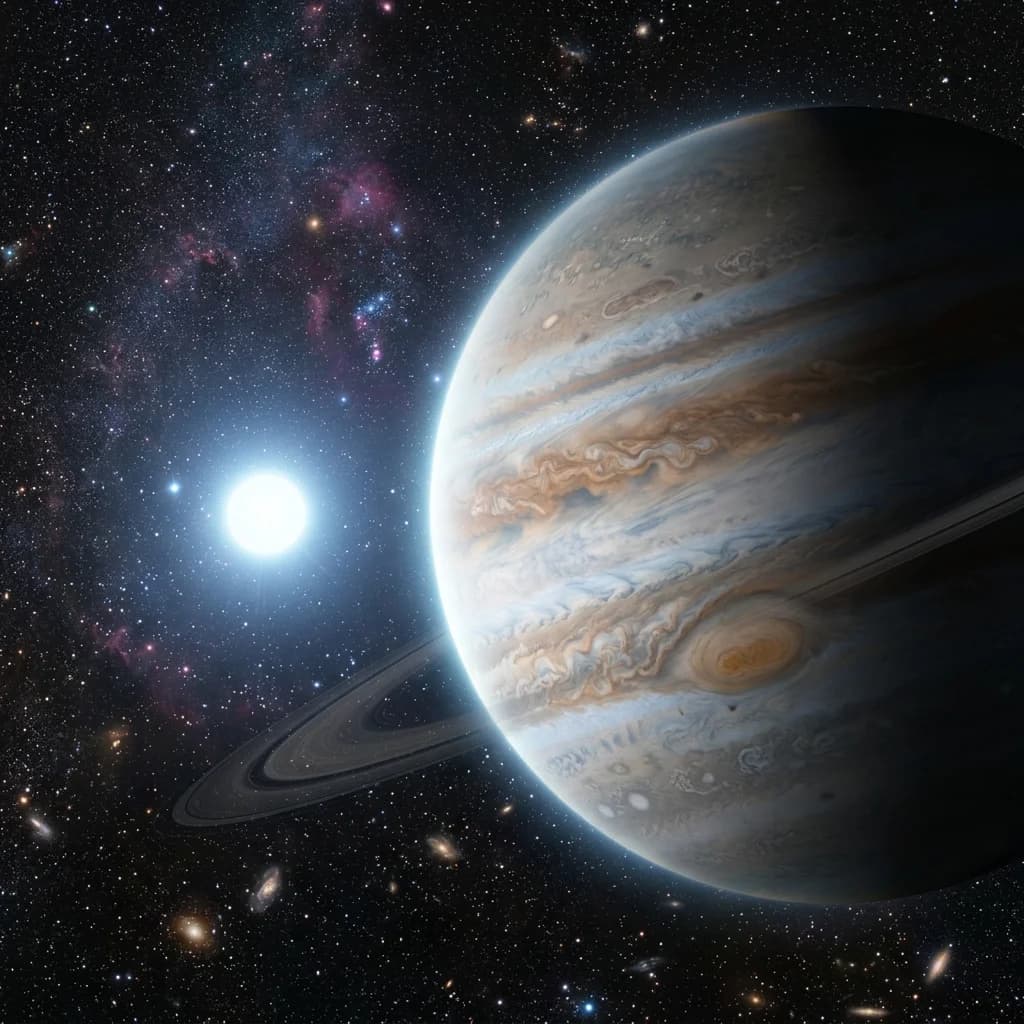
Astronomers have officially obtained the first detailed atmospheric measurements of an exoplanet orbiting a white dwarf star, offering a rare window into the long-term survival of planetary systems. Using the James Webb Space Telescope (JWST), an international team of researchers analyzed the atmosphere of WD 1856 b, a Jupiter-sized gas giant situated approximately 80 light-years from Earth. The study, published in the journal Nature on July 1, 2026, revealed that the planet’s atmosphere contains significant amounts of methane ($CH_4$) and exhibits signs of a thick haze layer.
The survival of WD 1856 b is a dynamic puzzle. A white dwarf is the cooling, dense remnant of a star that has exhausted its nuclear fuel. Before collapsing into this compact state, the star undergoes a red giant phase, expanding outward and swallowing nearby objects. Because WD 1856 b orbits its white dwarf every 1.4 days at a distance of just 1.5 million miles, it sits within the "forbidden zone" where it should have been engulfed and vaporized. The researchers, led by Ryan MacDonald of the University of St. Andrews, propose that the planet originally orbited at a safe, distant boundary. Billions of years after the host star's collapse, gravitational interactions migrated the planet inward.
This orbital migration explains another unexpected finding: the planet is significantly warmer than expected, measuring around 17 degrees Celsius despite the white dwarf's faint energy output. As the planet migrated inward, the intense gravitational pull of the white dwarf exerted tidal forces on it, causing internal friction and heating the planet's core from the inside out. For humanity, this system serves as a celestial time machine. It provides the first direct proof that gas giant planets in our own solar system, like Jupiter and Saturn, can survive the eventual red giant expansion of our Sun and migrate into stable orbits around the remaining white dwarf, persisting long after the solar system's main sequence era has ended.
⚡ Breaking Symmetry: Cambridge Scientists Engineer a Highly Conductive Polar Metal
In the field of materials physics, researchers have successfully engineered a highly conductive polar metal, resolving a long-standing paradox that has limited the progress of next-generation spintronics. The study, published in Nature Materials on June 25, 2026, by a research team at the University of Cambridge, demonstrates how polar distortions in the crystal lattice of a layered delafossite oxide (PtCoO₂) can break inversion symmetry while maintaining high metallic conductivity.
Polar metals are traditionally considered an physical impossibility. A polar material requires a permanent internal electric field, created by a structural separation of positive and negative charges. However, in metallic materials, a sea of free-flowing conduction electrons is always present. According to basic electrostatic laws, these free electrons immediately rush to screen out and neutralize any internal electric fields—a phenomenon identical to how a metal container blocks radio waves. To create a polar metal, physicists must find a way to maintain structural polarity without letting the conduction electrons extinguish the effect.
The Cambridge team overcame this obstacle by utilizing PtCoO₂, a layered delafossite material famous for its exceptionally low resistivity and quasi-two-dimensional structure. The material consists of alternating layers of highly conductive platinum sheets and insulating cobalt-oxygen sheets. By introducing precise structural distortions that broke inversion symmetry within the cobalt-oxygen layers, the team successfully established a robust, permanent polar state. Because the conduction electrons are tightly confined to the adjacent platinum layers, they were unable to screen the polar displacement in the oxide layers. This engineered material exhibits an exceptionally large spin Hall effect, allowing it to convert electrical currents into spin-polarized currents with extreme efficiency. This breakthrough provides a single-material solution to generate spin currents, opening the door for energy-efficient spintronic microchips that process data via electron spin rather than charge, generating almost no waste heat.
🧠 The Focus Filter: Johns Hopkins Uncovers the Brain's Ancient 'Attention Engine'
Neuroscientists have identified a specific cluster of inhibitory neurons in the brainstem that acts as a primordial "attention engine," filtering out irrelevant sensory noise to help animals focus. The research, published in Nature Communications in late June 2026, was led by senior author Shreesh Mysore and lead author Ninad B. Kothari at Johns Hopkins University. By studying this evolutionarily ancient brain structure, the team has shifted the traditional scientific focus away from the prefrontal cortex as the sole driver of attention, revealing a focus filter that is shared across all vertebrates.
For decades, the prevailing model in neuroscience asserted that selective attention—the ability to focus on one task while ignoring distractions—was primarily managed by the prefrontal cortex, the seat of advanced reasoning in mammals. However, this model failed to explain how simpler organisms, which lack a developed cortex, manage to focus on prey or avoid predators in complex environments. The Johns Hopkins team focused instead on the brainstem, an ancient region that evolved hundreds of millions of years ago. Using optogenetics in mice, the researchers selectively turned these brainstem neurons on and off using light pulses.
When these inhibitory brainstem neurons were silenced, the mice became immediately and highly distractible. They turned their attention toward even the faintest, irrelevant background noises or visual movements, mimicking the core clinical characteristics of Attention-Deficit/Hyperactivity Disorder (ADHD). Conversely, when the neurons were activated, the mice successfully ignored strong distractions to complete their focus tasks. The study reveals that this brainstem structure acts as a foundational gatekeeper, deciding what sensory information is important enough to send to the higher cortex. This discovery of a subcortical focus filter not only deepens our evolutionary understanding of cognition but also provides a precise cellular target for developing targeted, non-stimulant therapies for ADHD and other sensory-processing disorders.
📌 The Bottom Line
- exoplanet-wd-1856b-atmosphere: The James Webb Space Telescope detected methane and haze in the atmosphere of gas giant WD 1856 b, indicating the planet migrated inward and experienced tidal heating after surviving its host star's red giant phase.
- conductive-polar-metals: Physicists engineered a highly conductive polar metal using layered delafossite PtCoO₂ by separating conduction electrons from polar lattice distortions, enabling highly efficient charge-to-spin current conversion for future spintronics.
- brainstem-attention-engine: Researchers discovered an evolutionary brainstem circuit that acts as a focus filter, demonstrating that silencing these neurons induces ADHD-like distractibility in mice and offering a new target for attention disorder therapies.
References & Scientific Literature:
- MacDonald, R., et al. "JWST atmospheric transmission spectroscopy of the white dwarf exoplanet WD 1856 b." Nature, July 1, 2026. DOI: 10.1038/s41586-026-09852-x.
- Cambridge Materials Research Group. "Conductive polar states and spin-orbit torque efficiency in metallic delafossite PtCoO₂." Nature Materials, June 25, 2026. DOI: 10.1038/s41563-026-02639-x.
- Kothari, N. B., Mysore, S. "A conserved subcortical mechanism for selective spatial attention in the vertebrate brainstem." Nature Communications, June 2026. DOI: 10.1038/s41467-026-72449-x.
Enjoyed this post?
Get our weekly digest delivered free.
Share this post:
Knowelth is reader-supported. We may earn a commission from links in this article at no extra cost to you. Read our disclosure.
Related Posts

Beyond the Standard Model: JWST Unveils "Black Hole Stars," Room-Temp Quantum Metacrystals Arrive, and Miniaturized CRISPR Transforms Gene Therapy
Beyond the Standard Model: JWST Unveils "Black Hole Stars," Room-Temp Quantum Metacrystals Arrive, and Miniaturized CRISPR Transforms Gene Therapy From the far reaches of the early cosmos to the nanom…

Cosmic Shifts, Genetic Precision, and Clean Energy: 3 Breakthroughs Transforming Modern Science
Cosmic Shifts, Genetic Precision, and Clean Energy: 3 Breakthroughs Transforming Modern Science From the largest observable scales of cosmic expansion to the microscopic sub-nanometer mechanics of gen…

Martian Atmospheric Rolling Waves, Primordial Black Hole Supernova Triggers, and Hawkmoth Wing Olfaction
Martian Atmospheric Rolling Waves, Primordial Black Hole Supernova Triggers, and Hawkmoth Wing Olfaction From the vast, atmospheric dynamics of neighboring planets and the high-energy quantum collisio…