Scientific Validation of Ayurveda: Chandraprabha Vati, Lashuna Ksheera Paka, and Kantakari
Scientific Validation of Ayurveda: Chandraprabha Vati, Lashuna Ksheera Paka, and Kantakari
As modern healthcare shifts from reactive symptom management to holistic, preventative wellness, traditional Indian medicine (AYUSH) is gaining widespread recognition through rigorous scientific validation. By subjecting classical Ayurvedic formulations to contemporary clinical trials, phytomedical analysis, and network pharmacology, researchers are verifying the therapeutic mechanisms of ancient remedies. This integration of traditional wisdom and modern evidence-based science offers safe, standardized, and multi-target therapies for complex metabolic, cardiovascular, and respiratory conditions.
🌿 Chandraprabha Vati: Multi-Target Metabolic and Genitourinary Support
Chandraprabha Vati is one of the most widely utilized polyherbal-mineral formulations in Ayurvedic medicine, classically celebrated for its broad therapeutic range. Historically documented in texts such as the Bhaishajya Ratnavali, its name translates to the "glow of the moon," symbolizing its ability to restore vitality, clarity, and balance to the body. Within the Ayurvedic clinical framework, it is classified as a Sarvaroga Pranashini (destroyer of all diseases) and is traditionally indicated for disorders of the Mutravaha Srotas (urinary tract) and Artavaha Srotas (female reproductive system). By balancing all three doshas—particularly Vata and Kapha—and regulating Apana Vata (the downward-moving energy), it helps eliminate accumulated metabolic wastes (Ama) and rebuild compromised tissues (Dhatu).
The formulation's clinical versatility stems from its complex composition of 37 ingredients, which highlights the Ayurvedic principle of polyherbal synergy. Key components include potent mineral rejuvenators such as purified Shilajit (mineral pitch) and Lauha Bhasma (calcined iron), alongside classical binders like Guggulu (Commiphora mukul) and digestive stimulants like Trikatu (ginger, black pepper, and long pepper). In Ayurvedic pharmacology, these components act together to stimulate Dhatvagni (tissue-level metabolic fire) and promote Srotoshodhana (channel purification). Shilajit serves as a powerful Rasayana (rejuvenative) that enhances cellular energy, while Guggulu provides anti-inflammatory and lipid-clearing support, making the tablet an effective remedy for metabolic sluggishness and tissue degeneration.
Contemporary scientific research has focused heavily on validating Chandraprabha Vati's role in metabolic health, particularly in the management of Type 2 Diabetes Mellitus (Madhumeha). Recent clinical studies and network pharmacology analyses have shown that Chandraprabha Vati acts as an effective adjunct to conventional oral hypoglycemic agents. Research indicates that the formulation significantly lowers fasting and postprandial blood glucose levels, reduces total cholesterol, and decreases triglycerides in hyperglycemic models. Phytochemical components within the formulation, such as guggulsterones and gymnemic acids, interact with molecular pathways governing insulin homeostasis, glucose transport, and lipid metabolism, thereby improving peripheral insulin sensitivity and protecting pancreatic beta cells from oxidative damage.
Furthermore, its traditional application in genitourinary health has been validated through preclinical and clinical studies on urinary tract infections (UTIs) and renal inflammation. Researchers have demonstrated that Chandraprabha Vati helps restore levels of key protective proteins, such as Tamm-Horsfall glycoprotein, in the kidneys, which prevents pathogens from adhering to the urothelium. The formulation also downregulates pro-inflammatory cytokines and markers of renal oxidative stress, providing a soothing, diuretic (Mutrala) effect that relieves burning micturition (Mutrakrichra) and dysuria. By combining antimicrobial, anti-inflammatory, and immunomodulatory properties, Chandraprabha Vati stands as a scientifically validated therapeutic for sustaining genitourinary and metabolic health.
🥛 Lashuna Ksheera Paka: Ayurvedic Pharmaceutical Synergy for Cardiovascular and Neurological Care
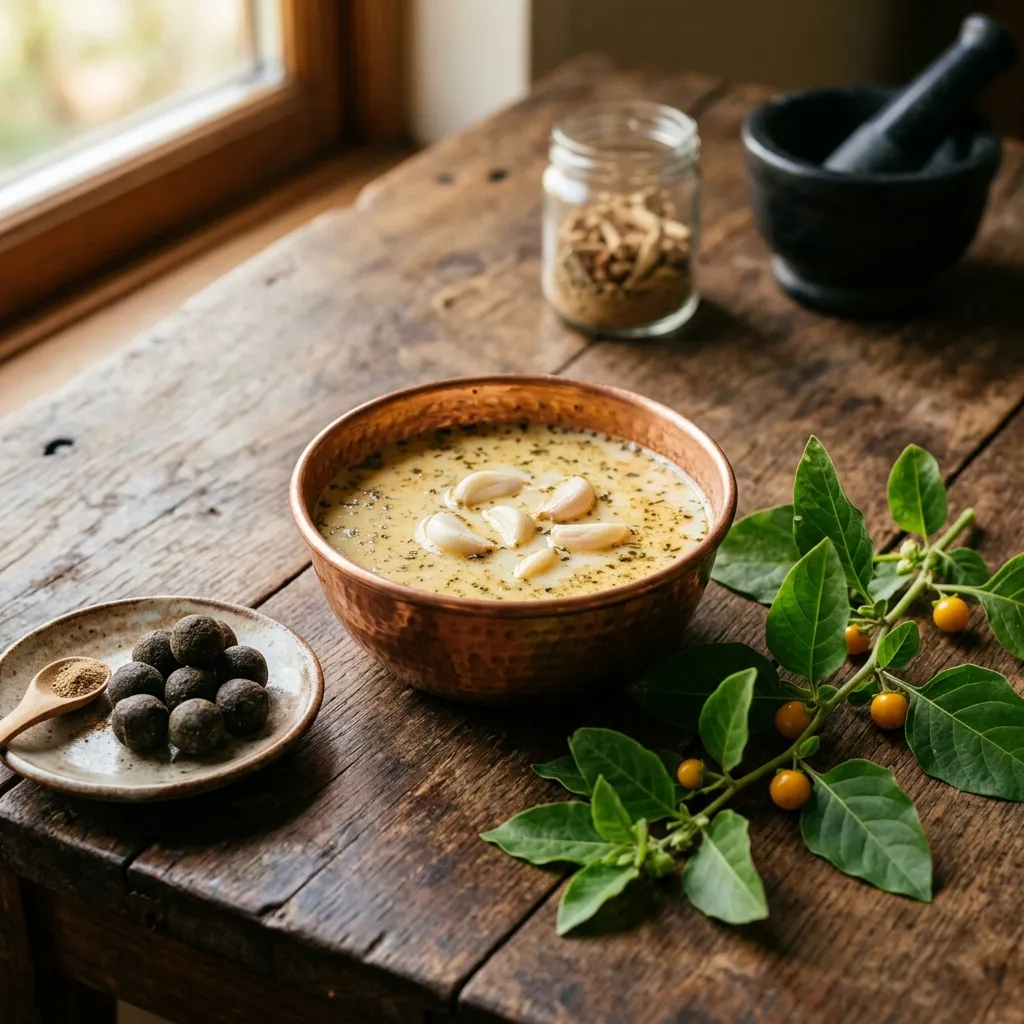
Lashuna Ksheera Paka (garlic-medicated milk) is a classic example of Bhaishajya Kalpana (Ayurvedic pharmaceutics), showcasing the traditional method of using Samskara (processing) to refine a substance's therapeutic properties. Raw garlic (Lashuna) is highly regarded in classical Ayurveda as a potent cardiotonic (Hridya) and a powerful pacifier of Vata dosha. However, raw garlic also possesses intense Ushna (heating) and Tikshna (sharp, pungent) qualities that can aggravate Pitta dosha, causing digestive irritation, hyperacidity, and gastric reflux. By boiling garlic in a mixture of milk and water until only the milk remains, Ayurvedic physicians create a balanced formulation where the lipid-rich, sweet (Madhura) qualities of the milk neutralize garlic’s harshness, protecting the gastrointestinal tract while preserving its therapeutic potency.
Classically detailed in foundational texts like the Charaka Samhita, Lashuna Ksheera Paka is indicated for a wide variety of severe Vata disorders, including Gridhrasi (sciatica), chronic back pain, abdominal bloating (Udavarta), and cardiac disorders (Hridroga). In Ayurvedic pathology, Vata imbalances are characterized by dryness, coldness, and hyperactivity within the nervous and musculoskeletal systems. The milk in this formulation acts as a nourishing, lipid-based vehicle (Anupana), which helps deliver the active compounds of garlic across cellular membranes. This targeted delivery helps lubricate joints, soothe inflamed nerve pathways, and restore the normal downward movement of digestive air, providing deep relief for chronic pain and bloating.
Modern pharmaceutical and phytochemical analyses have validated the scientific precision of this traditional preparation method. Comparative studies evaluating the extraction profiles of Charaka Samhita versus later texts show that the classic water-and-milk boiling ratio is exceptionally effective at preserving volatile, bioactive organosulfur compounds. Gas chromatography-mass spectrometry (GC-MS) analysis reveals that the milk medium shields Alliin (the precursor to garlic's active compound, allicin) from rapid thermal degradation during cooking. The milk fat globules serve to encapsulate both water-soluble and lipid-soluble bioactives, creating a natural liposomal delivery system that enhances the stability and intestinal absorption of these compound molecules.
From a clinical perspective, contemporary research supports the use of Lashuna Ksheera Paka in cardiovascular wellness and metabolic regulation. Clinical trials and reviews have demonstrated its effectiveness in reducing serum cholesterol, inhibiting platelet aggregation, and lowering arterial blood pressure. The formulation's bioactives help upregulate nitric oxide production, promoting vasodilation and improving coronary blood flow, while its rich antioxidant profile reduces lipid peroxidation. By utilizing a common food matrix to deliver highly bioavailable, cardioprotective sulfur compounds, Lashuna Ksheera Paka illustrates how Ayurvedic pharmaceutics can optimize the delivery of therapeutic herbs for modern cardiovascular and neurological care.
💜 Kantakari: Botanical Bronchodilator for Respiratory Wellness
Kantakari (Solanum xanthocarpum), commonly known as yellow-berried nightshade, is a vital herb in the Ayurvedic respiratory pharmacopoeia and a key component of the Laghu Panchamula (the group of five lesser roots). In Ayurvedic herbology (Dravyaguna), Kantakari is characterized by its Katu (pungent) and Tikta (bitter) rasa (tastes), Laghu (light) and Ruksha (dry) guna (qualities), and Ushna (heating) virya (potency). These specific energetics make the herb a highly effective remedy for pacifying accumulated Kapha (phlegm) and regulating hyperactive Vata dosha within the Pranavaha Srotas (respiratory system). The herb helps liquefy sticky mucus and ease spasmodic contractions of the respiratory tract, allowing for freer breathing.
Traditionally indicated for Shwasa Roga (bronchial asthma, dyspnea) and Kasa (chronic cough), Kantakari is the principal ingredient in classic formulations such as Kantakari Avaleha and Vyaghri Haritaki. Its primary clinical action is that of a Kapha-hara expectorant and bronchodilator. By clearing the respiratory channels of stagnant mucus and soot, it relieves chest congestion and supports the lungs' natural defense mechanisms. Additionally, its heating potency helps rekindle the local cellular metabolism, assisting the respiratory system in resisting environmental allergens, seasonal changes, and airborne irritants.
Modern clinical trials have confirmed the therapeutic efficacy of Kantakari in managing respiratory conditions, particularly mild-to-moderate bronchial asthma. Pilot clinical studies have shown that the administration of Solanum xanthocarpum extracts leads to a progressive and statistically significant improvement in pulmonary function parameters, including Peak Expiratory Flow Rate (PEFR) and Forced Expiratory Volume in one second ($FEV_1$). Patients in these trials experienced marked reductions in clinical symptoms such as wheezing, dyspnea, and cough frequency. These clinical improvements occurred with an excellent safety profile, demonstrating that the herb provides a well-tolerated, natural option for long-term respiratory support.
Pharmacological investigations have identified the specific chemical compounds responsible for these clinical benefits. The plant is rich in steroidal alkaloids, most notably solasodine and solanine, which act as natural bronchodilators and mast-cell stabilizers. These bioactives work by inhibiting the release of inflammatory mediators (such as histamines and prostaglandins) from mast cells, thereby reducing airway hyperresponsiveness and preventing allergic constriction. Concurrently, they relax the bronchial smooth muscles by modulating calcium channels, validating the traditional classification of Kantakari as a powerful, scientifically validated botanical bronchodilator for modern respiratory health.
📌 The Bottom Line
- chandraprabha-vati: Supported by clinical trials and network pharmacology, this classical polyherbal-mineral formulation regulates blood glucose, improves lipid profiles, and restores protective proteins to manage urinary tract infections and metabolic syndrome.
- lashuna-ksheera-paka: The traditional milk-decoction method optimizes the bioavailability of garlic's active compounds (like Alliin) while protecting the stomach, providing a clinically validated therapeutic for sciatica and cardiovascular health.
- kantakari: Rich in bronchodilating alkaloids like solasodine, this traditional herb is clinically proven to improve pulmonary function (PEFR) and alleviate bronchial asthma symptoms by stabilizing mast cells and relaxing airways.
Disclaimer: The information provided in this post is for educational and informational purposes only. It is not intended to be a substitute for professional medical advice, diagnosis, or treatment. Always seek the advice of your physician or other qualified health provider with any questions you may have regarding a medical condition.
Enjoyed this post?
Get our weekly digest delivered free.
Share this post:
Knowelth is reader-supported. We may earn a commission from links in this article at no extra cost to you. Read our disclosure.
Related Posts
Systems Biology, Circadian Dinacharya, and Gut-Agni Chrono-Nutrition: The Science Validating Ayurvedic Medicine
Systems Biology, Circadian Dinacharya, and Gut-Agni Chrono-Nutrition: The Science Validating Ayurvedic Medicine Modern healthcare is undergoing a paradigm shift from reductionist single-molecule thera…
Clinical Validation in Ayurveda: Cardiometabolic Formulations, Chrononutrition Agni Science, and Ayurgenomics in Ovarian Reserve
Clinical Validation in Ayurveda: Cardiometabolic Formulations, Chrononutrition Agni Science, and Ayurgenomics in Ovarian Reserve Traditional Indian medicine is undergoing a profound scientific renaiss…
Ayurveda Meets Systems Biology: Agni, Chronomedicine, and Botanical Synergy in Modern Clinical Science
Ayurveda Meets Systems Biology: Agni, Chronomedicine, and Botanical Synergy in Modern Clinical Science The 2025–2026 wave of systems biology research has made an unambiguous statement: the three pilla…