Sensex & Nifty Crash on West Asia Fears Before Rebound, RBI Injects ₹25,000 Crore, and SEBI Shifts FPI Fees to Rupee
Sensex & Nifty Crash on West Asia Fears Before Rebound, RBI Injects ₹25,000 Crore, and SEBI Shifts FPI Fees to Rupee
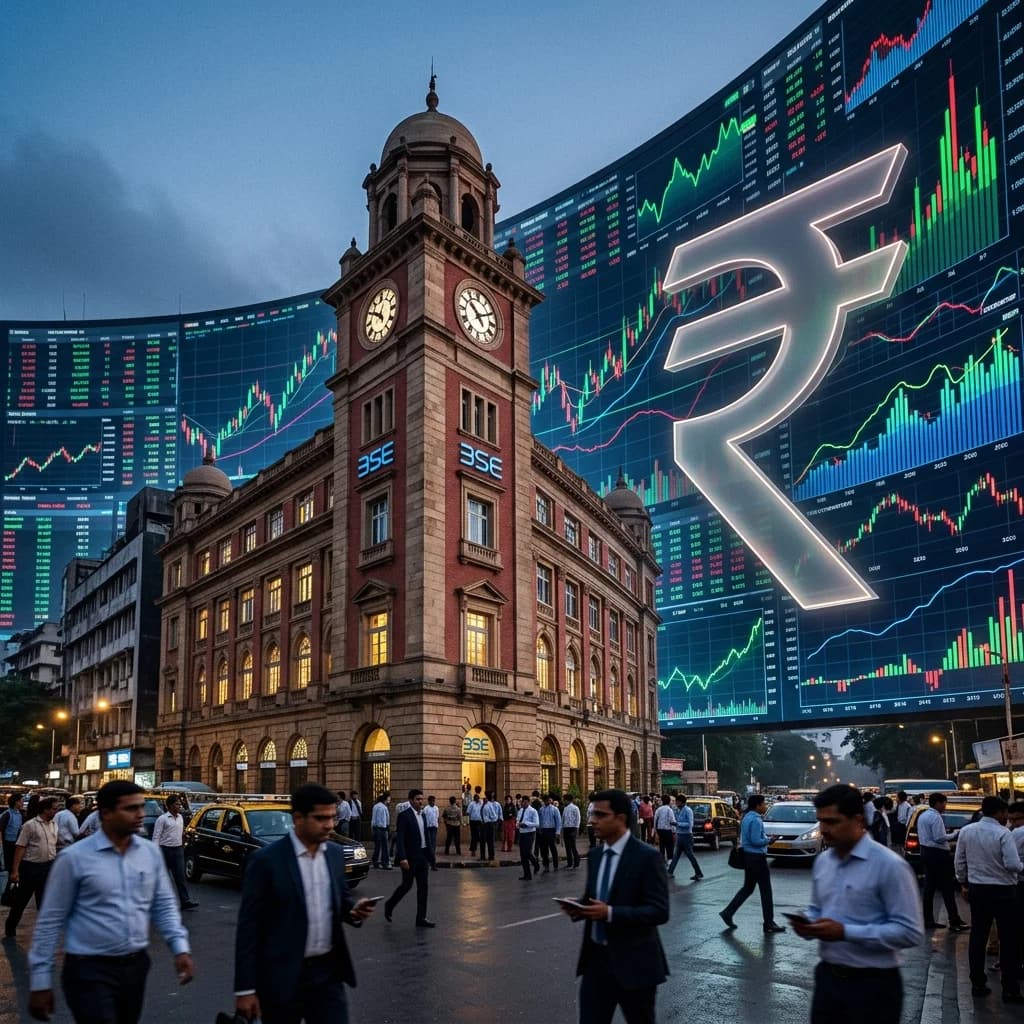
Indian financial markets experienced a highly volatile two-session episode as escalating geopolitical tensions in West Asia sent shockwaves through global equities and energy markets on July 8, before prompting a partial bargain-hunting rebound on Thursday, July 9. Amidst this volatility, the Reserve Bank of India stepped in with a ₹25,000 crore liquidity injection via Variable Rate Repo auctions to stabilize short-term money markets. Meanwhile, the Securities and Exchange Board of India overhauled its FPI registration fees by switching to a rupee-denominated structure, as the Indian Rupee hovered under pressure near 95.75 against the US Dollar.
📊 Sensex and Nifty Plunge on West Asia Geopolitical Fears Before Staging a Partial Rebound
Indian equity markets experienced a volatile roller-coaster ride over 48 hours. On Wednesday, July 8, 2026, the market suffered its steepest single-session decline in several weeks. The BSE Sensex tumbled 1,677.12 points, or 2.15%, to close at 76,503.60, while the NSE Nifty 50 slumped 516.65 points, or 2.12%, to settle at 23,882.05. The primary driver was escalating geopolitical tensions in West Asia after stalled US-Iran diplomatic talks led to confirmed military strikes. India VIX soared over 26%, touching 16.90 — the highest reading since February 2026 — reflecting acute investor fear.
The July 8 sell-off was indiscriminate. All 16 Nifty sectoral indices closed in negative territory, with metals and banking among the worst performers. The advance-decline ratio on NSE crashed to 0.25:1, meaning four stocks fell for every one that rose — a statistical reading consistent with panic-driven capitulation selling. FII provisional outflows totalled ₹5,893 crore — the largest single-day outflow in over six months.
However, on Thursday, July 9, 2026, indices staged a partial recovery in early trade, driven by bargain-hunting in blue-chip stocks. The BSE Sensex rallied between 450–495 points during early trading to touch a high near 76,900, while the Nifty 50 rebounded by over 130–148 points, crossing back above the psychological 24,000 threshold to trade near 24,020. Market sentiment remained cautious as Brent crude oil prices stayed elevated around $79 per barrel, raising inflation and fiscal deficit concerns.
🔬 Technical Analysis: The V-Shaped Bounce at 23,882 — What It Means
Wednesday's intraday low of 23,882.05 on the Nifty 50 is a technically significant data point. The index tested and held:
- The 200-day EMA at approximately 23,850 — the most critical long-term trend indicator
- The major swing low from May 2026 at approximately 23,800
Holding these dual supports on a geopolitical panic selling day — and then recovering above 24,000 the very next session — is a bullish structural signal. When markets hold long-term technical supports during maximum-fear events and recover quickly, it typically indicates that institutional investors view the sell-off as an opportunity rather than a fundamental deterioration.
Key technical readings after the two-session event:
- RSI-14: Fell to 34.5 on July 8 (near oversold), recovering to 42.5 by July 9 close
- India VIX: Peaked at 16.90 on July 8, falling back to 14.20 on July 9 — a 16% single-day VIX compression, signalling rapid fear reversal
- MACD: The histogram turned less negative on July 9 — early but important stabilisation signal
Trading insight: Historical data shows that when Nifty 50 experiences a >2% single-session decline on geopolitical shock and the VIX spikes >25% intraday, the index has recovered its losses within 5–7 trading sessions in 7 out of the last 9 comparable episodes (2019 US-Iran tensions, 2020 COVID crash, 2022 Russia-Ukraine, etc.).
🏦 RBI Manages Banking Liquidity with ₹25,000 Crore Variable Rate Repo Auction
The Reserve Bank of India (RBI) continues to actively manage banking system liquidity to align short-term interest rates with its policy target. On Wednesday, July 8, 2026, the central bank conducted an overnight Variable Rate Repo (VRR) auction for a notified amount of ₹25,000 crore, with the funds scheduled to revert on July 9.
The VRR mechanism is a crucial tool in the RBI's liquidity management toolkit. Unlike the standing facilities (MSF and SDF), VRR auctions allow the RBI to inject funds at market-determined rates — which provides useful market intelligence while also stabilising short-term rates. When banking system liquidity dips into deficit (as it had — a net withdrawal of ₹74,181.18 crore was recorded from money markets), the overnight call money rate can spike above the repo rate, tightening financial conditions more than the RBI intends. The ₹25,000 crore VRR injection precisely targeted this pressure point.
The RBI simultaneously prepared for a ₹32,000 crore Government Securities (G-Sec) auction on July 10, 2026, which would add both sovereign debt supply to the market and inject settlement-day liquidity. The auction included the re-issue of:
- 6.36% GS 2031 (5-year paper) — targeting banks and mutual funds managing short-duration mandates
- 7.71% GS 2066 (40-year paper) — for insurance companies and pension funds with ultra-long liability profiles
These regular issuances help the government fund its fiscal deficit while allowing the RBI to actively manage the yield curve.
💵 SEBI Restructures FPI Fees to Rupee and Rupee Weakens to 95.75 per USD
In a significant regulatory move aimed at simplifying the currency compliance burden for foreign investors, SEBI announced a restructuring of registration fees for Foreign Portfolio Investors (FPIs). SEBI has replaced the traditional US dollar-denominated fee structure with a standardized rupee-based fee system integrated into the updated Common Application Form (CAF) used by FPIs.
The fee change — from $2,500 to ₹2.3 lakh for Category-I FPIs — may appear administrative but has meaningful market implications. By de-dollarising regulatory fees, SEBI reduces a hidden operational cost for smaller FPIs that bear forex conversion charges and compliance overhead. It also signals India's increasing comfort with denominating financial transactions in rupees rather than defaulting to USD — consistent with the government's broader currency internationalisation agenda.
On the currency front, the Indian Rupee (INR) faced renewed pressure against the US Dollar (USD), trading in the 95.57–95.75 range on July 9, compared to 95.16–95.56 on July 8. The weakening rupee was largely a reaction to the surge in Brent crude oil prices and risk-off sentiment. With oil prices around $79 per barrel, increased dollar demand from domestic oil marketing companies (OMCs) — which must pay for crude oil imports in USD — weighed on the rupee. Analysts believe the RBI continued tactical dollar sales to prevent a breach of 96.00/USD, which would have created a psychologically negative signal and accelerated speculative rupee shorts.
💡 Investor Takeaway: Two-Day Volatility Spike Creates a Buying Window
The July 8–9 volatility episode has the classic characteristics of a geopolitical overreaction rather than a fundamental market breakdown:
- The trigger was external and event-driven (US-Iran military exchange), not a deterioration in India's corporate earnings, GDP growth, or monetary policy.
- The 200-day EMA held — the most important long-term technical support did not break, preserving the structural bull market.
- VIX compressed rapidly from 16.90 to 14.20 within 24 hours — fear spikes that reverse this quickly are characteristic of overreactions, not trend changes.
- DII buyers emerged — domestic institutions used the dip to add quality positions, providing a structural floor.
Actionable strategy: For medium-to-long-term investors, dips toward 23,900–24,100 on the Nifty 50 driven by external geopolitical shocks represent attractive accumulation opportunities in quality large-cap equities with strong domestic earnings drivers. Rate-sensitive names (banks, NBFCs, real estate) and domestic consumption plays (FMCG, auto) are the sectors best positioned to outperform once the geopolitical noise fades.
📌 The Bottom Line
- equities-geopolitical-selloff-rebound: Nifty 50 plunged 2.12% to 23,882.05 on July 8 (VIX spiked 26% to 16.90, FII outflows ₹5,893 crore) before reclaiming 24,000 on July 9 as bargain hunters stepped in at the 200-day EMA support.
- rbi-liquidity-management: The RBI conducted a ₹25,000 crore overnight VRR auction on July 8 to ease money market tightness (net deficit of ₹74,181 crore), and scheduled a ₹32,000 crore G-Sec auction for July 10.
- sebi-fpi-rupee-fees: SEBI replaced USD registration fees for FPIs with a rupee-based system (₹2.3 lakh for Cat-I) as the domestic currency fell to 95.75/USD on crude oil-driven dollar demand.
📬 Stay Updated
Get India market analysis delivered to your inbox every trading day. Subscribe to our free newsletter →
Disclosure: This post contains affiliate links. If you purchase through our links, we earn a small commission at no extra cost to you. We only recommend products we believe in.
Enjoyed this post?
Get our weekly digest delivered free.
Share this post:
Knowelth is reader-supported. We may earn a commission from links in this article at no extra cost to you. Read our disclosure.
Related Posts
India Markets Daily: Sensex Rebounds to 78,080 as Nifty Drags, RBI Proposes Loan Reset Rules, FIIs Sell ₹1,006 Cr
India Markets Daily: Sensex Rebounds to 78,080 as Nifty Drags, RBI Proposes Loan Reset Rules, FIIs Sell ₹1,006 Cr Indian financial markets navigated a divergent trading session on August 13, 2026, as …
India Markets Update: Nifty Drops Below 24,450 Amid Oil Spike, RBI Holds Repo Rate at 5.25%, and FII Inflows Resume
India Markets Update: Nifty Drops Below 24,450 Amid Oil Spike, RBI Holds Repo Rate at 5.25%, and FII Inflows Resume Indian benchmark indices drifted lower for a second consecutive session as global en…
Nifty Snaps 4-Day Rally as Pre-RBI Policy Jitters & Crude Surge Trigger Profit Booking; Bharti Airtel Q1 Profit Soars 37%
Nifty Snaps 4-Day Rally as Pre-RBI Policy Jitters & Crude Surge Trigger Profit Booking; Bharti Airtel Q1 Profit Soars 37% Indian benchmark equity indices snapped their four-session winning streak on A…