Superconducting Graphene, Google's Agentic AI Alliance, and Global Market Relief
Superconducting Graphene, Google's Agentic AI Alliance, and Global Market Relief
Welcome to today's digest, where we analyze the intersection of quantum physics, autonomous technology, and the global markets. Today, we look at a major breakthrough in superconducting graphene, an enterprise-scale push for agentic AI, and a swift market recovery following geopolitical de-escalation and a landmark U.S. immigration ruling. Here are the key stories you need to know today, June 9, 2026.
🔬 Science: Quantum Materials and Green Energy
Unlocking Superconductivity in Rhombohedral Graphene
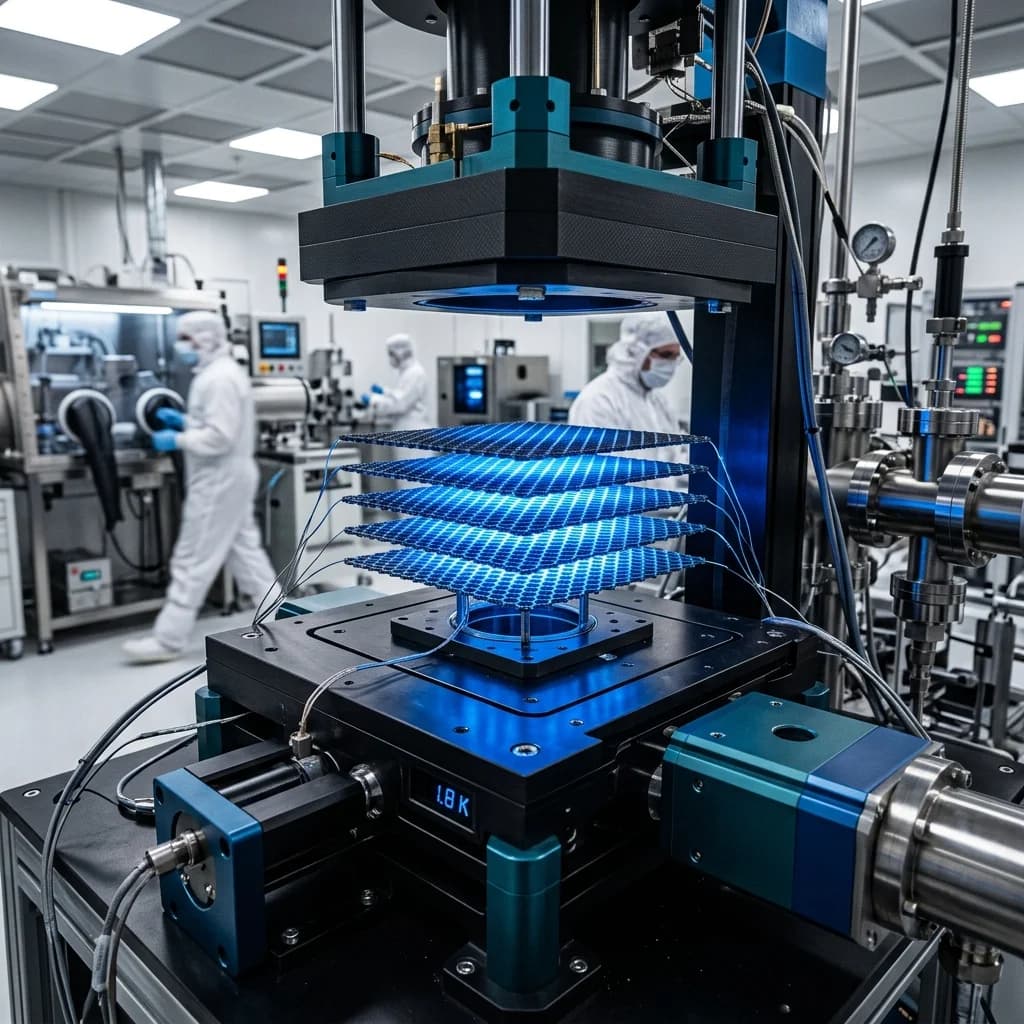
In a major advancement for quantum materials, researchers at Florida State University (FSU)—including Assistant Professors Zhengguang Lu and Cyprian Lewandowski—have participated in an international collaboration discovering robust, unconventional superconducting states in "moiréless" rhombohedral tetra- and penta-layer graphene.
Unlike previous twisted-layer graphene setups that rely on complex moiré superlattices, this superconductivity occurs naturally in cleanly aligned, thick rhombohedral graphene. The material exhibits spontaneous time-reversal symmetry breaking, making it a strong candidate for chiral superconductivity. This discovery provides physicists with a clean, ideal platform to study Majorana fermions, bringing fault-tolerant quantum computing one step closer to reality.
Granarium's Biodegradable Supercapacitors
Finnish deep-tech startup Granarium Technologies (a spin-out from the VTT Technical Research Centre of Finland) has secured over €1 million in pre-seed funding to commercialize sustainable energy storage. Led by CEO Paula Viinamäki, a former Nokia and Microsoft executive, the company develops supercapacitors composed of nanocellulose and upcycled agricultural and wood waste biomass.
By replacing rare metals and toxic chemicals with biodegradable organic materials, Granarium's patented technology could cut manufacturing costs by up to 80% compared to traditional methods. The startup plans to deploy these eco-friendly supercapacitors to manage grid volatility and support industrial-scale renewable energy storage.
💻 Technology: Scaled Agents and Geopolitical Blocs
Google Cloud and NTT DATA Scale Agentic AI
Enterprise software is taking a giant leap from chatbot assistants to autonomous AI workflows. NTT DATA has announced a massive expansion of its collaboration with Google Cloud, aimed at scaling agentic AI systems across global enterprises.
Under the new agreement, NTT DATA will certify 5,000 AI experts and deploy up to 500 autonomous AI agents designed to handle complex business operations, automated decision-making, and supply chain adjustments. This push highlights the growing corporate appetite for AI agents capable of executing multi-step tasks without human intervention.
Pentagon Blacklists Major Chinese Tech Giants
In a significant intensification of geopolitical tech tensions, the U.S. Department of Defense has updated its list of entities designated as Chinese military-linked companies.
The latest update adds heavyweight firms including Alibaba, Baidu, EV maker BYD, and autonomous robotics developer Unitree. The move places additional constraints on Western investment and tech-sharing, signaling that the decoupling of global supply chains in AI, electric vehicles, and robotics will continue to accelerate.
📈 Market: De-escalation and Legal Windfalls
Iran-Israel De-escalation Sparks Global Market Rally
Global financial markets breathed a sigh of relief as news broke of a mutual halt to direct military strikes between Iran and Israel. The geopolitical risk premium quickly evaporated from energy markets, sending crude oil prices back down from their recent highs.
The de-escalation triggered a strong recovery in Asian equity markets, with India's benchmark Nifty 50 and Sensex rebounding sharply. Technology stocks led the charge, recouping much of the ground lost during the previous week's volatility.
U.S. Federal Court Strikes Down H-1B Visa Fees
In a major victory for global tech firms and international talent, a U.S. federal judge has struck down the controversial $100,000 fee for new H-1B visas. The steep fee, which had been criticized as a prohibitive barrier for hiring foreign high-tech workers, was ruled unlawful.
The decision was warmly received by the global IT services sector, particularly in India, sparking a rally in major tech consulting stocks. Analysts expect the ruling to significantly ease recruiting costs and talent bottlenecks for enterprise software developers.
The Bottom Line
- Science: Physicists discover unconventional superconductivity in naturally aligned rhombohedral graphene, while Granarium Technologies secures funding to commercialize nanocellulose-based biodegradable supercapacitors.
- Technology: NTT DATA partners with Google Cloud to train 5,000 experts and deploy 500 enterprise-scale AI agents, while the Pentagon adds Baidu, Alibaba, BYD, and Unitree to its military-linked blacklist.
- Market: Stocks rally and oil retreats on Iran-Israel de-escalation, and a U.S. court victory striking down H-1B visa fees provides major financial relief to the tech sector.
Enjoyed this post?
Get our weekly digest delivered free.
Share this post:
📌 Disclosure: This post may contain affiliate links. If you make a purchase through our links, we may earn a commission at no extra cost to you. We only recommend products we believe in. See our Affiliate Disclosure.
Related Posts
U.S.-Iran Military Escalation, 3.2-Billion-Year-Old Enzymes Reconstructed, and Apple's $30 Billion U.S. Chip Deal
U.S.-Iran Military Escalation, 3.2-Billion-Year-Old Enzymes Reconstructed, and Apple's $30 Billion U.S. Chip Deal A dramatic military escalation in the Middle East has disrupted global energy markets,…
NATO Summit in Ankara, Saudi Arabia's Historic Crude Oil Price Slashes, and World's First Sub-1 GHz Massive MIMO 5G Network
NATO Summit in Ankara, Saudi Arabia's Historic Crude Oil Price Slashes, and World's First Sub-1 GHz Massive MIMO 5G Network July 7, 2026, represents a landmark day for international security allian…
UN AI Governance Summit, ISRO PSLV Resumption, and Norway's Historic World Cup Triumph
UN AI Governance Summit, ISRO PSLV Resumption, and Norway's Historic World Cup Triumph On July 6, 2026, the global landscape reflects a dynamic convergence of international policy, technological br…