Mitochondrial Rejuvenation, NEURA Robotics' $1.4B Mega-Round, and the Great IT Services AI Reset
Mitochondrial Rejuvenation, NEURA Robotics' $1.4B Mega-Round, and the Great IT Services AI Reset
Welcome to today's digest, where we analyze the cellular mechanisms of aging, the massive financial backing accelerating humanoid robotics, and the structural re-evaluations sweeping global technology markets. Today, we cover the Leibniz Institute's breakthrough in reversing mitochondrial decay via membrane lipids, NEURA Robotics' landmark $1.4 billion Series C round to scale cognitive physical AI, and the market correction in traditional IT services as AI automation disrupts labor arbitrage models. Here are the key stories you need to know today, June 14, 2026.
🔬 Science: Cellular Rejuvenation and Membrane Lipids
Phosphatidylcholine Depletion Identified as Key Driver of Mitochondrial Aging
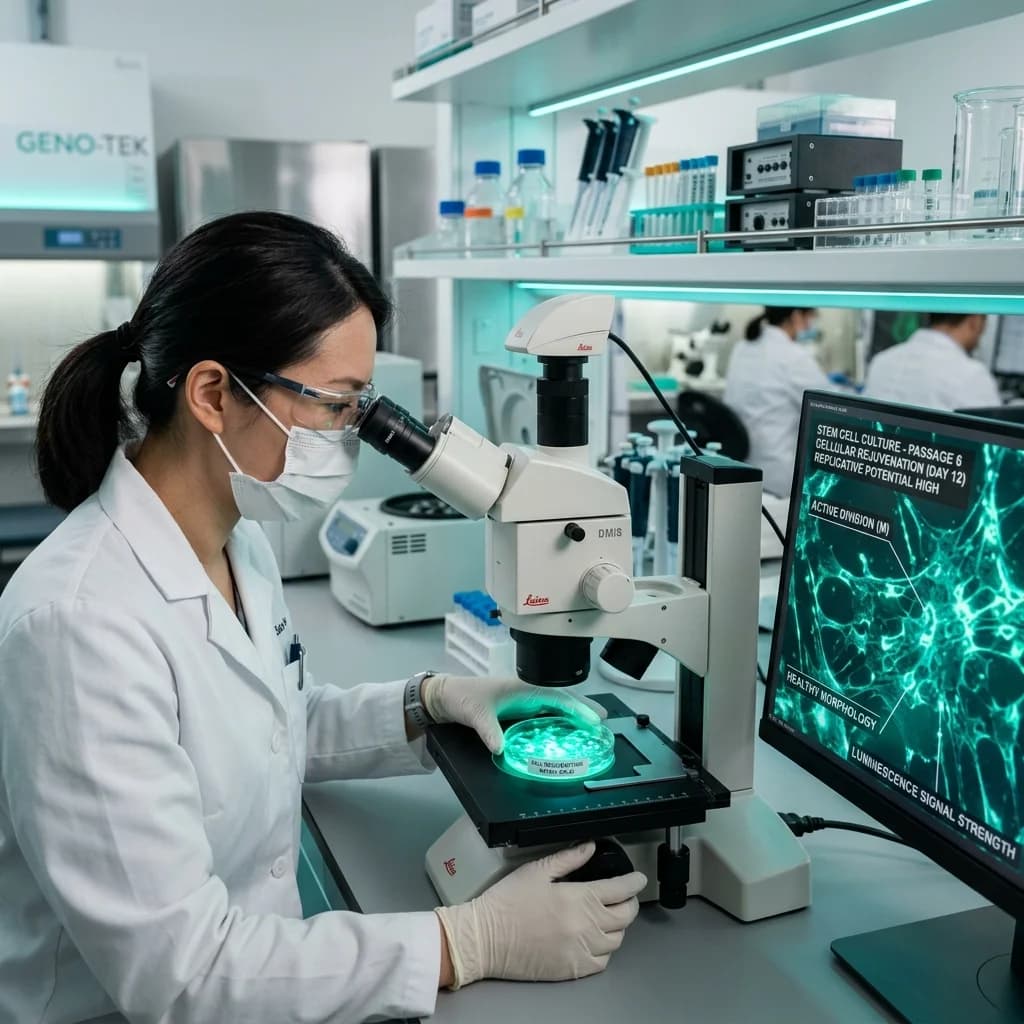
In a significant advancement for the biology of aging, researchers at the Leibniz Institute on Aging (FLI) have identified a crucial lipid-regulated mechanism that dictates cellular longevity and energy production. The study demonstrates that declining levels of phosphatidylcholine, a key membrane lipid found within cellular organelles, are directly responsible for the mitochondrial dysfunction and subsequent energy loss observed in senescent cells. As cells age, the reduction of this lipid disrupts the structural integrity of the inner mitochondrial membrane, impairing the electron transport chain and reducing the cell's ability to synthesize adenosine triphosphate (ATP), the primary energy currency of life.
Crucially, the research team demonstrated that targeted supplementation of phosphatidylcholine can restore youthful membrane dynamics and revive mitochondrial respiration in aged tissues. By replenishing the lipid bilayers, the mitochondria regained their characteristic structural folds (cristae) and normalized their metabolic output, effectively reversing key cellular markers of senescence. This finding shifts the paradigm of anti-aging research from purely genetic or genomic interventions to lipidomic and structural membrane therapies, opening up new pathways for treating age-related degenerative diseases and improving overall metabolic health in clinical applications.
💻 Technology: Physical AI and Humanoid Robotics
NEURA Robotics Secures $1.4 Billion Series C to Pioneer Millions of Humanoids
European robotics pioneer NEURA Robotics has announced a monumental $1.4 billion Series C funding round, signaling a massive acceleration in the commercial deployment of cognitive humanoid systems. The round was led by stablecoin issuer Tether, with substantial participation from tech titans and industrial giants including Amazon, NVIDIA, Qualcomm, Bosch, and Schaeffler, alongside institutional support from the European Investment Bank (EIB). This capital injection represents one of the largest single private funding rounds in European tech history, underscoring the high-stakes global race to dominate "Physical AI"—the integration of advanced cognitive computing with mobile robotic hardware.
NEURA plans to channel the funds into scaling its proprietary cognitive robotics platform, with the ambitious goal of bringing millions of humanoid robots to mass production by 2030. These robots are designed with sophisticated sensor arrays and localized neural processing, allowing them to collaborate safely with humans in manufacturing, logistics, and healthcare environments. By establishing a network of "NEURA Gyms"—dedicated cloud facilities for simulated and physical robot training—the company aims to create a standardized learning environment where robotic agents can share learned behaviors, drastically reducing the time required to deploy autonomous systems in complex, real-world tasks.
📈 Market: Tech Valuations and Labor Disruption
AI Automation Anxiety Sparks Global Sell-Off in IT Services Sector
Global technology markets experienced a sharp correction this week as investors aggressively repriced the IT services sector, fueled by growing anxiety over the long-term impact of artificial intelligence on traditional labor arbitrage models. The sell-off, which hit major Indian IT consultancies like TCS, Infosys, and Wipro particularly hard, was accelerated by the "Broadcom Trigger" and a broader re-evaluation of tech valuations. For decades, the IT services industry has relied on scaling human workforce headcount to manage software development, application maintenance, and testing. However, the rapid advancement of autonomous coding agents and automated testing platforms is threatening to make these human-intensive business models obsolete.
The NIFTY IT index in India and comparable global benchmarks saw sharp drops as institutional funds shifted capital away from traditional software outsourcing firms toward pure-play AI infrastructure and hardware providers. Analysts suggest that the core revenue driver of these services firms—billing by hourly human labor—is facing a structural contraction as enterprise clients demand AI-integrated, automated solutions that deliver results at a fraction of the cost. While some IT giants are scrambling to retrain their workforces and deploy proprietary AI agents, the market remains highly skeptical of their ability to transition quickly enough to offset the margin pressures of this technological pivot, leading to a cautious, defensive stance across the sector.
The Bottom Line
- Science: Leibniz Institute researchers demonstrate that replenishing phosphatidylcholine levels in aging cells reverses mitochondrial decay, pointing toward novel lipid-based therapies for cellular rejuvenation.
- Technology: NEURA Robotics secures a historic $1.4 billion Series C round backed by Tether, Amazon, and NVIDIA to mass-produce cognitive humanoid robots and accelerate Physical AI training.
- Market: Traditional IT services stocks face a severe global sell-off as automated AI coding and testing solutions disrupt the labor-intensive software outsourcing business model.
Enjoyed this post?
Get our weekly digest delivered free.
Share this post:
📌 Disclosure: This post may contain affiliate links. If you make a purchase through our links, we may earn a commission at no extra cost to you. We only recommend products we believe in. See our Affiliate Disclosure.
Related Posts

U.S.-Iran Military Escalation, 3.2-Billion-Year-Old Enzymes Reconstructed, and Apple's $30 Billion U.S. Chip Deal
U.S.-Iran Military Escalation, 3.2-Billion-Year-Old Enzymes Reconstructed, and Apple's $30 Billion U.S. Chip Deal A dramatic military escalation in the Middle East has disrupted global energy markets,…

NATO Summit in Ankara, Saudi Arabia's Historic Crude Oil Price Slashes, and World's First Sub-1 GHz Massive MIMO 5G Network
NATO Summit in Ankara, Saudi Arabia's Historic Crude Oil Price Slashes, and World's First Sub-1 GHz Massive MIMO 5G Network July 7, 2026, represents a landmark day for international security allian…
UN AI Governance Summit, ISRO PSLV Resumption, and Norway's Historic World Cup Triumph
UN AI Governance Summit, ISRO PSLV Resumption, and Norway's Historic World Cup Triumph On July 6, 2026, the global landscape reflects a dynamic convergence of international policy, technological br…