Fusion Power Roadmaps, Valleytronic Photonic Chips, and the SpaceX ETF Debut
Fusion Power Roadmaps, Valleytronic Photonic Chips, and the SpaceX ETF Debut
Welcome to today's second digest, where we explore the strategic acceleration of clean energy, the next frontier in light-based computation, and the financial structures broadening space-sector accessibility. Today, we cover the U.S. Department of Energy's finalized national roadmap for commercializing fusion energy, Monash University's development of an integrated valleytronic photonic chip, and the trading debut of the Ninepoint SpaceX HighShares ETF on the Toronto Stock Exchange. Here are the key stories you need to know today, June 16, 2026.
🔬 Science: Commercial Fusion Energy Pathways
DOE Releases Strategic Roadmap to Accelerate Commercial Fusion Power
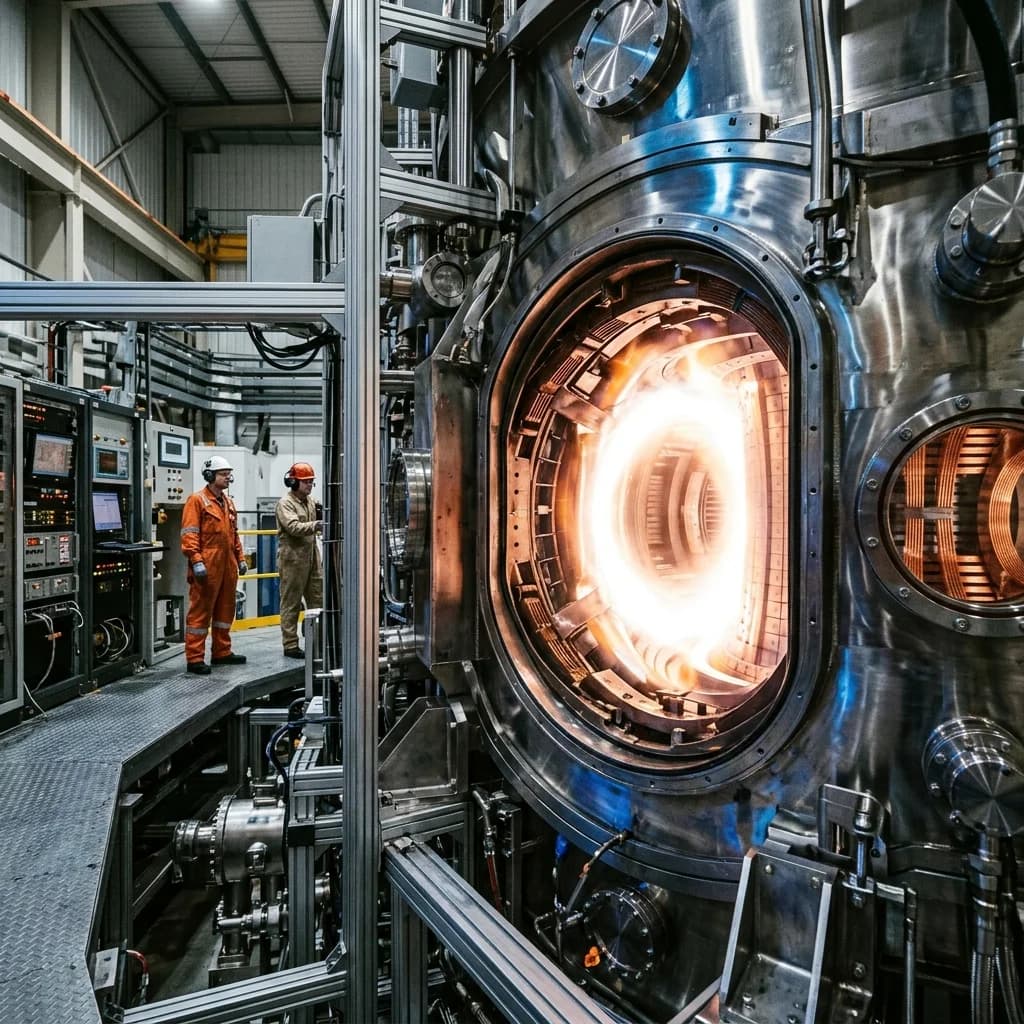
In a major shift toward establishing clean energy infrastructure for the next decade, the U.S. Department of Energy (DOE) has officially released its finalized national strategy to accelerate the commercialization of fusion energy. The comprehensive roadmap represents a coordinated effort to bridge the historical gap between experimental plasma physics and commercial grid deployment. By aligning research programs across national laboratories, academic institutions, and private sector leaders, the strategy aims to streamline the development of pilot fusion plants. Specifically, the DOE has outlined a pathway to support the design, engineering, and regulatory approval of commercial-scale power stations, targeting a operational deployment window by the mid-2030s to help meet surging global electricity demands.
This policy push comes amid significant milestones in the private fusion sector, including the activation of Xcimer Energy's "Phoenix" laser facility—the largest privately owned system in the world designed to test laser-based fusion systems. By prioritizing funding for critical subsystem engineering, such as tritium breeding blankets and high-temperature superconducting magnets, the federal strategy aims to resolve the physical containment and heat-extraction challenges that have long prevented fusion from achieving sustained net-energy output. The formalized roadmap not only provides a financial lifeline for early-stage fusion developers but also signals a growing regulatory consensus, establishing a clear framework that will enable private capital to flow into utility-scale fusion ventures with reduced regulatory risk.
💻 Technology: Light-Based Quantum Computation
Integrated Photonic Valleytronic Chip Marks Leap in Energy-Efficient Computing
Addressing the physical limits of traditional silicon semiconductors, researchers at Monash University have successfully developed a fully integrated, nanoscale photonic "valleytronic" chip capable of generating, steering, and reading light-based information. Traditional microprocessors rely on the flow of electrons, which generates substantial heat and limits processing speed due to resistance and capacitance bottlenecks. The new chip bypasses these challenges by using light particles (photons) rather than electrons, leveraging the "valley" degree of freedom in quantum materials to control the flow of light. By manipulating the local energy minima—or valleys—in the electronic band structure of 2D transition metal dichalcogenides, the team has created a stable pathway for routing light signals on-chip without signal degradation.
This breakthrough holds major implications for the future of quantum computing and high-density AI accelerators, which are currently constrained by the thermal and power limits of conventional silicon. The integrated valleytronic design enables high-speed data transmission with a fraction of the power required by electrical interconnects, paving the way for ultra-fast, low-latency communication on a single silicon substrate. Furthermore, because valleytronic structures are highly resilient to manufacturing imperfections and environmental noise, this technology solves a major scaling bottleneck for photonic processors, bringing light-based logic gates out of the laboratory and closer to commercial, high-performance computing architectures.
📈 Market: Space Valuations and Secondary Exposure
Ninepoint SpaceX HighShares ETF Debuts on TSX to Expand Retail Exposure
Global capital markets are witnessing further expansion of the space-economy ecosystem with the official trading debut of the Ninepoint SpaceX HighShares ETF under the ticker symbol SXHI on the Toronto Stock Exchange. The launch marks a significant milestone, providing retail and institutional investors in Canada with a direct, liquid investment vehicle to gain exposure to SpaceX’s diversified commercial operations. Following SpaceX's historic public listing on the Nasdaq exchange as SPCX on Friday, June 12, which pushed the aerospace giant's market capitalization past $2.1 trillion, demand for space-related equities has reached an all-time high. The SXHI ETF aims to capture this momentum by tracking a basket of SpaceX-related holdings and partnerships, helping investors navigate the high-multiple volatility of the sector.
The introduction of a dedicated SpaceX ETF highlights the rapid maturation of the commercial space industry from a niche venture capital play into a mainstream asset class. For years, retail investors were locked out of SpaceX’s pre-IPO growth, which was restricted to private placements and ultra-high-net-worth investors. The combination of the SPCX public listing and secondary vehicles like SXHI provides a structural bridge, allowing retail portfolios to participate in the long-term cash flows of the Starlink satellite internet constellation and the development of the Starship launch system. Financial analysts project that the success of the SXHI listing will prompt other international asset managers to launch similar products, further increasing global liquidity and capital allocation to the commercial space launch economy.
The Bottom Line
- Science: The U.S. Department of Energy releases a national fusion roadmap to transition experimental plasma physics into commercial grid-scale pilot plants by the mid-2030s.
- Technology: Monash University researchers develop an integrated photonic valleytronic chip, utilizing the valley degree of freedom to enable low-power, high-speed light-based computing.
- Market: The Ninepoint SpaceX HighShares ETF debuts on the Toronto Stock Exchange as SXHI, broadening retail access to the space economy following SpaceX’s historic $2.1 trillion public listing.
Enjoyed this post?
Get our weekly digest delivered free.
Share this post:
📌 Disclosure: This post may contain affiliate links. If you make a purchase through our links, we may earn a commission at no extra cost to you. We only recommend products we believe in. See our Affiliate Disclosure.
Related Posts

U.S.-Iran Military Escalation, 3.2-Billion-Year-Old Enzymes Reconstructed, and Apple's $30 Billion U.S. Chip Deal
U.S.-Iran Military Escalation, 3.2-Billion-Year-Old Enzymes Reconstructed, and Apple's $30 Billion U.S. Chip Deal A dramatic military escalation in the Middle East has disrupted global energy markets,…

NATO Summit in Ankara, Saudi Arabia's Historic Crude Oil Price Slashes, and World's First Sub-1 GHz Massive MIMO 5G Network
NATO Summit in Ankara, Saudi Arabia's Historic Crude Oil Price Slashes, and World's First Sub-1 GHz Massive MIMO 5G Network July 7, 2026, represents a landmark day for international security allian…

UN AI Governance Summit, ISRO PSLV Resumption, and Norway's Historic World Cup Triumph
UN AI Governance Summit, ISRO PSLV Resumption, and Norway's Historic World Cup Triumph On July 6, 2026, the global landscape reflects a dynamic convergence of international policy, technological br…