CRISPR Lettuce Modifications, Hybrid Classical-Quantum Supercomputing, and the Water Scarcity Risks of AI Compute
CRISPR Lettuce Modifications, Hybrid Classical-Quantum Supercomputing, and the Water Scarcity Risks of AI Compute
Welcome to today's digest, where we cover key advancements in agricultural genetics, cellular biology, high-performance computing, astrophysics research, and macroeconomic infrastructure. Today, we analyze the metabolic redirection of red-leaf lettuce to green for enhanced quercetin content, the discovery of new kinetochore-driven vesicle transport systems in developing egg cells, Hewlett Packard Enterprise's expanded partnerships in hybrid classical-quantum systems, NASA's latest Small Explorer program announcement, SpaceX's historic IPO disclosure on water scarcity risks for AI cooling, and the UK Financial Conduct Authority's scenarios for emerging financial tech. Here are the major global stories for today, June 28, 2026.
🔬 Science: Agricultural Genomics and Cellular Oogenesis
CRISPR Redirection of Plant Anthocyanin Pathways Boosts Quercetin Content
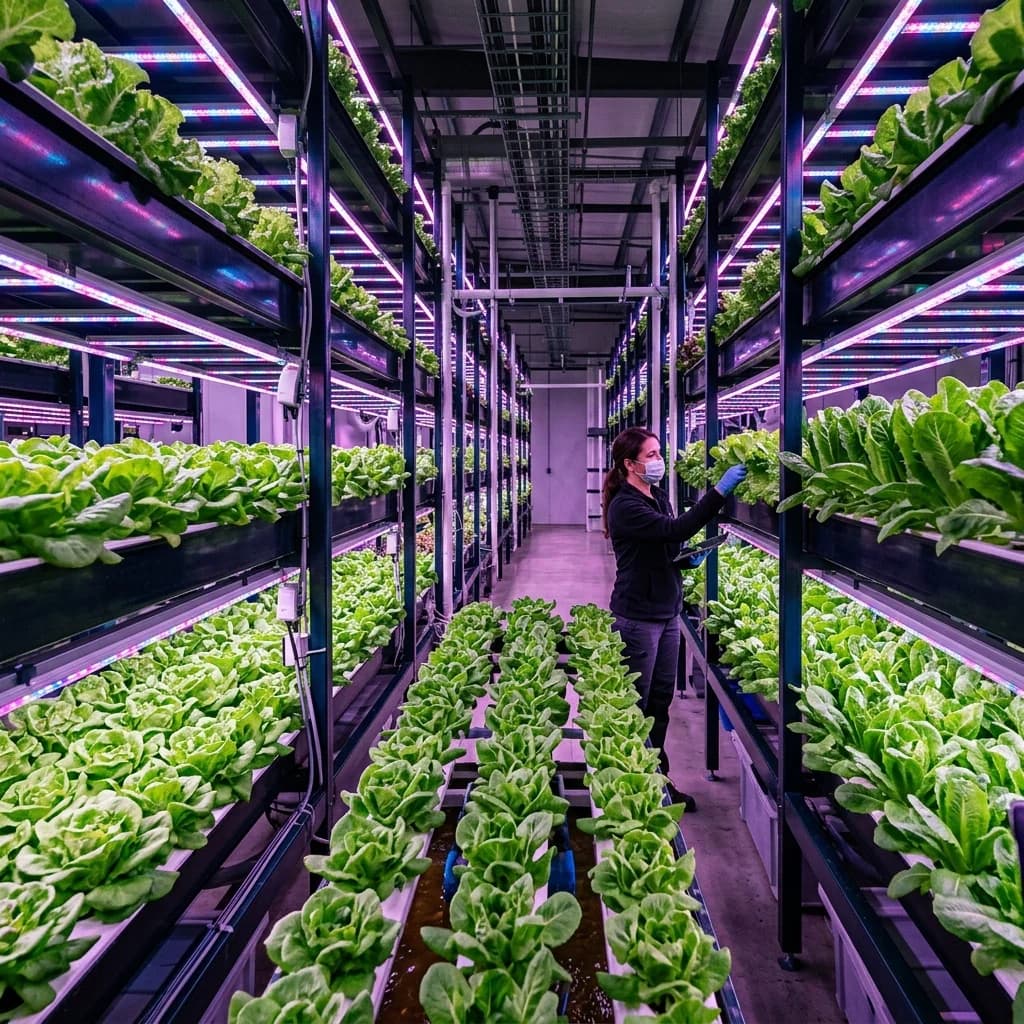
Researchers at the University of Tsukuba have achieved a major milestone in agricultural biotechnology by using CRISPR/Cas9 genome editing to modify red-leaf lettuce, resulting in green leaves with significantly higher concentrations of the beneficial antioxidant quercetin. The scientific team successfully targeted and inactivated the gene encoding dihydroflavonol 4-reductase (DFR), a key enzyme in the biosynthetic pathway that produces anthocyanins—the pigments responsible for the red coloration in lettuce leaves. By knocking out this enzyme, the researchers effectively blocked the pathway that converts metabolic precursors into anthocyanins, redirecting the metabolic flux toward other flavonoid branches.
The implications of this metabolic redirection are highly promising for the future of functional foods and controlled-environment agriculture. Instead of producing red pigments, the gene-edited lettuce accumulated record-breaking levels of quercetin, a powerful antioxidant known for its anti-inflammatory and cardiovascular health benefits. Crucially, the genetic modification did not result in any significant negative impact on the plants' growth rates, yields, or structural development, demonstrating that precision genome editing can successfully tailor crop nutritional profiles without compromising agricultural efficiency. This study paves the way for designing nutrient-dense crops optimized for indoor plant factories, addressing the growing consumer demand for functional foods.
Kinetochores Found Coordinating Cargo and Vesicle Transport in Developing Egg Cells
In reproductive biology and cell mechanics, a study published in The Journal of Cell Science by researchers at the Wayne State University School of Medicine has uncovered a critical, previously unknown role for outer kinetochore proteins in developing oocytes (egg cells). Kinetochores have historically been understood solely as protein structures that facilitate chromosome segregation during cell division. However, the research team led by Dr. Joshua Bembenek discovered that in oocytes, these proteins assemble into specialized thread-like structures called "linear elements" shortly before cell division, performing functions entirely unrelated to chromosome movement.
The study shows that these linear elements act as vital organizational tracks that coordinate the transport and distribution of cortical granules—vesicles containing structural materials essential for fertilization—throughout the egg cell's outer cortex. These linear elements interact with microtubules and the endoplasmic reticulum to transport and secrete these granules, which release their contents during fertilization to form a protective shell around the newly formed embryo, preventing polyspermy. By demonstrating a non-traditional, cytoplasmic transport role for kinetochores, this research provides new insights into the molecular causes of oocyte developmental defects and infertility, potentially leading to advanced therapeutic interventions in reproductive medicine.
💻 Technology: Hybrid Classical-Quantum Architectures and Space Instrumentation
HPE Integrates Classical Supercomputing with Multi-Modal Quantum Hardware
During the HPE Discover 2026 conference, Hewlett Packard Enterprise (HPE) announced a major expansion of its strategic relationships to integrate multi-modal quantum computing hardware directly with its high-performance classical supercomputers. Recognizing that no single quantum technology has emerged as the definitive standard, HPE is leveraging its HPE Cray supercomputing infrastructure to build integrated testbeds that support diverse quantum modalities. The company has expanded partnerships with eight leading quantum tech firms, including Intel for silicon spin qubits, Rigetti and IQM for superconducting qubits, Quantinuum for trapped-ion technologies, and QuEra for neutral-atom architectures.
This full-stack hybrid platform approach aims to transform quantum computing from an experimental research tool into a practical industrial accelerator that runs alongside classical supercomputers. By collaborating with quantum control specialists like Quantum Machines and Qblox, and error-correction pioneers like Riverlane, HPE is developing the necessary networking and control systems to run hybrid classical-quantum algorithms. This integration enables researchers to offload complex calculations—such as molecular simulations in chemistry, advanced material science modeling, and logistics optimization—directly to quantum co-processors. The initiative establishes a flexible, system-level framework that ensures enterprise workflows can utilize quantum acceleration regardless of which qubit technology scales first.
NASA Releases Solicitation for the 2026 Small Explorer Astrophysics Missions
NASA's Science Mission Directorate has officially released the final Announcement of Opportunity (AO) for the 2026 Astrophysics Small Explorer (SMEX) program, inviting research proposals for high-impact space science investigations. The 2026 solicitation introduces a significant structural change by shifting from the traditional two-step selection process—which required competitive Phase A concept studies—to a streamlined, single-step selection process. Under this new format, NASA will evaluate proposals and select a single investigation team to proceed directly into a combined Phase A/B development, significantly reducing the administrative timeline and accelerating the mission's path to launch.
The cost cap for the 2026 SMEX mission is set at $190 million, which covers all development phases, instrument engineering, and launch integration. This program offers a critical platform for university-led research groups and aerospace laboratories to propose compact space telescopes and detector arrays designed to study cosmic phenomena, such as dark energy, stellar evolution, and exoplanet atmospheres. By streamlining the solicitation process and maintaining a strict cost-performance balance, NASA aims to maximize scientific returns on a relatively modest budget. This approach ensures a continuous flow of specialized astrophysics data while fostering rapid innovation in space-based instrumentation.
📈 Market: Infrastructure Sustainability and Financial Tech Scenarios
SpaceX IPO Prospectus Highlights Water Scarcity as Critical AI Infrastructure Risk
Following its historic $75 billion Initial Public Offering (IPO) on the Nasdaq exchange on June 12, 2026, SpaceX has drawn significant attention from market analysts for its unique risk disclosures regarding its AI and data center infrastructure. In its final prospectus, the aerospace giant explicitly listed water scarcity as a critical risk factor, elevating it to the same level of concern as grid power availability and semiconductor supply chains. The company warned that its growing artificial intelligence operations and data center footprints require millions of gallons of water daily for cooling, making them highly vulnerable to drought, local water competition, and tightening environmental regulations.
This disclosure reflects a broader, systemic challenge facing the global technology sector, where the rapid expansion of AI compute resources is clashing with physical resource constraints. High-performance AI servers generate immense heat, and liquid cooling systems that rely on municipal water supplies are becoming a major source of friction between technology companies and local communities. SpaceX warned investors that local water restrictions or environmental litigation could delay data center construction, increase utility costs, or force transitions to expensive closed-loop cooling technologies. The filing highlights that the financial viability of hyperscale AI is no longer just a question of chip efficiency or software design, but is increasingly bound to resource management.
UK Financial Conduct Authority Outlines Scenarios for 2030 Financial Tech Convergence
The UK Financial Conduct Authority (FCA) has published its first Emerging Technology Horizon Scan 2026, outlining three key scenarios for how technologies like artificial intelligence and distributed ledgers will reshape the financial services sector by 2030. Produced by the FCA's Emerging Tech and Research team, the report is designed to help financial firms and regulators navigate the convergence of AI, decentralized finance, and digital identity. Rather than serving as rigid regulatory guidelines, the foresight scan presents plausible scenarios to encourage strategic planning, highlighting both the commercial opportunities and the systemic risks of rapid digitization.
The report's scenarios detail "Personalised Intelligence," where AI agents act as cognitive extensions for consumers to automate budgeting, "Synthetic Crime," where deepfakes and advanced AI models elevate fraud risks, and "Programmable Finance," where tokenized assets and smart contracts reshape global transaction clearing. The FCA warns that while distributed ledger technologies and smart contracts will significantly increase the speed and reduce the cost of cross-border financial plumbing, they will also introduce new avenues for malicious exploitation. By highlighting these trends, the regulator is urging financial institutions to actively invest in defensive security frameworks and adapt to an environment where customer interfaces and back-end settlement systems are fully automated.
The Bottom Line
- Science: Genome editing of red-leaf lettuce at Tsukuba redirects metabolic pathways to boost quercetin antioxidant levels, while Wayne State researchers discover kinetochore proteins coordinating crucial vesicle transport in oocytes.
- Technology: HPE expands collaborations to integrate multi-modal quantum hardware with Cray supercomputers, while NASA releases its 2026 SMEX astrophysics solicitation with a streamlined single-step solicitation process.
- Market: SpaceX's record-breaking IPO highlights water scarcity as a critical bottleneck for cooling AI data centers, while the UK FCA's Horizon Scan prepares the financial sector for AI agents, synthetic crime, and DLT-based programmable finance.
Enjoyed this post?
Get our weekly digest delivered free.
Share this post:
📌 Disclosure: This post may contain affiliate links. If you make a purchase through our links, we may earn a commission at no extra cost to you. We only recommend products we believe in. See our Affiliate Disclosure.
Related Posts

U.S.-Iran Military Escalation, 3.2-Billion-Year-Old Enzymes Reconstructed, and Apple's $30 Billion U.S. Chip Deal
U.S.-Iran Military Escalation, 3.2-Billion-Year-Old Enzymes Reconstructed, and Apple's $30 Billion U.S. Chip Deal A dramatic military escalation in the Middle East has disrupted global energy markets,…

NATO Summit in Ankara, Saudi Arabia's Historic Crude Oil Price Slashes, and World's First Sub-1 GHz Massive MIMO 5G Network
NATO Summit in Ankara, Saudi Arabia's Historic Crude Oil Price Slashes, and World's First Sub-1 GHz Massive MIMO 5G Network July 7, 2026, represents a landmark day for international security allian…

UN AI Governance Summit, ISRO PSLV Resumption, and Norway's Historic World Cup Triumph
UN AI Governance Summit, ISRO PSLV Resumption, and Norway's Historic World Cup Triumph On July 6, 2026, the global landscape reflects a dynamic convergence of international policy, technological br…