Acoustic Spintronics, Gemini-Powered Siri, and the Thermal Footprint of Hyperscale Compute: The Mid-June 2026 Update
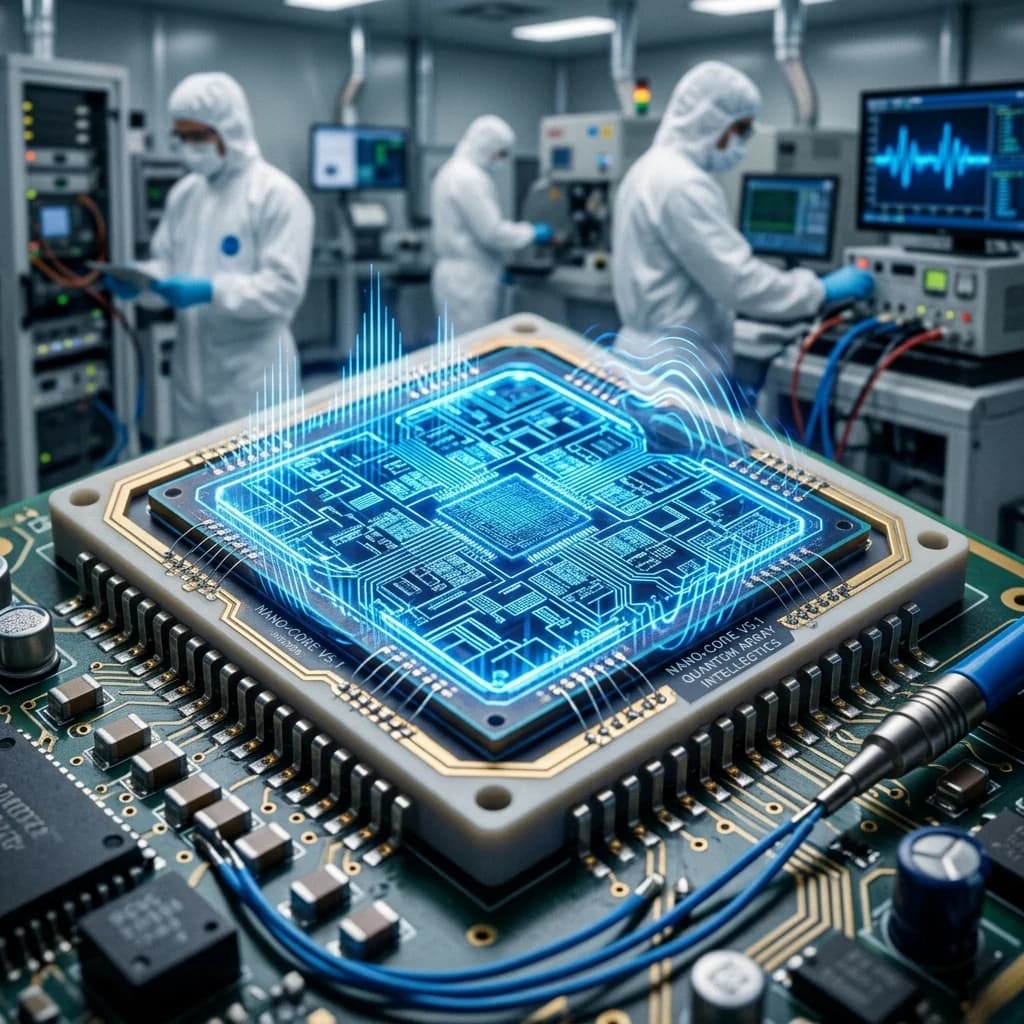
Acoustic Spintronics, Gemini-Powered Siri, and the Thermal Footprint of Hyperscale Compute: The Mid-June 2026 Update
As of mid-June 2026, the global scientific and technological frontiers are experiencing a rapid convergence across low-power hardware architecture, cosmic observation, consumer software intelligence, and environmental thermodynamics. Rather than advancing in isolation, the systems scaling today's computational capabilities—from device-level spintronic logic to hyperscale AI data centers and global consumer integrations—are driving a shared focus on efficiency, privacy, and physical limits. Together, these developments outline a future where digital intelligence is increasingly defined by its physical energy footprint and hardware constraints.
Here is a synthesized analysis of the major breakthroughs and market-defining shifts as of June 15, 2026.
1. Physical Limits and Cosmic Dynamics: Acoustic Spintronics and Sgr A* Outflows
In fundamental physics and astronomical observation, researchers are uncovering new ways to map and control energy transfer at both the atomic scale and the galactic core. The search for heatless computing has led to quantum breakthroughs, while advanced radio telescope arrays are revealing the gentle feedback systems of typical supermassive black holes.
Key Scientific and Observational Developments:
- Acoustic Wave Control in Spintronics: In solid-state physics, researchers have achieved a major milestone in spintronics by using surface acoustic waves (SAWs) to mechanically generate and control spin currents in ferromagnetic thin films. Traditional electronic devices are constrained by resistance-induced heating as current flows through nanoscale silicon channels. By utilizing mechanical acoustic vibrations rather than electrical voltages or thermal gradients to induce spin polarization, this new method offers a "heatless" route to carry and manipulate digital information. This breakthrough is poised to directly integrate micro-electro-mechanical systems (MEMS) with magnetic random-access memory (MRAM) and neuromorphic processors, solving a critical interconnect bottleneck for next-generation quantum and classical chip designs.
- ALMA Maps Sagittarius A Cosmic Wind:* In astrophysics, astronomers have successfully mapped the first direct evidence of a persistent molecular wind blowing from Sagittarius A* (Sgr A*), the supermassive black hole at the center of the Milky Way. Using the Atacama Large Millimeter/submillimeter Array (ALMA) in Chile to analyze cold carbon monoxide gas, researchers subtracted the intense radio glare of the black hole to reveal a cone-shaped cavity carved into the surrounding molecular clouds. The wind, which acts as a gentle galactic breeze compared to the violent relativistic jets of active galactic nuclei, offers a baseline look at typical quiescent black holes. These findings, published in The Astrophysical Journal Letters, provide crucial insights into how black holes regulate star formation by gradually dispersing the cold gas reservoirs needed to birth new stars.
2. Consumer Scale and Deeptech: Gemini-Powered Siri and AI-Driven Simulations
The integration of artificial intelligence is accelerating both at the consumer device layer and in the rapid development of deeptech startups, shifting long-term research and development timelines into near-term software-hardware integration.
Developments in AI Integration and Innovation Ecosystems:
- Apple Siri's Gemini-Powered Rebirth: At the Worldwide Developers Conference (WWDC) 2026, Apple announced a major overhaul of Siri, leveraging a custom 1.2-trillion-parameter Gemini model licensed from Google in an annual partnership valued at $1 billion. To address user privacy, Apple employs a tiered processing model: local tasks run on-device, complex reasoning is sent to Private Cloud Compute, and the heaviest queries are sent to Google Cloud within secure, hardware-encrypted Nvidia Blackwell GPU environments to ensure data remains stateless. The announcement also marks a leadership milestone, representing the final WWDC keynote delivered by Tim Cook before John Ternus assumes the role of CEO on September 1, 2026.
- WEF Technology Pioneers 2026 Cohort: The World Economic Forum (WEF) has announced its 2026 cohort of "Technology Pioneers," highlighting a significant shift where early-stage startups are using advanced machine learning and physics-informed neural networks to compress deeptech R&D timelines. Sectors such as nuclear fusion, neurosurgical robotics, and aerospace engineering—which historically required decades of capital-intensive research—are now moving rapidly from simulations to physical deployment. By utilizing AI-generated synthetic data and cloud-based high-performance computing, these startups are democratizing physical science innovation and bypassing traditional prototyping bottlenecks.
3. Thermal Footprints, Organelle Health, and Macroeconomic Realignments
As computation scales to meet consumer and industrial demand, its physical footprint is reshaping local climates, even as biological researchers map new ways to reverse cellular decay and financial markets prepare for regulatory and structural shifts.
Key Environmental, Biological, and Market Indicators:
- The "Data Heat Island Effect" Around AI Centers: A landmark satellite-based study led by the University of Cambridge has documented the localized microclimatic impact of hyperscale AI data centers. Analyzing over twenty years of thermal data across 8,400 facilities, researchers found that land surface temperatures in the immediate vicinity of these sites rise by an average of 2°C (3.6°F) and in some cases up to 9°C (16.2°F). This thermal footprint extends up to 10 kilometers away, potentially impacting 340 million people globally. The study highlights the environmental cost of generative AI workloads and has prompted calls for next-generation waste heat recovery systems and stricter zoning laws.
- Reversible Mitochondrial Aging Pathways: In cell biology, researchers at the Leibniz Institute on Aging (FLI) have identified a decline in the membrane lipid phosphatidylcholine (PC) as a primary trigger for mitochondrial dysfunction during aging. By analyzing C. elegans, the team demonstrated that mitochondrial membrane decay is not inevitable; targeted dietary and chemical supplementation of phosphatidylcholine restored organelle membrane composition and recovered normal cellular energy output. Published in a prominent scientific journal, the study opens new therapeutic avenues for age-related metabolic and neurodegenerative diseases in humans.
- Honeywell's HONA Aerospace Spin-Off: Industrial conglomerate Honeywell is finalizing its corporate restructuring to spin off its Aerospace business as a standalone entity trading on the Nasdaq under the ticker HONA on June 29, 2026. A 1-for-2 reverse stock split will consolidate equity prior to listing, while the parent company rebrands as Honeywell Technologies to focus on industrial automation and warehouse software. The separation reflects a broader trend of conglomerates simplifying their structures to allow pure-play companies to directly reinvest cash flows into specialized aerospace and automation technologies.
- Market Consolidation Ahead of Warsh's FOMC Debut: Global financial markets are trading in a narrow range ahead of the June 16–17 FOMC meeting, which marks the debut of Kevin Warsh as Federal Reserve Chairman. With May CPI inflation coming in at a hotter-than-expected 4.2%, investors have priced out a summer interest rate cut and are anticipating a "higher-for-longer" policy stance. Analysts speculate that Chairman Warsh may restructure the Fed's communication tools, including a potential phase-out of the dot plot in favor of qualitative policy guidance, which has driven 10-year Treasury yields higher and pressured tech stocks.
Conclusion: The Cyber-Physical and Macroeconomic Cycle
The milestones of mid-June 2026 illustrate that hardware engineering, environmental sustainability, and financial markets are bound in a continuous feedback loop. The thermal strain highlighted by Cambridge's "data heat island" study underscores the urgency of breakthroughs like acoustic spintronics to enable heatless computing. At the same time, massive consumer integrations like Apple's Gemini-powered Siri scale the demand for this hardware, driving capital market transitions like Honeywell's HONA spin-off and requiring careful policy navigation by the Federal Reserve under Chairman Warsh. As physical systems and software architectures continue to merge, the ability to balance raw computational capacity with environmental constraints and corporate agility will define the leaders of the next technological epoch.
Enjoyed this post?
Get our weekly digest delivered free.
Share this post:
📌 Disclosure: This post may contain affiliate links. If you make a purchase through our links, we may earn a commission at no extra cost to you. We only recommend products we believe in. See our Affiliate Disclosure.
Related Posts

U.S. Launches Major Night Strikes on 90 Targets in Iran as Ceasefire Declared Over
Breaking: U.S. Launches Major Night Strikes on 90 Targets in Iran as Ceasefire Declared Over Last updated: 2026-07-09 11:15 IST The United States military has launched a massive wave of airstrikes tar…

U.S.-Iran Ceasefire Collapses Amid Persian Gulf Military Strikes
Breaking: U.S.-Iran Ceasefire Collapses Amid Persian Gulf Military Strikes Last updated: 2026-07-08 22:30 IST The fragile ceasefire between the United States and Iran has collapsed after a series of m…

Breaking: US Launches Massive Strikes on 80 Iran Sites; Tehran Retaliates Against US Bases in Bahrain and Kuwait
Breaking: US Launches Massive Strikes on 80 Iran Sites; Tehran Retaliates Against US Bases in Bahrain and Kuwait Last updated: 2026-07-08 17:20 IST On July 8, 2026, the United States Central Command (…