U.S. Air Force B-52 Crash, Unilever-Accenture Digital Twins, and QuantumCore's KI-TWPA Breakthrough: The June 16, 2026 Update
U.S. Air Force B-52 Crash, Unilever-Accenture Digital Twins, and QuantumCore's KI-TWPA Breakthrough: The June 16, 2026 Update
As mid-June 2026 unfolds, the global landscapes of strategic defense, industrial automation, and advanced computing are experiencing critical inflection points. Today's developments highlight a transition from legacy operational models to next-generation cyber-physical frameworks, whether through the tragic loss of a strategic bomber raising questions about military modernization, multinational enterprises deploying scalable AI networks to optimize physical supply chains, or quantum computing developers achieving cryogenic signal milestones. In a world increasingly defined by physical limits and complex resource demands, these shifts underscore the growing integration of hardware resiliency and intelligent automation.
Here is a synthesized analysis of the major breakthroughs and market-defining shifts as of June 16, 2026.
1. Geopolitical Security and Defense Infrastructure: The B-52 Stratofortress Incident
In global security and defense logistics, the maintenance of strategic capabilities remains paramount even as modern air forces accelerate the transition to next-generation platforms.
Key Defense and Security Developments:
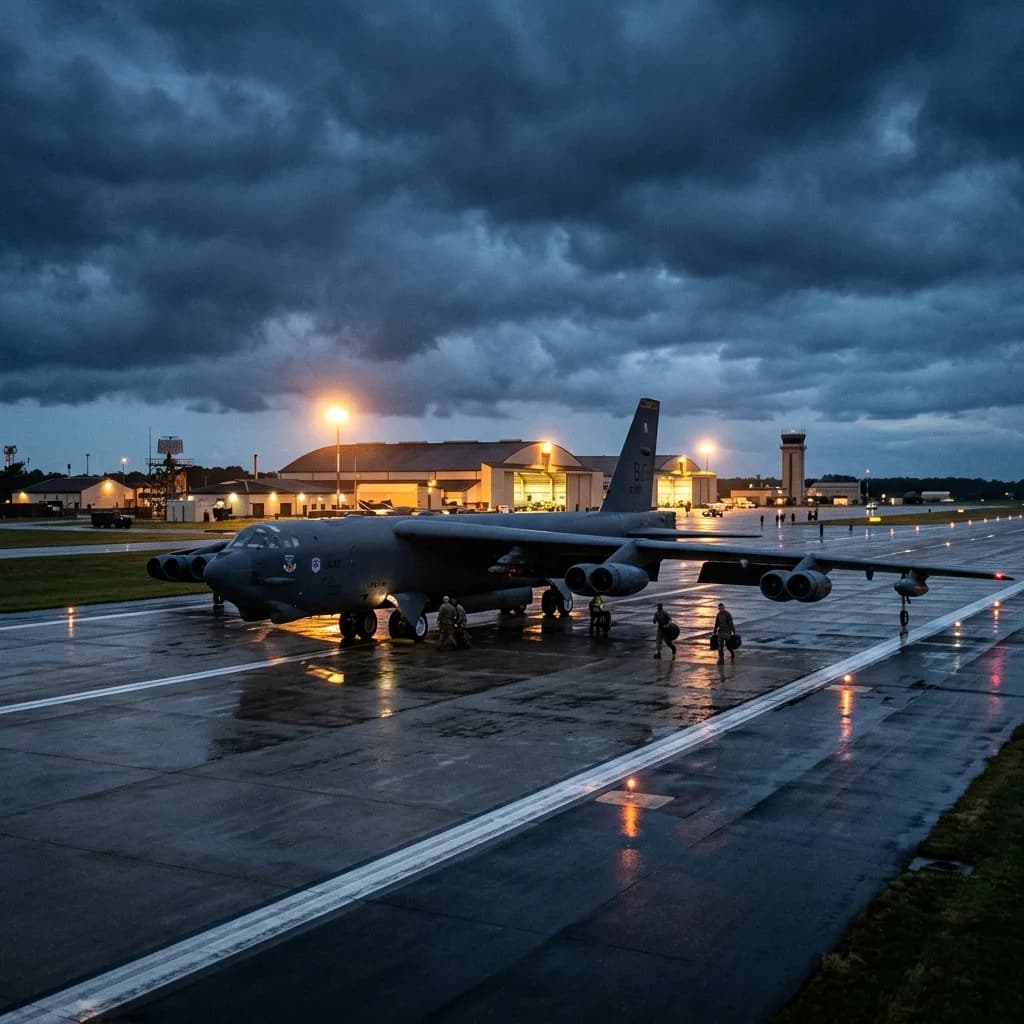
- B-52 Stratofortress Test Flight Crash: A United States Air Force B-52 Stratofortress strategic bomber crashed in California during a routine test flight originating from Edwards Air Force Base. Initial reports indicate that all eight crew members and flight specialists on board perished in the incident. The B-52, a cornerstone of the U.S. strategic bomber fleet for decades, has been undergoing extensive modernization programs, including commercial engine replacement and radar upgrades, to extend its operational service life into the mid-21st century. The crash has prompted the Department of Defense to temporarily suspend non-essential modernization test flights pending a comprehensive safety investigation, highlighting the physical wear and engineering challenges associated with maintaining legacy heavy bomber platforms.
- Philadelphia Anti-Violence Grants: Highlighting domestic security efforts that run parallel to international defense concerns, Philadelphia Mayor Cherelle L. Parker announced the distribution of the city’s first $2 million in anti-violence grants for 2026. The funding, allocated to 47 grassroots organizations and local non-profits, is designed to support community-based intervention, mentorship, and economic opportunity programs in neighborhoods experiencing elevated levels of systemic violence. By combining local civic funding with targeted law enforcement resources, municipal leaders aim to address the social determinants of crime and build sustainable urban safety networks.
2. Industrial Automation and Digital Platforms: Unilever's AI Scaling and Multilingual Procurement
The integration of artificial intelligence is transitioning rapidly from creative software applications to large-scale enterprise workflows, enabling multinational supply chains and national public infrastructure to achieve unprecedented efficiency and language-independent access.
Key Enterprise Tech and Digital Platform Trends:
- Unilever and Accenture AI Digital Twin Alliance: In a major move to optimize global consumer goods manufacturing, Unilever has announced a strategic partnership with Accenture to scale the deployment of AI-enabled "digital twins" across its global factory network. By creating virtual, real-time replicas of physical production lines, Unilever aims to utilize predictive analytics to forecast machine maintenance needs, minimize product waste, and optimize energy consumption on the factory floor. The joint initiative leverages generative AI and physics-informed machine learning models to simulate complex manufacturing variables, enabling local site managers to make data-driven operational adjustments and build more resilient supply chains.
- India's GeM and BHASHINI Multilingual Integration: India's public procurement portal, the Government e-Marketplace (GeM), has officially partnered with the government's BHASHINI AI language translation platform to integrate multilingual access across its digital ecosystem. The integration allows small-scale vendors, agricultural cooperatives, and rural micro-enterprises to navigate procurement tenders, submit bids, and communicate with government buyers in their native regional languages. By breaking down linguistic barriers that have historically favored larger corporate bidders, the initiative aims to democratize access to the multi-billion-dollar public procurement market and drive inclusive economic growth.
3. Quantum Architecture and Celestial Observation: QuantumCore's KI-TWPA and the June Conjunction
As computation reaches the physical limits of classical silicon, researchers are developing cryogenic amplification systems to scale quantum processors, while skywatchers observe unique planetary alignments that highlight the progress of cosmic science.
Key Quantum Hardware and Space Science Indicators:
- QuantumCore KI-TWPA Performance Breakthrough: QuantumCore Ltd. has announced a significant technical milestone in the development of its kinetic inductance traveling wave parametric amplifier (KI-TWPA) platform. Crucial for the high-fidelity readout of superconducting qubits at cryogenic temperatures, the KI-TWPA technology has achieved noise performance and signal amplification levels approaching those of traditional semiconductor-based components. By providing low-noise, broadband amplification within dilution refrigerators, the platform addresses a critical heat-generation bottleneck that has hindered the scaling of quantum computers beyond 1,000 qubits. The company plans to begin shipping evaluation units to select research laboratories and commercial partners in the coming weeks.
- Bloomsday Celestial Alignment: Skywatchers celebrated the annual Bloomsday and World Sea Turtle Day on June 16, 2026, alongside a striking astronomical event in the evening sky. A waxing crescent Moon positioned itself to form an elongated celestial triangle with the planets Jupiter and Mercury low on the western horizon. The planetary conjunction offered amateur astronomers a clear viewing window, coinciding with sessions at the 248th meeting of the American Astronomical Society (AAS) where astronomers highlighted how next-generation ground-based and orbital observatories are mapping planetary orbits with unprecedented precision.
Conclusion: The Integrated Cyber-Physical Loop
The events of June 16, 2026, demonstrate that international defense, industrial enterprise, and quantum-scale innovation are deeply interconnected. The tragic crash of the B-52 bomber underscores the critical need for advanced digital twin simulations—similar to those deployed by Unilever and Accenture—to stress-test physical materials and manage maintenance cycles before systems are deployed. At the same time, the computational power required to run global digital twins and manage multilingual platforms like BHASHINI will eventually rely on scalable quantum networks, which depend on cryogenic hardware breakthroughs like QuantumCore's KI-TWPA amplifiers. As society navigates the physical limits of legacy machinery and classical computing, the transition to integrated, cyber-physical feedback loops remains the central theme of the mid-2026 technological landscape.
Enjoyed this post?
Get our weekly digest delivered free.
Share this post:
📌 Disclosure: This post may contain affiliate links. If you make a purchase through our links, we may earn a commission at no extra cost to you. We only recommend products we believe in. See our Affiliate Disclosure.
Related Posts

U.S. Launches Major Night Strikes on 90 Targets in Iran as Ceasefire Declared Over
Breaking: U.S. Launches Major Night Strikes on 90 Targets in Iran as Ceasefire Declared Over Last updated: 2026-07-09 11:15 IST The United States military has launched a massive wave of airstrikes tar…
U.S.-Iran Ceasefire Collapses Amid Persian Gulf Military Strikes
Breaking: U.S.-Iran Ceasefire Collapses Amid Persian Gulf Military Strikes Last updated: 2026-07-08 22:30 IST The fragile ceasefire between the United States and Iran has collapsed after a series of m…
Breaking: US Launches Massive Strikes on 80 Iran Sites; Tehran Retaliates Against US Bases in Bahrain and Kuwait
Breaking: US Launches Massive Strikes on 80 Iran Sites; Tehran Retaliates Against US Bases in Bahrain and Kuwait Last updated: 2026-07-08 17:20 IST On July 8, 2026, the United States Central Command (…