CHEOPS Extension, Starlink India Compliance, and Warsh's FOMC Debut: The June 16, 2026 Update
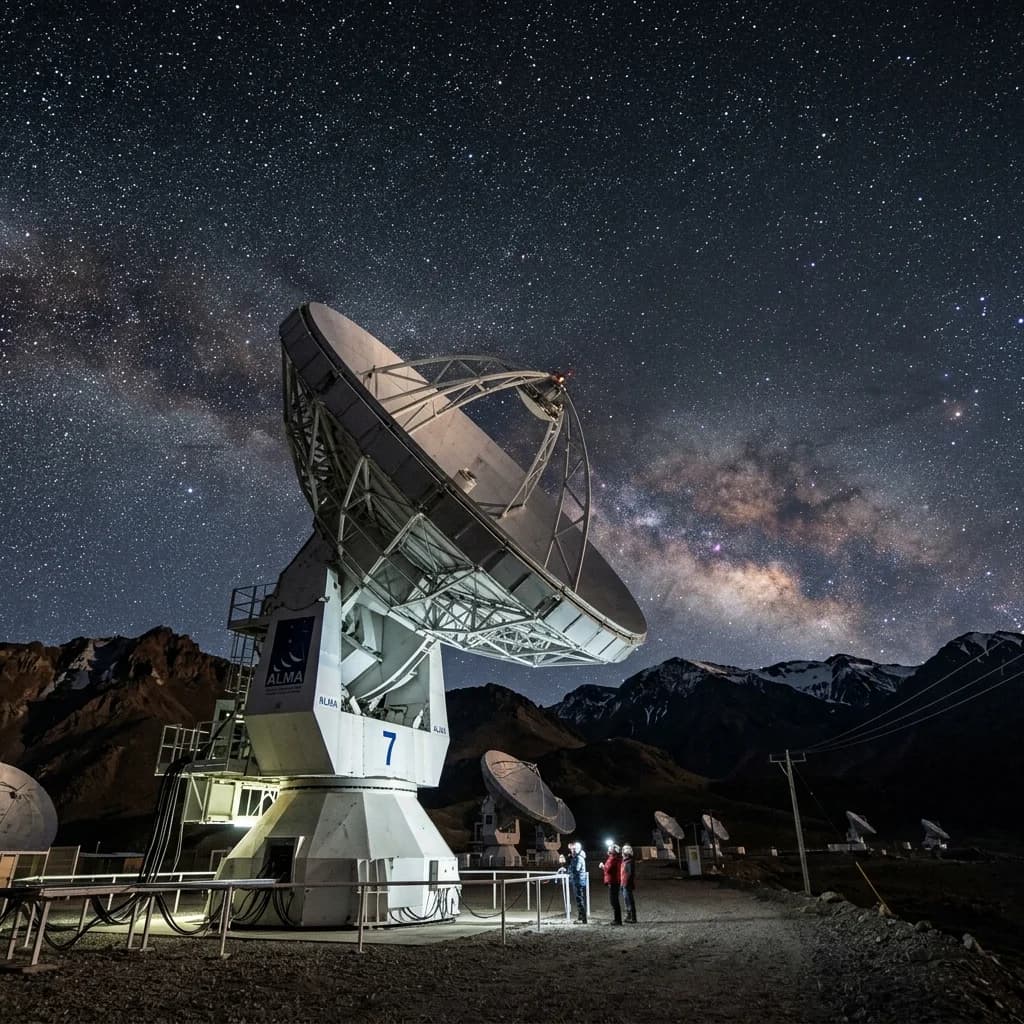
CHEOPS Extension, Starlink India Compliance, and Warsh's FOMC Debut: The June 16, 2026 Update
As mid-June 2026 unfolds, the trajectories of international space collaboration, digital telecommunications compliance, molecular biology, and global monetary policy are converging. Today's advancements show a distinct trend: the translation of theoretical and orbital models into practical, regulated infrastructure. Whether mapping the tidal deformation of distant exoplanets, navigating national security requirements for satellite constellation routing, or structuring interest rate policies to combat sticky inflation, the global arena is shifting toward institutional integration and physical execution.
Here is a synthesized analysis of the major breakthroughs and market-defining shifts as of June 16, 2026.
1. Orbits and Cosmic Surveys: CHEOPS Extension, Ax-4, and the SMEX AO
In astronomical observation and space exploration, the focus has shifted toward extending high-performing assets, international crew training, and soliciting low-cost, high-science-yield astrophysics investigations in low Earth orbit (LEO).
Key Space Tech and Observational Developments:
- CHEOPS Mission Extended to 2029: The European Space Agency (ESA) has officially extended the CHEOPS (CHaracterising ExOPlanets Satellite) mission until the end of 2029. Since its launch in 2019, CHEOPS has been highly successful in measuring the sizes of known exoplanets, enabling researchers to calculate their bulk densities and atmospheric properties. Its extended mandate will focus heavily on exoplanetary tidal deformation—a phenomenon where gravitational pull from a host star distorts the shape of a planet, providing crucial data on its interior structure (whether it is rocky, icy, or possesses a large iron core).
- Axiom Mission 4 (Ax-4) and Gaganyaan Synergy: Scheduled to launch later this year, the Ax-4 mission represents a major milestone in international human spaceflight. In a collaboration between NASA, SpaceX, and Axiom Space, the 14-day flight to the International Space Station (ISS) will carry ISRO astronaut Shubhanshu Shukla (with Prasanth Balakrishnan Nair serving as backup). This mission provides crucial operational experience in microgravity, docking procedures, and life support systems for India's astronaut corps ahead of ISRO's first independent crewed orbiters under the Gaganyaan-1 program.
- NASA Small Explorer (SMEX) Program Solicitation: NASA has released a new Announcement of Opportunity under the SMEX program, inviting proposals for Principal Investigator-led space science investigations. Capped at approximately $150 million, SMEX projects represent a cost-effective way to deploy targeted astrophysics and heliophysics instruments. The 2026 round aims to deploy small satellites designed to study cosmic structures, stellar cycles, and magnetospheric dynamics, leveraging commercially available satellite buses to accelerate development timelines.
2. Telecom Compliance, Physical AI, and Sodium-Ion Scaling
The integration of artificial intelligence is accelerating both at the consumer device layer and in the rapid development of deeptech startups, shifting long-term research and development timelines into near-term software-hardware integration.
Key Technology and Connectivity Trends:
- Starlink's Indian Security Compliance: In telecommunications, Starlink is navigating the final stages of its Indian market entry. Addressing recent speculative reports of a government "freeze" on its Global Mobile Personal Communication by Satellite (GMPCS) license, Lauren Dreyer, Vice President of Starlink Business Operations, confirmed that the company remains in active and productive discussions with India's Department of Telecommunications (DoT). The regulatory focus centers on security compliance, specifically regarding data routing through domestic gateways and the prevention of unauthorized terminal usage in geopolitical conflict zones. The outcome of these negotiations will decide the deployment timeline of low-latency satellite broadband across India's vast rural and underserved regions.
- The "Physical AI" and Agentic Shift: In computational architecture, industry forums like the Gartner IT Symposium are highlighting the transition of AI from digital cognitive assistants to "Physical AI" systems. Rather than operating strictly inside software containers, AI in mid-2026 is increasingly integrated into robotic controls, industrial automation, and autonomous multi-agent networks that execute physical workflows. This shift requires real-time edge processing and "agentic" software layers capable of long-horizon planning and self-correction without human intervention.
- Sodium-Ion Battery Commercialization: On the energy front, sodium-ion battery technology is reaching a critical inflection point as a viable commercial alternative to lithium-ion. As global supply chains face bottlenecks in lithium extraction, manufacturers are scaling sodium-ion production lines for stationary grid storage and urban electric vehicles. Utilizing abundant, low-cost sodium, these batteries offer superior safety, better performance in extreme temperatures, and a lower environmental footprint, helping to stabilize energy grids that are increasingly stressed by localized computational workloads.
3. Cellular Biology, Nutritional Science, and Macroeconomic Realignments
As computation scales to meet consumer and industrial demand, its physical footprint is reshaping local climates, even as biological researchers map new ways to reverse cellular decay and financial markets prepare for regulatory and structural shifts.
Key Environmental, Biological, and Market Indicators:
- Outer Kinetochore Proteins in Oogenesis: In molecular biology, a landmark study has revealed that outer kinetochore proteins play a fundamental role in the early development of egg cells (oocytes). Historically, these protein complexes were believed to function exclusively during active chromosome segregation in mitosis and meiosis. The discovery that they also regulate transcription and structural integrity during the prolonged arrest phase of oocyte development opens new pathways for understanding reproductive health and mitigating age-related fertility decline.
- Tyrosine Supplementation and Life-Span Correlation: In nutritional science, a newly published long-term cohort study has raised questions about the safety of common cognitive and brain-health supplements. The research, which tracked metabolic profiles over several years, identified a correlation between high levels of the amino acid tyrosine and a shorter life expectancy in men. While tyrosine is a precursor to dopamine and is widely marketed to enhance focus and reduce stress, the study suggests that chronic over-supplementation could disrupt metabolic homeostasis and cardiovascular function, prompting calls for more rigorous clinical guidelines on over-the-counter nootropics.
- Warsh's FOMC Debut on June 16: In macroeconomics, global financial markets are closely watching the Federal Reserve as the June 16–17 FOMC meeting begins. This meeting marks the official debut of Kevin Warsh as Federal Reserve Chairman. With inflation remaining sticky at 4.2% and the labor market showing persistent tightness, the Fed is widely expected to maintain its restrictive "higher-for-longer" interest rate stance. Analysts are focused on Chairman Warsh's opening press conference, where he is anticipated to outline structural reforms to the Fed's communication framework, including the potential phase-out of the dot plot in favor of qualitative policy bands.
Conclusion: The Interdependent Loop
The developments of June 16, 2026, illustrate the feedback loops shaping our modern world. The scale of telecommunications like Starlink in India and the rise of Physical AI drive massive computational demands, which require alternative battery technologies like sodium-ion to prevent grid overload. To build these batteries and understand oocyte development, researchers rely on advanced computational models. All these capital-intensive efforts operate under the macroeconomic umbrella of the Federal Reserve, where Chairman Warsh's policies will determine the cost of capital for the next wave of deeptech projects. Balancing technological capability, regulatory security, and monetary stability remains the central challenge of the mid-2026 landscape.
Enjoyed this post?
Get our weekly digest delivered free.
Share this post:
📌 Disclosure: This post may contain affiliate links. If you make a purchase through our links, we may earn a commission at no extra cost to you. We only recommend products we believe in. See our Affiliate Disclosure.
Related Posts

U.S. Launches Major Night Strikes on 90 Targets in Iran as Ceasefire Declared Over
Breaking: U.S. Launches Major Night Strikes on 90 Targets in Iran as Ceasefire Declared Over Last updated: 2026-07-09 11:15 IST The United States military has launched a massive wave of airstrikes tar…

U.S.-Iran Ceasefire Collapses Amid Persian Gulf Military Strikes
Breaking: U.S.-Iran Ceasefire Collapses Amid Persian Gulf Military Strikes Last updated: 2026-07-08 22:30 IST The fragile ceasefire between the United States and Iran has collapsed after a series of m…

Breaking: US Launches Massive Strikes on 80 Iran Sites; Tehran Retaliates Against US Bases in Bahrain and Kuwait
Breaking: US Launches Massive Strikes on 80 Iran Sites; Tehran Retaliates Against US Bases in Bahrain and Kuwait Last updated: 2026-07-08 17:20 IST On July 8, 2026, the United States Central Command (…