Fusion Power, Next-Gen Lithography, and the Embodied AI Robotics Fleet: The Mid-June 2026 Update
Fusion Power, Next-Gen Lithography, and the Embodied AI Robotics Fleet: The Mid-June 2026 Update
As of mid-June 2026, the boundaries of global infrastructure, computing capability, and biotechnology are experiencing a rapid convergence. Rather than advancing in isolation, the systems scaling today's exploratory frontiers—from commercial-scale fusion energy and next-generation 2nm silicon lithography to task-oriented humanoid robot fleets and clinical in vivo gene editing—are sharing a focus on physical viability, efficiency, and high-precision control. Together, these developments outline a future where the massive power demands of advanced computation are met by clean energy breakthroughs, and where physical materials and biological systems are increasingly governed by software-driven precision.
Here is a synthesized analysis of the major breakthroughs and market-defining shifts as of June 15, 2026.
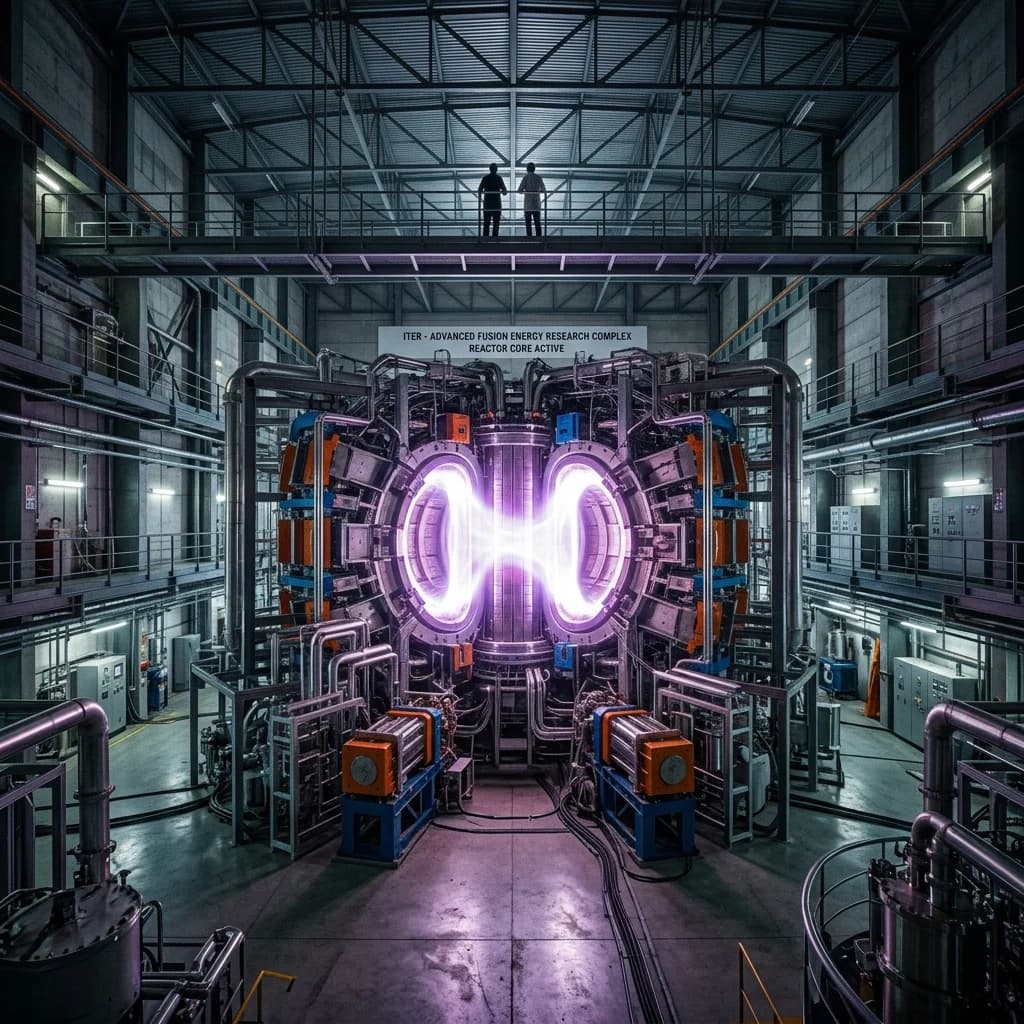
1. Commercializing the Star: Helion's Fusion Scale-Up and the Polaris Milestones
In the race for clean, zero-carbon energy to power the next generation of industrial manufacturing and AI data centers, commercial fusion is transitioning from experimental physics to capital-backed deployment.
Key Energy and Fusion Developments:
- Helion's $465M Series G Funding: Helion Energy announced a landmark $465 million Series G funding round led by Thrive Capital, nearly tripling the company's valuation to $15.5 billion. The capital injection brings Helion's total funding to $1.5 billion and is earmarked to accelerate the commercial deployment of its fusion reactors and scale its manufacturing capacity.
- Polaris and Orion Milestones: The funding follows key benchmarks achieved by Helion’s 7th-generation prototype, Polaris, which demonstrated deuterium-tritium (D-T) fusion and reached plasma temperatures exceeding 150 million degrees Celsius. The company is actively constructing Orion, its 8th-generation prototype and first commercial fusion power plant in Malaga, Washington, designed to deliver electricity directly to Microsoft by 2028.
- Altman Steps Down from Board: To prevent potential conflicts of interest as OpenAI began exploring utility-scale power purchase agreements, Sam Altman stepped down from Helion's Board of Directors in March 2026, though he retains his financial ownership stake in the company.
2. Advanced Computing and Silicon Scaling: TSMC's N2P Process and Wafer Economics
As compute requirements grow more demanding, semiconductor manufacturers are pushing lithography limits to deliver the power-efficient chips required for next-generation edge devices and data centers.
Key Semiconductor and Lithography Developments:
- TSMC N2 Volume Ramp-Up: Following its initial launch in late 2025, TSMC is aggressively ramping up volume production of its base N2 (2nm) process at Fab 20 (Hsinchu) and Fab 22 (Kaohsiung). The 2nm capacity for 2026 is heavily booked by major client portfolios including Apple, Qualcomm, and MediaTek, highlighting the industry's reliance on leading-edge silicon.
- N2P (2nm Performance) Schedule: TSMC has finalized its N2P (2nm Performance) volume production schedule for the second half of 2026. N2P introduces back-side power delivery networks (BSPDN), reducing voltage drop and delivering a 10% to 15% performance boost or a 25% to 30% power reduction compared to the base N2 node.
- Economics of the 2nm Transition: The shift to N2 and N2P has introduced a steep escalation in wafer pricing, forcing chip designers to reserve 2nm silicon exclusively for high-margin products like flagship smartphone application processors and datacenter AI accelerators.
3. Biological Precision and Embodied Fleet Operations: In Vivo CRISPR and the 10,000-Robot Mandate
The boundary between physical automation and biological systems is becoming increasingly blurred as robotic platforms transition to practical workplaces and genetic therapies achieve targeted precision.
Key Clinical and Robotic Developments:
- Phase 3 Success for In Vivo CRISPR: In biotechnology, researchers reported the successful completion of a landmark Phase 3 clinical trial for lonvoguran-ziclumeran (lonvo-z), an in vivo CRISPR-based therapy developed by Intellia Therapeutics for hereditary angioedema (HAE). The therapy demonstrated a significant reduction in swelling attacks, marking the first time an in vivo CRISPR therapy has cleared a Phase 3 hurdle and paving the way for upcoming global regulatory filings.
- Compact CRISPR Delivery Systems: Addressing a critical delivery bottleneck, researchers engineered a compact CRISPR enzyme, Al3Cas12f. Because this enzyme is small enough to fit inside standard adeno-associated virus (AAV) vectors, it allows therapeutic payloads to be delivered directly in vivo without the need for complex, ex vivo cell extraction.
- China's 10,000-Robot Industrial Mandate: In automation, China's Ministry of Industry and Information Technology (MIIT) issued a mandate requiring the deployment of over 10,000 humanoid robots into commercial and industrial workplaces by the end of 2026. This directive shifts the focus of the robotics sector from locomotion demonstrations to task-oriented "Embodied AI" applications in manufacturing, logistics, and healthcare, prompting developers to scale production of models like the Tesla Optimus V3, Figure 03, and 1X NEO.
Conclusion: The Energy, Compute, and Physical Loop
The breakthroughs of mid-June 2026 highlight a tightly coupled cyber-physical loop. The deployment of autonomous humanoid fleets under mandates like China's and the scaling of next-generation AI accelerators rely on high-performance, power-efficient silicon like TSMC's N2P. In turn, manufacturing and operating these advanced semiconductor nodes and robotic systems demands massive amounts of energy, driving the urgency behind Helion's commercial fusion timeline. Finally, the compute systems powered by these technologies provide the design and modeling engines necessary to engineer compact genetic vectors like the Al3Cas12f CRISPR enzyme and simulate complex plasma dynamics in fusion reactors. The future is no longer a set of parallel technological paths, but a single, reinforcing cycle of energy, compute, and physical execution.
Enjoyed this post?
Get our weekly digest delivered free.
Share this post:
📌 Disclosure: This post may contain affiliate links. If you make a purchase through our links, we may earn a commission at no extra cost to you. We only recommend products we believe in. See our Affiliate Disclosure.
Related Posts

U.S. Launches Major Night Strikes on 90 Targets in Iran as Ceasefire Declared Over
Breaking: U.S. Launches Major Night Strikes on 90 Targets in Iran as Ceasefire Declared Over Last updated: 2026-07-09 11:15 IST The United States military has launched a massive wave of airstrikes tar…

U.S.-Iran Ceasefire Collapses Amid Persian Gulf Military Strikes
Breaking: U.S.-Iran Ceasefire Collapses Amid Persian Gulf Military Strikes Last updated: 2026-07-08 22:30 IST The fragile ceasefire between the United States and Iran has collapsed after a series of m…

Breaking: US Launches Massive Strikes on 80 Iran Sites; Tehran Retaliates Against US Bases in Bahrain and Kuwait
Breaking: US Launches Massive Strikes on 80 Iran Sites; Tehran Retaliates Against US Bases in Bahrain and Kuwait Last updated: 2026-07-08 17:20 IST On July 8, 2026, the United States Central Command (…