Geopolitical Resets, Trusted AI Alliances, and the Two-Track Labor Market: The Mid-June 2026 Update
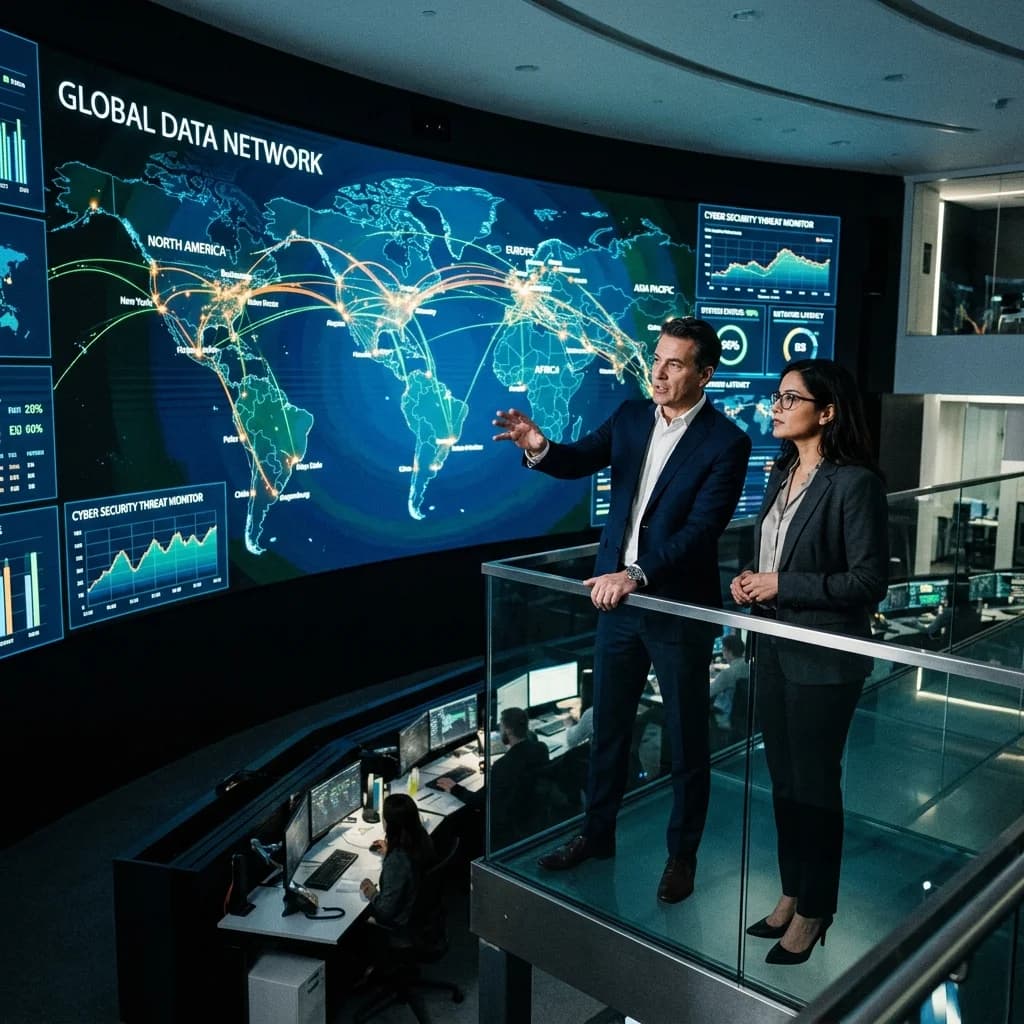
Geopolitical Resets, Trusted AI Alliances, and the Two-Track Labor Market: The Mid-June 2026 Update
As of mid-June 2026, the global landscape is witnessing a rapid realignment of geopolitical alliances, sovereign AI strategies, and global labor structures. Rather than evolving in isolation, the diplomatic frameworks designed to secure critical global energy routes are occurring alongside bilateral technological pacts and new analytical models of AI's economic footprint. Together, these forces are defining a new epoch of economic stability and sovereign compute.
Here is a synthesized analysis of the major breakthroughs defining the global landscape as of June 15, 2026.
1. Sovereign AI and Bilateral Tech Alliances
In artificial intelligence, the paradigm of 2026 is defined by national sovereignty, trusted governance, and localized content delivery. As models grow more capable, states are moving away from monolithic cloud-dependent services to build secure, domestic technology channels.
Key AI and Technology Developments:
- The India-France Innovation Roadmap 2030: On June 14, 2026, Prime Minister Narendra Modi and French President Emmanuel Macron met at the "Bharat Innovates 2026" summit in Nice to adopt the Innovation Roadmap 2030. Building on the Horizon 2047 framework, this roadmap establishes a Joint Working Group on Trusted AI, focusing on safe, ethical governance. It also establishes the DST-INRIA Centre of Digital Sciences to promote collaborative research between Kanpur and Nice, and expands the Unified Payments Interface (UPI) across retail sectors in France.
- Launch of "Varya" Video AI: Supported by the IndiaAI Mission, developers at Avataar have launched "Varya," an indigenous video-generation AI model. Engineered using advanced distillation techniques, Varya is optimized to generate culturally aligned and relevant video content at a fraction of the compute cost of traditional models, making localized AI video creation affordable for startups and educational institutions.
2. Geopolitical Resets and Macroeconomic Rebound
The stabilization of maritime trade corridors has provided an immediate boost to the global economy, reducing risk premiums and reshaping commodity markets.
Orbital and Macroeconomic Milestones:
- The US-Iran Peace Accord: On June 15, 2026, the United States and Iran announced a tentative peace agreement—a memorandum of understanding (MoU)—aimed at ending their military conflict. The agreement outlines a ceasefire, the reopening of the Strait of Hormuz to international shipping, and the removal of the U.S. naval blockade on Iranian ports, alongside the release of frozen Iranian funds. The formal signing ceremony is scheduled for June 19, 2026, in Switzerland.
- Market and Commodity Reaction: Global financial markets reacted with immediate optimism. Asian indices led the rally, with Japan's Nikkei 225 and South Korea's Kospi surging over 5% in response to the easing of shipping bottlenecks. Concurrently, Brent crude oil prices plunged 4.5% to fall below $83.40 per barrel, mitigating concerns over energy-driven inflation.
3. Labor Dynamics and the "Two-Track" AI Economy
As AI integration deepens, its impact on employment and human capital is becoming highly structured, creating clear divisions across professional sectors.
Economic and Social Frontiers:
- PwC’s 2026 Global AI Jobs Barometer: Released on June 15, PwC's latest report indicates the emergence of a "two-track" labor market. Professionalized roles, where AI acts as a force multiplier for expert workers (e.g., software engineering, legal analysis, and scientific research), are seeing a significant surge in demand, accompanied by wage premiums of up to 25%. Conversely, administrative and generic content roles that are easily automated face contraction.
- Education Under Attack 2026 Report: Highlighting the human cost of global instability, the Global Coalition to Protect Education from Attack (GCPEA) released its Education Under Attack 2026 report. The document reveals a 40% increase in attacks on schools, students, and teachers worldwide during 2024–2025, impacting over 10,600 individuals across 83 countries. The report underscores the urgent need for secure, remote digital education infrastructure in conflict zones.
Conclusion: The Geopolitical and Cyber Loop
The events of mid-June 2026 confirm that geopolitical stability and technological progress form an interdependent loop. The reopening of the Strait of Hormuz stabilizes global energy costs, lowering the electricity overhead required to run data centers and train large-scale AI models. Meanwhile, sovereign frameworks like the India-France Innovation Roadmap ensure that the deployment of these models remains trusted, secure, and aligned with democratic values. As these technologies alter the global labor market, tools like Varya and local digital platforms will prove essential in helping professionalized workers navigate the emerging "two-track" economy.
Enjoyed this post?
Get our weekly digest delivered free.
Share this post:
📌 Disclosure: This post may contain affiliate links. If you make a purchase through our links, we may earn a commission at no extra cost to you. We only recommend products we believe in. See our Affiliate Disclosure.
Related Posts
U.S. Launches Major Night Strikes on 90 Targets in Iran as Ceasefire Declared Over
Breaking: U.S. Launches Major Night Strikes on 90 Targets in Iran as Ceasefire Declared Over Last updated: 2026-07-09 11:15 IST The United States military has launched a massive wave of airstrikes tar…
U.S.-Iran Ceasefire Collapses Amid Persian Gulf Military Strikes
Breaking: U.S.-Iran Ceasefire Collapses Amid Persian Gulf Military Strikes Last updated: 2026-07-08 22:30 IST The fragile ceasefire between the United States and Iran has collapsed after a series of m…
Breaking: US Launches Massive Strikes on 80 Iran Sites; Tehran Retaliates Against US Bases in Bahrain and Kuwait
Breaking: US Launches Massive Strikes on 80 Iran Sites; Tehran Retaliates Against US Bases in Bahrain and Kuwait Last updated: 2026-07-08 17:20 IST On July 8, 2026, the United States Central Command (…