Systems Biology, Circadian Dinacharya, and Gut-Agni Chrono-Nutrition: The Science Validating Ayurvedic Medicine

Systems Biology, Circadian Dinacharya, and Gut-Agni Chrono-Nutrition: The Science Validating Ayurvedic Medicine
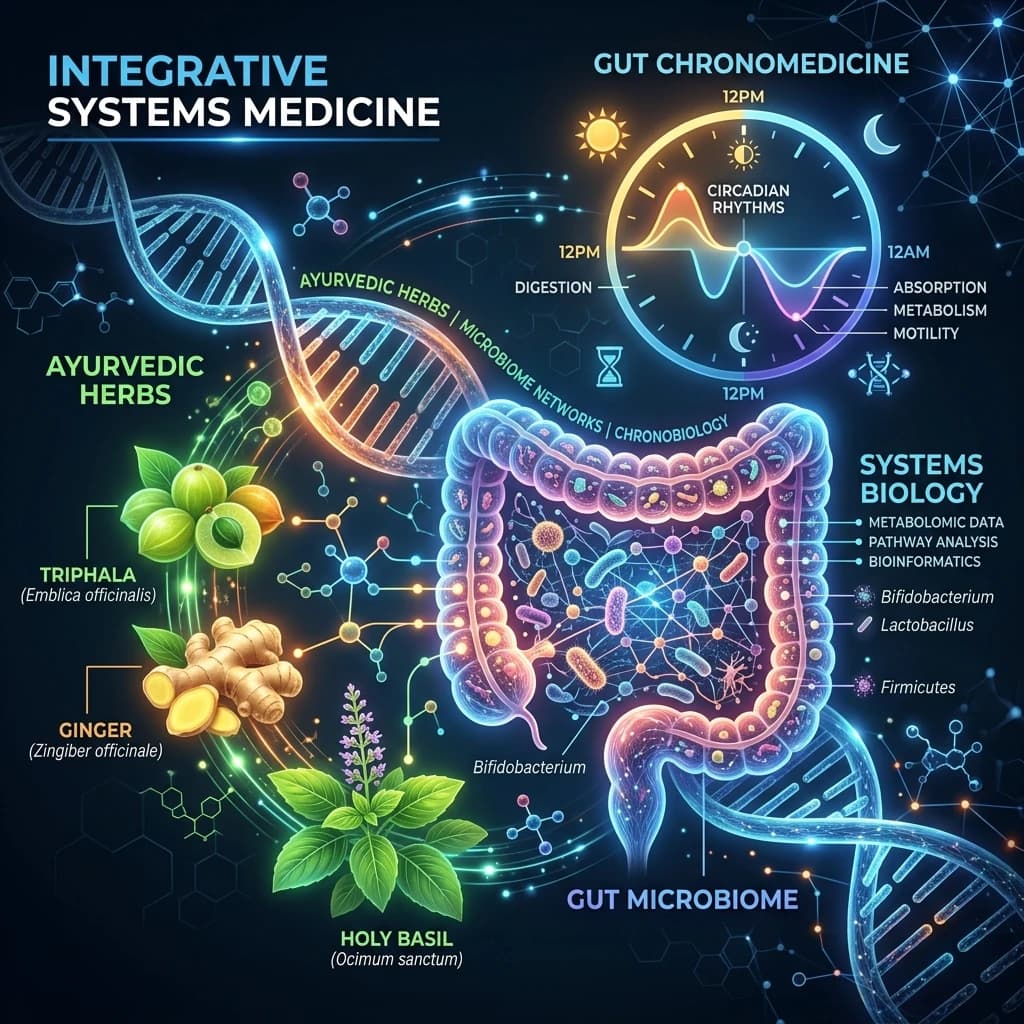
Modern healthcare is undergoing a paradigm shift from reductionist single-molecule therapies toward systems-based integrative medicine. By combining contemporary computational biology, chronobiology, and microbiome science with ancient Ayurvedic principles, researchers are unlocking empirical validations for multi-target herbal remedies, daily circadian regimens, and digestive wellness protocols.
🌿 Systems Biology & Network Pharmacology: Decoding Classical Polyherbal Formulations
For decades, pharmaceutical research operated on a "one drug, one target" model, attempting to isolate single active compounds from medicinal plants. However, classical Ayurveda relies predominantly on complex polyherbal formulations—synergistic mixtures of multiple botanical drugs designed to work harmoniously across biological systems. Recent scientific breakthroughs in 2025 and 2026 demonstrate that network pharmacology and transcriptomics are finally providing the analytical tools required to map how these ancient multi-herb combinations exert their systemic therapeutic effects.
Instead of targeting a single receptor or enzyme, polyherbal formulations deploy hundreds of secondary metabolites—such as alkaloids, flavonoids, and saponins—that modulate interconnected signaling cascades. Recent computational modeling published in leading integrative medicine journals reveals that botanical synergy allows sub-therapeutic doses of individual phytochemicals to bind weakly yet simultaneously to multiple node proteins across inflammatory pathways (such as NF-κB, MAPK, and TNF-alpha). This polypharmacological mechanism minimizes systemic toxicity while achieving potent therapeutic efficacy, directly validating classical concepts of Samyoga (herbal compounding) and Prabhava (specific therapeutic action).
Furthermore, the emerging field of Ayurgenomics has established a molecular foundation for Prakriti (individual psycho-somatic constitution). Genomic profiling studies have identified distinct single-nucleotide polymorphisms (SNPs) and gene expression patterns corresponding to Vata, Pitta, and Kapha phenotypes. For instance, individuals categorized under Pitta-dominant Prakriti demonstrate higher baseline expression of pro-inflammatory cytokines and metabolic rate genes, explaining why multi-target formulations like Tinospora cordifolia (Guduchi) or Curcuma longa (Haridra) yield distinct, personalized clinical outcomes depending on the patient's baseline genomic architecture.
As global healthcare transitions toward P4 medicine—predictive, preventive, personalized, and participatory—the scientific validation of Ayurvedic systems biology offers a groundbreaking blueprint for chronic disease management. By analyzing classical formulations through multi-omics technology, clinical researchers can standardize herbal therapeutics without destroying their holistic synergistic integrity, paving the way for targeted integrative treatments in oncology, metabolic syndrome, and autoimmune disorders.
⏰ Circadian Entrainment & Dinacharya: How Daily Routines Regulate Metabolic Homeostasis
Chronobiology—the study of biological rhythms and internal circadian clocks—has emerged as one of the most dynamic frontiers in modern physiology. Fascinatingly, classical Ayurvedic texts detailed elaborate circadian health frameworks thousands of years ago under the science of Dinacharya (daily regimen) and Ritucharya (seasonal regimen). Recent clinical trials and physiological studies confirm that synchronizing daily behavior with natural light-dark cycles directly influences suprachiasmatic nucleus (SCN) function, gene transcription, and endocrine balance.
According to Ayurvedic physiology, the 24-hour diurnal cycle is divided into distinct four-hour phases dominated sequentially by Kapha, Pitta, and Vata doshas. Modern endocrinology corroborates these exact temporal shifts. The early morning Kapha phase (6:00 AM to 10:00 AM) correlates with natural cortisol awakening responses and insulin sensitivities. Waking during Brahma Muhurta (approximately 90 minutes before sunrise) aligns with peak pineal melatonin clearance and high vagal nerve tone, promoting neurological alertness and mood stability. Conversely, skipping morning routines or oversleeping into late Kapha hours leads to circadian desynchronization, heightened systemic inflammation, and sluggish metabolic clearance.
Seasonal adaptations (Ritucharya) expand this circadian intelligence across annual environmental shifts. Emerging gastroenterology studies highlight that human gut microbial populations naturally fluctuate across seasons in response to daylight duration and temperature changes. Ayurvedic recommendations for seasonal dietary transitions—such as detoxifying during Ritu Sandhi (the junction between seasons)—help buffer the immune system against seasonal gut dysbiosis and metabolic deceleration. Adopting time-restricted eating, morning sunlight exposure, and evening wind-down rituals effectively entrains peripheral clocks located in the liver, pancreas, and adipose tissue.
The clinical implications of integrating Dinacharya into modern lifestyle medicine are profound. Quaternary prevention strategies for obesity, type-2 diabetes, hypertension, and circadian sleep disorders are increasingly adopting Ayurvedic daily routines to replace reactive pharmacological interventions. By honoring biological clocks through structured sleep-wake hygiene and movement patterns, individuals can restore neuro-hormonal equilibrium and build resilient long-term health.
🥣 Ahara & Digestive Agni: The Modern Science of Prebiotic Takra and Chrono-Nutrition
In Ayurvedic philosophy, digestive capacity—termed Agni (the metabolic fire)—is regarded as the central pillar of human health and longevity. Classical texts assert that impaired Agni produces Ama (toxic metabolic bi-products), laying the foundation for systemic inflammatory and autoimmune diseases. Today, modern gastroenterology and gut microbiome research strongly support this ancient paradigm, linking gastrointestinal permeability, microbial diversity, and digestive enzymatic activity directly to systemic immune function and metabolic health.
Central to Ayurvedic clinical nutrition (Ahara) is the therapeutic use of Takra—traditionally fermented buttermilk seasoned with carminative digestive spices such as cumin, ginger, and rock salt. Modern microbiological analysis shows that properly prepared Takra acts as a powerful synbiotic, combining bioavailable lactic acid bacteria (probiotics) with short-chain fatty acid (SCFA) precursors (prebiotics). Unlike heavy dairy products, Takra is light (Laghu) and easy to digest, helping to restore the gut mucosal barrier, lower intraluminal pH, and inhibit opportunistic pathogenic bacteria while nourishing beneficial gut commensals like Bifidobacterium and Lactobacillus species.
Furthermore, Ayurvedic dietary guidelines (Ahara Vidhi Vidhan) emphasize chrono-nutrition principles that modern dietetics is only beginning to formalize. Eating the primary meal during peak daylight hours (12:00 PM to 2:00 PM)—when Pitta dosha and digestive Agni are strongest—aligns perfectly with peak gastric enzyme secretion, bile acid production, and postprandial glucose disposal capacity. Consuming heavy or late-night dinners, by contrast, suppresses nocturnal lipolysis, promotes visceral fat deposition, and triggers low-grade intestinal inflammation due to sluggish digestion.
Synthesizing Ayurvedic nutritional wisdom with gut microbiome science reveals that food is far more than mere caloric input; it is a bio-informational signal that shapes microbial ecosystems and gene expression. Practicing mindful eating, matching food qualities (Gunas) to seasonal needs, and incorporating probiotic preparations like Takra provides a natural, sustainable approach to gut health, metabolic vitality, and chronic disease prevention.
📌 The Bottom Line
- network-pharmacology-ayurgenomics: Modern systems biology and multi-omics research validate the multi-target synergy of classical polyherbal formulations and the genetic basis of individual Prakriti phenotypes.
- circadian-dinacharya-ritucharya: Daily and seasonal Ayurvedic routines (Dinacharya and Ritucharya) align with circadian clock genetics, optimizing endocrine function, metabolic clearance, and neuro-hormonal balance.
- ahara-gut-microbiome-agni: Traditional digestive nutrition centered around Agni and probiotic Takra provides a scientifically proven framework for optimizing the gut microbiome and metabolic health.
📫 Stay Updated
Get Ayurveda and wellness wisdom delivered to your inbox every week. Subscribe to our free newsletter →
Disclaimer: The information provided in this post is for educational and informational purposes only. It is not intended to be a substitute for professional medical advice, diagnosis, or treatment. Always seek the advice of your physician or other qualified health provider.
Disclosure: This post contains affiliate links. If you purchase through our links, we earn a small commission at no extra cost to you. We only recommend products we believe in.
Enjoyed this post?
Get our weekly digest delivered free.
Share this post:
Knowelth is reader-supported. We may earn a commission from links in this article at no extra cost to you. Read our disclosure.
Related Posts

Clinical Validation in Ayurveda: Cardiometabolic Formulations, Chrononutrition Agni Science, and Ayurgenomics in Ovarian Reserve
Clinical Validation in Ayurveda: Cardiometabolic Formulations, Chrononutrition Agni Science, and Ayurgenomics in Ovarian Reserve Traditional Indian medicine is undergoing a profound scientific renaiss…
Ayurveda Meets Systems Biology: Agni, Chronomedicine, and Botanical Synergy in Modern Clinical Science
Ayurveda Meets Systems Biology: Agni, Chronomedicine, and Botanical Synergy in Modern Clinical Science The 2025–2026 wave of systems biology research has made an unambiguous statement: the three pilla…
Modern Clinical Validation of Ayurveda: Manjistha Skin Microflora, Kapikacchu Dopaminergic Restoration, and Circannual Ritucharya
Modern Clinical Validation of Ayurveda: Manjistha Skin Microflora, Kapikacchu Dopaminergic Restoration, and Circannual Ritucharya As global healthcare transitions toward integrative, systems-based …