Monolithic Cliffs, Alpine Spires, and Chariots of Stone: The Architectural Feats of Dhamnar, Baijnath, and Melkadambur
Monolithic Cliffs, Alpine Spires, and Chariots of Stone: The Architectural Feats of Dhamnar, Baijnath, and Melkadambur
Across the vast geographical expanse of the Indian subcontinent, ancient and medieval builders transformed natural geological formations and lithic materials into sacred architecture that functioned as cosmic models. From rock-cut subterranean pits in Central India to high-altitude Himalayan valley spires and kinetic chariot temples in the fertile Kaveri Delta, classical Indian master craftsmen pushed the limits of pre-modern civil engineering.
This technical investigation explores three monumental achievements of classical Indian temple architecture: the 8th-century monolithic laterite rock-cut trench and Nagara shikhara of the Dharmarajeshwar Temple at Dhamnar (Madhya Pradesh), the 12th-century Katyuri dynasty alpine schist Pancharatha complex at Baijnath (Uttarakhand), and the 1113 CE Chola horse-drawn stone chariot (Karakkoil) of the Amirthakadeswarar Temple at Melkadambur (Tamil Nadu).
🏛️ The Laterite Monolith of Malwa: Dhamnar's Dharmarajeshwar Temple
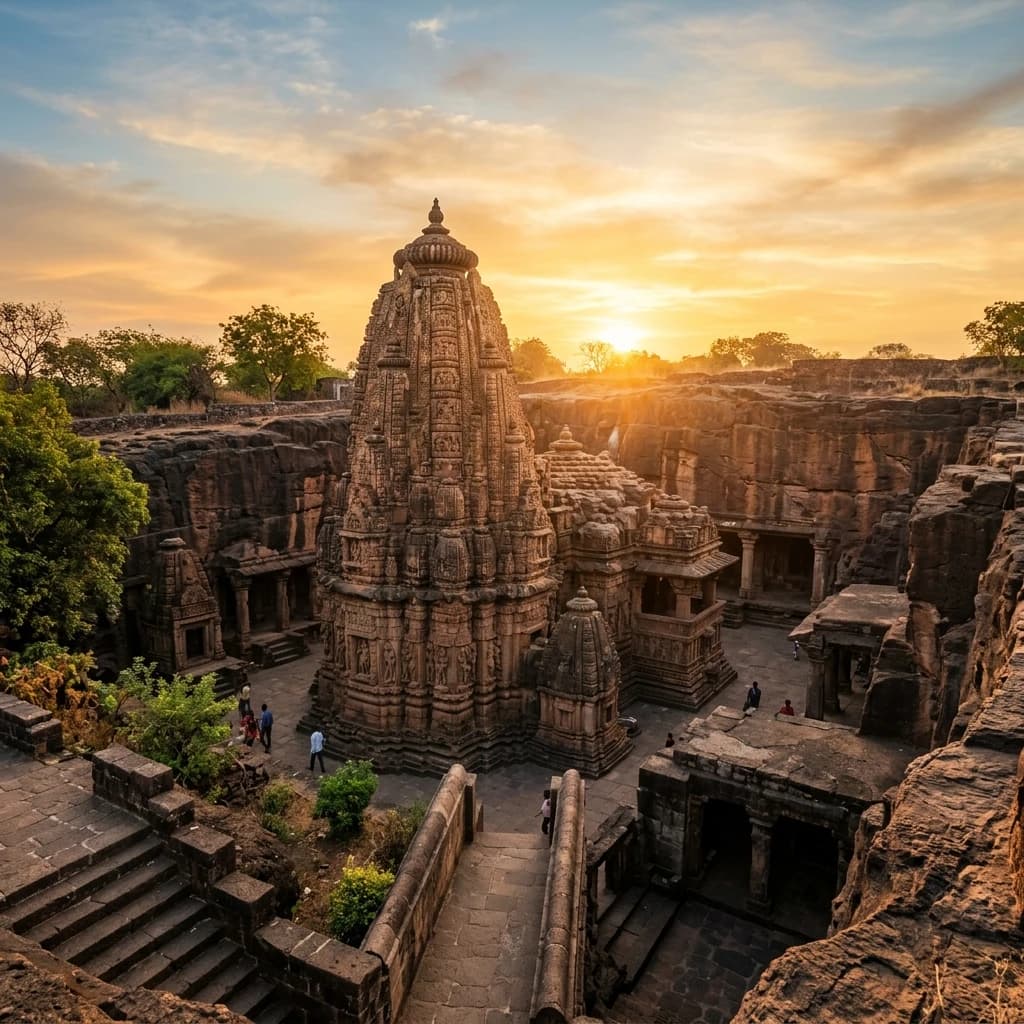
8th-Century Subtractive Trench Engineering, Monolithic Nagara Shikhara, and Harihara Syncretism
The Monolithic Nagara Wonder of Central India: Carved directly into a laterite hillock in Mandsaur district, Madhya Pradesh, the Dharmarajeshwar Temple was excavated in the 8th century CE during the zenith of the Rashtrakuta and imperial Gurjara-Pratihara spheres of influence. Positioned adjacent to the 5th-century Buddhist Dhamnar Caves, the monument represents an extremely rare North Indian Nagara temple carved entirely via monolithic rock-cut methods (a technique far more common in Southern Dravidian contexts like Ellora and Kalugumalai).
                      [Dhamnar Dharmarajeshwar Subtractive Schema]
                                          │
                                          ▼
                      [Excavation of Massive Rectangular Pit]
                        (50 m Long × 20 m Wide × 9 m Deep Trench)
                                          │
                                          ▼
                      [Central Monolithic Block Sculpting Sequence]
                     (Top-Down Carving from Pit Surface to Base)
                                          │
          ┌───────────────────────────────┴───────────────────────────────┐
          ▼                                                               ▼
[Central Nagara Shikhara Spire]                                 [7 Surrounding Peripheral Monoliths]
• Curvilinear Spire with *Jalavaka* Mesh                        • Miniature Subsidiary Shrine Array
• Massive Ribbed *Amalaka* & *Kalasha*                          • Dedicated to Ganesha, Surya, Devi
• Mukha-Mandapa, Sabha-Mandapa & Sanctum                        • Carved in-situ from Same Bedrock
          │                                                               │
          └───────────────────────────────┬───────────────────────────────┘
                                          │
                                          ▼
                      [Presiding Deity: Monolithic Harihara & Shiva Linga]
Structural and Lithic Specifications:
| Architectural Metric | Dharmarajeshwar Specification | Civil Engineering / Geological Role |
|---|---|---|
| Excavation Methodology | Subtractive Open-Pit Quarrying | 50 m × 20 m × 9 m trench isolating a central monolithic core |
| Sanctum Spire Typology | Classical North Indian Nagara Shikhara | Curvilinear tower adorned with fine Jalavaka mesh trellis carvings |
| Primary Lithic Medium | High-Iron Laterite Rock Matrix | Soft and malleable when moist; oxidizes into hard rock upon air exposure |
| Auxiliary Shrines Array | 7 Surrounding Miniature Shrines | Sculpted in-situ from the base floor surrounding the central temple |
| Presiding Iconography | Monolithic Harihara & Shiva Linga | Reconciles Shaiva and Vaishnava theological streams in medieval Malwa |
Laterite Engineering and Subtractive Mechanics: Masons excavated a massive perimeter trench down to 9 meters depth. Taking advantage of laterite's unique property—remaining soft and easily cut when subterranean, but hardening significantly upon atmospheric oxidation—sculptors rapidly carved the delicate Jali mesh of the central spire, the hypostyle halls, and seven satellite shrines before the stone reached full geological hardness.
🗿 The Alpine Shikharas of Kartikeyapura: The Baijnath Temple Complex
12th-Century Katyuri Dynasty Schist Masonry, 18 Alpine Shrines, and Monolithic Parvati Statuary
The Spiritual Citadel of the Katyuri Kings: Nestled in the Katyur Valley along the Gomti River in Bageshwar district, Uttarakhand, the Baijnath Temple Complex was constructed in the mid-12th century CE (c. 1150 CE) as the religious epicenter of Kartikeyapura, the capital of the Katyuri dynasty. Engineered to withstand the extreme freeze-thaw cycles and tectonic activity of the Himalayan mountains, the complex comprises 18 stone shrines clustered upon an elevated river terrace.
                      [Baijnath Complex Himalayan Spatial Plan]
                                          │
                                          ▼
                      [Cluster of 18 Compact Schist Shrines]
                     (Elevated Stone Plinth along the Gomti River)
                                          │
          ┌───────────────────────────────┴───────────────────────────────┐
          ▼                                                               ▼
[Principal Vaidyanath Shiva Temple]                             [Dark Grey Schist Sculptural Peak]
• Pancharatha Curvilinear Shikhara                              • **Life-Sized Monolithic Parvati Statue**
• Compact Porch Minimizing Heat Loss                            • 26 Miniature Deities on Crown Filigree
• Heavy Interlocking Schist & Granite Blocks                    • Composite Shiva-Parvati Matrimonial Panels
          │                                                               │
          └───────────────────────────────┬───────────────────────────────┘
                                          │
                                          ▼
                      [Riverside Stepped Stone Ghats Built by Katyuri Queen]
Material Science and Architectural Metrics:
| Architectural Metric | Baijnath Complex Specification | Material Science / Seismic Advantage |
|---|---|---|
| Total Shrines Count | 18 Stone Shrines in Complex | Clustered layout offering structural mutual shelter against mountain winds |
| Ground Plan Geometry | Pancharatha (Five-Fold Wall Facets) | Thick, low-center-of-gravity walls engineered for seismic shock dampening |
| Primary Lithic Medium | Dark Grey Metamorphic Schist & Granite | Dense, non-porous rock completely resistant to frost-wedging and weathering |
| Masterpiece Sculpture | 12th-Century Schist Parvati Statue | Life-sized idol displaying 26 miniature gods sculpted into her crown |
| Hydraulic Setting | Gomti River Confluence Steps | Broad stone staircase (Ghat) connecting river ablution to temple court |
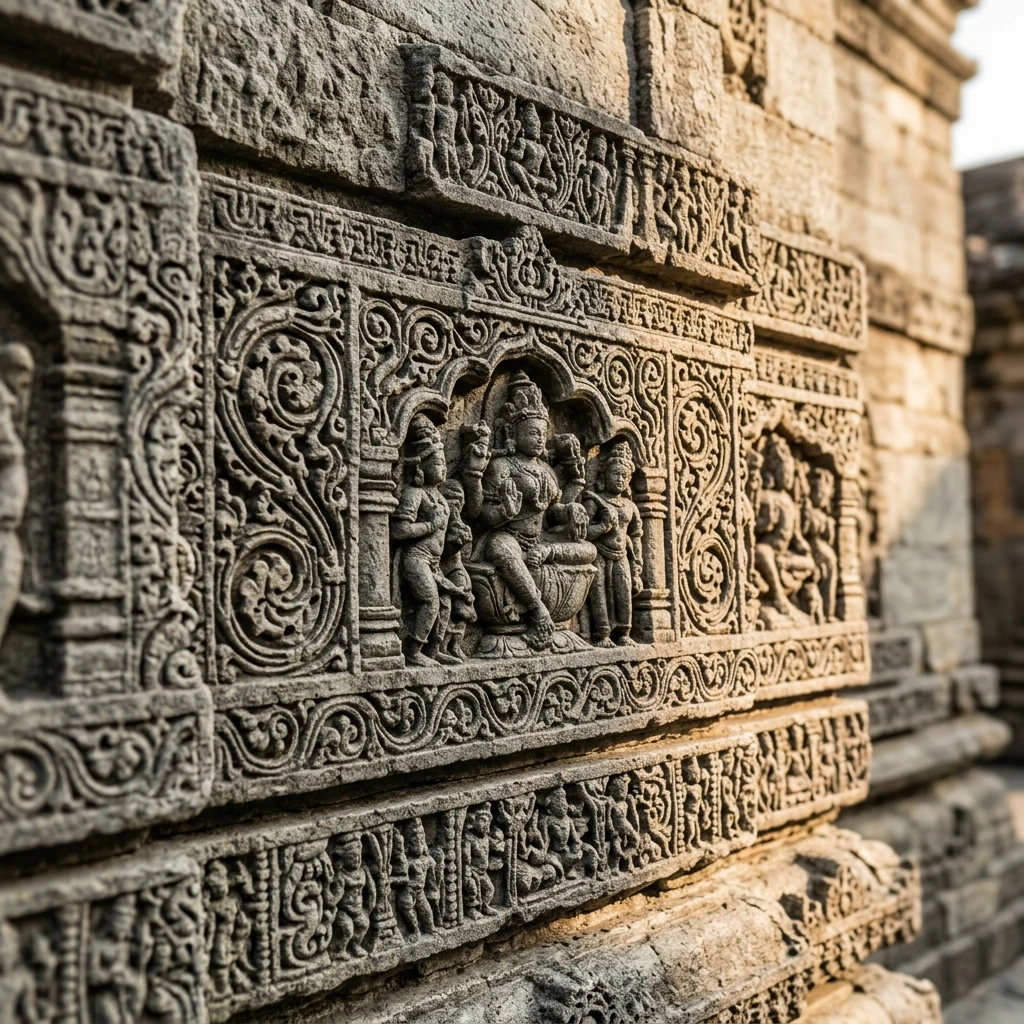
Figure 1: Intricate stone craftsmanship and architectural elements at the Baijnath Temple Complex, Uttarakhand.
Alpine Schist Masonry and the 26-Deity Parvati Crown: Constructed without spacious open halls to preserve interior warmth during Himalayan winters, the temples feature dense, low-profile schist walls. The main sanctum houses a magnificent 12th-century dark schist statue of Goddess Parvati, whose headdress contains 26 microscopic, high-relief carvings of Vedic and Puranic deities.
🔱 The Chariot of Kulothunga: Melkadambur's Amirthakadeswarar Karakkoil
1113 CE Kulothunga Chola I Chariot Architecture, Stone Axle Wheels, and 63 Nayanmar Friezes
The Pioneer of Kinetic Temple Architecture: Located in Cuddalore district, Tamil Nadu, the Amirthakadeswarar Temple at Melkadambur was reconstructed in stone in 1113 CE during the 43rd regnal year of Emperor Kulothunga Chola I. Recognized as a Karakkoil (one of the nine classical structural temple forms classified by 7th-century Tamil saint Appar in the Thevaram), Melkadambur is India's oldest surviving horse-drawn stone chariot temple, pre-dating the Sun Temple of Konark by more than a century.
                      [Melkadambur Karakkoil Chariot Elevation]
                                          │
                                          ▼
                      [Two-Tiered Granite Vimana Superstructure]
                     (Representing Shiva's Tripura Samhara Chariot)
                                          │
          ┌───────────────────────────────┴───────────────────────────────┐
          ▼                                                               ▼
[Monolithic Granite Chariot Wheels]                             [Rearing Caparisoned Horses]
• Two Functional Granite Wheels with Axles                      • Sculpted in High-Relief at Plinth Base
• 1.5 m Diameter with Hubs & Fine Spokes                        • Dynamic Leaping Kinetic Postures
• Distributes Weight of Entire Sanctum Core                     • Guides Temple Celestial Path
          │                                                               │
          └───────────────────────────────┬───────────────────────────────┘
                                          │
                                          ▼
                      [Miniature Friezes: 63 Nayanmars & 1113 CE Epigraph]
Structural Metrics and Epigraphical Archival Data:
| Architectural Metric | Melkadambur Specification | Chola Engineering Significance |
|---|---|---|
| Architectural Typology | Karakkoil (Stone Chariot Temple) | Earliest surviving chariot-form temple in Indian architectural history |
| Chariot Base Wheels | 2 Monolithic Granite Wheels (1.5 m) | Fully sculpted with hubs, spokes, and load-bearing stone axles |
| Traction Statuary | 2 Rearing Granite Horses | Sculpted dynamically on the plinth as if drawing the sanctum forward |
| Sanctum Spire Typology | Dwitala (Two-Story) Granite Vimana | Square sanctum with crisp Chola Adhishthana moldings and Kudus |
| Sculptural Program | 63 Nayanmar Miniature Panels | Complete narrative reliefs of the Tamil Shaivite saints along base niches |
| Epigraphical Horizon | 1113 CE Kulothunga I Inscription | Documents stone reconstruction and royal land endowments (Devadana) |
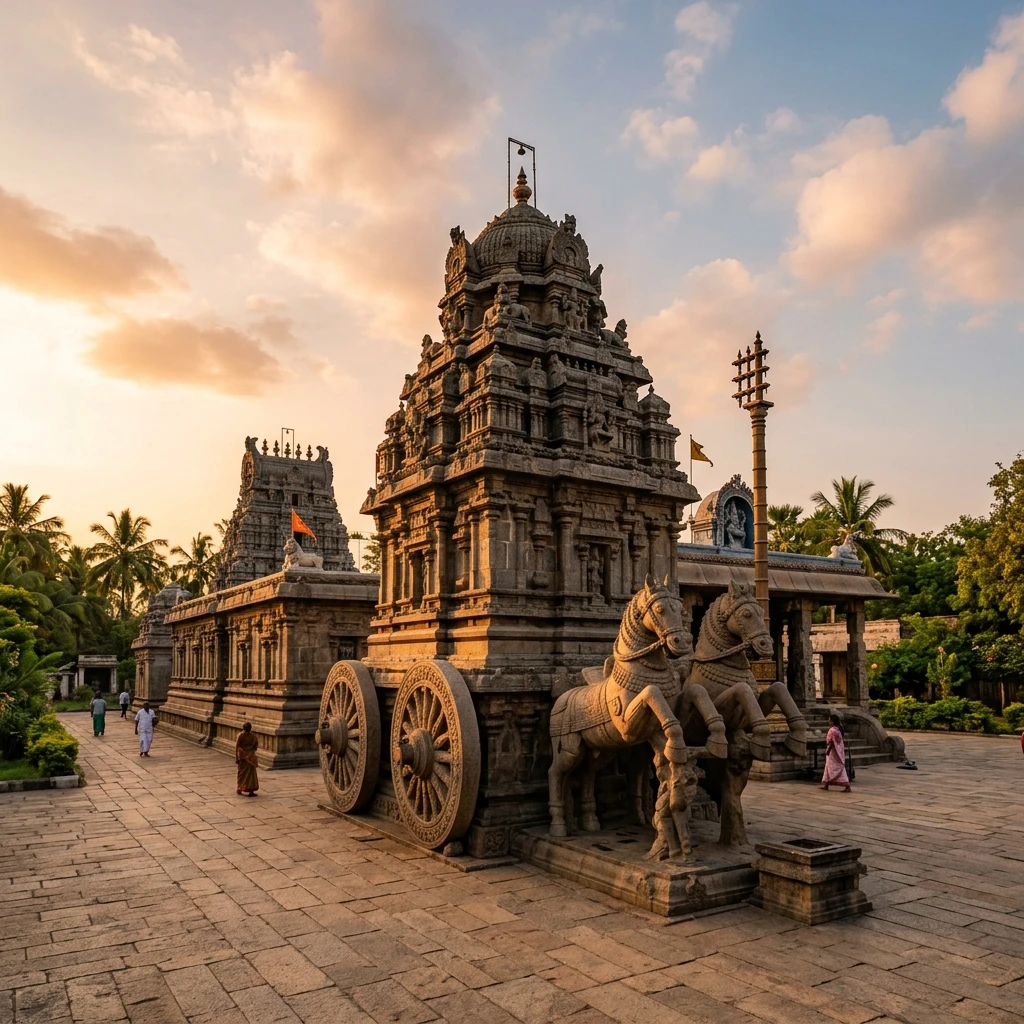
Figure 2: Architectural design and monumental structures at Amirthakadeswarar Temple, Melkadambur.
The Karakkoil Chariot Innovation and Nayanmar Epigraphs: The base of the sanctum features two finely carved granite wheels with detailed spokes and axles, flanked by rearing horses, symbolizing Lord Shiva's Tripura Samhara chariot. The outer plinth registers preserve the earliest known complete visual narrative cycle of the 63 Nayanmar saints carved into granite Devakoshta niches.
📊 Comparative Architectural & Dynastic Matrix
| Parameter | Dharmarajeshwar (Dhamnar) | Baijnath Complex (Uttarakhand) | Amirthakadeswarar (Melkadambur) |
|---|---|---|---|
| Dynastic Patron | Rashtrakuta / Pratihara Horizon | Katyuri Dynasty (Kartikeyapura) | Imperial Cholas (Kulothunga I) |
| Chronological Date | c. 8th Century CE | c. 1150 CE (12th Century) | 1113 CE (12th Century) |
| Primary Lithic Medium | High-Iron Laterite Rock Matrix | Metamorphic Grey Schist | Plutonic Crystalline Granite |
| Architectural Typology | Subtractive Monolithic Nagara | Alpine Pancharatha Nagara | Dravidian Karakkoil Stone Chariot |
| Pinnacle Engineering Feat | 50m Trench & 7 In-situ Sub-shrines | 18 Clustered seismic shrines | Functional stone wheels & horses |
| Primary Dedication | Syncretic Harihara & Shiva | Shiva (Vaidyanath) & Parvati | Shiva (Amirthakadeswarar) |
📌 The Bottom Line
- dhamnar-dharmarajeshwar: An extraordinary 8th-century monolithic rock-cut Nagara temple in Madhya Pradesh, excavated from a 50-meter laterite pit with seven in-situ satellite shrines, housing a syncretic Harihara idol.
- baijnath-complex: A 12th-century Katyuri dynasty alpine sanctuary in Uttarakhand; features 18 earthquake-resilient grey schist shrines along the Gomti River housing the celebrated monolithic Parvati statue with 26 deities carved into her crown.
- melkadambur-amirthakadeswarar: A 1113 CE Later Chola masterpiece in Tamil Nadu; recognized as India’s oldest surviving chariot temple (Karakkoil) with functional stone wheels and rearing horses, pre-dating Konark by over a century.
📬 Stay Updated
Get India's heritage and history stories delivered to your inbox every week. Subscribe to our free newsletter →
Disclaimer: The information provided in this post is for educational and informational purposes only. It is not intended to be a substitute for professional historical or architectural advice.
Enjoyed this post?
Get our weekly digest delivered free.
Share this post:
Knowelth is reader-supported. We may earn a commission from links in this article at no extra cost to you. Read our disclosure.
Related Posts
Stone Chronicles of Sovereignty and Democracy: The Epigraphic Legacy of Aihole's Meguti Temple, Uttiramerur's Assembly Inscriptions, and the Royal Reliefs of Hampi's Hazara Rama
Stone Chronicles of Sovereignty and Democracy: The Epigraphic Legacy of Aihole's Meguti Temple, Uttiramerur's Assembly Inscriptions, and the Royal Reliefs of Hampi's Hazara Rama Across the diverse lan…
Sacred Corridors, Interlocking Stone Chains, and Thousand-Pillar Sanctuaries: The Architectural Marvels of Rameswaram, Kanchipuram, and Moodabidri
Sacred Corridors, Interlocking Stone Chains, and Thousand-Pillar Sanctuaries: The Architectural Marvels of Rameswaram, Kanchipuram, and Moodabidri Across the Indian subcontinent, sacred architecture r…
Stone Bastions, Animal Syncretism, and Polished Chlorite Spires: The Dravidian Masonry of Malegitti Shivalaya, the Enigmatic Rudra Shiva of Tala, and the Bhanja Splendour of Khiching
Stone Bastions, Animal Syncretism, and Polished Chlorite Spires: The Dravidian Masonry of Malegitti Shivalaya, the Enigmatic Rudra Shiva of Tala, and the Bhanja Splendour of Khiching Across the divers…