Stone Chronicles of Sovereignty and Democracy: The Epigraphic Legacy of Aihole's Meguti Temple, Uttiramerur's Assembly Inscriptions, and the Royal Reliefs of Hampi's Hazara Rama
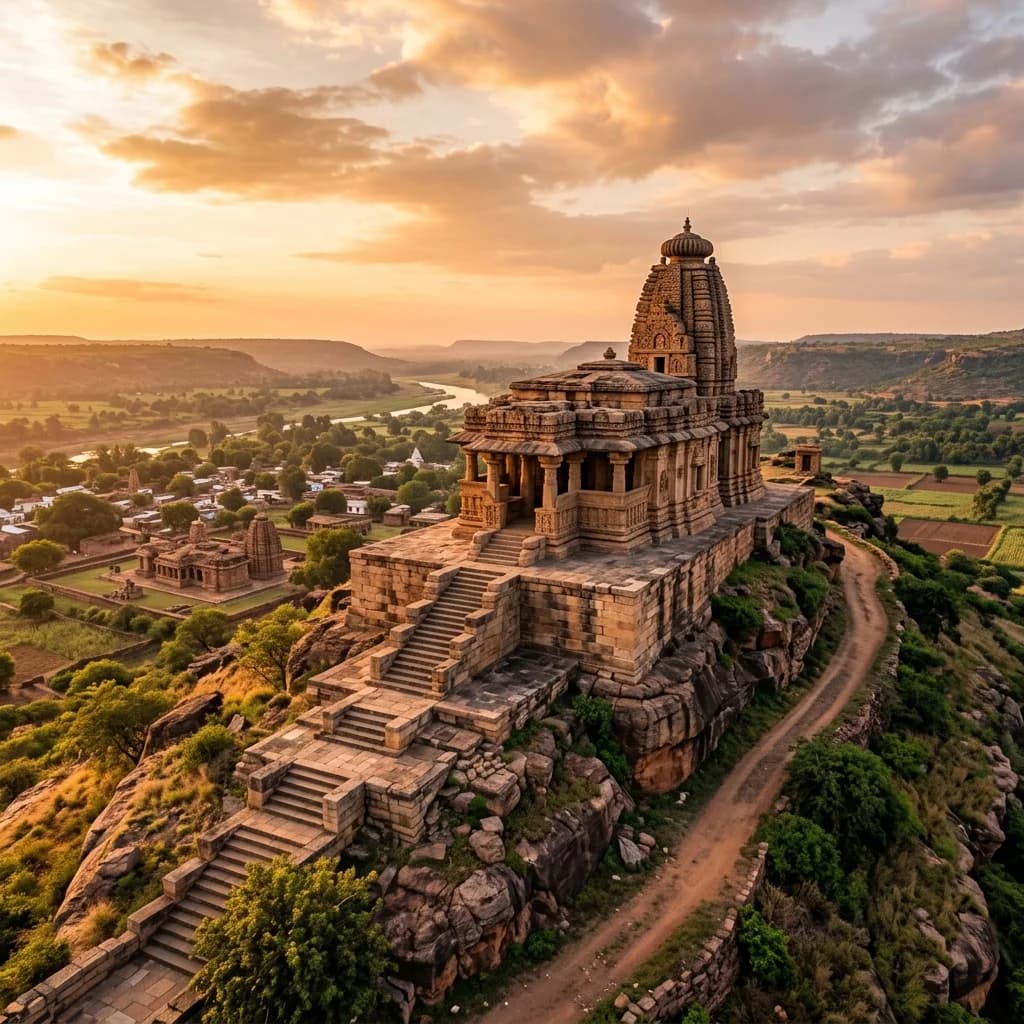
Stone Chronicles of Sovereignty and Democracy: The Epigraphic Legacy of Aihole's Meguti Temple, Uttiramerur's Assembly Inscriptions, and the Royal Reliefs of Hampi's Hazara Rama
Across the diverse landscape of the Indian subcontinent, ancient and medieval temples serve not only as sacred sanctuaries but also as monumental stone archives. Far from being passive structures of worship, these stone chronicles preserve the direct legislative decrees, historical declarations, and artistic narratives of India's past dynasties. This week, we explore three extraordinary heritage monuments where stone, epigraphy, and architecture converge: the hilltop Meguti Jain Temple of Aihole, the democratic archive of the Vaikunda Perumal Temple in Uttiramerur, and the royal, narrative relief-lined sanctuary of the Hazara Rama Temple in Hampi.
🏛️ The Hilltop Eulogy of the Chalukyas: Aihole’s Meguti Jain Temple
Perched atop a scenic rocky ridge in the historic town of Aihole, Karnataka, the Meguti Jain Temple holds a singular position in the annals of Indian archaeology. Constructed in 634–635 CE (Shaka Era 556) during the reign of the illustrious Badami Chalukya Emperor Pulakeshin II, this temple is widely recognized as the earliest dated structural stone temple in the Deccan. It represents an important transition in southern temple design, showcasing early Chalukyan architectural concepts. The temple's patron and designer was the Jain poet and scholar Ravikirti, who served as a court poet and general under Pulakeshin II, and erected the temple on the highest point of the capital to command the surrounding landscape.
Architecturally, the Meguti temple is built of massive, precision-cut sandstone blocks assembled without mortar, featuring a simple, austere layout that reflects the early Dravidian style. The temple consists of a pillared veranda (mukhamandapa), a large square assembly hall (mahamandapa), and an inner sanctum (garbhagriha) with an upper-story shrine accessed by a stone staircase. What makes Meguti structurally unique is its transitional plan, showing the evolution from rock-cut cave layouts to free-standing masonry temples. The flat roof, solid walls, and low, heavy plinth give it a fort-like appearance, which is why it is often referred to as "Meguti," derived from the local Kannada word Melguti meaning "upper temple."
The true archaeological treasure of Meguti, however, is the famous Aihole Inscription engraved on the eastern outer wall of the temple's sanctum. Composed in elegant classical Sanskrit poetry by Ravikirti using the Southern Brahmi (Old Kannada-Telugu) script, the inscription is a prashasti (eulogy) celebrating the military triumphs of Pulakeshin II. The text provides historians with a vivid account of the emperor's campaigns, including his subjugation of the Kadambas, Gangas, and Nalas, and his most famous military victory: the defeat of the powerful Northern Emperor Harshavardhana of Kanauj on the banks of the Narmada River. Crucially, the inscription also serves as an invaluable anchor for literary history, as Ravikirti compares his own poetic skills to those of the legendary Sanskrit master poets Kalidasa and Bharavi, establishing a firm historical timeline for their lives.
🗿 The Code of Medieval Democracy: Vaikunda Perumal Temple of Uttiramerur
While the temples of the Deccan and the North often glorified the military exploits of individual kings, a quiet rural temple in Tamil Nadu preserves one of the most remarkable records of civic organization and participatory democracy in human history. The Vaikunda Perumal Temple in Uttiramerur, located about 85 kilometers southwest of Chennai, was originally founded during the Pallava period but underwent major renovations and expansions under the Imperial Chola Dynasty. Dedicated to Vishnu as Vaikunda Perumal, the temple's simple stone walls serve as the canvas for a detailed constitution that governed the agrarian society of early medieval South India.
The temple's outer walls are covered in extensive Sanskrit and Tamil inscriptions dating to 919 CE and 921 CE, corresponding to the 12th and 14th regnal years of the Chola monarch Parantaka Chola I. These inscriptions detail the operational guidelines for the local village assembly, or sabha, outlining a sophisticated administrative system known as the Kudavolai (literally meaning "pot-ticket") system. The system operated on the principle of representative committees (variyams) responsible for managing key public works, such as irrigation tanks (eri-variyam), temple affairs (totta-variyam), and tax collection.
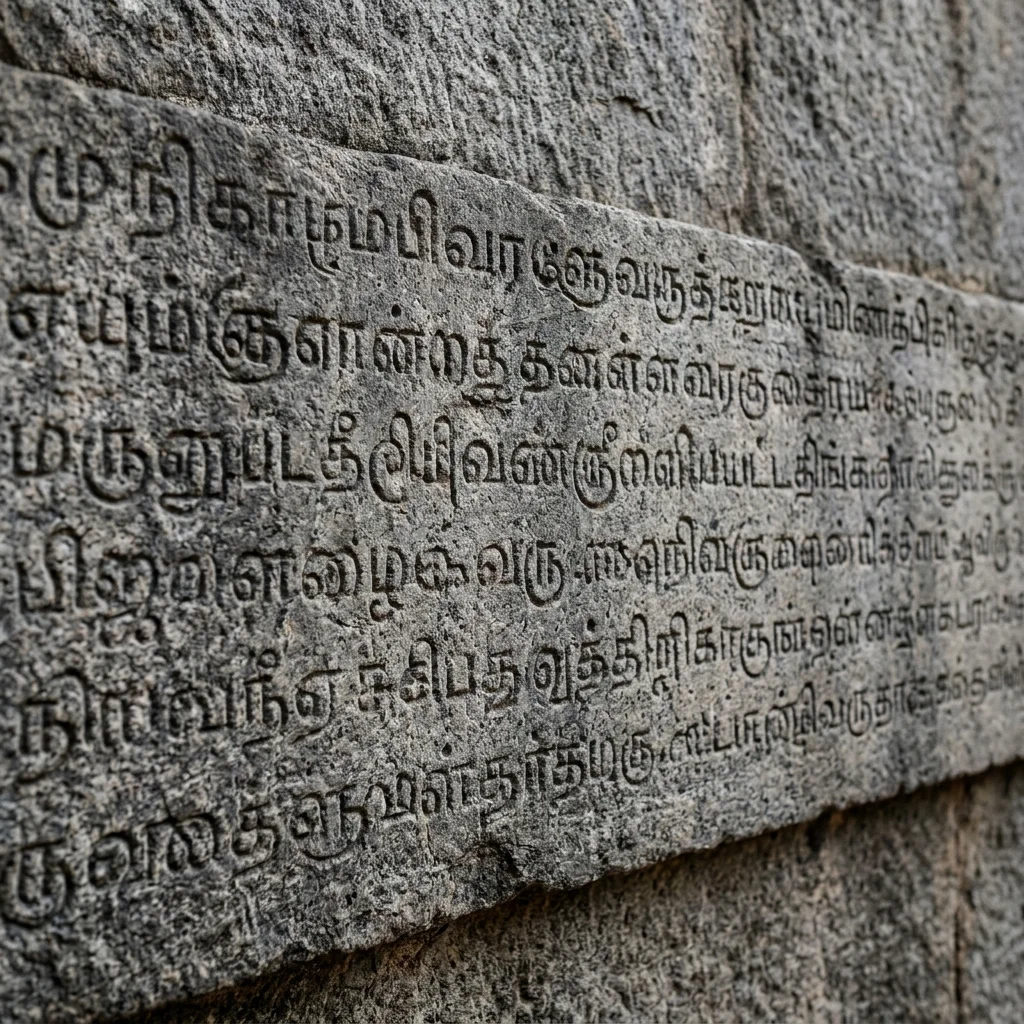
Figure 1: Intricate stone craftsmanship and architectural elements at Vaikunda Perumal Temple.
The Kudavolai election process was designed to be highly transparent and community-driven. The village was divided into 30 wards, and eligible residents from each ward submitted palm-leaf tickets (olais) bearing their names. These tickets were placed in a large clay pot (kudam), which was thoroughly shaken in a public gathering. A young, innocent boy was then called upon to draw tickets from the pot to select the committee representatives. The inscriptions outline strict qualifications for candidates: they had to own tax-paying land, reside in their own house on that land, be between 35 and 70 years old, and possess knowledge of the Vedas and administrative matters. Equally detailed were the disqualifications: individuals who had failed to submit public accounts, committed theft, or engaged in moral misconduct were barred from running, along with their close relatives, establishing a code of ethics and accountability.
🔱 A Royal Chapel in Stone: Hampi’s Hazara Rama Temple
In the heart of the Royal Enclave of Hampi, the former capital of the Vijayanagara Empire, stands the Hazara Rama Temple—a monument that functions as both a private royal chapel and a narrative masterpiece in stone. Built during the early 15th century, likely under the patronage of King Devaraya I (and later expanded by Devaraya II), the temple was designed specifically for the exclusive use of the Vijayanagara kings and the royal family. Its name, "Hazara Rama," translates literally to "a thousand Ramas," which is a poetic reference to the countless depictions of the solar deity Rama carved across its walls and pillars.
The architectural layout of the Hazara Rama Temple is characterized by its compact, elegant proportions and the exceptional quality of its masonry. Unlike the monumental, public temples of Hampi, such as the Vittala or Virupaksha temples, Hazara Rama is intimate in scale but exceptionally rich in detail. The main temple is constructed of fine-grained granite and features a pillared assembly hall leading to the central sanctum. Inside the ardha-mandapa, four polished black basalt pillars imported from the Deccan stand as masterworks of carving. Their dark, reflecting surfaces are decorated with relief figures of various deities, including Vishnu's avatars, displaying the incredible skill of Vijayanagara stone carvers in working with hard basalt.
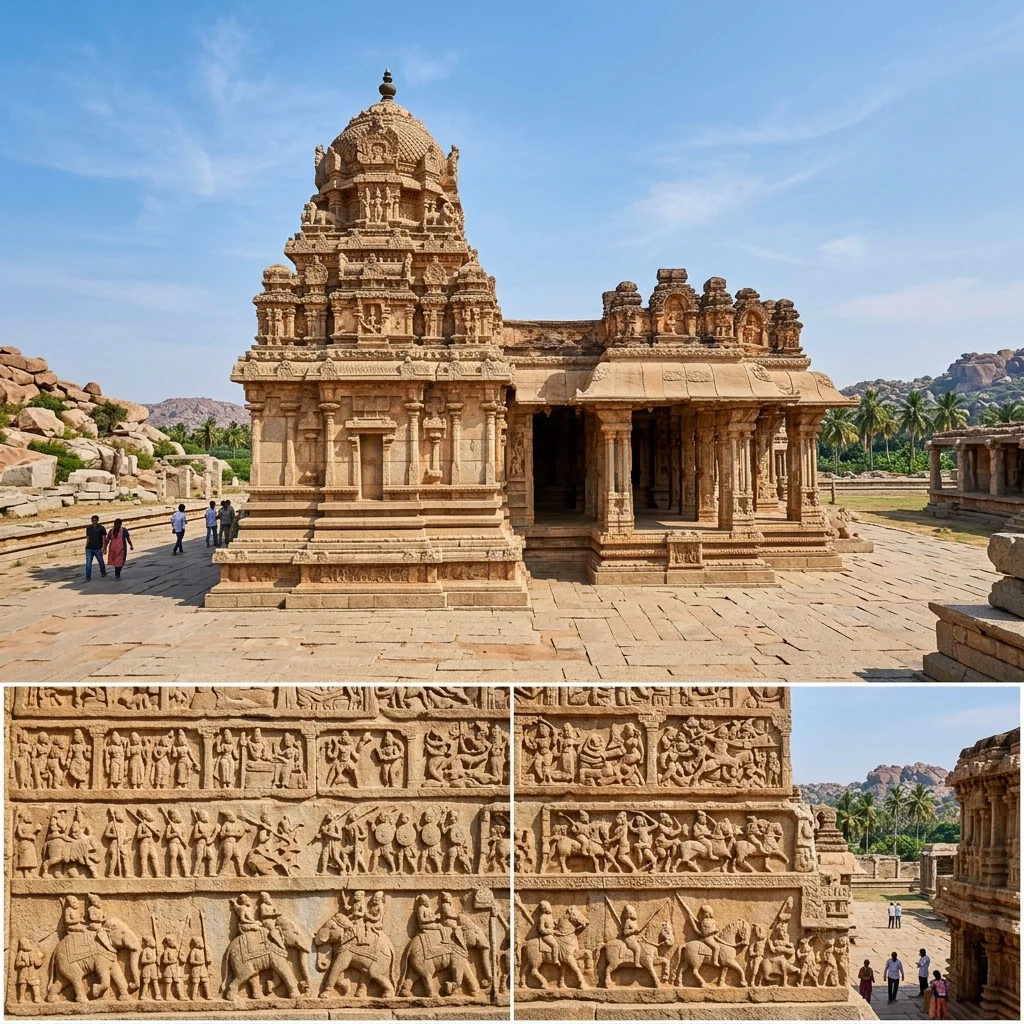
Figure 2: Architectural design and monumental structures at Hazara Rama Temple.
The defining feature of Hazara Rama is its exterior enclosure walls, which act as a virtual stone comic strip. The outer walls are divided into horizontal friezes that narrate the entire story of the Ramayana epic in sequential panels. Moving clockwise in the traditional pradakshina path, visitors can read the epic carved in stone: from King Dasaratha's Putrakameshti Yagna to Rama's exile, the abduction of Sita, the battle of Lanka, and Rama's eventual coronation. Lower panels depict scenes from courtly life and the annual Mahanavami (Dasara) festival, showing rows of marching elephants, cavalry horses, foot soldiers, and courtly dancers in fluid, expressive motion. The temple stands as a supreme architectural statement, combining the spiritual power of the epic with the political sovereignty of the Vijayanagara court.
📌 The Bottom Line
- meguti-temple-aihole: Built in 634 CE, Aihole's hilltop Meguti Temple preserves the historic Aihole Prashasti by Ravikirti, recording Pulakeshin II's victory over Harshavardhana and dating poets Kalidasa and Bharavi.
- uttiramerur-inscriptions: The Vaikunda Perumal Temple at Uttiramerur houses a 10th-century Chola constitution that details the Kudavolai system of democratic elections, qualifications, and accountability.
- hazara-rama-hampi: The private royal chapel of the Vijayanagara kings, Hampi's Hazara Rama Temple is renowned for its polished black basalt pillars and extensive narrative bas-reliefs detailing the entire Ramayana epic.
📬 Stay Updated
Get India's heritage and history stories delivered to your inbox every week. Subscribe to our free newsletter →
Disclosure: This post contains affiliate links. If you purchase through our links, we earn a small commission at no extra cost to you. We only recommend products we believe in.
Enjoyed this post?
Get our weekly digest delivered free.
Share this post:
Knowelth is reader-supported. We may earn a commission from links in this article at no extra cost to you. Read our disclosure.
Related Posts
Monolithic Cliffs, Alpine Spires, and Chariots of Stone: The Architectural Feats of Dhamnar, Baijnath, and Melkadambur
Monolithic Cliffs, Alpine Spires, and Chariots of Stone: The Architectural Feats of Dhamnar, Baijnath, and Melkadambur Across the vast geographical expanse of the Indian subcontinent, ancient and medi…
Sacred Corridors, Interlocking Stone Chains, and Thousand-Pillar Sanctuaries: The Architectural Marvels of Rameswaram, Kanchipuram, and Moodabidri
Sacred Corridors, Interlocking Stone Chains, and Thousand-Pillar Sanctuaries: The Architectural Marvels of Rameswaram, Kanchipuram, and Moodabidri Across the Indian subcontinent, sacred architecture r…
Stone Bastions, Animal Syncretism, and Polished Chlorite Spires: The Dravidian Masonry of Malegitti Shivalaya, the Enigmatic Rudra Shiva of Tala, and the Bhanja Splendour of Khiching
Stone Bastions, Animal Syncretism, and Polished Chlorite Spires: The Dravidian Masonry of Malegitti Shivalaya, the Enigmatic Rudra Shiva of Tala, and the Bhanja Splendour of Khiching Across the divers…