Confidential IPOs, ChatGPT's Superapp Evolution, and the UN's Geneva AI Governance Summit
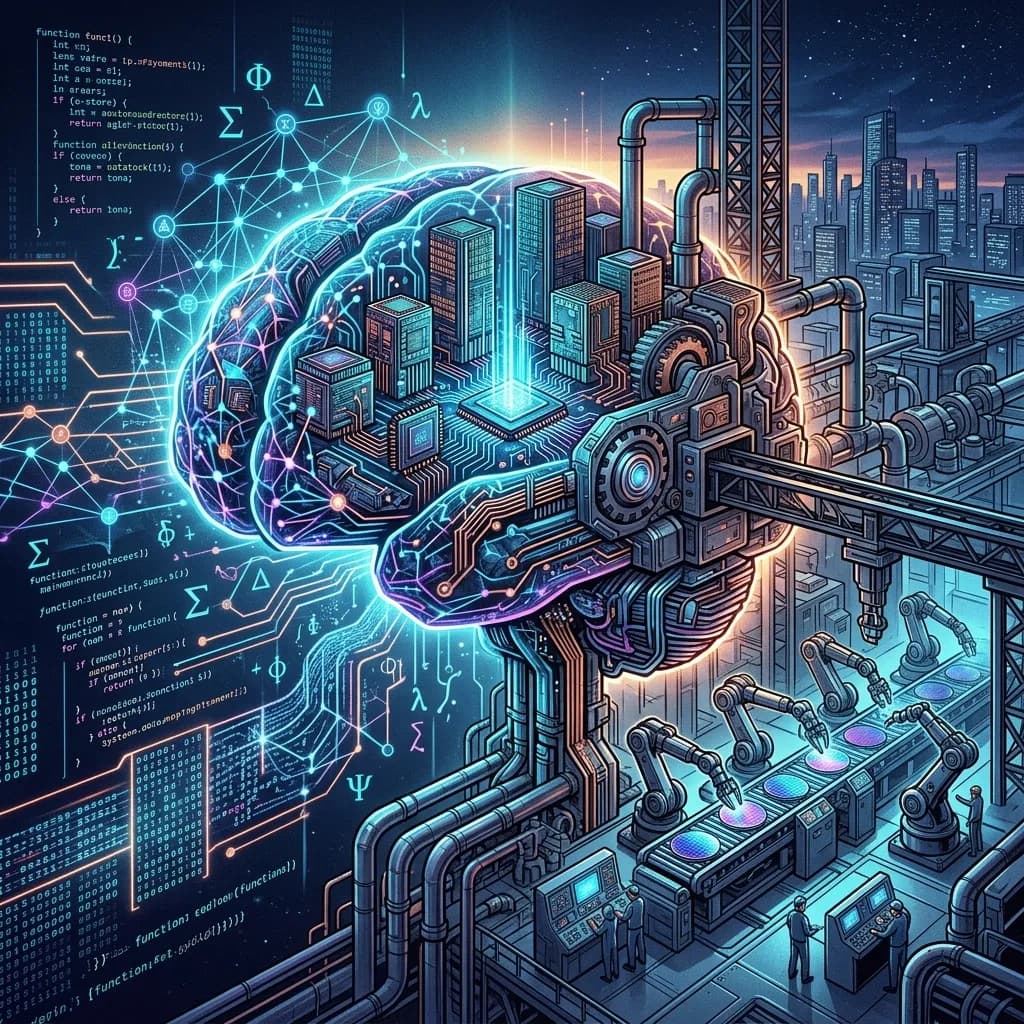
Confidential IPOs, ChatGPT's Superapp Evolution, and the UN's Geneva AI Governance Summit
Three events in early July 2026 mark the transition of AI from a venture-backed experimental phase to a permanent fixture of public markets, enterprise operating systems, and international law. OpenAI and Anthropic's confidential S-1 filings force both companies to pivot from benchmark-competition to sustained-margin discipline — defining what "profitable frontier AI" must look like for public investors. ChatGPT's desktop superapp overhaul (integrating Atlas browser + Codex + agentic background workflows into one system-level interface) is OpenAI's bid to own the entire professional knowledge-work desktop. And the UN's first Global Dialogue on AI Governance (July 6–7, Geneva, 193 member states) attempts to harmonise the EU's compliance-heavy AI Act, the US's market-led executive orders, and China's state controls into baseline multilateral standards — with compute equity for the Global South as the defining political fault line.
🤖 Confidential S-1 Filings — What Going Public Forces AI Labs to Confront
The Financial Reality of Frontier AI
Why frontier AI labs need public markets: The capital requirements for training and serving next-generation foundation models have outpaced what venture capital can sustainably provide:
| Funding Round Type | Typical Check Size | Use | Limitation |
|---|---|---|---|
| Seed / Series A | $1–50M | Research, prototype | Can't fund frontier training |
| Series B–D | $50–500M | Product build, team scale | Can fund one training run |
| Late-stage venture / strategic | $500M–$5B | Infrastructure, compute | Multiple large investors needed per round |
| Public equity markets | $10B+ | Sustained compute + operations + R&D | Ongoing capital access; no lock-up |
OpenAI's estimated financials (leaked draft S-1 data):
| Metric | Value | Context |
|---|---|---|
| Annual revenue (2026 run rate) | ~$12B | GPT-5.x API + ChatGPT Plus/Pro + enterprise |
| Annual compute cost | ~$8B | Nvidia GPU clusters (Azure + owned) |
| Gross margin | ~33% | Low vs typical SaaS (80%+) due to compute intensity |
| Estimated net loss | ~$3–5B | Frontier model training amortised |
| Employee count | ~3,800 | Post-restructuring |
| Target valuation at IPO | $200–250B | Based on 17–20× revenue multiple |
Anthropic's estimated financials:
| Metric | Value |
|---|---|
| Annual revenue (2026 run rate) | ~$30B |
| Annual compute cost | ~$9B |
| Gross margin | ~40% |
| Target valuation at IPO | $180–220B |
| Timeline | Late 2026 (earlier than OpenAI) |
What S-1 scrutiny will reveal: Public investors will demand answers to questions that VCs have not forced: How does gross margin improve as models get more capable but also more expensive to run? What is the compute cost per incremental dollar of revenue? Are enterprise customers renewing at expected rates? The confidential filing phase (before the S-1 goes public) is when both companies are stress-testing their financial narratives against SEC disclosure standards.
💻 ChatGPT Desktop Superapp — Operating System for Knowledge Work
What "Superapp" Means in This Context
A "superapp" (term popularised by WeChat in China) is an application that replaces multiple single-purpose apps with a unified interface. WeChat replaced phone apps for messaging, payments, food delivery, ride-hailing, and social media. OpenAI's ChatGPT superapp aims to replace: web browser, coding IDE, file manager, email client, calendar app, and communication tools — for professional knowledge workers.
The ChatGPT desktop superapp — component integration:
| Component | What It Does | Previous State |
|---|---|---|
| ChatGPT core | Conversational AI + memory + task history | Standalone web app |
| Atlas browser | AI-native web browser; pages rendered as structured data for AI parsing | New — integrated |
| Codex coding suite | Write, test, debug, deploy code autonomously | Previously separate API |
| Agentic background worker | Runs tasks while user does other work; completes multi-hour workflows | New — system-level process |
| File system integration | Read/write local and cloud files; organise based on content | New |
| Enterprise integrations | Salesforce, Jira, Slack, Notion — direct API action (not just read) | Partial before; write access now |
The Atlas browser — why it's architecturally significant: Standard web browsers render HTML into a visual display for human eyes. Atlas renders web pages into structured representations optimised for AI parsing:
- Instead of pixels, Atlas generates a JSON representation of page content, structure, and interactive elements
- The AI can query this representation directly — "find the Submit button" or "extract the table from this page" — without computer vision
- Pages load in ~200ms in Atlas (vs ~1.5s typical) because graphics rendering is stripped
- Result: AI can browse the web 10× faster than human-speed computer use
The agentic background workflow engine:
| Workflow Complexity | Old ChatGPT | New Superapp |
|---|---|---|
| "Write a blog post" | Single response (3 min) | Same |
| "Analyse this 50-page report" | Multiple manual prompts (30 min) | Single request, 8 min background (auto) |
| "Build and deploy a web scraper" | Requires copy-paste to IDE, manual execution | Autonomous: writes code, runs tests, deploys |
| "Monitor competitor pricing weekly" | Not possible (no persistence) | Automated recurring background task |
| "Update my CRM with leads from this email thread" | Not possible (no CRM write access) | Direct Salesforce API write action |
🌐 UN Geneva AI Governance — Building Multilateral Consensus
Why Global AI Governance Has Failed So Far
The three current regulatory paradigms (and their incompatibilities):
| Jurisdiction | Framework | Philosophy | Enforcement |
|---|---|---|---|
| EU | AI Act (August 2026) | Precautionary principle: prohibit first, allow if safe | Hard law: fines up to 15% global revenue |
| US | EO 14110 (Biden) + AI NSF (Trump 2026) | Innovation-first: voluntary safety commitments + selective export controls | Soft law (voluntary) + hard export controls |
| China | Generative AI Interim Measures + AIGC Regulations | State-aligned: content control + domestic-only access | Platform-level enforcement; opaque |
These three frameworks conflict:
- An AI model compliant with the EU AI Act (requires human oversight for high-risk uses) may violate China's requirement for state-approved content filters
- A model meeting US national security export controls may be inaccessible in ways that violate EU non-discrimination rules
- Companies operating globally must build separate compliance stacks for each jurisdiction
The UN Geneva Dialogue — structure and mandate:
| Element | Detail |
|---|---|
| Full name | Global Dialogue on AI Governance (GDAIG 2026) |
| Dates | July 6–7, 2026 |
| Location | Palexpo, Geneva, Switzerland |
| Co-chairs | Rein Tammsaar (Estonia) + Egriselda López (El Salvador) |
| Member states participating | 193 (all UN member states) |
| Non-state participants | 200+ tech companies, 150+ NGOs, 50+ academic institutions |
| Legal basis | UN General Assembly resolution (2024 Summit of the Future + Global Digital Compact) |
| Concurrent events | WSIS Forum 2026 + AI for Good Global Summit |
The compute divide — the core Global South issue:
| Country/Region | AI Compute Access (H100 equivalents) | % of Global AI Research Output |
|---|---|---|
| United States | ~2.8M | 38% |
| China (domestic) | ~900K | 28% |
| European Union | ~480K | 15% |
| Rest of world (170+ countries) | ~120K total | <8% |
The Global South — representing ~6.5 billion people and 170+ countries — collectively has access to less than 5% of global AI compute. The UN dialogue's concrete proposals:
- Compute access pool: G7 nations commit $10B to fund shared compute for low-income countries via UNDP data centres
- Technology transfer: Mandatory open-weight model provision for critical public services (healthcare, agriculture, education) in least-developed countries
- Governance capacity building: $2B for training national AI safety teams in 50 countries by 2028
Why co-chairs Estonia and El Salvador? Estonia: the world's most digitally advanced government (99% of government services online; digital citizenship; data embassies). It demonstrates that small, lower-resource countries can lead in digital governance. El Salvador: represents Latin America and small economies dependent on AI in agriculture, remittances, and financial inclusion — precisely the communities at risk of being excluded from AI's benefits.
📌 The Bottom Line
- openai-anthropic-s1-ipo-financials: Frontier AI exceeds VC capacity → public markets; OpenAI: ~$12B ARR, ~33% gross margin (vs 80%+ SaaS), ~$3-5B net loss, target $200-250B valuation (17-20× revenue); Anthropic: ~$30B ARR, ~40% gross margin, target $180-220B; S-1 forces public disclosure on: gross margin improvement roadmap, compute cost per revenue dollar, enterprise renewal rates; OpenAI 2027 timeline, Anthropic late 2026.
- chatgpt-atlas-codex-desktop-superapp: 6-component integration: ChatGPT + Atlas browser + Codex coding + agentic background worker + file system + enterprise write access (Salesforce/Jira/Slack); Atlas: JSON-structured page representation → no computer vision needed, 10× faster than human-speed browsing, 200ms page load; workflow shift: "deploy a web scraper" → autonomous write/test/deploy; "weekly pricing monitor" → persistent background task; "CRM update from email" → direct Salesforce API write.
- un-geneva-193-member-ai-governance: 3-paradigm conflict: EU (hard law, precautionary, 15% fines) vs US (voluntary + export controls) vs China (state-aligned content control); GDAIG: 193 member states, co-chairs Estonia + El Salvador, July 6-7 Geneva; compute divide: US 2.8M H100-equiv → rest of world <120K total (<5% of global compute, 170+ countries, 6.5B people); 3 proposals: $10B G7 compute pool + mandatory open-weight public services provision + $2B governance capacity building (50 countries by 2028).
📬 Stay Updated
Get the best of AI & technology delivered to your inbox every week. Subscribe to our free newsletter →
Disclosure: This post contains affiliate links. If you purchase through our links, we earn a small commission at no extra cost to you. We only recommend products we believe in.
Enjoyed this post?
Get our weekly digest delivered free.
Share this post:
Knowelth is reader-supported. We may earn a commission from links in this article at no extra cost to you. Read our disclosure.
Related Posts

System 2 AI Architectures, NVIDIA's $500B Infrastructure Alliance, and Industrial Physical AI Scale-Up
System 2 AI Architectures, NVIDIA's $500B Infrastructure Alliance, and Industrial Physical AI Scale-Up The artificial intelligence ecosystem is undergoing a fundamental structural transformation this …
AI's Frontier Shift: Autonomous Bio-Design, 0.42nm Semiconductors, and the EU AI Act Governance Horizon
AI's Frontier Shift: Autonomous Bio-Design, 0.42nm Semiconductors, and the EU AI Act Governance Horizon The artificial intelligence landscape has reached a decisive turning point where digital intelli…
OpenAI Astra's Lean Proofs, Google's Gemini Robotics ER 2, and the EU AI Act's Article 50 Enforcement
OpenAI Astra's Lean Proofs, Google's Gemini Robotics ER 2, and the EU AI Act's Article 50 Enforcement The first week of August 2026 marks a watershed moment across the entire spectrum of artificial…