AMD Launches MI400 Chips, Meta Scales 5GW Supercluster, and EU AI Act GPAI Rules Take Effect
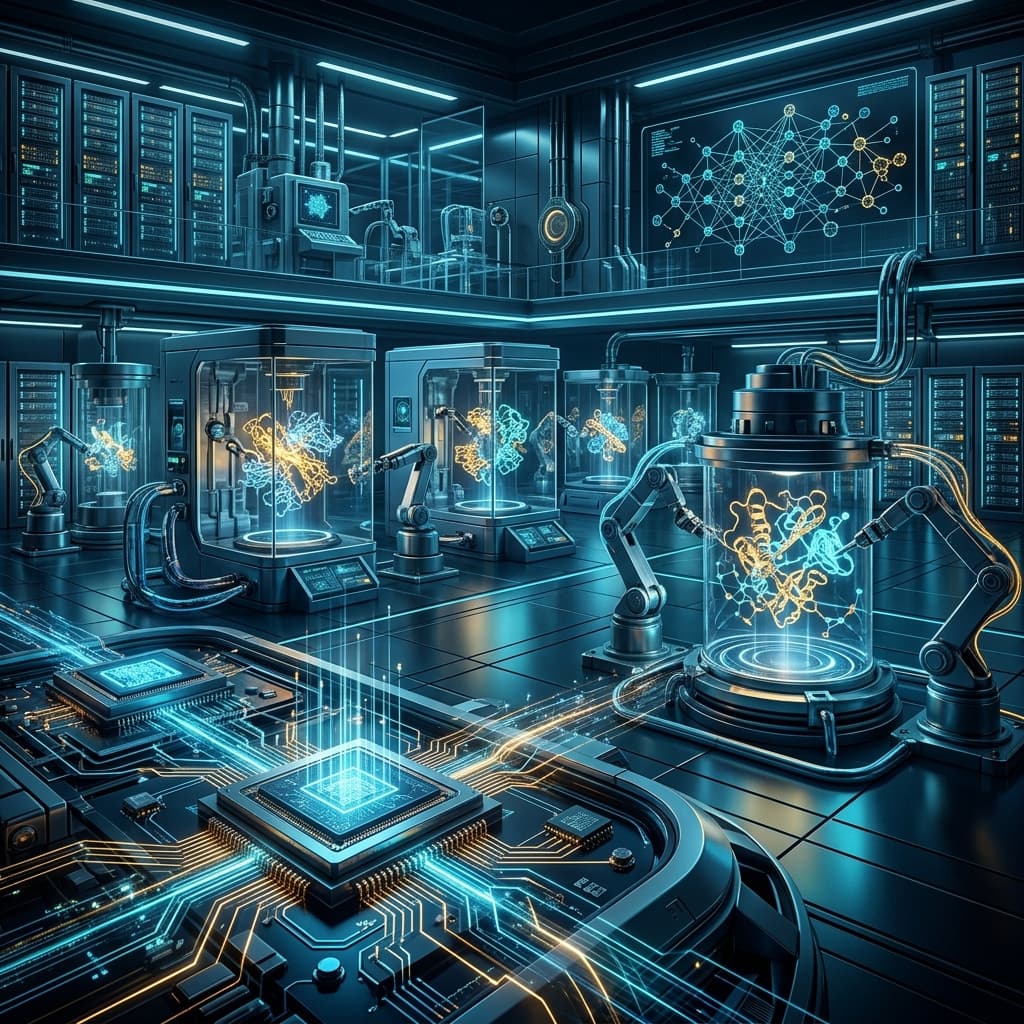
AMD Launches MI400 Chips, Meta Scales 5GW Supercluster, and EU AI Act GPAI Rules Take Effect
Three simultaneous developments in late July 2026 define the AI infrastructure and governance frontier. AMD's Instinct MI400 series (TSMC 2nm, CDNA 5, 432 GB HBM4, Ultra Ethernet Consortium networking in the Helios rack) is the most direct competitive threat to Nvidia's datacenter monopoly since AMD launched the MI300X — this time targeting multi-trillion parameter training workloads rather than inference. Meta's Project Hyperion (5 GW, $50B+, Louisiana) crosses into genuinely new territory: a single company's AI compute campus consuming more power than the entire city of New Orleans. And the EU AI Act's GPAI (General-Purpose AI) provisions entering force August 2, 2026 impose the world's first legally binding technical documentation, copyright transparency, and synthetic content watermarking obligations on frontier model providers operating in Europe.
🤖 AMD MI400 Series — TSMC 2nm Takes on Nvidia's Blackwell
The Hardware Arms Race — Context
Nvidia's current datacenter AI monopoly:
| Vendor | AI Chip | Market Share (H1 2026) | Key Advantage |
|---|---|---|---|
| Nvidia | H200 + B200 Blackwell | ~87% | CUDA ecosystem; NVLink; GB200 NVL72 rack |
| AMD | MI300X | ~6% | Price-performance; ROCm (improving) |
| Google (internal) | TPU v6 | ~3% (internal only) | Gemini training |
| Intel | Gaudi 3 | ~1% | Gaudi SDK; mid-market price |
| Custom/other | Tenstorrent, Groq, etc. | ~3% | Specialised workloads |
AMD's MI300X (2024) gained traction for LLM inference due to its 192 GB HBM capacity. The MI400 is AMD's first chip designed from the ground up for training multi-trillion parameter models — directly targeting Nvidia's B200/B300 Blackwell.
AMD MI400 Series — Technical Specifications
MI400 series comparison:
| Spec | MI455X (flagship) | MI430X (sovereign/HPC) | Nvidia B200 (rival) |
|---|---|---|---|
| Process node | TSMC 2nm | TSMC 2nm | TSMC 4nm |
| Architecture | CDNA 5 | CDNA 5 | Blackwell |
| FP8 AI compute | ~2,300 TFLOPS | ~1,800 TFLOPS | ~2,250 TFLOPS |
| FP16 AI compute | ~1,150 TFLOPS | ~900 TFLOPS | ~1,100 TFLOPS |
| HBM capacity | 432 GB HBM4 | 288 GB HBM4 | 192 GB HBM3e |
| HBM bandwidth | ~9.0 TB/s | ~6.5 TB/s | ~8.0 TB/s |
| TDP (power) | ~900W | ~650W | ~1,000W |
| Memory capacity advantage | +125% vs B200 | +50% vs B200 | — |
Why 432 GB HBM4 is a breakthrough: Training a 1-trillion-parameter model requires holding a subset of model weights + gradients + optimizer states in accelerator memory simultaneously. With 192 GB (B200), you need ~10 B200s to hold a 1T model in memory for tensor-parallel training. With 432 GB (MI455X), you need only ~5 cards — halving the interconnect complexity and communication overhead.
The Helios Rack Solution:
| Element | Specification | Advantage |
|---|---|---|
| Accelerator density | Up to 256 MI455X per rack | 256 × 432 GB = 110 TB HBM in one rack |
| Interconnect | Ultra Ethernet Consortium (UEC) open standard | Avoids Nvidia InfiniBand proprietary lock-in |
| Networking bandwidth | 3.2 Tb/s bisection bandwidth per rack | Matches NVLink-4 intra-rack bandwidth |
| Cooling | Direct liquid cooling (rear-door heat exchanger) | Enables 900W TDP per card at high density |
| Power density | ~230 kW per rack | vs ~100 kW for standard AI racks |
Why UEC (Ultra Ethernet Consortium) matters: Nvidia's NVLink + InfiniBand creates a proprietary network stack that locks customers into Nvidia hardware for the entire cluster. AMD's support for UEC — an open Ethernet-based standard backed by AMD, Meta, Microsoft, Intel, and Broadcom — means Helios racks can be mixed with other vendors' hardware. This is a major enterprise selling point.
⚡ Meta Project Hyperion — The First 5GW AI Campus
The Scale of 5 Gigawatts
Power consumption context:
| Entity | Power Consumption | Equivalent |
|---|---|---|
| Average US household | ~1.2 kW | — |
| Large corporate data centre (pre-AI, 2020) | 50–100 MW | 40,000–80,000 homes |
| Nvidia GB200 NVL72 rack (72 GPUs) | 120 kW | 100 homes per rack |
| Meta's current AI infrastructure (all facilities) | ~2.5 GW | ~2.1M homes |
| Meta Project Hyperion (at full build-out) | 5 GW | ~4.2M homes |
| New Orleans metro area total electricity use | ~4.8 GW | — |
Hyperion at full build-out would consume more power than the entire city of New Orleans — making it effectively a small country's worth of electricity consumption in a single physical campus.
Why Louisiana?
| Factor | Louisiana Advantage |
|---|---|
| Land cost | ~$5,000–10,000 per acre (vs $50,000+ near major US tech hubs) |
| Natural gas | Adjacent to Henry Hub (US natural gas pricing benchmark) — cheap, direct supply |
| Grid capacity | Louisiana grid has significant surplus capacity from legacy industrial decline |
| Water | Mississippi River access for cooling water; no drought risk |
| Tax incentives | Louisiana Industrial Tax Exemption Program (ITEP): up to 80% property tax exemption |
| Political support | Governor's office actively courting data centre investment |
The "behind-the-meter" energy strategy: Rather than buying power from the Louisiana grid, Meta is building dedicated behind-the-meter generation:
- 1.5 GW dedicated natural gas peaker plants (on-site; no grid dependency)
- 2.0 GW solar farms within 100km (power purchase agreements + transmission rights)
- 1.0 GW nuclear power (Vogtle-style AP1000 SMR discussions; 2030+ timeline)
- 0.5 GW backup diesel + battery storage
This strategy means Meta's AI campus operates largely independently of the Louisiana grid — critical for 99.99%+ uptime for continuous pre-training runs.
The networking problem at 5GW scale: With 500,000+ GPUs (estimated) in a single campus, the inter-GPU communication fabric becomes a primary engineering challenge:
- Meta is pioneering co-packaged optics (CPO) — optical transceivers integrated directly onto the switch chip, eliminating the copper-to-optical conversion bottleneck
- CPO achieves: ~0.5 pJ/bit energy (vs ~3 pJ/bit for pluggable optics) and <50ns switch latency
- At 5 GW compute scale: CPO reduces network power by ~200–300 MW (significant savings)
⚖️ EU AI Act GPAI Provisions — August 2, 2026
What "GPAI" Means and Who Is Affected
General-Purpose AI (GPAI) model definition under the EU AI Act: A GPAI model is any AI model trained on large amounts of data, demonstrating significant generality, and capable of performing a wide range of distinct tasks. In practice, this means:
- All large language models (GPT-5.x, Claude Fable/Sonnet, Gemini, Llama 4, etc.)
- Multimodal foundation models (image generation, video, audio)
- Embedding models used as components in larger systems
Two tiers of GPAI obligation:
| GPAI Category | Threshold | Additional Obligations |
|---|---|---|
| Standard GPAI | All GPAI models | Technical documentation + copyright summary + interoperability |
| Systemic-risk GPAI | Training compute ≥ 10²⁵ FLOPs | + Adversarial testing + incident reporting + cybersecurity + energy consumption reporting |
The 10²⁵ FLOP threshold in context:
- GPT-4 training: ~2.15 × 10²⁴ FLOPs (below threshold when released)
- GPT-5.0 training (estimated): ~8 × 10²⁴ FLOPs (approaching threshold)
- GPT-5.5 / Claude Fable 5 (estimated): ~3–8 × 10²⁵ FLOPs (above threshold)
- All frontier models from mid-2025 onwards are above the systemic-risk threshold
August 2, 2026 — mandatory obligations for systemic-risk GPAI providers:
| Obligation | Requirement | Deadline |
|---|---|---|
| Technical documentation | Architecture, training data summary, compute used, capabilities, limitations | August 2, 2026 |
| Copyright transparency | Summary of training data used (categories, sources); opt-out mechanism for right-holders | August 2, 2026 |
| Adversarial testing | Red-teaming against CBRN + cybersecurity + manipulation benchmarks | August 2, 2026 (initial); ongoing |
| Incident reporting | Report serious incidents to EU AI Office within 15 days | Immediate upon incident |
| Synthetic content labelling | Article 50: AI-generated content must carry machine-readable watermark | August 2, 2026 |
| Energy reporting | Training energy consumption (MWh); inference energy per million tokens | February 2, 2027 |
Article 50 — Synthetic Content Watermarking: Any AI-generated text, image, audio, or video must embed machine-readable metadata indicating AI origin. The technical standard: C2PA (Coalition for Content Provenance and Authenticity) — a cryptographically signed metadata standard already implemented by Adobe, Microsoft, Google, OpenAI, and others. The EU AI Act makes C2PA (or equivalent) legally mandatory for providers operating in Europe.
Enforcement:
- The European AI Office (established under the AI Act; operational from May 2024) is the primary enforcer for GPAI
- National supervisory authorities (Ireland's AI Office for Google/Meta/Apple/Microsoft HQ'd in Dublin) enforce at the member-state level
- Maximum fine for systemic-risk GPAI violations: 3% of global annual turnover (or €15M, whichever is higher)
📌 The Bottom Line
- amd-mi400-cdna5-helios-rack: TSMC 2nm CDNA 5; MI455X: 432 GB HBM4 (+125% vs B200's 192 GB), ~9.0 TB/s bandwidth, ~2,300 TFLOPS FP8, 900W TDP; 432 GB = 5 MI455X vs 10 B200 for 1T model training (halves interconnect complexity); Helios rack: 256 MI455X = 110 TB HBM/rack, UEC open Ethernet (vs Nvidia InfiniBand proprietary lock-in), 3.2 Tb/s bisection BW, 230 kW per rack, direct liquid cooling.
- meta-hyperion-5gw-louisiana-50b: 5 GW = 4.2M homes = more than entire New Orleans metro (4.8 GW); Louisiana: cheap land, Henry Hub gas, grid surplus, Mississippi cooling water, 80% ITEP property tax exemption; behind-the-meter: 1.5GW gas + 2GW solar PPA + 1GW nuclear (2030+) + 0.5GW battery; co-packaged optics (CPO): 0.5 vs 3 pJ/bit, <50ns switch latency, saves 200-300 MW at campus scale; 500,000+ GPU estimate.
- eu-ai-act-gpai-august-2026: 10²⁵ FLOP systemic-risk threshold = all frontier models from mid-2025 onwards; Aug 2 mandatory: technical documentation + copyright training data summary + adversarial testing + incident reporting (15-day) + C2PA synthetic content watermarking; energy reporting by Feb 2027; European AI Office primary enforcer; max fine: 3% global turnover (Ireland's AI Office = Google/Meta/Apple/Microsoft primary EU regulator).
📬 Stay Updated
Get the best of AI & technology delivered to your inbox every week. Subscribe to our free newsletter →
Disclosure: This post contains affiliate links. If you purchase through our links, we earn a small commission at no extra cost to you. We only recommend products we believe in.
Enjoyed this post?
Get our weekly digest delivered free.
Share this post:
Knowelth is reader-supported. We may earn a commission from links in this article at no extra cost to you. Read our disclosure.
Related Posts

System 2 AI Architectures, NVIDIA's $500B Infrastructure Alliance, and Industrial Physical AI Scale-Up
System 2 AI Architectures, NVIDIA's $500B Infrastructure Alliance, and Industrial Physical AI Scale-Up The artificial intelligence ecosystem is undergoing a fundamental structural transformation this …
AI's Frontier Shift: Autonomous Bio-Design, 0.42nm Semiconductors, and the EU AI Act Governance Horizon
AI's Frontier Shift: Autonomous Bio-Design, 0.42nm Semiconductors, and the EU AI Act Governance Horizon The artificial intelligence landscape has reached a decisive turning point where digital intelli…

OpenAI Astra's Lean Proofs, Google's Gemini Robotics ER 2, and the EU AI Act's Article 50 Enforcement
OpenAI Astra's Lean Proofs, Google's Gemini Robotics ER 2, and the EU AI Act's Article 50 Enforcement The first week of August 2026 marks a watershed moment across the entire spectrum of artificial…