Clinical Validation of Ayurveda: Kumkumadi Tailam for Skin Pigmentation, Abhyanga for Stress Modulation, and Swarna Prashana for Pediatric Immunity
Clinical Validation of Ayurveda: Kumkumadi Tailam for Skin Pigmentation, Abhyanga for Stress Modulation, and Swarna Prashana for Pediatric Immunity
As modern healthcare pivots toward preventive, personalized, and holistic models, the scientific validation of traditional Indian medicine (AYUSH) plays a critical role. Investigating ancient formulations and wellness rituals through modern biochemistry and clinical trials helps bridge the gap between empirical wisdom and evidence-based science. This week, we examine the scientific trials validating Kumkumadi Tailam for skin pigmentation and brightness, the autonomic nervous system benefits of the daily self-massage practice known as Abhyanga, and the pediatric immunomodulatory and cognitive pathways of Swarna Prashana.
🌿 Skin Radiance and Hyperpigmentation: Clinical Validation of Kumkumadi Tailam
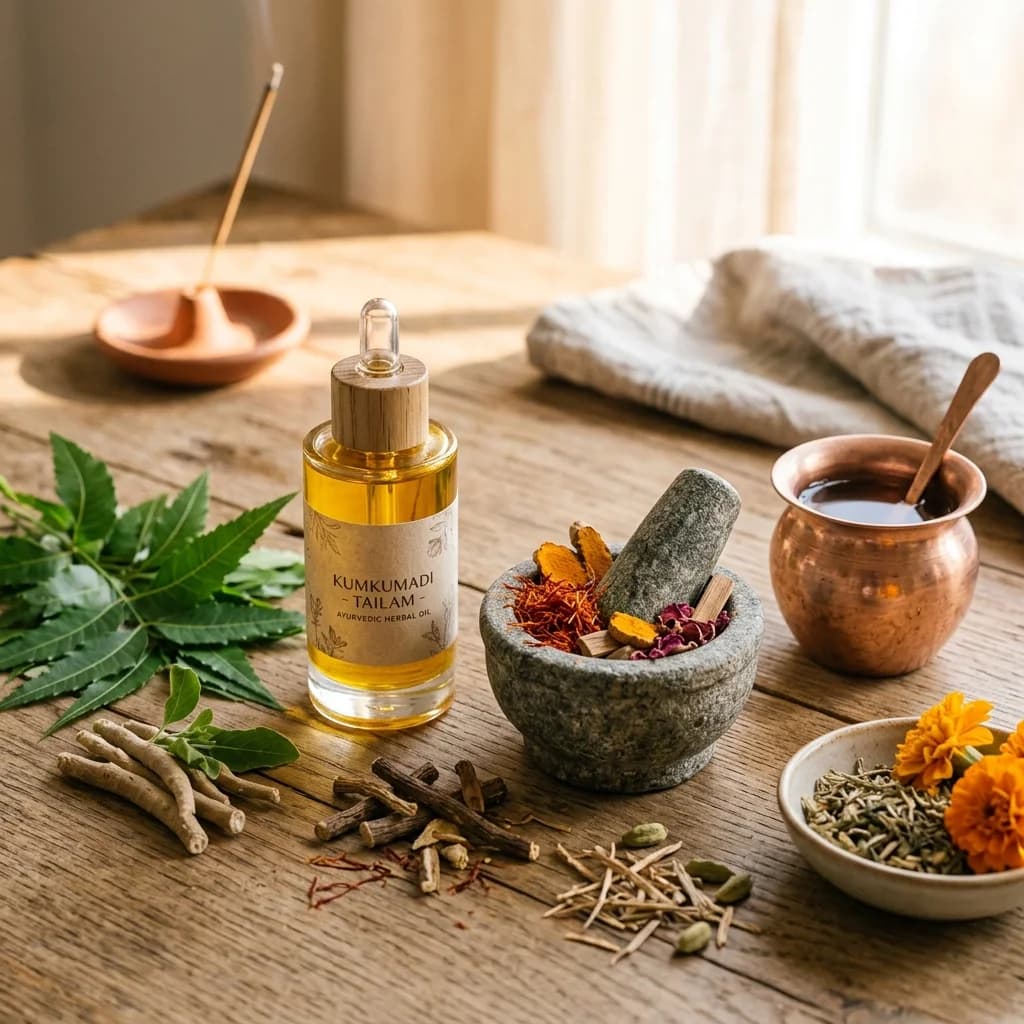
Kumkumadi Tailam, a classical herbal oil composition documented in revered Ayurvedic texts like the Ashtanga Hridaya, has been used for centuries to address skin ailments and maintain a radiant complexion. In Ayurvedic pharmacology, this oil is classified as Varnya (complexion-enhancing), Kanti-kara (glow-inducing), and Rakta-prasadaka (soothing to the blood element). It is formulated to balance the Pitta and Rakta (blood) doshas, which are responsible for metabolic processes in the skin and the occurrence of hyperpigmentation, known classically as Vyanga. The primary ingredient, Kesar (Saffron or Crocus sativus), is combined with a synergistic blend of herbs including Manjistha (Rubia cordifolia), Yashtimadhu (Glycyrrhiza glabra), and Chandana (Santalum album) in a base of sesame oil.
Modern dermatological research has begun to confirm these empirical benefits through objective clinical evaluations. In a recent 15-day exploratory study, researchers used instrument-based measurements (such as the DermaLab Combo®) to assess the oil's efficacy. The study demonstrated a statistically significant decrease in both the Melanin Index (which measures skin pigmentation) and the Erythema Index (which measures skin redness and inflammation). Furthermore, an 8-week open-label clinical pilot study involving subjects with uneven skin tone showed that over 56% of participants experienced a highly significant improvement in overall skin brightness, with no reports of adverse reactions or irritation, confirming its safety and tolerability.
Phytochemical profiling of Kumkumadi Tailam using high-resolution liquid chromatography-mass spectrometry (UPLC-MS/MS QTOF) has identified the molecular drivers behind these clinical outcomes. The analysis revealed a rich diversity of bioactive compounds, including safranal and crocin from Saffron, liquiritin and isoliquiritin from Licorice, and berberine from supportive herbs. These compounds act through multiple biological pathways: they inhibit tyrosinase (the key enzyme in melanin synthesis), neutralize reactive oxygen species (ROS) that trigger inflammation, and downregulate inflammatory cytokines. This complex biochemical network validates the traditional formulation's ability to act as a natural, safe alternative for managing hyperpigmentation and enhancing skin barrier health.
💆 Nervous System Regulation: The Science of Abhyanga (Ayurvedic Self-Massage)
Abhyanga, the practice of full-body warm oil self-massage, is an essential pillar of Dinacharya (daily routine) in Ayurvedic medicine. In the Charaka Samhita, Abhyanga is described as a powerful therapy to pacify Vata dosha, the energetic principle that governs movement, the nervous system, and stress responses. Because Vata is characterized by Sheeta (cold), Rooksha (dry), and Chala (mobile) qualities, it is balanced by the Ushna (heating), Snigdha (unctuous), and Sthira (stable) properties of warm herbalized oils, typically sesame oil (Tila Taila). Classically, daily Abhyanga is said to promote physical strength (Bala), improve sleep quality (Nidra), nourish the skin, and ward off premature aging (Jara).
From a modern physiological standpoint, Abhyanga acts as a powerful modulator of the autonomic nervous system (ANS). During a state of chronic stress, the sympathetic nervous system ("fight-or-flight") dominates, leading to elevated heart rate, high blood pressure, and increased cortisol secretion. Clinical pilot studies measuring the physiological effects of Abhyanga have shown that a standardized session results in a rapid shift toward parasympathetic dominance ("rest-and-digest"). Objective measurements demonstrated significant reductions in heart rate and systolic blood pressure immediately following the treatment, particularly in prehypertensive and stressed individuals, alongside a self-reported decline in anxiety levels.
The mechanism behind this autonomic shift lies in the stimulation of cutaneous pressure receptors (mechanoreceptors) embedded in the skin. The rhythmic, firm, and warm tactile stimulation of Abhyanga triggers the vagus nerve, which in turn reduces sympathetic activity and promotes the release of endogenous endorphins and oxytocin. Additionally, the absorption of warm oil through the skin barrier helps hydrate tissues and reduce peripheral resistance. By lowering circulating cortisol levels and optimizing heart rate variability (HRV), this simple daily practice provides a clinically verifiable method to build resilience against modern psychological and physiological stressors.
👶 Pediatric Vitality: Swarna Prashana and Modern Immunomodulation
Swarna Prashana (also known as Swarna Bindu Prashana) is a traditional pediatric health ritual described in the classical text Kashyapa Samhita under the branch of Kaumarbhritya (pediatrics). The practice involves the oral administration of purified gold nanoparticles (Swarna Bhasma) mixed with raw honey (Madhu), cow ghee (Goghrita), and a combination of Medhya Rasayanas (nootropic and rejuvenating herbs) such as Brahmi (Bacopa monnieri), Shankhpushpi (Convolvulus pluricaulis), and Vacha (Acorus calamus). Traditionally administered on the day of the Pushya Nakshatra (an auspicious lunar mansion associated with nourishment and growth), it is formulated to enhance a child's immunity (Vyadhikshamatva), intellect (Medha), digestion (Agni), and overall physical development (Bala).
In recent years, the pharmacological properties of Swarna Prashana have drawn significant interest from immunologists and nanomedicine researchers. Modern science recognizes that gold nanoparticles (AuNPs) in the size range used in Ayurvedic formulations exhibit unique biocompatible and immunomodulatory properties. Unlike bulk gold, these ultra-fine particles are readily engulfed by macrophages and dendritic cells without causing toxicity. Once inside, they modulate immune function by regulating the expression of key inflammatory cytokines (such as IL-1β, IL-6, and TNF-α) and stimulating phagocytic activity, thereby enhancing the body's innate defense mechanisms.
Clinical trials and observational studies have begun to document the therapeutic utility of this ancient practice in pediatric care. Studies evaluating children undergoing regular Swarna Prashana therapy have reported a marked reduction in the frequency, duration, and severity of recurrent upper respiratory tract infections (URTI), a common concern in early childhood. Furthermore, the combination of gold nanoparticles with nootropic herbs in a lipophilic ghee base supports the blood-brain barrier passage of active phytochemicals. This synergistic mechanism helps explain the observed improvements in cognitive parameters, including attention span, memory retention, and learning capacity, establishing Swarna Prashana as a clinically relevant protocol for holistic pediatric development.
📌 The Bottom Line
- kumkumadi-skin-radiance: Clinical studies and advanced UPLC-MS/MS analysis validate Kumkumadi Tailam's ability to significantly reduce the Melanin Index and improve skin brightness by inhibiting tyrosinase and reducing cutaneous inflammation.
- abhyanga-stress-regulation: Daily warm oil self-massage (Abhyanga) clinically modulates the autonomic nervous system, promoting parasympathetic dominance, lowering heart rate, and reducing circulating cortisol levels.
- swarna-prashana-pediatric-immunity: Swarna Prashana utilizes biocompatible gold nanoparticles to modulate cytokine pathways, clinically reducing recurrent pediatric respiratory infections while supporting cognitive development.
Disclaimer: The information provided in this post is for educational and informational purposes only. It is not intended to be a substitute for professional medical advice, diagnosis, or treatment. Always seek the advice of your physician or other qualified health provider with any questions you may have regarding a medical condition.
Enjoyed this post?
Get our weekly digest delivered free.
Share this post:
Knowelth is reader-supported. We may earn a commission from links in this article at no extra cost to you. Read our disclosure.
Related Posts
Systems Biology, Circadian Dinacharya, and Gut-Agni Chrono-Nutrition: The Science Validating Ayurvedic Medicine
Systems Biology, Circadian Dinacharya, and Gut-Agni Chrono-Nutrition: The Science Validating Ayurvedic Medicine Modern healthcare is undergoing a paradigm shift from reductionist single-molecule thera…
Clinical Validation in Ayurveda: Cardiometabolic Formulations, Chrononutrition Agni Science, and Ayurgenomics in Ovarian Reserve
Clinical Validation in Ayurveda: Cardiometabolic Formulations, Chrononutrition Agni Science, and Ayurgenomics in Ovarian Reserve Traditional Indian medicine is undergoing a profound scientific renaiss…
Ayurveda Meets Systems Biology: Agni, Chronomedicine, and Botanical Synergy in Modern Clinical Science
Ayurveda Meets Systems Biology: Agni, Chronomedicine, and Botanical Synergy in Modern Clinical Science The 2025–2026 wave of systems biology research has made an unambiguous statement: the three pilla…