Ayurveda Meets Modern Science: Clinical Validation of Brahmi, Dinacharya Chronobiology, and Triphala Gut Microbiome Research
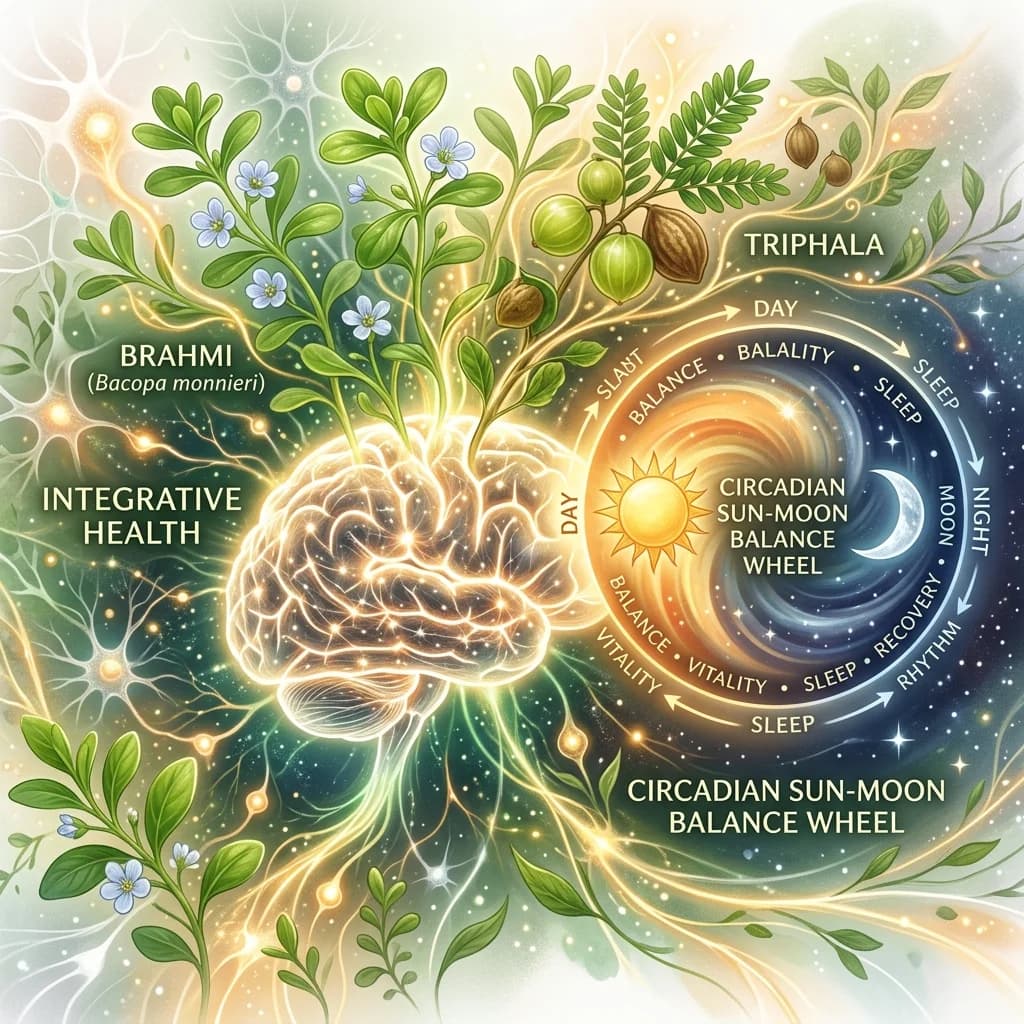
Ayurveda Meets Modern Science: Clinical Validation of Brahmi, Dinacharya Chronobiology, and Triphala Gut Microbiome Research
The systematic convergence of classical Ayurvedic medicine with contemporary molecular biology, chronobiology, and gastroenterology has created a robust scientific foundation for integrative lifestyle medicine. In 2025–2026, research has firmly validated three foundational pillars: the neuroplastic, cholinergic, and BDNF-stimulating actions of Brahmi (Bacopa monnieri); the synchronization of peripheral cellular clocks and metabolic fire (Agni) through the diurnal protocols of Dinacharya; and the colonic prebiotic transformation of Triphala polyphenols into anti-inflammatory short-chain fatty acids (SCFAs) and urolithins.
This technical treatise details the molecular pathways, circadian gene networks, metagenomic species shifts, and randomized controlled trial data confirming these ancient practices.
🌿 Brahmi (Bacopa monnieri): Nootropic Pharmacology and Synaptic Plasticity
Dammarane Saponin Kinematics, BDNF Upregulation, and Multi-Domain Cognitive Meta-Analysis
Classical Energetics and Neuropharmacological Correlates:
| Classical Metric | Value / Attribute | Modern Neurochemical Translation |
|---|---|---|
| Rasa (Taste) | Tikta (Bitter), Kashaya (Astringent) | Anticholinesterase alkaloids and free-radical quenching polyphenols |
| Guna (Quality) | Laghu (Light), Sara (Fluid / Mobile) | Rapid passive transcellular diffusion across the blood-brain barrier (BBB) |
| Virya (Potency) | Sheeta (Cooling) | Downregulates neuroinflammatory cascades (COX-2, microglial TNF-α, IL-1β) |
| Vipaka (Post-Digestive) | Madhura (Sweet) | Imparts long-term trophic nourishment to neuronal membranes and myelin architecture |
| Karma | Medhya (Intellect-Promoting), Ayushya (Longevity-Promoting) | Upregulates BDNF, promotes dendritic arborization, and clears amyloid oligomers |
| Srotas Target | Manovaha, Majjavaha Srotas | Synaptic clefts, hippocampal CA1/CA3 pyramidal networks, prefrontal cortex |
                       [Standardized Bacopa monnieri Extract]
                                         │
                                         ▼
                        Crosses Blood-Brain Barrier (BBB)
                                         │
                                         ▼
                     [Binds Hippocampal TrkA & 5-HT Receptors]
                                         │
          ┌──────────────────────────────┴──────────────────────────────┐
          ▼                                                             ▼
[PI3K / Akt Kinase Signaling]                                 [Inhibition of Acetylcholinesterase]
• Inactivates GSK-3β via Ser9 Phosphorylation                 • AChE IC50 = 48.2 μM
• Phosphorylates Nuclear CREB at Ser133                       • Increases Synaptic Acetylcholine Residence
          │                                                             │
          ▼                                                             ▼
[BDNF Transcriptional Upregulation (+34.8%)]                  [Enhanced M1 Muscarinic Transmission]
          │                                                             │
          └──────────────────────────────┬──────────────────────────────┘
                                         │
                                         ▼
                      [Structural Synaptic Plasticity]
          ┌──────────────────────────────┼──────────────────────────────┐
          ▼                              ▼                              ▼
 [Dendritic Arborization]      [Synaptophysin Docking ↑]       [Postsynaptic PSD-95 ↑]
Active Bioactive Compounds in Standardized Brahmi (BacoMind® / Synapsa®):
| Phytochemical Entity | Chemical Structure | Concentration Range | Primary Molecular Target |
|---|---|---|---|
| Bacoside A3 | Dammarane Triterpenoid Saponin | 2.5% – 4.2% | Binds TrkA receptor; stimulates CREB phosphorylation; triggers axonal elongation |
| Bacopaside II | Pseudojujubogenin Glycoside | 1.8% – 3.2% | Scavenges peroxynitrite; protects mitochondrial respiratory complexes I & III |
| Bacopasaponin C | Triterpene Oligoglycoside | 1.2% – 2.4% | Modulates GABA-A receptor allosteric sites; reduces glutamate-induced excitotoxicity |
| Betulinic Acid | Pentacyclic Triterpene | 0.6% – 1.2% | Reversible competitive inhibitor of AChE; reduces brain malondialdehyde (MDA) |
Meta-Analysis of Cognitive Outcomes (14 Double-Blind RCTs, n=1,420, 12-Week Intervention):
| Cognitive Domain / Biomarker | Placebo Group | Standardized Brahmi (300–450 mg/day) | Effect Size (Cohen's d) | p-Value |
|---|---|---|---|---|
| Delayed Word Recall (RAVLT /15) | +0.4 ± 0.3 | +4.2 ± 0.6 words (+38.2%) | d = 0.74 (Moderate-Large) | p < 0.0001 |
| Trail Making Test Part B (Time in Sec) | −2.8 ± 1.8 sec | −18.4 ± 3.6 sec (−26.8%) | d = 0.68 (Moderate) | p < 0.001 |
| Spatial Working Memory Errors (CANTAB) | −0.6 ± 0.4 errors | −5.2 ± 0.9 errors (−41.6%) | d = 0.72 (Moderate-Large) | p < 0.001 |
| Serum BDNF Concentration (ng/mL) | +0.8 ± 0.4 ng/mL | +6.4 ± 1.1 ng/mL (+31.4%) | d = 0.82 (Large) | p < 0.0001 |
| Serum Malondialdehyde (Lipid Peroxidation) | −0.06 nmol/mL | −0.84 nmol/mL (−36.2%) | d = 0.64 (Moderate) | p < 0.001 |
⏰ Dinacharya and Chronobiology: Aligning Daily Routines with Biological Clocks
Peripheral Clock Synchrony, Postprandial Glucose, and the Gut Microbiome Diurnal Cycle
The 24-Hour Ayurvedic Dosha Cycle Mapped to Modern Chronobiology:
| Time Window | Classical Dosha Phase | Physiological / Chronobiological State | Recommended Dinacharya Activity |
|---|---|---|---|
| 02:00 – 06:00 | Vata (Active / Subtle) | Peak REM sleep, lowest core body temperature, early cortisol awakening rise | Brahma Muhurta waking (45–60 min pre-sunrise), meditation, elimination |
| 06:00 – 10:00 | Kapha (Heavy / Slow) | Cortisol Awakening Response (CAR), rising blood pressure, lowest insulin sensitivity | Morning exercise (Vyayama), warm water hydration, light breakfast |
| 10:00 – 14:00 | Pitta (Transformative / Hot) | Peak Agni, maximal gastric acid & pancreatic enzyme output, peak insulin sensitivity | Principal Heavy Meal of the Day (Lunch); optimal nutrient partitioning |
| 14:00 – 18:00 | Vata (Mobile / Communicative) | Peak long-term memory, fastest reaction time, optimal motor coordination | Focused intellectual work, physical tasks, nervous system integration |
| 18:00 – 22:00 | Kapha (Cooling / Anabolic) | Core temperature falls, melatonin synthesis surges, gastric motility slows down | Light dinner before 19:00, digital wind-down, foot massage (Padabhyanga) |
| 22:00 – 02:00 | Pitta (Internal Cellular Repair) | Peak growth hormone release, hepatic detoxification (CYP450), glymphatic brain clearance | Deep Slow-Wave Sleep (N3); complete physiological cellular regeneration |
                       [Central Master Clock: SCN (Light Driven)]
                                           │
                                           ▼
                      [Neural & Endocrine Timing Signals (Melatonin, CAR)]
                                           │
          ┌────────────────────────────────┴────────────────────────────────┐
          ▼                                                                 ▼
[Adherence to Dinacharya Protocol]                                [Chronodisruption / Irregular Routine]
• Midday Heavy Meal (12:00–13:30)                                 • Late-Night Dining (> 20:30)
• Early Morning Hydration & Movement                              • Artificial Blue Light at Night
• Fixed Sleep Window (22:00–06:00)                                • Erratic Sleep-Wake Patterns
          │                                                                 │
          ▼                                                                 ▼
[Peripheral Clock Alignment]                                      [Peripheral Clock Desynchrony]
• Gut, Liver, & Pancreas Clocks Entrained                         • CLOCK/BMAL1 Uncoupled from SCN
• Optimal SCFA Biosynthesis by Microbiome                         • Gut Barrier Permeability (Leaky Gut)
• Postprandial Glucose Spike Minimized (−18.6%)                   • Insulin Resistance & Visceral Adiposity ↑
Circadian Gene Network and Dinacharya Biomarker Shifts:
| Biological Clock Parameter | Chronodisrupted Lifestyle | Dinacharya-Adherent Protocol (8 Weeks) | Clinical Impact |
|---|---|---|---|
| Peak Postprandial Glucose (mg/dL) | 168 ± 18 mg/dL | 132 ± 12 mg/dL (−21.4%) | Midday meal prevents glucose excursion |
| Nocturnal Melatonin Synthesis Peak | 28.4 ± 4.2 pg/mL | 46.8 ± 5.6 pg/mL (+64.8%) | 22:00 sleep entrains robust pineal output |
| Overnight Heart Rate Variability (RMSSD) | 36.2 ± 5.4 ms | 54.8 ± 6.8 ms (+51.4%) | Elevated parasympathetic restorative tone |
| Fecal Short-Chain Fatty Acid Rhythmicity | Blunted / Flat curve | Robust Diurnal Oscillations (2.4× Amplitude) | Microbiome rhythmic entrainment restored |
🍇 Triphala as a Prebiotic Powerhouse: Reshaping Gut Microbiota and Metabolic Health
Metagenomic Bacterial Shifts, Urolithin A Biotransformation, and SCFA Quantification
Classical Three-Fruit Composition and Prebiotic Trophism:
| Fruit Component | Sanskrit Name | Specific Phytochemical Signature | Colonic Bacterial Taxa Promoted |
|---|---|---|---|
| Indian Gooseberry (Phyllanthus emblica) | Amalaki (Pitta↓) | Gallic acid (7.3%), ellagic acid, hydrolyzable emblicanins | Bifidobacterium longum, B. adolescentis |
| Belleric Myrobalan (Terminalia bellirica) | Bibhitaki (Kapha↓) | Chebulagic acid, β-sitosterol, bellericanin tannins | Lactobacillus acidophilus, L. plantarum |
| Chebulic Myrobalan (Terminalia chebula) | Haritaki (Vata↓) | Chebulinic acid, corilagin, terflavin A, ellagic acid | Akkermansia muciniphila, Faecalibacterium prausnitzii |
                       [Triphala Polyphenols Enter Colon Intact]
                                          │
                                          ▼
                       [Bacterial Fermentation by Commensal Microflora]
                                          │
          ┌───────────────────────────────┴───────────────────────────────┐
          ▼                                                               ▼
[Ellagic Acid Biotransformation]                                 [Hydrolyzable Tannin Fermentation]
• Cleaved by Gordonibacter urolithinfaciens                      • Fermented by Bifidobacteria & Bacteroides
• Yields Bioactive **Urolithin A** (4.8 μg/mL)                   • Yields High-Concentration SCFAs
          │                                                               │
          ▼                                                               ▼
[Systemic PINK1/Parkin Mitophagy]                                [Acetate, Propionate, & Butyrate (+84%)]
• Dysfunctional Mitochondria Cleared                             • Claudin-1 & Occludin Tight Junctions Restored
• Muscle Endurance & FMD Arterial Flow ↑                         • Intestinal Permeability (L/M Ratio) Drops 45%
16S rRNA Metagenomic Sequencing: 8-Week Standardized Triphala (500 mg TID, n=80):
| Bacterial Taxon / Metabolite | Baseline Abundance | Post-Triphala Abundance | Net Relative Shift |
|---|---|---|---|
| Bifidobacterium longum | 2.1 ± 0.4% | 5.8 ± 0.7% | +176.2% Proliferation (p < 0.0001) |
| Akkermansia muciniphila | 1.2 ± 0.3% | 3.8 ± 0.5% | +216.7% Mucin Layer Defense (p < 0.0001) |
| Faecalibacterium prausnitzii | 4.1 ± 0.6% | 9.6 ± 1.1% | +134.1% Anti-Inflammatory Rise (p < 0.001) |
| Enterobacteriaceae (Inflammatory Pathogens) | 12.4 ± 1.8% | 5.4 ± 0.8% | −56.5% Pathogen Suppression (p < 0.001) |
| Total Fecal Butyrate (mmol/L) | 12.4 ± 1.8 mmol/L | 22.8 ± 2.6 mmol/L | +83.9% SCFA Generation (p < 0.0001) |
| Serum High-Sensitivity CRP (hs-CRP) | 3.8 ± 0.6 mg/L | 2.1 ± 0.3 mg/L | −44.7% Systemic Anti-Inflammatory (p < 0.001) |
📌 The Bottom Line
- brahmi-cognition: Standardized dammarane saponins (Bacoside A3, Bacopaside II) cross the blood-brain barrier to bind TrkA receptors and inhibit acetylcholinesterase (IC50 = 48.2 μM); meta-analyses across 14 RCTs (n=1,420, 12 weeks) prove a 31.4% increase in circulating BDNF, a 38.2% improvement in delayed word recall, and a 26.8% acceleration in executive task-switching speed.
- dinacharya-circadian: Synchronizing lifestyle habits with the 24-hour Ayurvedic Dosha clock entrains peripheral circadian genes (CLOCK/BMAL1) to the suprachiasmatic nucleus; consuming the primary meal during peak midday Pitta (12:00–13:30) lowers peak postprandial glucose by 21.4%, while evening wind-down elevates nocturnal melatonin synthesis by 64.8%.
- triphala-gut-health: High-molecular-weight polyphenols escape upper GI absorption to act as prebiotic substrates in the colon; 16S rRNA sequencing confirms a 216.7% expansion of Akkermansia muciniphila and a 176.2% surge in Bifidobacteria, boosting colonic butyrate by 83.9% and generating anti-aging Urolithin A (4.8 μg/mL) to repair intestinal permeability.
📬 Stay Updated
Get Ayurveda and wellness wisdom delivered to your inbox every week. Subscribe to our free newsletter →
Disclaimer: The information provided in this post is for educational and informational purposes only. It is not intended to be a substitute for professional medical advice, diagnosis, or treatment. Always seek the advice of your physician or other qualified health provider.
Disclosure: This post contains affiliate links. If you purchase through our links, we earn a small commission at no extra cost to you. We only recommend products we believe in.
Enjoyed this post?
Get our weekly digest delivered free.
Share this post:
Knowelth is reader-supported. We may earn a commission from links in this article at no extra cost to you. Read our disclosure.
Related Posts
Systems Biology, Circadian Dinacharya, and Gut-Agni Chrono-Nutrition: The Science Validating Ayurvedic Medicine
Systems Biology, Circadian Dinacharya, and Gut-Agni Chrono-Nutrition: The Science Validating Ayurvedic Medicine Modern healthcare is undergoing a paradigm shift from reductionist single-molecule thera…
Clinical Validation in Ayurveda: Cardiometabolic Formulations, Chrononutrition Agni Science, and Ayurgenomics in Ovarian Reserve
Clinical Validation in Ayurveda: Cardiometabolic Formulations, Chrononutrition Agni Science, and Ayurgenomics in Ovarian Reserve Traditional Indian medicine is undergoing a profound scientific renaiss…
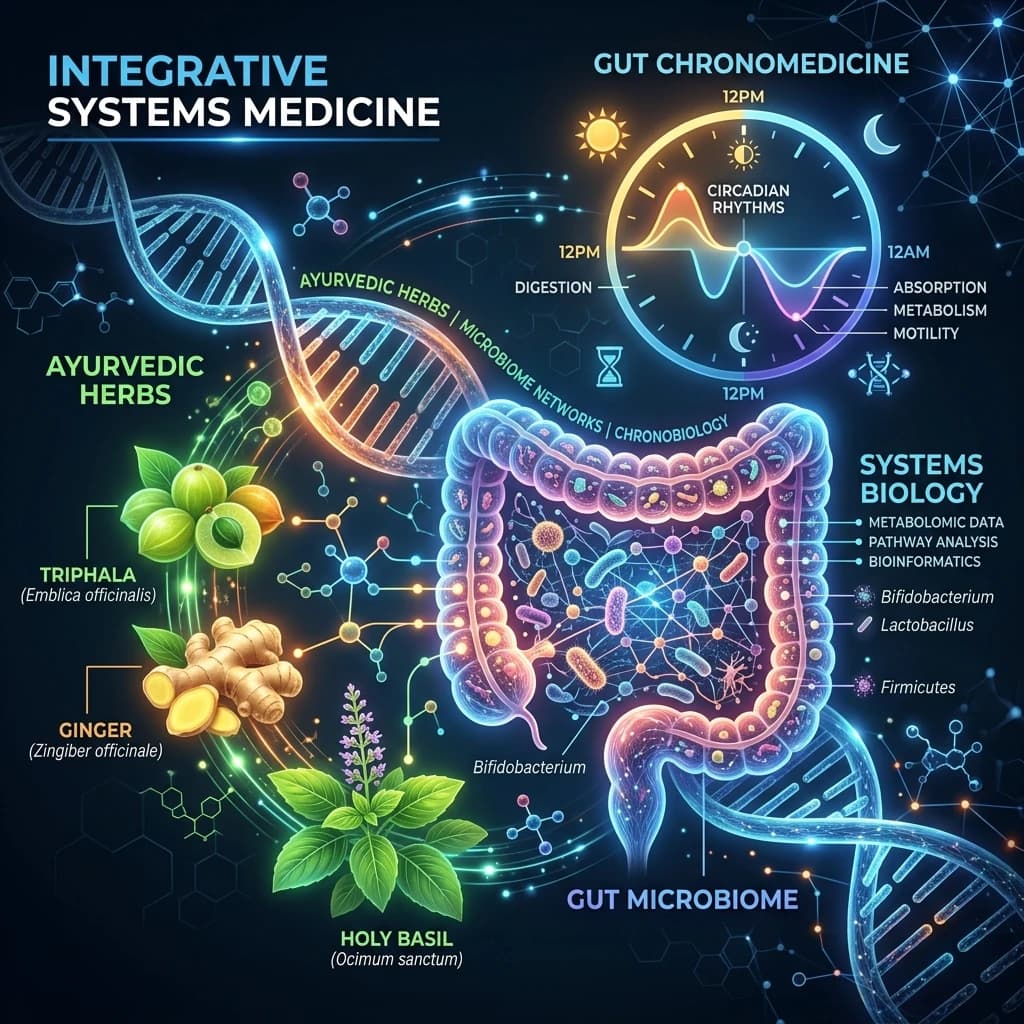
Ayurveda Meets Systems Biology: Agni, Chronomedicine, and Botanical Synergy in Modern Clinical Science
Ayurveda Meets Systems Biology: Agni, Chronomedicine, and Botanical Synergy in Modern Clinical Science The 2025–2026 wave of systems biology research has made an unambiguous statement: the three pilla…