Monuments of Eternity: The Architectural Genius of Ancient Indian Temples
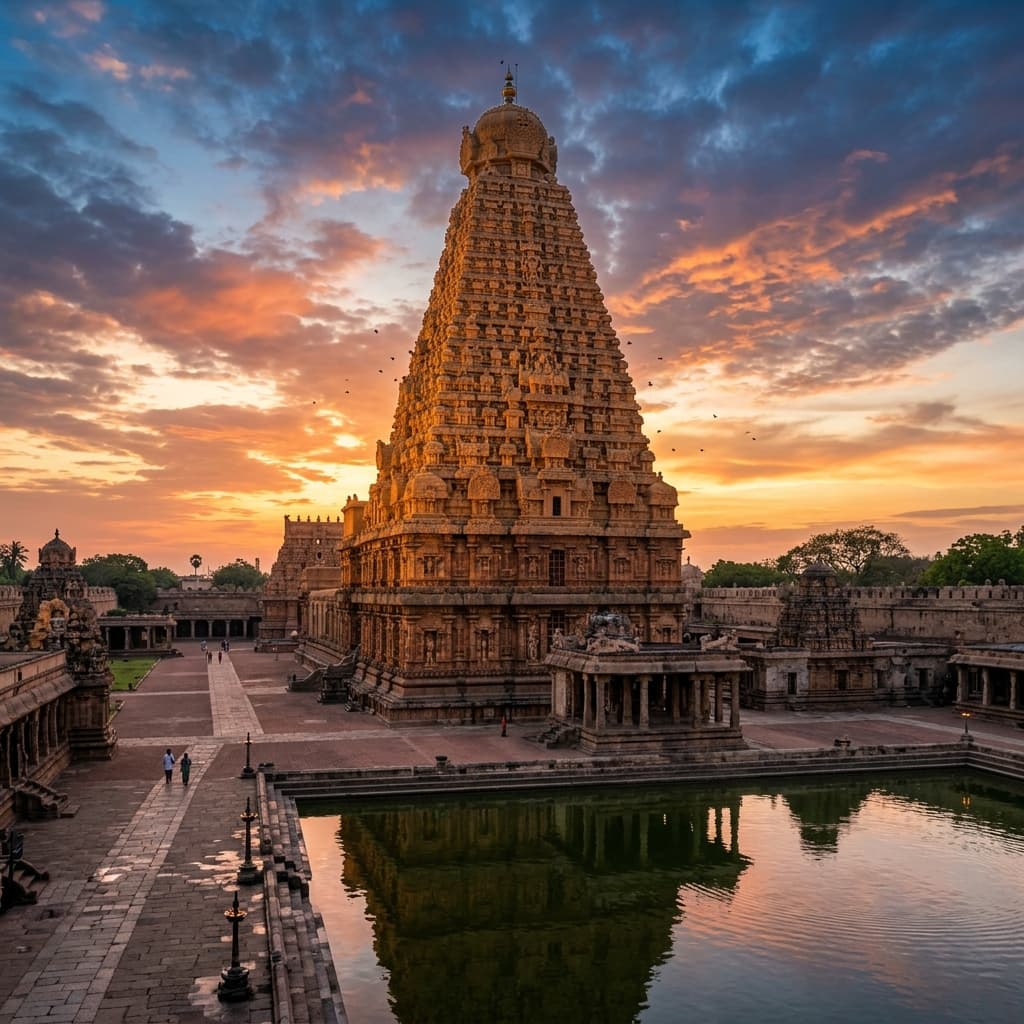
Monuments of Eternity: The Architectural Genius of Ancient Indian Temples
Across the vast and culturally rich landscape of the Indian subcontinent, ancient temples stand not merely as places of worship, but as monumental achievements in engineering, mathematics, and art. These stone marvels serve as living books of India's history, reflecting the profound vision of the dynasties that commissioned them and the unmatched skill of the artisans who carved them. Three temples — the Brihadeeswarar in Thanjavur, the Kailasa at Ellora, and the Sun Temple at Konark — represent the pinnacle of three distinct architectural traditions, each posing unresolved engineering mysteries that continue to fascinate scholars and archaeologists.
🏛️ Brihadeeswarar Temple — The Zenith of Chola Architecture
Historical Context — Rajaraja I and the Chola Imperial Vision
Built by the Chola Emperor Rajaraja I between 1003 and 1010 CE in Thanjavur (Tanjore), Tamil Nadu, the Brihadeeswarar Temple (also called the Big Temple or Peruvudaiyār Kōvil) was conceived as the ritual centrepiece of the most powerful South Indian empire of its era:
The Chola Empire at the time of construction:
| Aspect | Detail |
|---|---|
| Territory (1003 CE) | All of peninsular India south of the Krishna River, parts of Sri Lanka, Maldives, and trading colonies in Southeast Asia |
| Annual revenue | 1,200,000 kāsu (gold coins) — the largest South Indian treasury of the era |
| Rajaraja I's reign | 985–1014 CE — 29 years of military expansion and monumental building |
| Temple's role | The devāyatana (divine abode) of the empire — all military conquests were ritually dedicated here |
| Workforce | 100,000+ artisans, labourers, and stone-cutters over 7 years of continuous construction |
Engineering Facts — The Granite Problem
The temple is constructed almost entirely of granite — specifically the grey biotite granite of the Tirumangalam quarries, over 100 kilometres from Thanjavur. In 1003 CE, without mechanical transport:
The granite logistics:
- Estimated total stone volume: 130,000 cubic metres (approximately 350,000 tonnes)
- Each major block weighs between 10 and 80 tonnes
- Transport method: the "ramp and roller" system — granite rollers laid in grooved earth channels, lubricated with ghee, pulled by large teams of oxen and workers
The 80-tonne capstone (Shikhara) mystery: The shikhara (crown stone) at the top of the 66-metre vimana (tower) is a single monolithic granite block weighing approximately 80 tonnes. The most widely accepted theory:
- An earthen ramp 6–8 kilometres long at a 1:80 gradient was constructed from the quarrying site to the top of the vimana
- The block was dragged up this ramp over several months
- The ramp was then dismantled
- No contemporary text records the precise method — Tamil inscriptions on the temple walls describe the result but not the process
The "shadow-free" legend: A popular local legend holds that the vimana's shadow never touches the ground at noon on the equinox. Structural analysis shows the tower's taper (the vimana narrows as it rises) combined with its orientation means its shadow does indeed fall within its own base at solar noon in September — not a supernatural phenomenon, but a geometrically precise orientation towards celestial north, demonstrating the builders' astronomical knowledge.
Artistic and Administrative Record
The temple's walls contain over 1,000 inscriptions — the most comprehensive administrative record of the Chola empire:
- Land grants to the temple: 1,350 villages donated by Rajaraja I
- The temple's livestock: 500 dairy cattle + 250 goats (for lamp oil and butter)
- Recorded professionals: 400 dancing girls (devadasi), 57 musicians, 212 priests
- The 108 karanas (dance postures) of Bharatanatyam: first comprehensive sculptural record in India
The temple was designated a UNESCO World Heritage Site in 1987 as part of the "Great Living Chola Temples" complex.
🗿 Kailasa Temple — The Mountain Carved from Stone
Scale and Technical Achievement
The Kailasa Temple (Cave 16) at Ellora, Maharashtra, is not a temple built from quarried blocks — it is a temple excavated from a single hillside. Commissioned by the Rashtrakuta king Krishna I (756–773 CE), it represents the largest single-rock excavation in human history:
Key dimensions:
| Feature | Measurement |
|---|---|
| Rock removed (estimated) | 200,000 tonnes |
| Length (N-S) | 81 metres |
| Width (E-W) | 47 metres |
| Height of main tower | 32.6 metres |
| Excavation depth below cliff top | 33 metres |
| Total labour-years (estimated) | 150,000+ (modern estimates for equivalent work) |
| Construction period | ~18 years (756–774 CE) |
The top-down excavation method: Conventional building starts at the foundation and builds up. Kailasa's builders started at the cliff top and carved downward. This required:
- Precise three-dimensional planning of the entire complex before the first chisel strike
- No ability to correct structural errors — a miscalculation in a load-bearing column cannot be fixed
- All light came from above — workers in deep trenches relied on polished copper mirrors to reflect sunlight
The tool marks mystery: Archaeological analysis of the tool marks on Kailasa's walls shows that the Rashtrakuta craftsmen used:
- Iron chisels (standard for the period)
- Bow drills for initial point penetration
- No evidence of any metal harder than iron
Yet the precision of some carvings — particularly the flying celestials (vidyadharas) on the upper cornices — is at the micron level. How was this achieved with iron tools on basalt (one of the hardest volcanic rocks)? No satisfactory answer has been found.
The iconographic programme: The entire temple is dedicated to Shiva as Lord of Kailash Mountain. The sculptural programme includes:
- Ravana shaking Kailash (south wall): a 7-metre panel showing Ravana beneath a calm Shiva, considered one of the finest stone sculptures in Asia
- The river goddesses Ganga and Yamuna at the entrance
- Directional guardians (dikpalas) at each cardinal point
- A life-sized elephant frieze running the entire perimeter base (symbolising the earth supported by elephants in Hindu cosmology)
🔱 Sun Temple of Konark — The Celestial Stone Chariot
Astronomical Precision — The Sundial Wheels
Built by King Narasimhadeva I of the Eastern Ganga Dynasty between 1238 and 1264 CE, the Konark Sun Temple (Surya Deula) is a 13th-century fusion of astrophysics, architecture, and devotion:
The chariot concept — dimensions:
| Element | Number | Astronomical Significance |
|---|---|---|
| Stone wheels (chariot wheels) | 24 (12 pairs) | 24 hours in a day; also the 24 fortnights (paksha) in a lunar year |
| Wheel diameter | 2.9 metres | — |
| Horses pulling the chariot | 7 | The 7 days of the week; also the 7 colours of visible sunlight |
| Wheel spokes | 8 per wheel | The 8 prahars (3-hour periods) of the Hindu day |
| Temple orientation | Precisely east | Captures the first rays of sunrise on the sanctum deity |
How the wheels function as sundials: Each wheel has 8 large spokes and 8 smaller secondary spokes. The spokes divide the wheel face into 8 equal segments. When the sun shines on the wheel:
- The shadow of each spoke falls on the wheel rim
- The position of the shadow indicates the time to within approximately ±3 minutes
- The position of the wheel (which pair, morning or afternoon) indicates AM or PM
- The system works throughout the year because the wheel diameter and spoke geometry compensate for the seasonal variation in sun angle
This is not a simple shadow clock — it is a linked analog computer in stone.
The construction materials and collapse:
- Primary stone: ferruginous sandstone (Khondalite) — orange-brown, relatively soft, allows detailed carving
- Structural elements: chloritic schist — harder, used for load-bearing columns
- The main rekha deula (main sanctum tower, originally ~70 metres tall) collapsed completely, likely between the 17th and 19th centuries
- Modern excavations reveal the original tower was anchored by an iron beam (dhwajadanda) running vertically through the tower core — innovative structural engineering for the 13th century
- The surviving jagamohana (audience hall, ~38 metres) is what most visitors see today
The "Black Pagoda" navigation legend: Portuguese and Dutch sailors called Konark the "Black Pagoda" — using it as a navigational landmark. Historical records suggest 17th-century maritime maps marked the temple as a navigation reference point, its tower visible 90 kilometres out to sea.
📌 The Bottom Line
- brihadeeswarar-temple-thanjavur: Rajaraja I (985-1014 CE): 100K+ workers, 130,000 m³ granite from Tirumangalam quarries (100km away), 350,000 tonnes total; 66m vimana (80-tonne monolithic capstone: 6-8km earthen ramp theory); vimana shadow falls within own base at solar noon equinox (geometric precision, not supernatural); 1,000+ inscriptions: land grants, 400 devadasi, 212 priests, 57 musicians; 108 Bharatanatyam karanas — first comprehensive sculptural record; UNESCO 1987.
- kailasa-temple-ellora: Krishna I (756-774 CE): 200,000 tonnes of basalt removed top-down; 81×47m, 32.6m tower; 150,000+ labour-years; top-down excavation = no structural error correction possible; polished copper mirror lighting for deep trench workers; iron chisel + bow drill tools producing micron-precision carvings on basalt (unexplained); Ravana-Kailash 7m panel = finest Asian stone sculpture; world's largest single-rock excavation.
- sun-temple-konark: Narasimhadeva I (1238-1264 CE): 24 wheels (24 hours/24 paksha) × 8 spokes (8 prahars) = sundial accurate to ±3 minutes; 7 horses (7 days/7 colours of light); east orientation for sunrise capture; ferruginous sandstone (carving) + chloritic schist (structural); original 70m tower collapsed; iron dhwajadanda vertical beam (13th-century structural innovation); "Black Pagoda" = Portuguese/Dutch maritime navigation landmark visible 90km offshore.
📬 Stay Updated
Get India's heritage and history stories delivered to your inbox every week. Subscribe to our free newsletter →
Disclosure: This post contains affiliate links. If you purchase through our links, we earn a small commission at no extra cost to you. We only recommend products we believe in.
Enjoyed this post?
Get our weekly digest delivered free.
Share this post:
Knowelth is reader-supported. We may earn a commission from links in this article at no extra cost to you. Read our disclosure.
Related Posts
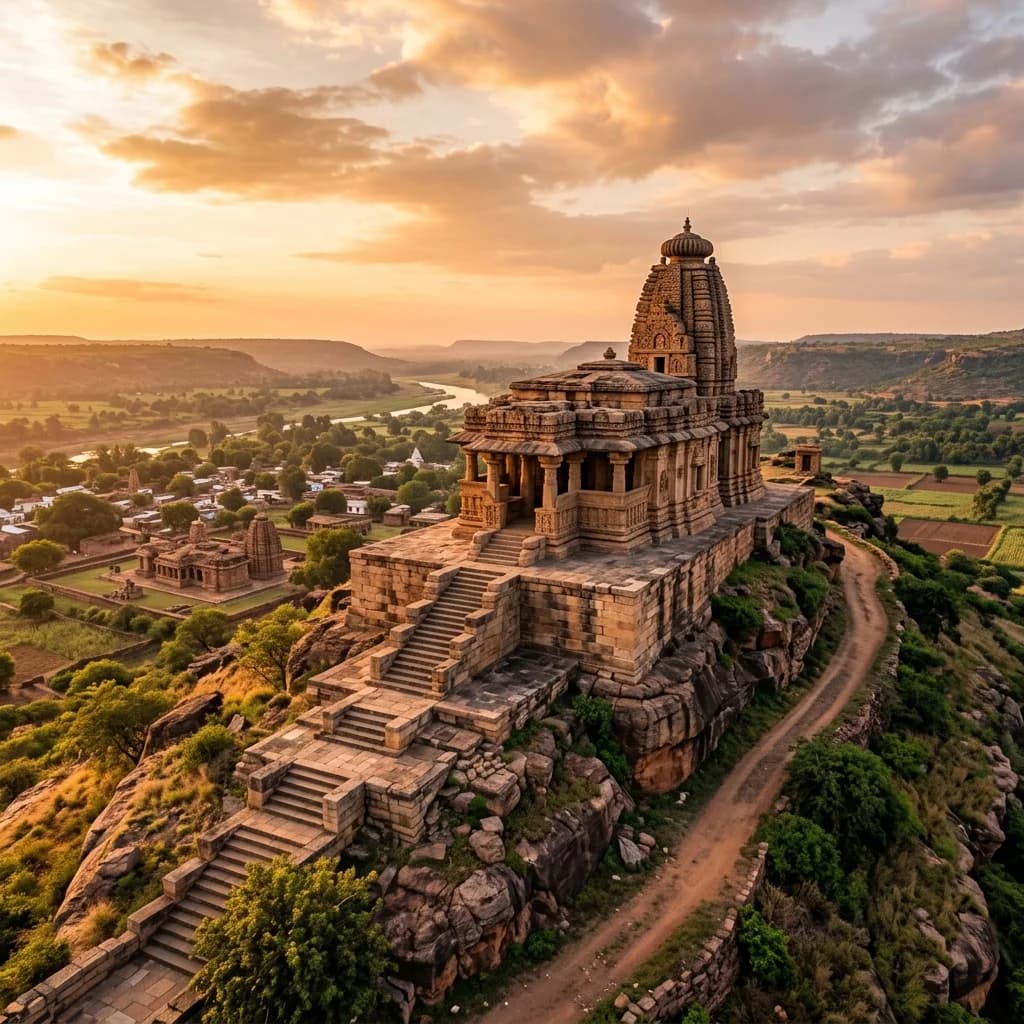
Stone Chronicles of Sovereignty and Democracy: The Epigraphic Legacy of Aihole's Meguti Temple, Uttiramerur's Assembly Inscriptions, and the Royal Reliefs of Hampi's Hazara Rama
Stone Chronicles of Sovereignty and Democracy: The Epigraphic Legacy of Aihole's Meguti Temple, Uttiramerur's Assembly Inscriptions, and the Royal Reliefs of Hampi's Hazara Rama Across the diverse lan…
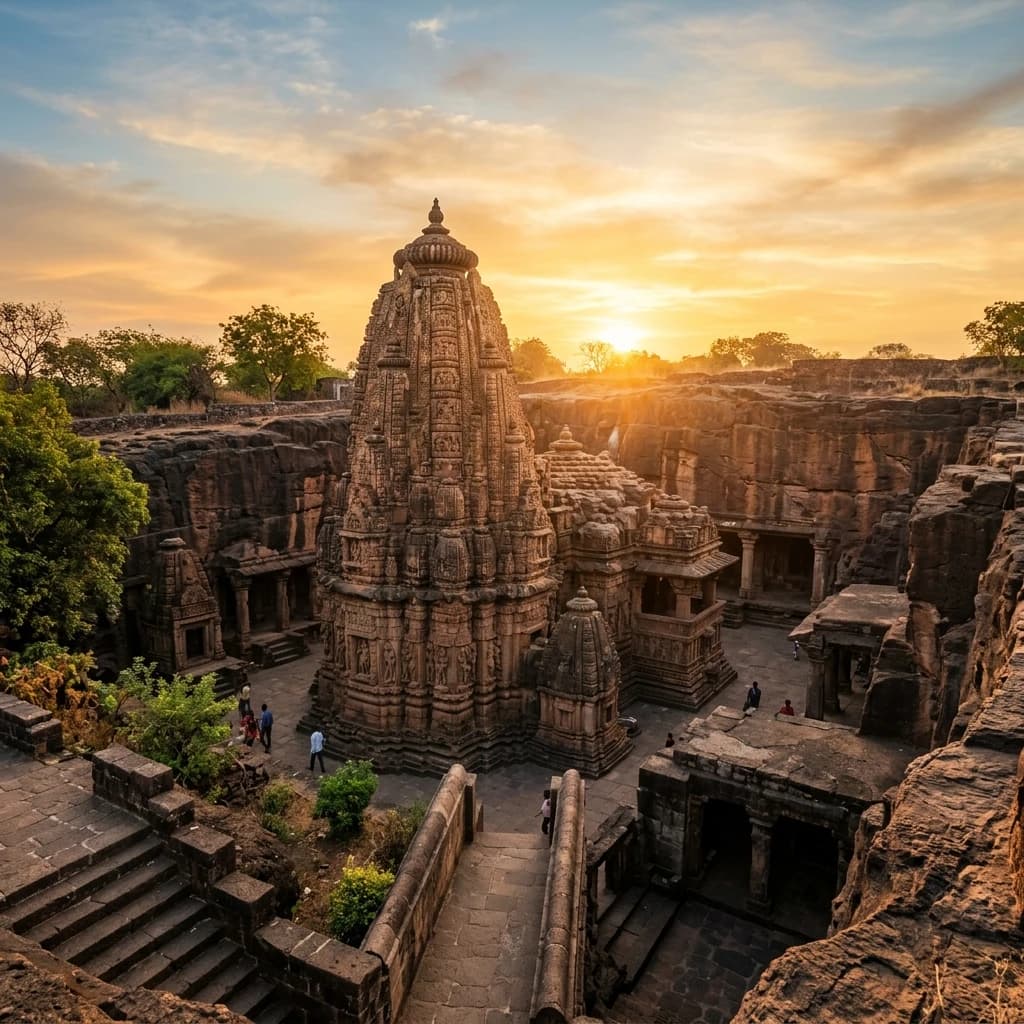
Monolithic Cliffs, Alpine Spires, and Chariots of Stone: The Architectural Feats of Dhamnar, Baijnath, and Melkadambur
Monolithic Cliffs, Alpine Spires, and Chariots of Stone: The Architectural Feats of Dhamnar, Baijnath, and Melkadambur Across the vast geographical expanse of the Indian subcontinent, ancient and medi…
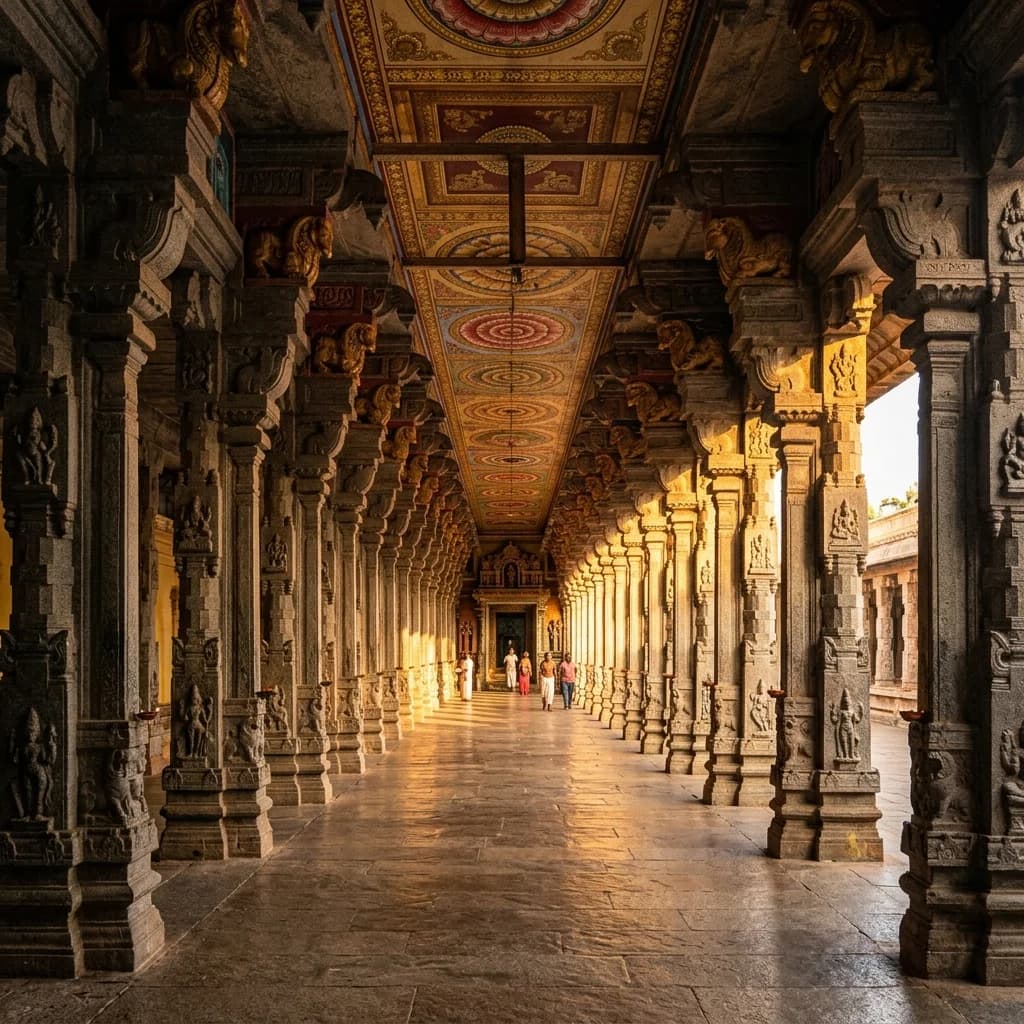
Sacred Corridors, Interlocking Stone Chains, and Thousand-Pillar Sanctuaries: The Architectural Marvels of Rameswaram, Kanchipuram, and Moodabidri
Sacred Corridors, Interlocking Stone Chains, and Thousand-Pillar Sanctuaries: The Architectural Marvels of Rameswaram, Kanchipuram, and Moodabidri Across the Indian subcontinent, sacred architecture r…