Symphonies in Sandstone and Basalt: The Exquisite Carvings of Nagda's Sas-Bahu, the Stationary Shadow of Panagal's Chhaya Someshwara, and the Yadava Mastery of Lonar's Daitya Sudan
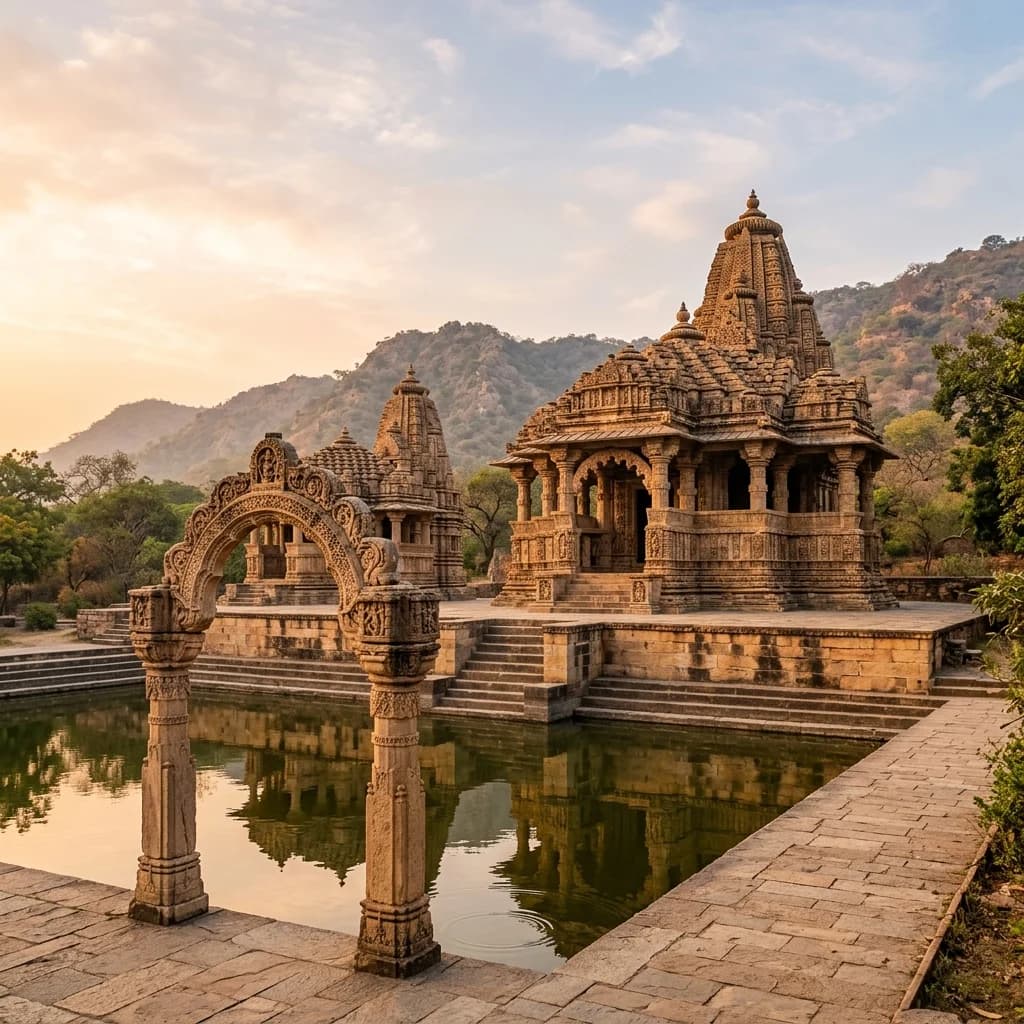
Symphonies in Sandstone and Basalt: The Exquisite Carvings of Nagda's Sas-Bahu, the Stationary Shadow of Panagal's Chhaya Someshwara, and the Yadava Mastery of Lonar's Daitya Sudan
Across the Indian subcontinent, ancient and medieval temple complexes serve as permanent books written in stone, capturing the mathematical, geological, optical, and artistic genius of their builders. Rather than mere places of worship, these structures represent structural achievements that pushed the boundaries of ancient civil engineering, spatial lighting, and material science.
This technical investigation explores three remarkable heritage sites of classical India: the 10th-century Guhila-era twin sandstone sanctuaries and ornate torana of Nagda's Sahasra-Bahu Temples (Mewar, Rajasthan), the 11th–12th century Kunduru Chola optical physics and stationary shadow mechanics of Panagal's Chhaya Someshwara Temple (Telangana), and the 13th-century Yadava-era mortarless basalt Hemadpanthi star-plan architecture of Lonar's Daitya Sudan Temple (Maharashtra).
🏛️ The Sahasra-Bahu Temples of Nagda: Ornate Masterpieces of the Guhila Dynasty
10th-Century Guhila Dynasty Sandstone Architecture, The Twin Shrines, and Concentric Dome Ceilings
The Royal Capital of Early Mewar: Nestled on the banks of Bagela Lake in Nagda near Udaipur, Rajasthan, the Sahasra-Bahu Temples ("He of the Thousand Arms," dedicated to Lord Vishnu, corrupted locally to "Sas-Bahu") were constructed in the late 10th century CE (c. 975–1000 CE) under the patronage of the Guhila rulers of Medapata. As the ancient capital of the Guhilas before the shift to Chittorgarh, Nagda preserves this twin-shrine complex as an extraordinary benchmark of the evolving Māru-Gurjara architectural style.
                      [Nagda Sahasra-Bahu Architectural Layout]
                                          │
                                          ▼
                      [Shared Elevated Stone Jagati Plinth]
                     (Overlooking Bagela Holy Water Reservoir)
                                          │
          ┌───────────────────────────────┴───────────────────────────────┐
          ▼                                                               ▼
[The "Sas" (Larger) Temple]                                     [The "Bahu" (Smaller) Temple]
• 10 Subsidiary Peripheral Shrines                              • 5 Subsidiary Subsidiary Shrines
• Multi-Tiered Open Torana Gateway                              • Octagonal Concentric Corbelled Dome
• 12 Elaborately Sculpted Mandapa Pillars                       • Bracket Sculptures of Dancing Vidyadharis
• Ramayana, Mahabharata & Purana Friezes                        • Intricate Floral & Rosette Medallions
          │                                                               │
          └───────────────────────────────┬───────────────────────────────┘
                                          │
                                          ▼
                      [1226 CE Iltutmish Infiltration Impact]
Structural and Lithic Specifications:
| Architectural Metric | Sas Temple (Larger) | Bahu Temple (Smaller) |
|---|---|---|
| Subsidiary Shrines (Devakulikas) | 10 Surrounding Shrines | 5 Surrounding Shrines |
| Entrance Architecture | Multi-Tiered Freestanding Torana Arch | Projecting Open Porch with Cusped Arches |
| Mandapa Ceiling Geometry | Multi-Tiered Corbelled Square | Octagonal Concentric Ring Dome with 8 Brackets |
| Primary Lithic Medium | Local Ferruginous Buff Sandstone | Fine-Grained Golden-Buff Sandstone |
| Pillar Sculptural Density | 12 Pillars with Narrative Epic Bands | 4 Central Columns with Deep Filigree Fluting |
| Sanctum Presiding Deity | Lord Vishnu (Sahasra-Bahu) | Lord Vishnu (Sahasra-Bahu) |
The Freestanding Torana and Octagonal Domes: The complex is fronted by an elaborate freestanding Torana arch supported by twin multifaceted sandstone pillars. The ceiling of the "Bahu" temple features concentric corbelled rings with miniature bracket figures of dancing Apsaras and musicians carved with high undercutting, creating a weightless, floating aesthetic overhead.
🗿 The Optical Wonder of Panagal: Chhaya Someshwara Temple and the Stationary Shadow
11th–12th Century Kunduru Chola Trikutalayam Geometry, Basalt Optical Reflections, and Shadow Physics
Kunduru Chola Patronage in Medieval Telingana: Located in Panagal, Nalgonda district, Telangana, the Chhaya Someshwara Temple was constructed between the late 11th and early 12th century CE under the royal patronage of the Kunduru Chola dynasty (vassals of the Western Chalukyas and Kakatiyas). Built in the traditional Deccani Trikutalayam (triple-shrine) format, the temple shares a grand central Maha-Mandapa that serves as an optical laboratory.
                      [Panagal Chhaya Someshwara Optical Model]
                                          │
                                          ▼
                      [Eastern Sunlight Entry via Open Portals]
                                          │
          ┌───────────────────────────────┴───────────────────────────────┐
          ▼                                                               ▼
[Left Symmetric Pillar Array]                                   [Right Symmetric Pillar Array]
• Polished Dark Basalt Surface                                  • Polished Dark Basalt Surface
• Multi-Directional Specular Reflection                         • Multi-Directional Specular Reflection
          │                                                               │
          └───────────────────────────────┬───────────────────────────────┘
                                          │
                                          ▼
                      [Constructive Wavefront Optical Cancellation]
                                          │
                                          ▼
                 [Stationary Unified Vertical Shadow on Shiva Lingam]
                 (Remains Perfectly Static from Dawn to Sunset)
Optical Physics and Engineering Dimensions:
| Engineering Metric | Scientific Specification | Optical / Architectural Mechanism |
|---|---|---|
| Ground Plan Typology | Trikutalayam (Triple-Shrine) | 3 Sanctums (Shiva, Vishnu, Surya) facing a shared hypostyle hall |
| Optical Phenomenon | Continuous Stationary Vertical Shadow | Single dark shadow band cast permanently upon the western Shiva Lingam |
| Light Diffusion Principle | Specular Basalt Reflection & Occlusion | Hall pillars split and cancel incoming eastern sunlight pathways |
| Primary Lithic Medium | Dark Fine-Grained Basalt Columns | Smoothly dressed surfaces providing calibrated multi-angle light bounce |
| Sanctum Alignment | True 0° East-West Optical Line | Direct line-of-sight from eastern dawn portal into the western cella |
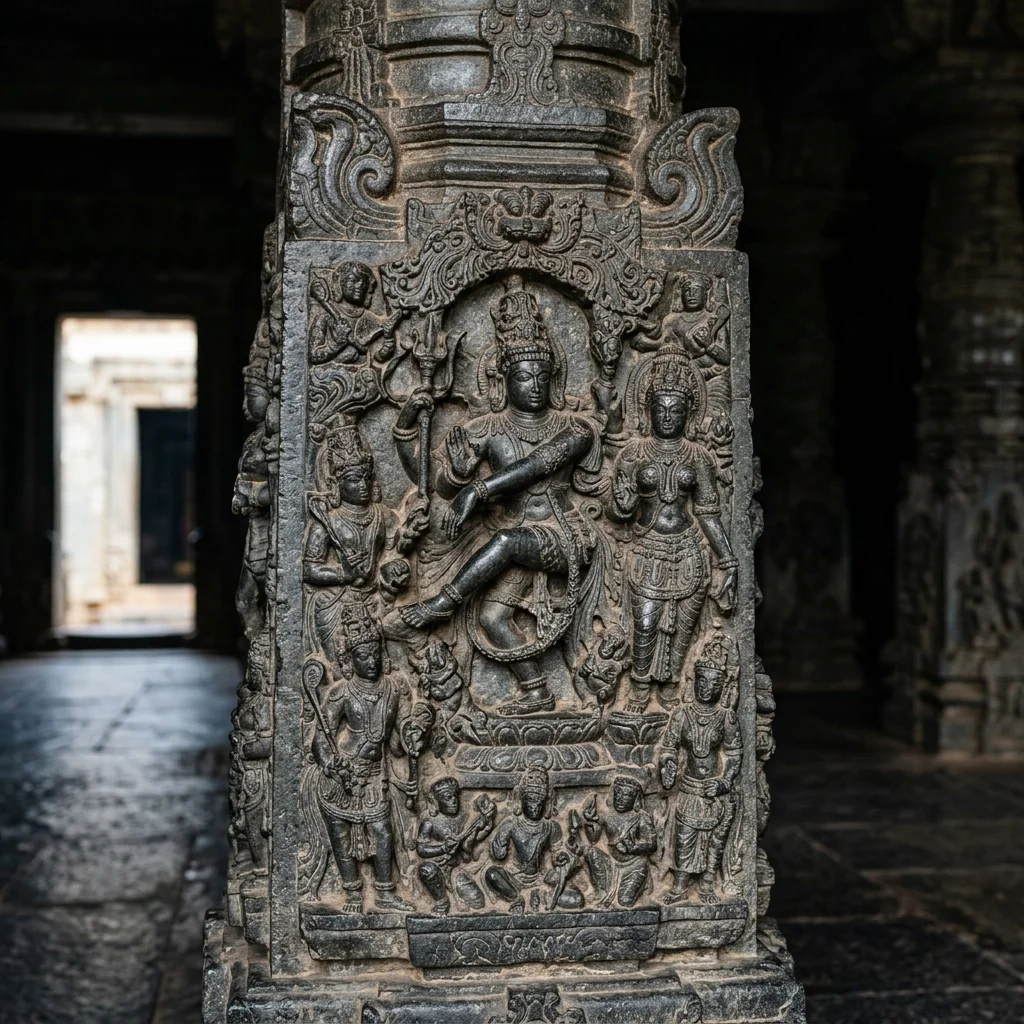
Figure 1: Intricate stone craftsmanship and architectural elements at Chhaya Someshwara Temple.
The Science of the Stationary Shadow: Contrary to popular myth claiming a single pillar casts the shadow, scientific optical analysis demonstrates that the shadow is created by the geometric spacing of the entrance pillars relative to the doorway. As the sun moves across the sky from morning to evening, light entering the open eastern doorway is diffracted and reflected off the polished basalt pillars in such a manner that the central vertical focal point behind the inner doorframe remains permanently in shadow, creating a stationary illusion.
🔱 The Basalt Sentinel of the Crater: Daitya Sudan Temple of Lonar
13th-Century Yadava Stellate Geometry, Meteorite Basin Geology, and Mortarless Hemadpanthi Masonry
The Yadavas of Devagiri on the Meteorite Rim: Perched on the outer rim of the world-famous Lonar Meteorite Crater in Buldhana district, Maharashtra, the Daitya Sudan Temple was constructed in the late 13th to early 14th century CE under the royal patronage of the Yadava (Seuna) dynasty of Devagiri. Dedicated to Lord Vishnu as Daityasudan (the slayer of the giant Lonasura, who according to the Skanda Purana dwelt within the crater's hyper-saline waters), the monument is a triumph of Hemadpanthi star-plan stone masonry.
                      [Lonar Daitya Sudan Stellate Architectural Plan]
                                          │
                                          ▼
                      [Stellate Star-Shaped Outer Wall Projections]
                       (32-Point Symmetry Maximizing Relief Area)
                                          │
          ┌───────────────────────────────┴───────────────────────────────┐
          ▼                                                               ▼
[Mortarless Hemadpanthi Basalt Masonry]                         [Three-Tiered Sculptural Registers]
• Interlocking Mortise-and-Tenon Joints                         • Primary Central Niche: Standing Surya Idol
• Extreme Compressive Load Resistance                           • Friezes: Ramayana, Mahabharata & Vyalas
• High-Density Local Volcanic Basalt                            • Erotic Mithuna Panels & Standing Vishnu
          │                                                               │
          └───────────────────────────────┬───────────────────────────────┘
                                          │
                                          ▼
                      [Sanctum: Monolithic Standing Daityasudan Vishnu]
Material Science and Architectural Metrics:
| Architectural Metric | Daitya Sudan Specification | Civil Engineering / Geological Role |
|---|---|---|
| Geological Setting | Rim of Lonar Impact Crater (570,000 BP) | Built upon shock-metamorphosed basalt ejecta blanket formations |
| Ground Plan Geometry | Stellate (Star-Shaped 32-Facet Plan) | Multi-faceted walls creating deep contrast between light and shadow |
| Masonry Technology | Hemadpanthi Dry-Stone Basalt | Assembled with tongue-and-groove joints without any binding mortar |
| Primary Lithic Medium | Dense Deccan Traps Tholeiitic Basalt | Dark igneous basalt carved with crisp Khajuraho-style figurative reliefs |
| Presiding Deity | Standing Daityasudan Vishnu Monolith | Carved from fine-grained black stone holding Shankha, Chakra, Gada, Padma |
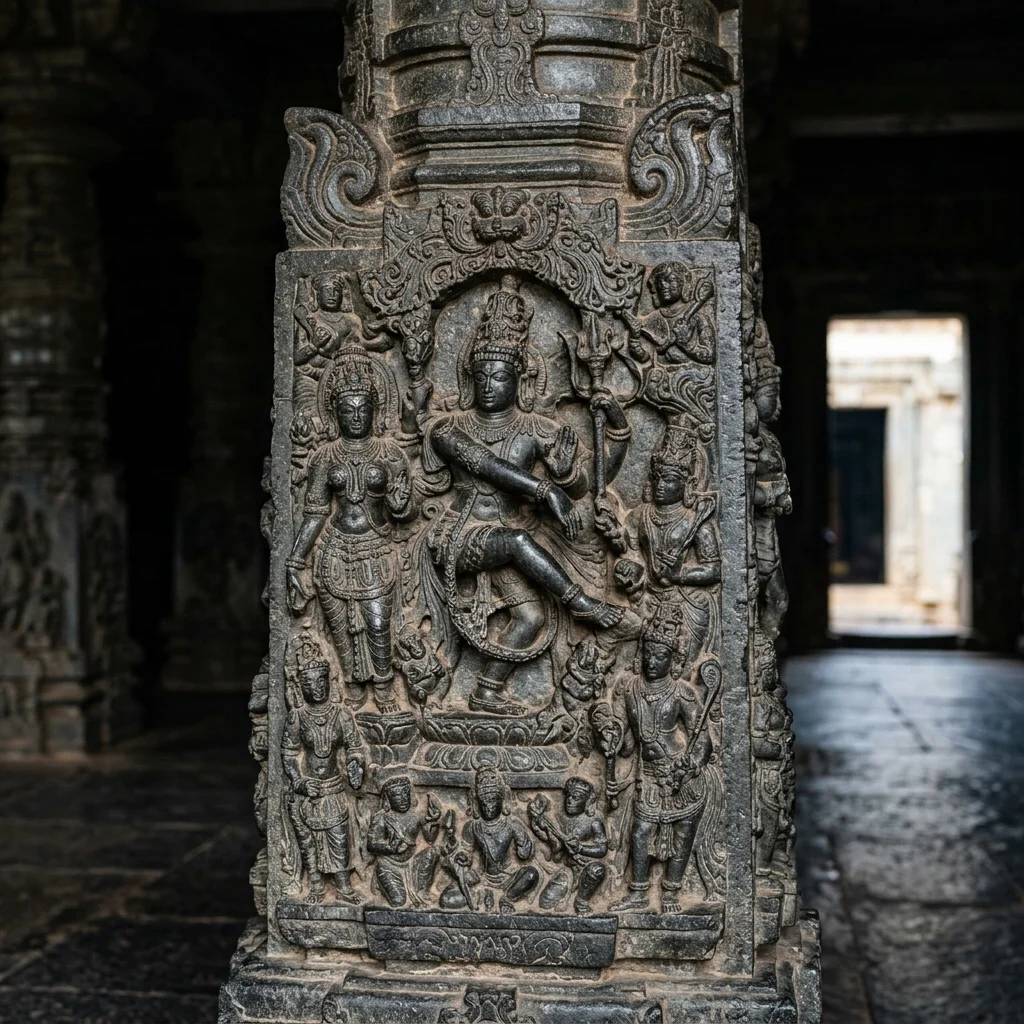
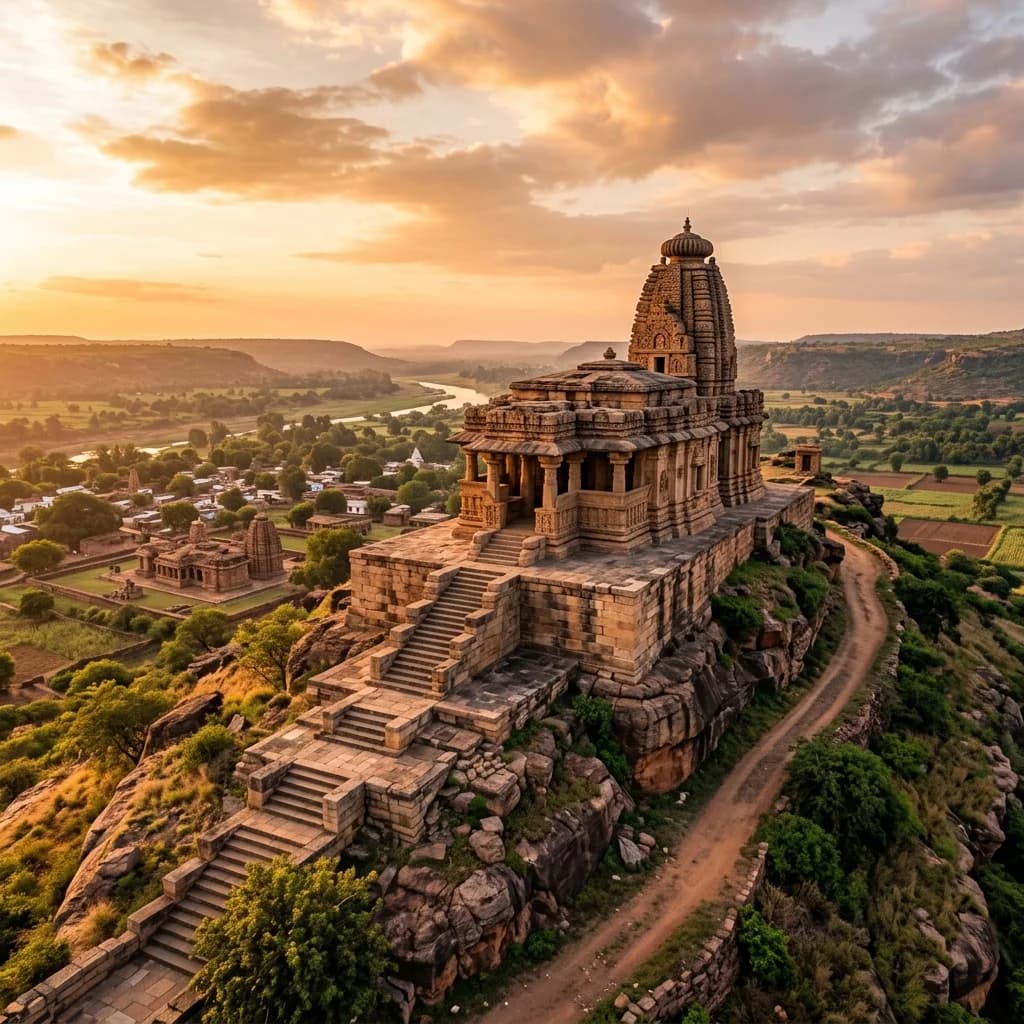
Figure 2: Architectural design and monumental structures at Daitya Sudan Temple.
Stellate Facades and Hemadpanthi Joinery: The outer walls of Daitya Sudan are configured on an irregular star-shaped plan (Stellate) that produces dozens of sharp vertical facets. The masonry is executed in the pure Hemadpanthi style, where precision-cut basalt blocks lock together through gravity and mechanical mortise-and-tenon joints, completely resisting the seismic shocks of the Deccan plateau.
📊 Comparative Architectural & Regional Matrix
| Parameter | Sahasra-Bahu Temples (Nagda) | Chhaya Someshwara (Panagal) | Daitya Sudan Temple (Lonar) |
|---|---|---|---|
| Dynastic Patron | Guhilas of Medapata (Mewar) | Kunduru Cholas (Kalyani Chalukyas) | Yadavas / Seunas of Devagiri |
| Chronological Period | c. 975 – 1000 CE (10th c.) | Late 11th – 12th Century CE | c. 1275 – 1300 CE (13th c.) |
| Primary Lithic Medium | Ferruginous Buff Sandstone | Fine-Grained Deccani Basalt | Volcanic Crater Basalt |
| Architectural Typology | Twin Māru-Gurjara Shrines | Trikutalayam (Triple-Shrine) | Stellate Hemadpanthi Star-Plan |
| Pinnacle Engineering Feat | Freestanding Torana & Concentric Domes | Permanent Stationary Shadow Optics | Mortarless Stellate Basalt Joints |
| Primary Dedication | Vishnu (Sahasra-Bahu) | Shiva (Someshwara) | Vishnu (Daityasudan) |
📌 The Bottom Line
- sahasra-bahu-temple: A 10th-century Guhila-era twin-sanctuary complex in Rajasthan; celebrated for its freestanding multifaceted Torana entrance arch, concentric corbelled dome ceilings, and dense narrative sandstone reliefs from the Hindu epics.
- chhaya-someshwara-temple: An 11th–12th century Kunduru Chola triple-shrine monument in Telangana; renowned for its optical engineering that casts a permanent, stationary vertical shadow upon the western Shiva Lingam via calibrated pillar reflections from dawn to sunset.
- daitya-sudan-temple: A 13th-century Yadava-era masterpiece situated on the rim of the Lonar Meteorite Crater in Maharashtra; features a 32-point star-shaped (stellate) ground plan executed in mortarless dry-stone Hemadpanthi basalt, housing the standing Daityasudan Vishnu monolith.
📬 Stay Updated
Get India's heritage and history stories delivered to your inbox every week. Subscribe to our free newsletter →
Disclaimer: The information provided in this post is for educational and informational purposes only. It is not intended to be a substitute for professional historical or architectural advice.
Enjoyed this post?
Get our weekly digest delivered free.
Share this post:
Knowelth is reader-supported. We may earn a commission from links in this article at no extra cost to you. Read our disclosure.
Related Posts
Stone Chronicles of Sovereignty and Democracy: The Epigraphic Legacy of Aihole's Meguti Temple, Uttiramerur's Assembly Inscriptions, and the Royal Reliefs of Hampi's Hazara Rama
Stone Chronicles of Sovereignty and Democracy: The Epigraphic Legacy of Aihole's Meguti Temple, Uttiramerur's Assembly Inscriptions, and the Royal Reliefs of Hampi's Hazara Rama Across the diverse lan…
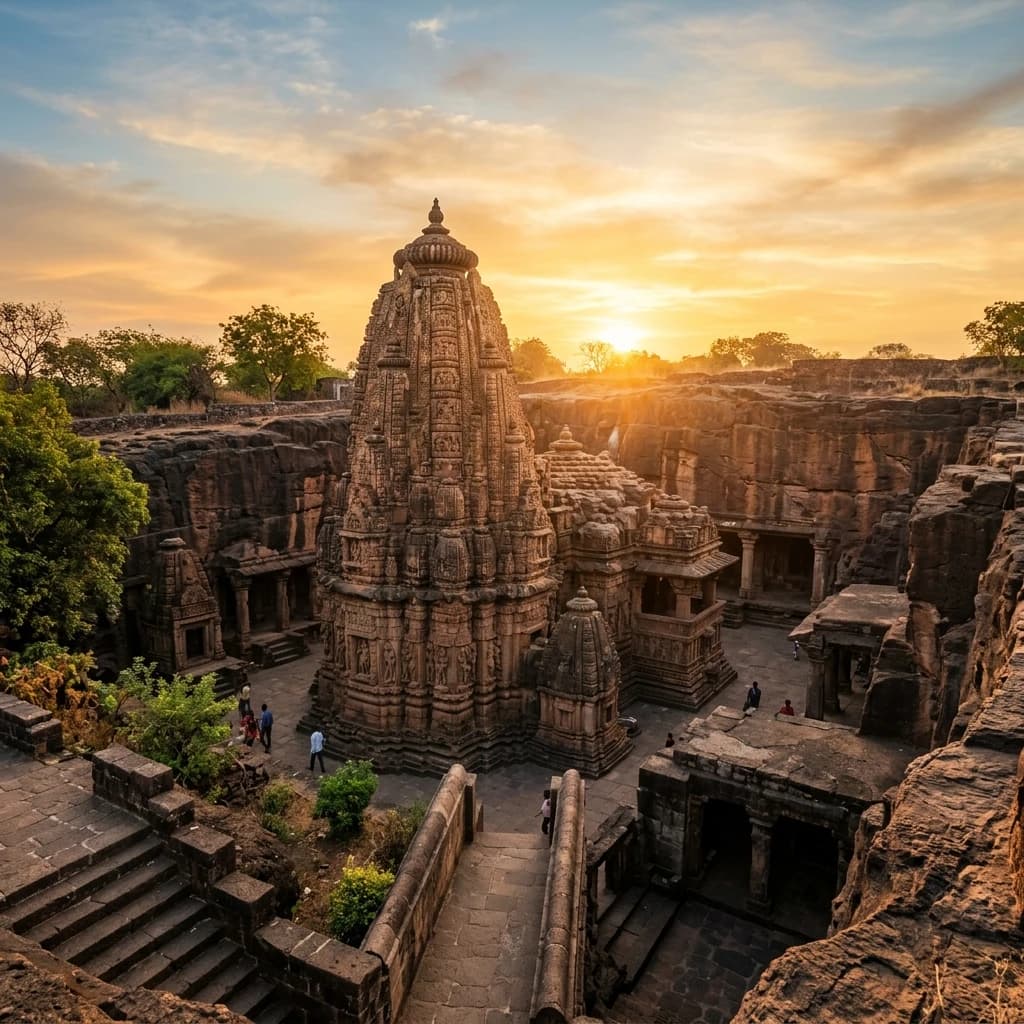
Monolithic Cliffs, Alpine Spires, and Chariots of Stone: The Architectural Feats of Dhamnar, Baijnath, and Melkadambur
Monolithic Cliffs, Alpine Spires, and Chariots of Stone: The Architectural Feats of Dhamnar, Baijnath, and Melkadambur Across the vast geographical expanse of the Indian subcontinent, ancient and medi…
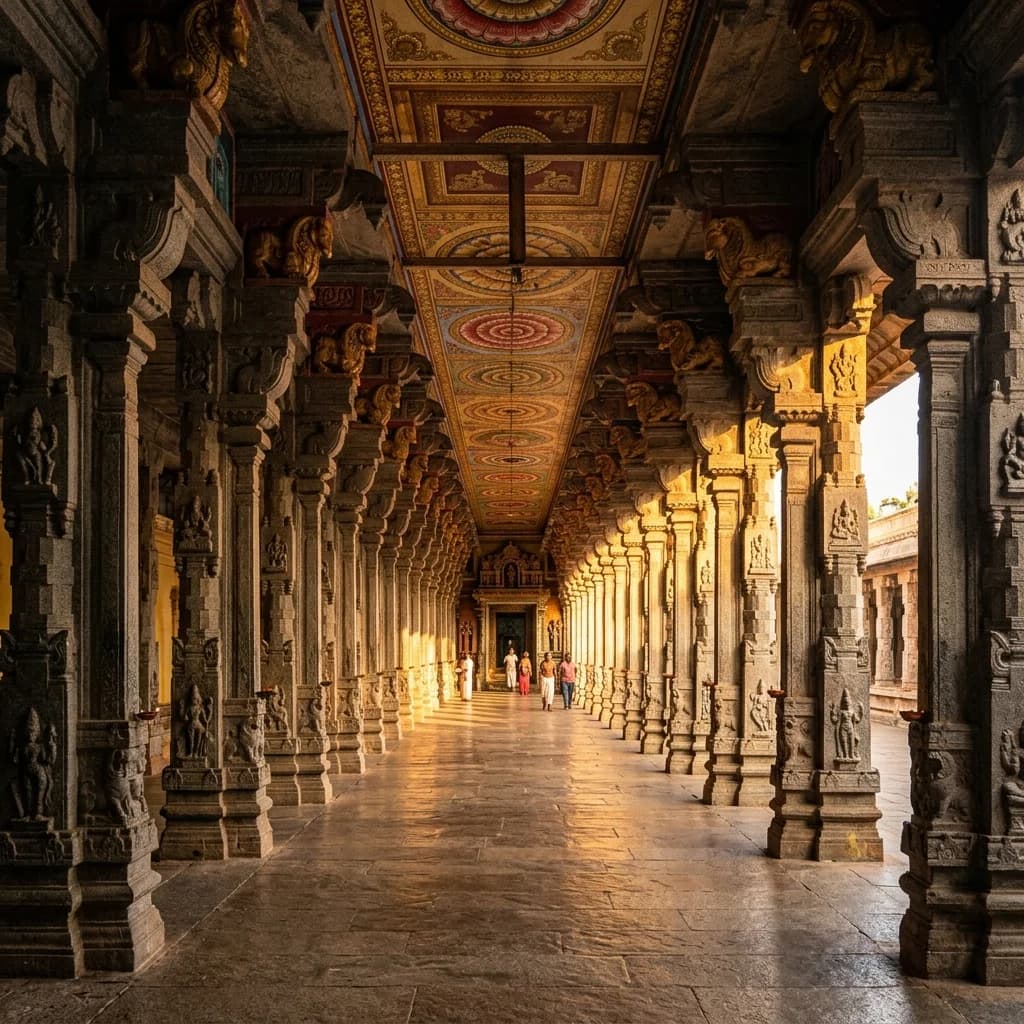
Sacred Corridors, Interlocking Stone Chains, and Thousand-Pillar Sanctuaries: The Architectural Marvels of Rameswaram, Kanchipuram, and Moodabidri
Sacred Corridors, Interlocking Stone Chains, and Thousand-Pillar Sanctuaries: The Architectural Marvels of Rameswaram, Kanchipuram, and Moodabidri Across the Indian subcontinent, sacred architecture r…