Masterpieces in Stone: Epigraphy, Astronomy, and Architectural Genius at Mahabalipuram, Belur, and Modhera
Masterpieces in Stone: Epigraphy, Astronomy, and Architectural Genius at Mahabalipuram, Belur, and Modhera
Across the Indian subcontinent, ancient and medieval dynasties transformed living rock into enduring sanctums of sacred geometry, political power, and astronomical precision. From the granite shores of Tamil Nadu to the soapstone friezes of Karnataka and the sandstone solar alignments of Gujarat, Indian temple architecture stands as a monumental synthesis of structural engineering, epigraphy, and spiritual philosophy.
🏛️ Shore Temple of Mahabalipuram: Pallava Granite Legacy and Coastal Submerged Antiquities
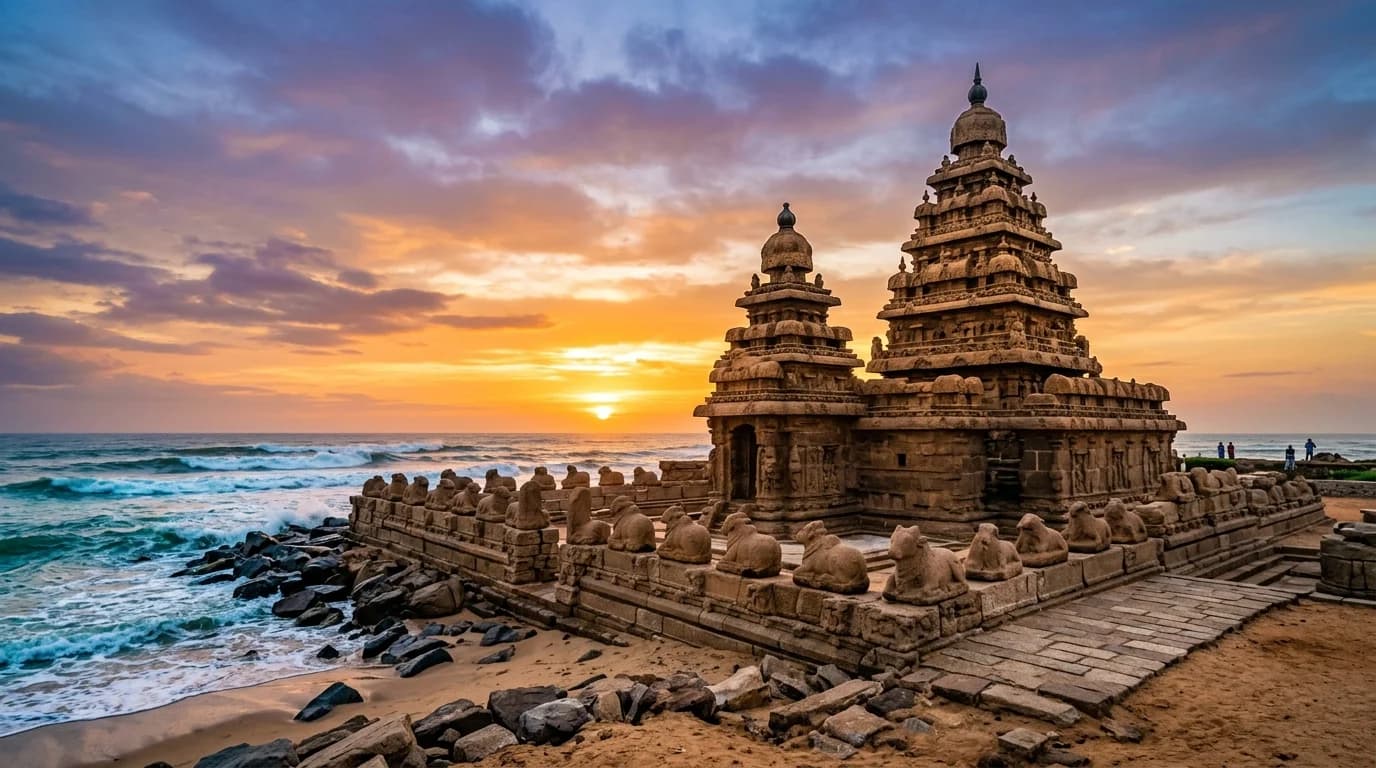
Perched on the windswept Coromandel Coast of the Bay of Bengal, the Shore Temple at Mahabalipuram (Mamallapuram) represents a pivotal watershed in South Indian architectural history. Built during the reign of Pallava King Narasimhavarman II (famously known as Rajasimha) between 700 and 728 CE, this UNESCO World Heritage monument marks the historic transition from rock-cut cave shrines and monolithic rathas to free-standing structural masonry crafted from dressed granite blocks. Serving as both an exalted sanctum and a beacon for ancient maritime trade vessels sailing along the Maritime Silk Route, the temple complex embodies the maritime ambitions and refined artistic patronages of the Pallava dynasty.
Architecturally, the Shore Temple complex houses three distinct shrines arranged along an intriguing dual-axial layout. Two shrines, dedicated to Lord Shiva, feature soaring pyramidal towers (vimanas) topped by octagonal shikharas that pierce the coastal skyline. The east-facing shrine catches the first rays of the dawn sun over the ocean, while the west-facing shrine opens toward the hinterland. Nestled between these two vertical stone towers lies an earlier, lower shrine dedicated to Lord Vishnu depicted as Anantasayana—reclining serenely upon the serpent Shesha. Surrounding the perimeter courtyard stands an imposing low wall guarded by a ceremonial guard of monolithic Nandi (sacred bull) sculptures carved in full relief, standing watch against the salty ocean spray.
The epigraphic and archaeological heritage of Mahabalipuram extends far beyond its standing granite walls. For centuries, European mariners and merchants visiting the prosperous port city recorded tales of the legendary "Seven Pagodas"—a mythic ensemble of seven majestic coastal temples of which only one remained visible on land. The validity of this historical memory received dramatic confirmation during the catastrophic December 2004 Indian Ocean Tsunami. As the ocean receded nearly 500 meters prior to landfall, local eyewitnesses observed long-submerged rows of dressed stone blocks, foundational platform walls, and carved stone animal figures emerging momentarily from the sea bed. Subsequent underwater sonar surveys and diving expeditions conducted by the Archaeological Survey of India (ASI) and the National Institute of Oceanography (NIO) confirmed the presence of extensive submerged structural ruins and granite masonry off the coast, corroborating centuries of coastal erosion and providing invaluable empirical insights into early medieval maritime archaeology.
Today, the Shore Temple stands as an engineering marvel of structural survival. Facing over thirteen centuries of relentless salt erosion, coastal humidity, and cyclonic sea storms, the granite masonry preserved under protective ASI conservation continues to reveal the sophisticated stone-dressing and mortarless joinery techniques engineered by Pallava master builders (sthapatis).
🗿 Chennakesava Temple at Belur: Hoysala Stellate Geometry and Master Artisan Inscriptions
In the lush foothills of the Western Ghats in Karnataka, the Chennakesava Temple at Belur stands as the supreme masterpiece of Hoysala architecture. Commissioned in 1117 CE by King Vishnuvardhana to commemorate his epochal military triumph over the Chola dynasty at the Battle of Talakad, this grand sanctuary dedicated to Lord Vishnu took over 103 years of continuous artistic patronage across three generations of rulers to reach completion. Built upon a low, wide raised terrace (jagati), the temple structure follows a complex stellate (star-shaped) plan that vastly increases the exterior wall surface area, providing an endless canvas for the most intricate stone relief carving in human history.
The defining technical triumph of Hoysala craftsmanship lies in their revolutionary choice of building material: chloritic schist, commonly known as soapstone. When freshly quarried from subterranean rock beds, soapstone is exceptionally soft and workable, allowing Hoysala sculptors to execute razor-thin micro-carvings, undercut friezes, and gossamer-like stone filigree with chisels as fine as needles. Upon prolonged exposure to atmospheric air, the mineral composition oxidizes and hardens into an incredibly durable, basalt-like stone density. This geological property permitted the creation of the interior Navaranga (closed assembly hall), supported by 48 lathe-turned, mirror-polished pillars. These pillars were created by mounting massive soapstone blocks onto horizontal mechanical swivel rigs and applying precise chisels while rotating the stone, yielding perfectly symmetrical, bell-shaped, and fluted columns that reflect ambient light like polished metal.
Adorning the exterior capitals beneath the eaves are the world-renowned Madanikas or Salabhanjikas—42 exquisite bracket figures portraying celestial maidens in dynamic dance postures (Natya), hunting scenes, and musical performances. Each figure is rendered with uncanny anatomical fluidity, featuring carved stone jewelry, translucent garments, and intricate hair buns through which light filters seamlessly. Surrounding the base of the outer wall are continuous horizontal bands of carved friezes: the lowest layer depicting thousands of marching elephants (symbolizing stability and strength), followed by lions (courage), horses (speed), floral creepers (creativity), and narrative scenes from the Ramayana and Mahabharata.
Crucially, the Chennakesava Temple represents a landmark epoch in epigraphy and social history. Over 118 detailed inscriptions recorded in Old Kannada script decorate the walls, flagstaff pedestals, and temple corridors. Unlike the anonymous artisans of classical Europe or ancient Egypt, Hoysala sculptors proudly inscribed their personal signatures, titles, and guild origins onto the bases of their masterworks. Inscriptions preserve the names of legendary master craftsmen such as Ruvari Amarashilpi Jakanachari, Dasoja of Balligavi, and his son Chavana, celebrating their creative rivalry and establishing a rare socio-historical record of medieval Indian artisan guilds.
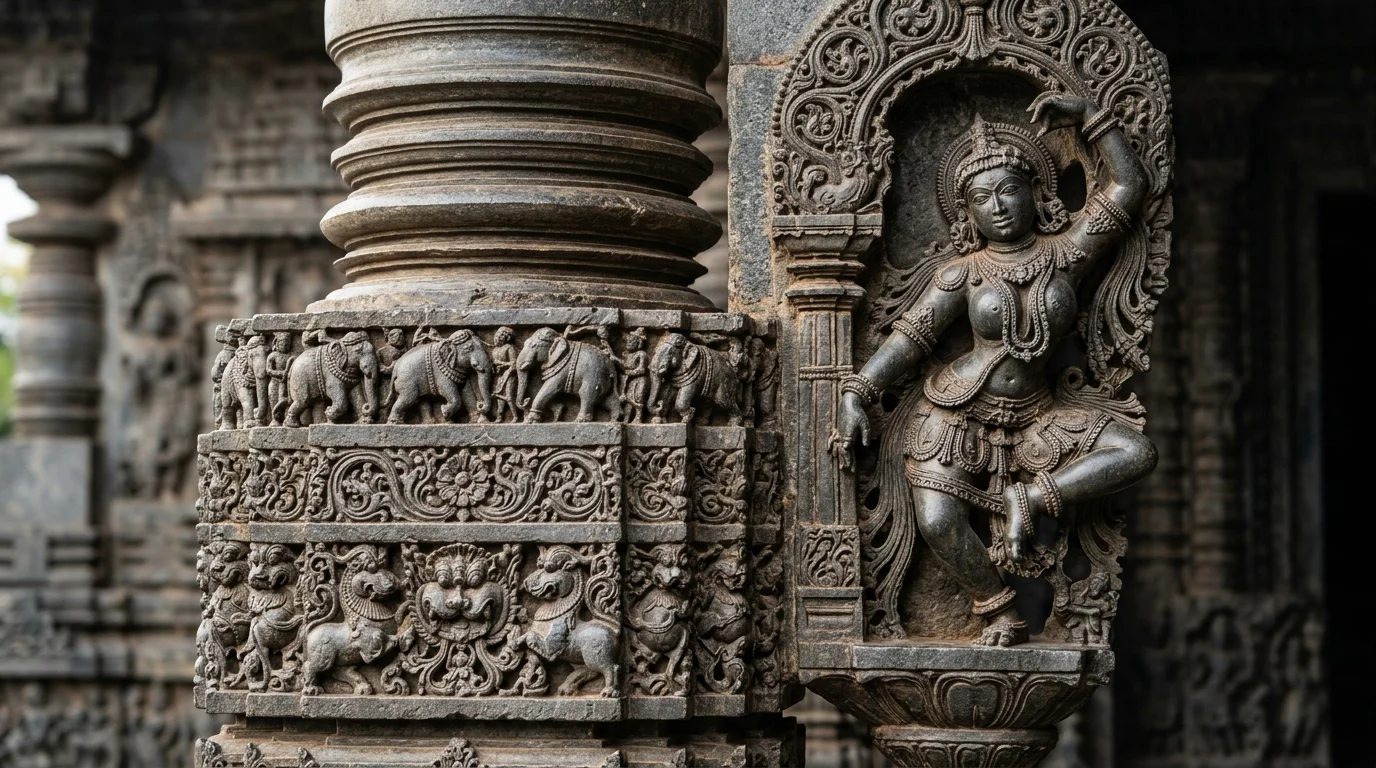
Figure 1: Intricate stone craftsmanship and architectural elements at Chennakesava Temple at Belur.
🛕 Sun Temple of Modhera: Solanki Maru-Gurjara Aesthetics and Equinoctial Solar Engineering
Constructed in 1026–1027 CE along the banks of the Pushpavati River in Mehsana, Gujarat, the Sun Temple at Modhera is a sublime monument to the Chaulukya (Solanki) dynasty. Built under the patronage of King Bhima I during a period of cultural resurgence following regional geopolitics, the temple complex was designed in the classical Māru-Gurjara architectural style. Rendered in warm golden sandstone without the use of mortar, the entire complex relies on precision tongue-and-groove interlocking masonry, demonstrating an extraordinary mastery of structural physics, sacred geometry, and solar astronomy.
The temple complex is orchestrated along a rigorous east-west celestial axis, comprising three main structural components that sequentially lead the visitor from water to cosmic light:
- The Suryakunda (Ramakunda): A monumental rectangular stepped water reservoir situated at the eastern approach. Serving as a sacred tank for ritual ablutions, the Suryakunda features a breathtaking geometric arrangement of cascading pyramidal staircases. Embedded along the steps are 108 miniature shrines dedicated to Lord Ganesha, Lord Shiva, Goddess Sitla, and various solar deities, creating a rhythmic, fractal landscape of stone stepwell architecture.
- The Sabha Mandapa (Assembly Hall): An open, grand pillared hall designed on a diagonal octagonal plan. The hall is supported by 52 exquisitely carved columns representing the 52 weeks of the solar year. The columns are embellished with detailed relief panels portraying episodes from the epics, celestial musicians (Gandharvas), and the twelve Adityas (solar aspects). The roof structures showcase intricate cusped stone arches (toranas) that distribute structural weight while acoustic domes capture musical resonance.
- The Gudha Mandapa (Inner Sanctum): The sanctum sanctorum housing the garbhagriha, designed with precise astronomical calculations. Built so that during the vernal and autumnal equinoxes (March 21 and September 23), the first rays of the rising sun pass directly through the central doorway of the Sabha Mandapa, traverse the inner vestibule, and strike the central sanctum. Historically, this solar alignment illuminated a gold, diamond-studded idol of Surya mounted upon a golden chariot, casting radiant light throughout the inner chamber.
Though worship at Modhera ceased in historical eras and the central deity image was relocated, the architectural skeleton remains fully intact as a protected national monument under the Archaeological Survey of India. Recent digital documentation, 3D laser mapping, and archaeo-astronomical studies have reaffirmed the exact mathematical precision of Solanki engineers, proving that every angle, pillar alignment, and step geometry was calculated to synchronize human space with cosmic solar movement.
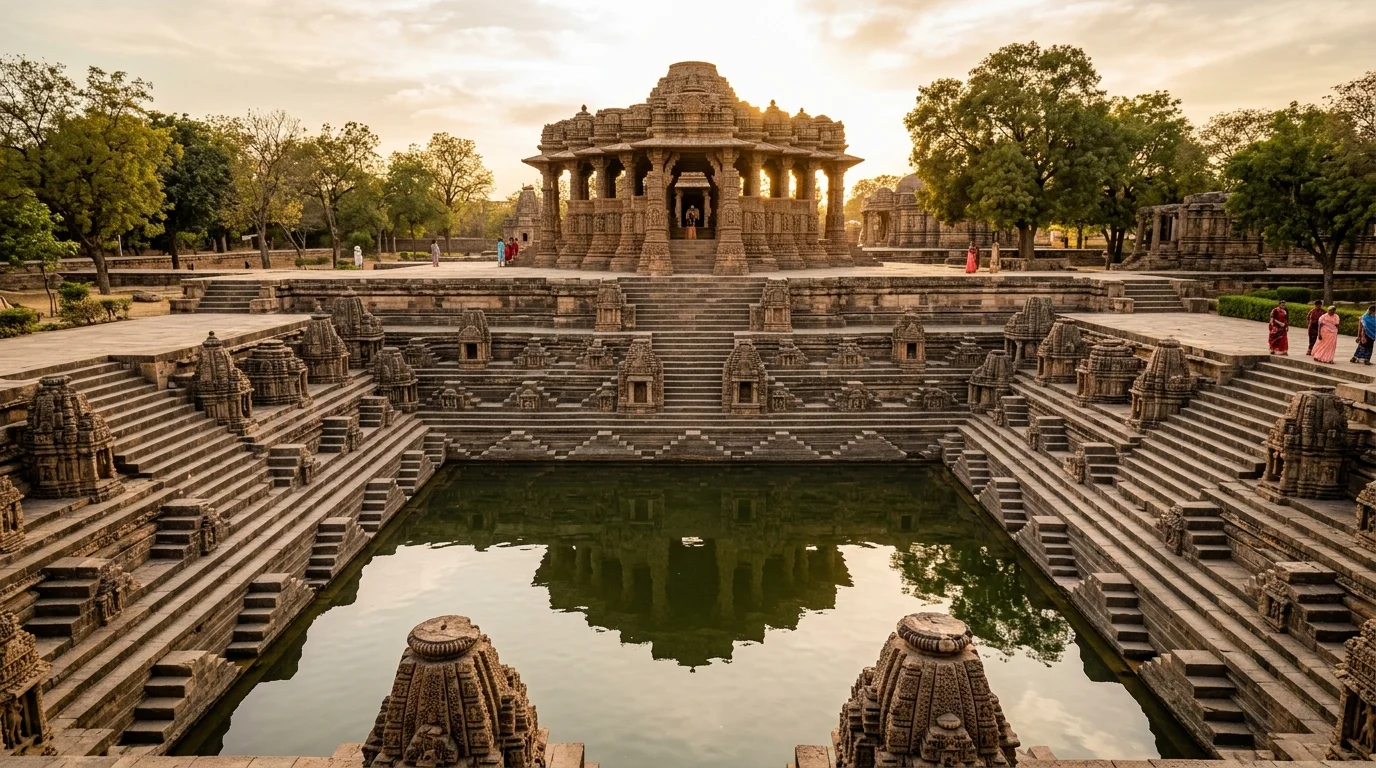
Figure 2: Architectural design and monumental structures at Sun Temple of Modhera.
📌 The Bottom Line
- mahabalipuram-shore-temple: Pallava structural granite marvel marking the transition from rock-cut monoliths to free-standing coastal temples, backed by 2004 tsunami archaeological discoveries of submerged ancient foundations.
- belur-chennakesava-temple: Hoysala soapstone masterpiece showcasing 108+ Old Kannada inscriptions, lathe-turned basalt pillars, and signed micro-carvings by master artisan guilds.
- modhera-sun-temple: Solanki Māru-Gurjara masterpiece combining the 108-shrine stepped Suryakunda reservoir with equinoctial solar alignment and mortarless interlocking sandstone geometry.
📫 Stay Updated
Get India's heritage and history stories delivered to your inbox every week. Subscribe to our free newsletter →
Disclosure: This post contains affiliate links. If you purchase through our links, we earn a small commission at no extra cost to you. We only recommend products we believe in.
Enjoyed this post?
Get our weekly digest delivered free.
Share this post:
Knowelth is reader-supported. We may earn a commission from links in this article at no extra cost to you. Read our disclosure.
Related Posts
Stone Chronicles of Sovereignty and Democracy: The Epigraphic Legacy of Aihole's Meguti Temple, Uttiramerur's Assembly Inscriptions, and the Royal Reliefs of Hampi's Hazara Rama
Stone Chronicles of Sovereignty and Democracy: The Epigraphic Legacy of Aihole's Meguti Temple, Uttiramerur's Assembly Inscriptions, and the Royal Reliefs of Hampi's Hazara Rama Across the diverse lan…
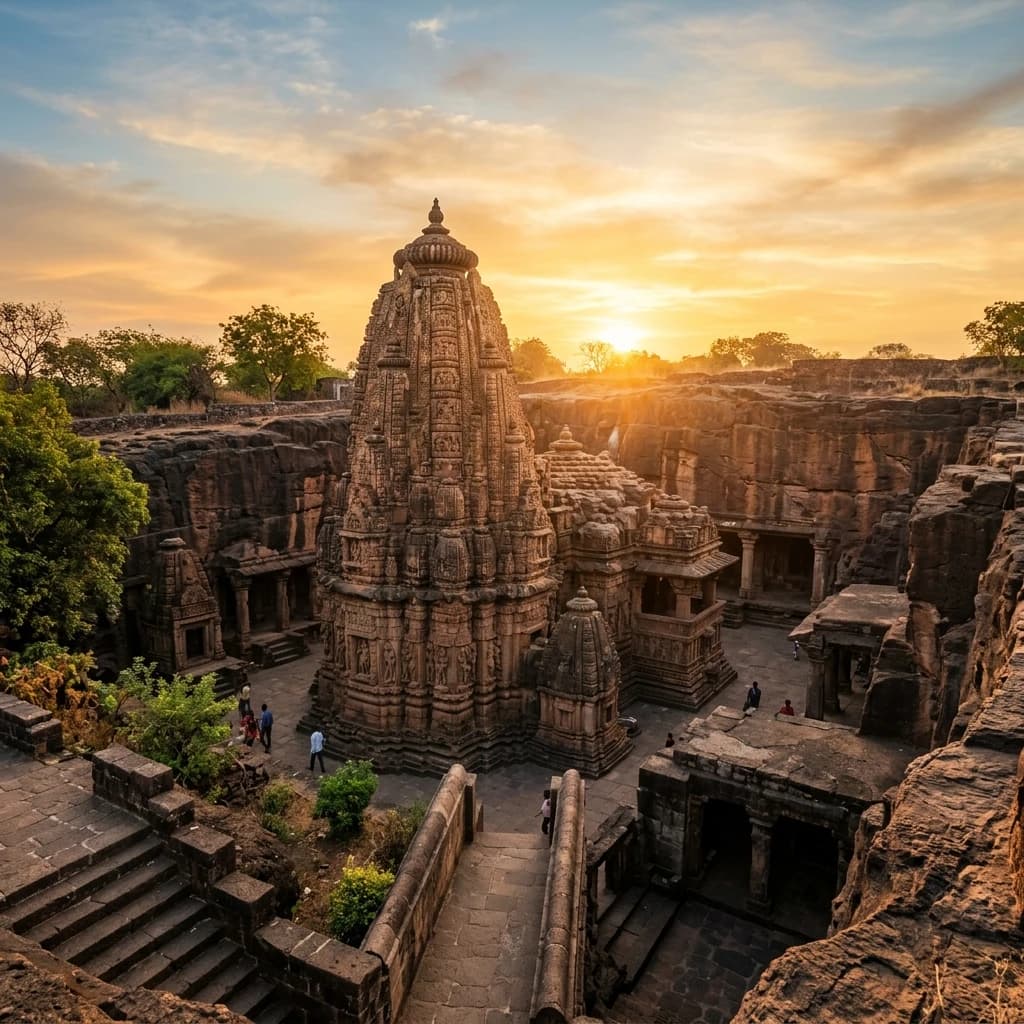
Monolithic Cliffs, Alpine Spires, and Chariots of Stone: The Architectural Feats of Dhamnar, Baijnath, and Melkadambur
Monolithic Cliffs, Alpine Spires, and Chariots of Stone: The Architectural Feats of Dhamnar, Baijnath, and Melkadambur Across the vast geographical expanse of the Indian subcontinent, ancient and medi…
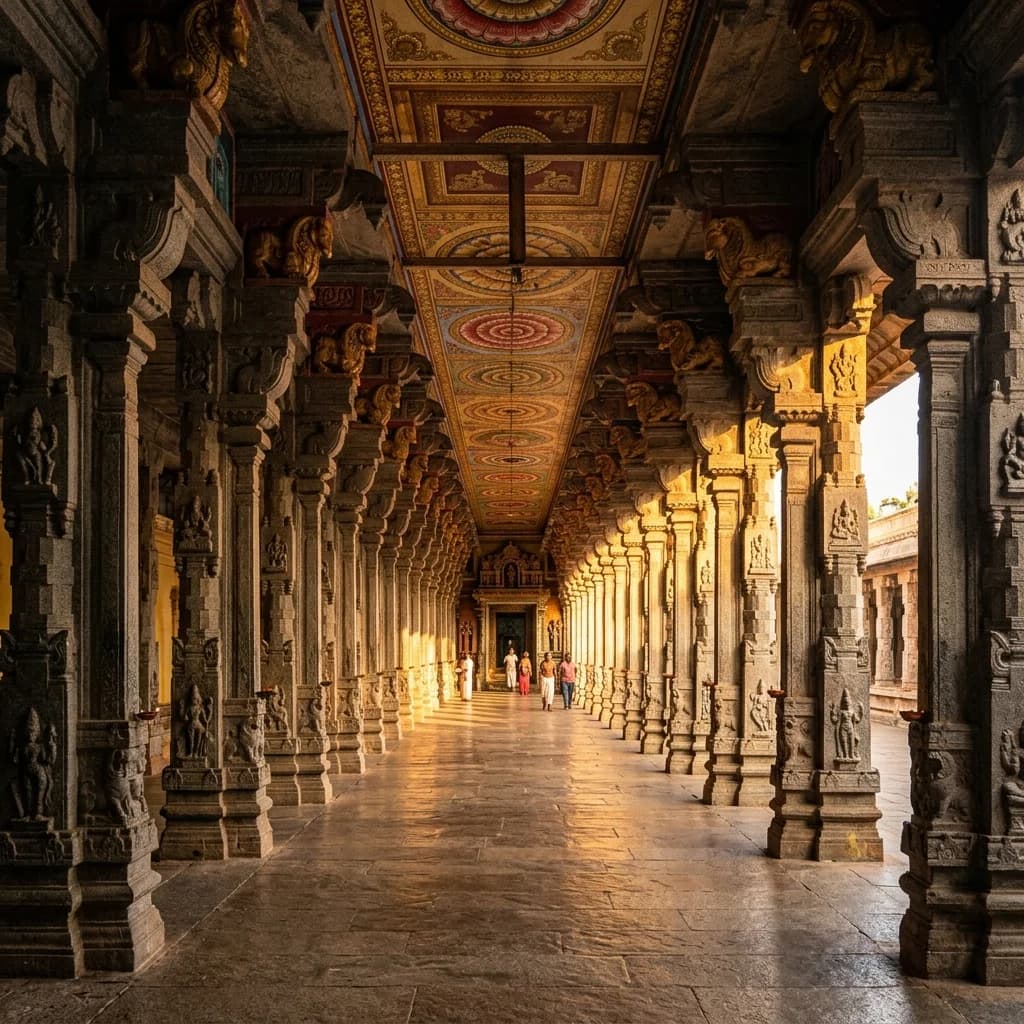
Sacred Corridors, Interlocking Stone Chains, and Thousand-Pillar Sanctuaries: The Architectural Marvels of Rameswaram, Kanchipuram, and Moodabidri
Sacred Corridors, Interlocking Stone Chains, and Thousand-Pillar Sanctuaries: The Architectural Marvels of Rameswaram, Kanchipuram, and Moodabidri Across the Indian subcontinent, sacred architecture r…